
The Spinal Decompression Chiropractic Treatment Table is specialised chiropractic and rehabilitation equipment designed to support controlled patient positioning, spinal traction techniques, and therapist-assisted decompression procedures. It is intended for professional use in chiropractic clinics, physiotherapy centres, orthopaedic facilities, and spinal rehabilitation departments.
Depending on the model, the table may feature adjustable treatment sections, patient support systems, traction mechanisms, and manual or motorised adjustment controls. These features help practitioners position patients and carry out selected treatment protocols according to clinical requirements.
PHYSIOMODALITIES™ provides professional physiotherapy, chiropractic, and rehabilitation equipment for healthcare facilities.
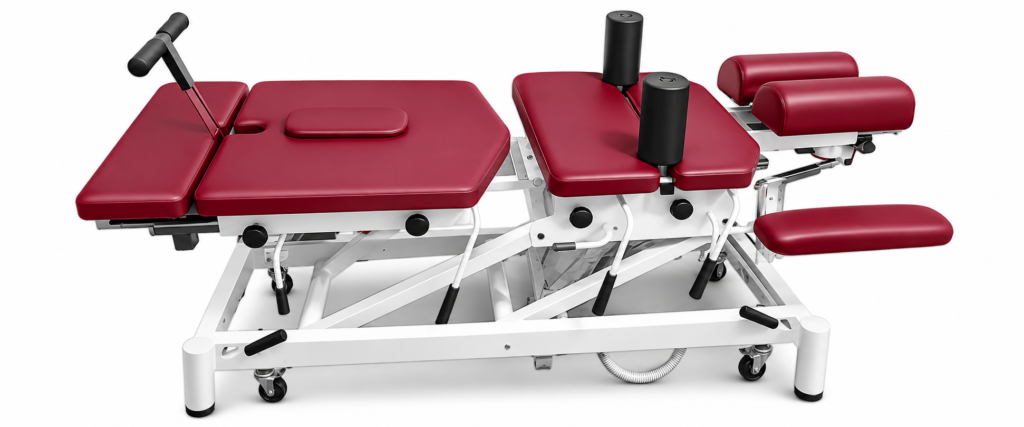
What Is a Spinal Decompression Chiropractic Treatment Table?
A Spinal Decompression Chiropractic Treatment Table is a specialised treatment platform designed to support selected spinal traction and decompression procedures.
The table helps position and stabilise the patient during treatment. Depending on its construction, different sections may move or adjust to support specific treatment positions and practitioner-assisted techniques.
It may be considered for:
- Chiropractic clinics
- Physiotherapy centres
- Spinal rehabilitation facilities
- Orthopaedic clinics
- Sports rehabilitation centres
- Multidisciplinary healthcare facilities
The exact treatment capabilities depend on the table’s design and adjustment mechanism.
How Does a Spinal Decompression Chiropractic Treatment Table Work?
The table supports controlled patient positioning and the application of selected traction techniques by trained practitioners.
Patient Positioning
The patient is positioned on the treatment surface according to the prescribed procedure. Appropriate supports help maintain the required body position.
Controlled Traction
Depending on the model, a manual or motorised mechanism may apply a controlled pulling force to selected body regions.
Adjustable Table Sections
Some tables include movable sections that allow practitioners to modify the patient’s position during treatment.
Practitioner-Controlled Treatment
The practitioner selects the appropriate positioning and treatment settings according to the patient’s assessment and the manufacturer’s instructions.
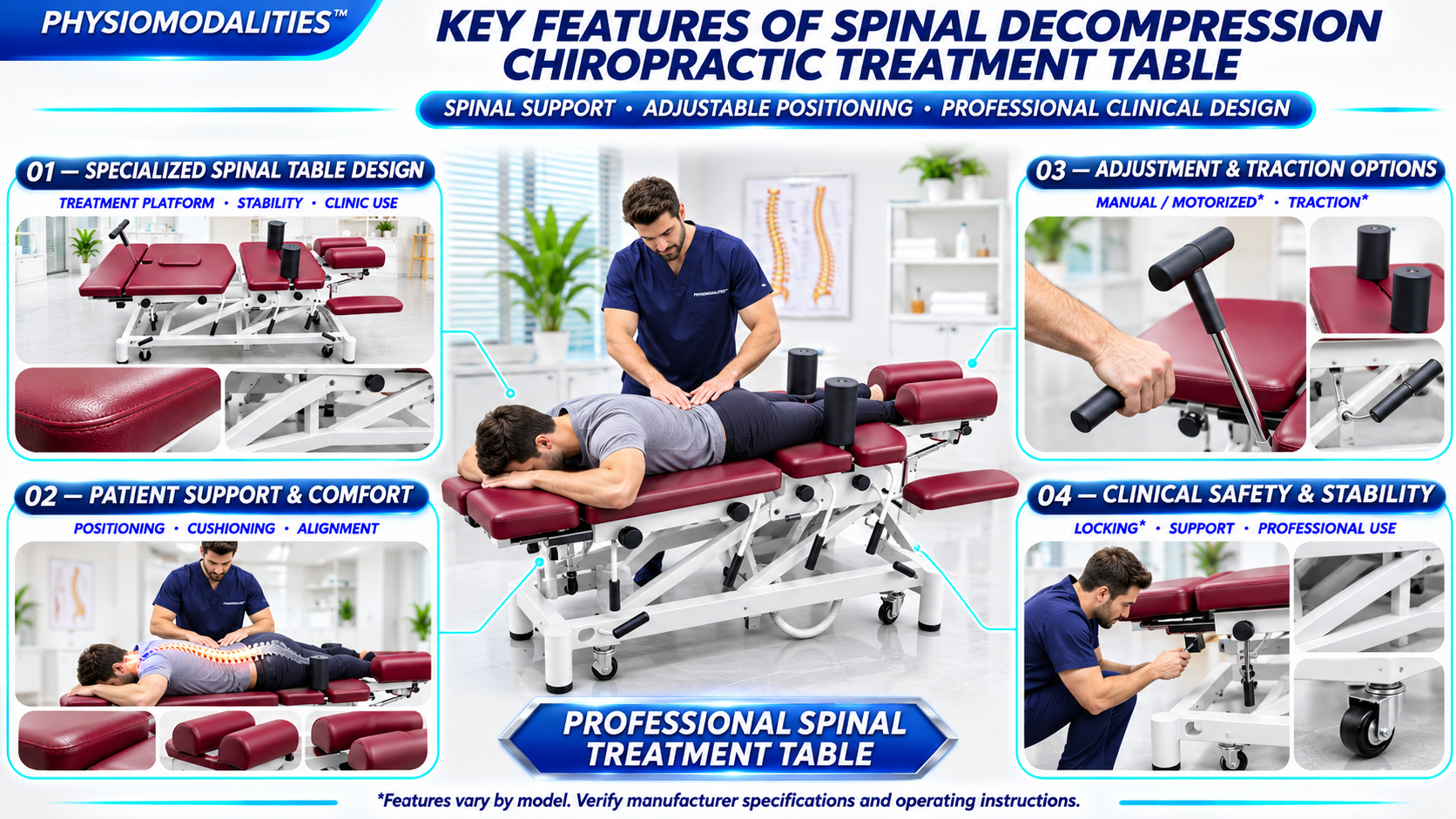
Key Features of Spinal Decompression Chiropractic Treatment Table
Features vary according to the manufacturer and model.
- Specialised spinal treatment table design
- Patient positioning and support system
- Manual or motorised adjustment mechanism
- Adjustable treatment sections on applicable models
- Controlled traction mechanism on supported models
- Adjustable positioning options
- Stable treatment platform
- Professional chiropractic clinic design
- Model-dependent safety and locking mechanisms
- Patient comfort-focused support surfaces
Applications of Spinal Decompression Chiropractic Treatment Table
A Spinal Decompression Chiropractic Treatment Table may be used in selected professional spinal care and rehabilitation settings.
Spinal Decompression Procedures
Designed to support selected decompression-based treatment protocols when the table is configured for that purpose.
Chiropractic Treatment
May support practitioner-assisted positioning and selected chiropractic procedures.
Spinal Rehabilitation
Can be incorporated into supervised rehabilitation programs where appropriate.
Manual Spinal Traction
Certain table designs support manual traction techniques performed by trained healthcare professionals.
Physiotherapy and Orthopaedic Care
May be considered by clinics providing selected musculoskeletal and spinal rehabilitation services.
Clinical Treatment Facilities
Provides a dedicated treatment platform for facilities offering specialised spinal care.
Important: A treatment table does not independently diagnose or cure spinal conditions. The suitability of traction or decompression depends on the patient’s diagnosis, medical history, contraindications, and clinical assessment.
Potential Benefits of a Spinal Decompression Chiropractic Treatment Table
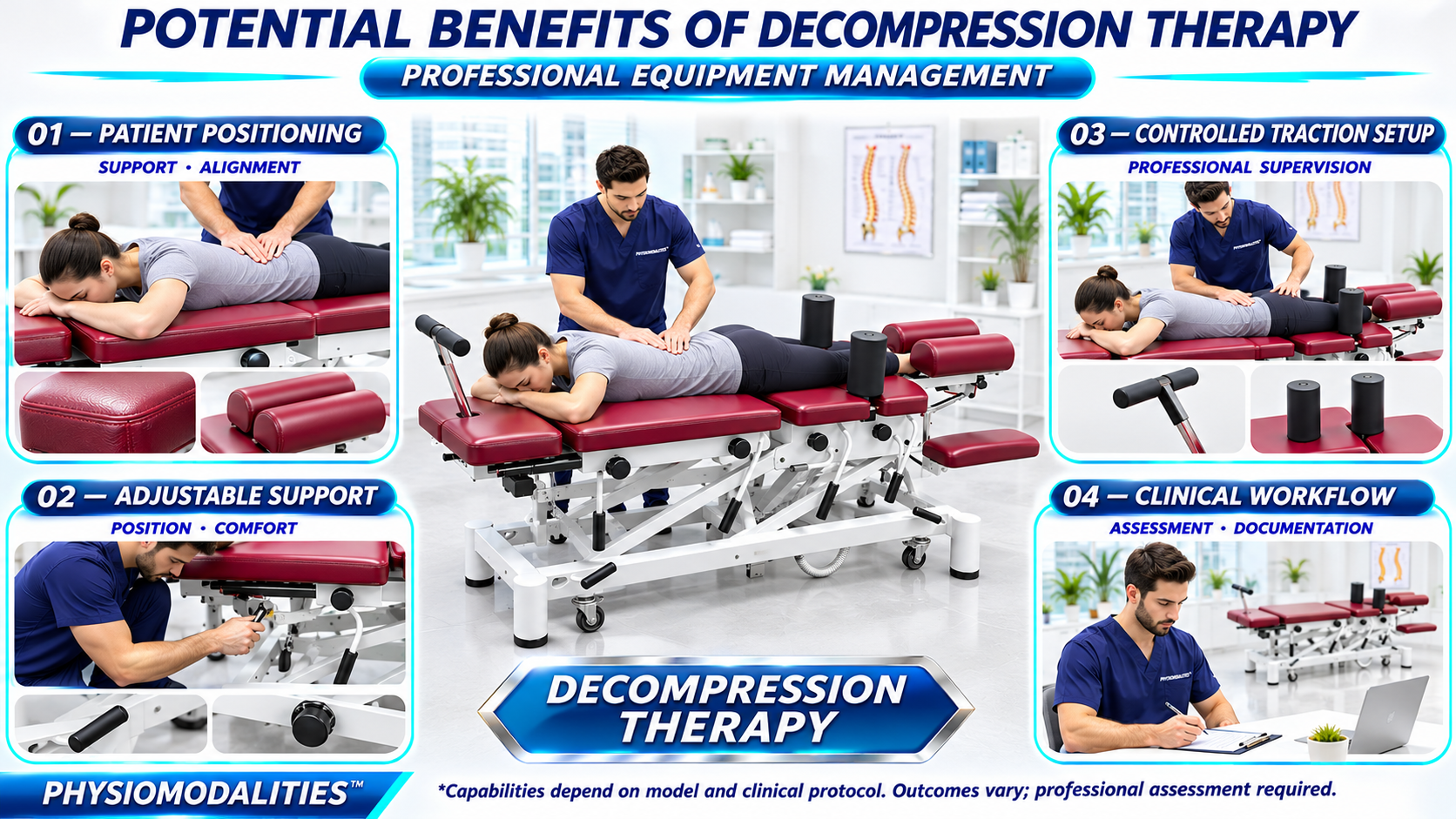
When appropriately selected for a clinical setting, the equipment may offer the following practical capabilities:
- Dedicated platform for spinal treatment procedures
- Support for controlled patient positioning
- Adjustable treatment configuration on applicable models
- Manual or powered traction options, depending on design
- Integration into selected chiropractic treatment protocols
- Support for practitioner-assisted rehabilitation procedures
- Professional equipment for specialised clinical environments
These are equipment-related capabilities, not guaranteed clinical outcomes.
Spinal Decompression Treatment Table for Chiropractic Clinics
A Spinal Decompression Chiropractic Treatment Table may be considered by healthcare facilities that provide specialised spinal treatment and rehabilitation services.
Potential professional settings include:
- Chiropractic clinics
- Physiotherapy practices
- Orthopaedic rehabilitation centres
- Spinal care facilities
- Sports medicine clinics
- Hospitals
- Multidisciplinary rehabilitation centres
Before purchasing, clinics should confirm the table’s traction mechanism, adjustment options, patient capacity, dimensions, and intended clinical applications.
Manual vs Motorised Spinal Decompression Treatment Table
Spinal decompression tables may use different adjustment systems. The main difference is how the practitioner controls the table and its traction mechanism.
| Feature | Manual Table | Motorised Table |
|---|---|---|
| Operation | Practitioner-controlled | Electrically powered |
| Adjustment | Manual mechanism | Motor-assisted mechanism |
| Traction Control | Depends on manual design | Depends on electronic control system |
| Treatment Settings | Based on available manual adjustments | May offer programmable settings |
| Power Requirement | May not require electricity | Generally requires electricity |
| Positioning | Manually adjusted | Motor-assisted or electronically adjusted |
| Maintenance | Mechanical inspection | Mechanical and electrical maintenance |
The correct option depends on the practitioner’s treatment approach, workflow, and patient requirements.
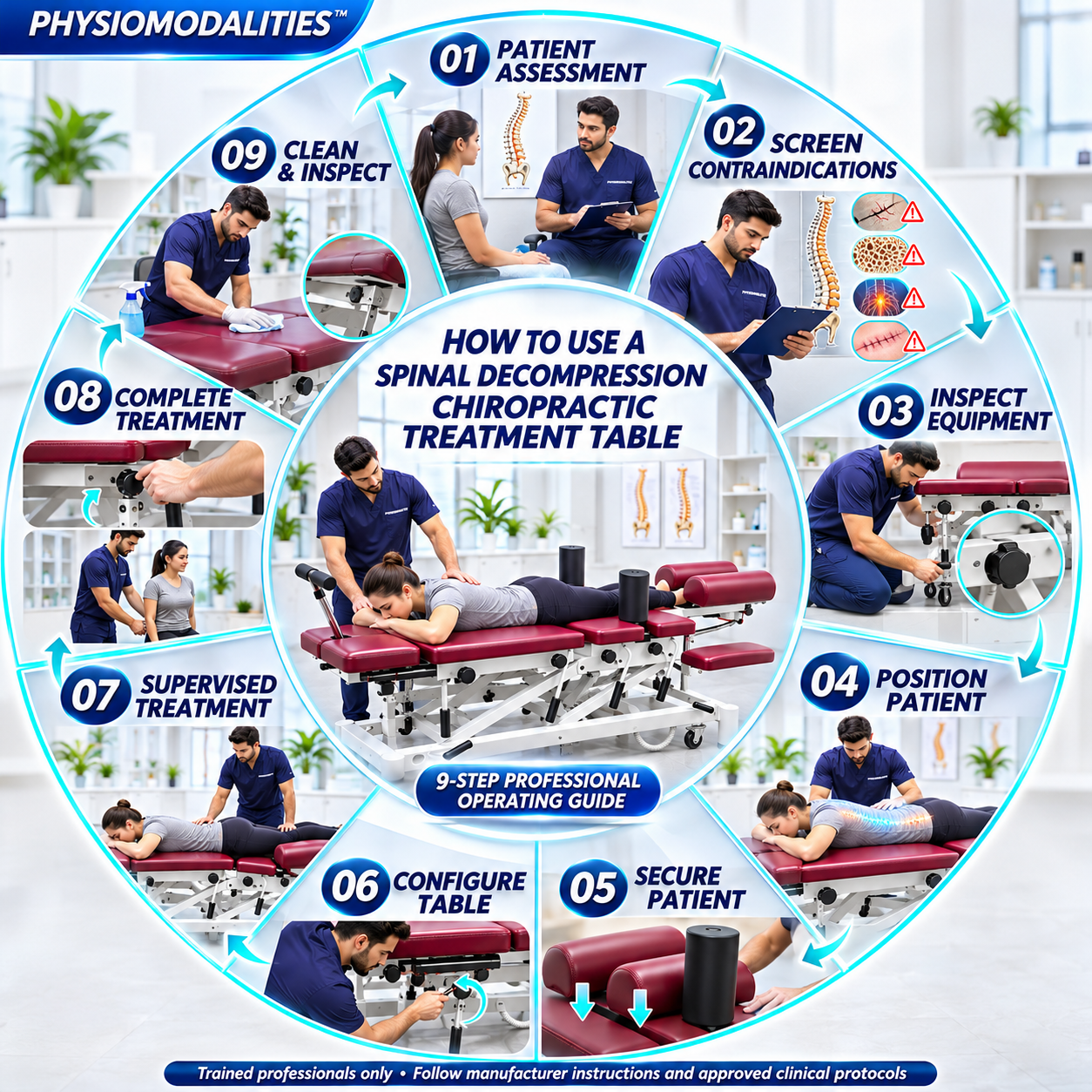
How to Use a Spinal Decompression Chiropractic Treatment Table
The equipment should only be used by trained chiropractors, physiotherapists, or qualified healthcare professionals.
Step 1: Patient Assessment
Review the patient’s symptoms, medical history, diagnosis, and suitability for the intended procedure.
Step 2: Screen for Contraindications
Check for relevant conditions such as suspected fractures, spinal instability, severe osteoporosis, acute neurological symptoms, or recent surgery.
Step 3: Inspect the Equipment
Check the table structure, supports, adjustment mechanisms, straps, locks, and controls before use.
Step 4: Position the Patient
Assist the patient onto the table and position them according to the treatment protocol.
Step 5: Secure the Patient
Use the available support components according to the manufacturer’s instructions. Ensure that they are comfortable and correctly positioned.
Step 6: Configure the Table
Adjust the table sections and traction settings, if available, according to the selected procedure.
Step 7: Begin Supervised Treatment
Start the procedure gradually and monitor the patient’s response throughout the session.
Step 8: Complete the Treatment
Stop the traction mechanism and return the table to a safe position before helping the patient get off.
Step 9: Clean and Inspect
Clean patient-contact surfaces and inspect the equipment after the session.
Safety Precautions
- Operate the table only under qualified professional supervision.
- Conduct patient screening before spinal traction or decompression procedures.
- Follow the manufacturer’s instructions and treatment guidelines.
- Check locking mechanisms and support components before positioning the patient.
- Never exceed the specified patient weight capacity.
- Avoid excessive traction force or sudden adjustments.
- Use caution in patients with osteoporosis, spinal instability, recent surgery, or other relevant medical conditions.
- Do not proceed when contraindications have not been assessed.
- Stop treatment if significant pain, numbness, weakness, or unusual symptoms develop.
- Inspect the table regularly for mechanical wear or damage.
- Follow the recommended cleaning and maintenance schedule.
Technical Specifications
The following specifications should be confirmed from the exact manufacturer’s datasheet.
| Specification | Details |
|---|---|
| Product Name | Spinal Decompression Chiropractic Treatment Table |
| Equipment Type | Chiropractic and Spinal Rehabilitation Table |
| Operation | Manual / Motorised, Model-Dependent |
| Traction Mechanism | Model-Dependent |
| Adjustment System | Manual / Electronic, Model-Dependent |
| Table Sections | Model-Dependent |
| Patient Positioning | Adjustable, Model-Dependent |
| Head and Body Supports | Model-Dependent |
| Frame Material | Confirm with Manufacturer |
| Upholstery | Confirm with Manufacturer |
| Maximum Patient Weight | Confirm with Manufacturer |
| Table Dimensions | Confirm with Manufacturer |
| Height Adjustment | Model-Dependent |
| Power Supply | Confirm with Manufacturer |
| Safety Mechanisms | Model-Dependent |
| Intended Application | Professional Chiropractic and Rehabilitation Use |
| Intended Operator | Trained Healthcare Professional |
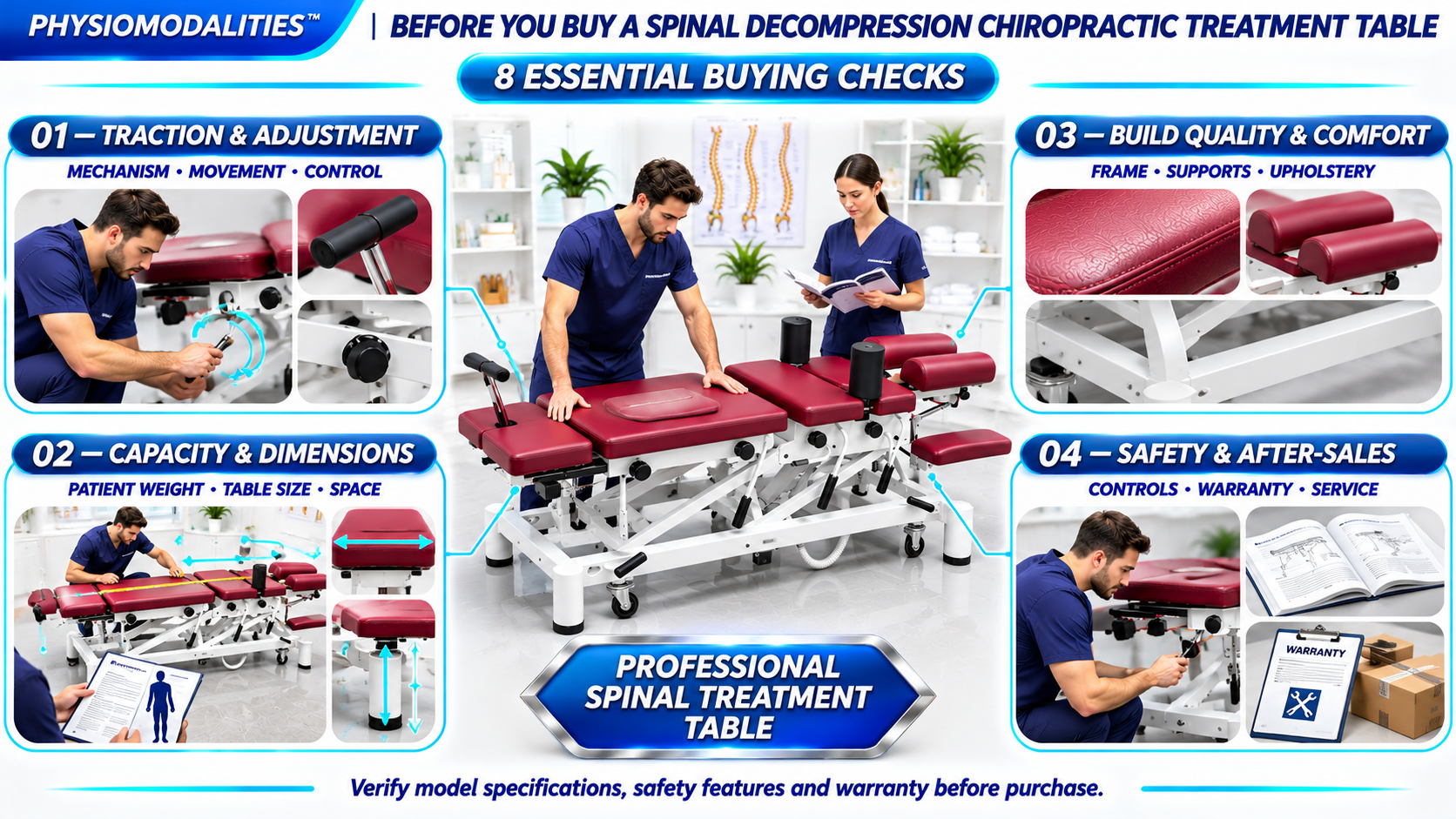
Things to Consider Before Buying
Traction Mechanism
Check whether the table uses manual traction, motorised traction, or another adjustment mechanism.
Adjustment Options
Review the available table movements, positioning options, and adjustment range.
Patient Weight Capacity
Confirm the maximum supported patient weight from the manufacturer.
Table Construction
Check the frame material, structural stability, joints, and overall build quality.
Patient Support System
Review the headrest, body supports, straps, and cushioning available with the table.
Control System
For motorised models, check the control interface, adjustment functions, and emergency-stop features.
Dimensions and Clinic Space
Confirm that the table dimensions and operating clearance are suitable for the treatment room.
Warranty and After-Sales Support
Review warranty terms, maintenance requirements, spare parts, and technical support availability.
Who Should Operate a Spinal Decompression Chiropractic Treatment Table?
The table should be operated by qualified chiropractors, physiotherapists, or appropriately trained healthcare professionals with knowledge of spinal anatomy, patient assessment, traction procedures, and treatment precautions.
Why Choose PHYSIOMODALITIES™?
PHYSIOMODALITIES™ provides professional physiotherapy, chiropractic, and rehabilitation equipment for healthcare facilities.
When selecting a Spinal Decompression Chiropractic Treatment Table, clinics should evaluate its adjustment mechanism, traction capabilities, patient support system, safety features, structural quality, and suitability for their clinical requirements.
PHYSIOMODALITIES ENTERPRISES aims to support healthcare professionals with equipment for specialised treatment and rehabilitation environments.
Conclusion
The Spinal Decompression Chiropractic Treatment Table is specialised clinical equipment designed to support patient positioning and selected spinal traction or decompression procedures. Depending on its configuration, it may offer manual or motorised adjustment options, patient support components, and controlled positioning capabilities.
Before purchasing, verify the traction mechanism, adjustment functions, patient weight capacity, table dimensions, safety features, warranty, and technical specifications. Proper patient assessment and trained professional operation are essential for responsible clinical use.
Frequently Asked Questions
1. What is a Spinal Decompression Chiropractic Treatment Table?
It is a specialised treatment table designed to support patient positioning and selected spinal traction or decompression procedures.
2. Is the table manual or motorised?
Both configurations may be available, depending on the manufacturer and model.
3. Who can operate this treatment table?
Qualified chiropractors, physiotherapists, and appropriately trained healthcare professionals should operate it.
4. Is spinal decompression suitable for every patient?
No. Suitability depends on the patient’s condition, medical history, contraindications, and clinical assessment.
5. What should I check before buying?
Review the traction mechanism, adjustment options, patient capacity, dimensions, safety features, warranty, and technical support.