
The Manual Chiropractic Bed is a specialised chiropractic and rehabilitation table designed to support manual spinal traction, controlled positioning, and therapist-assisted techniques. It is intended for professional use in chiropractic clinics, physiotherapy centres, orthopaedic facilities, and rehabilitation environments.
Unlike motorised systems, a manual chiropractic bed uses therapist-controlled mechanical adjustments to position and support the patient during treatment. Depending on the model, it may feature adjustable sections, movable supports, manual traction controls, and a specialised table structure.
PHYSIOMODALITIES™ provides professional physiotherapy and rehabilitation equipment for clinical environments.
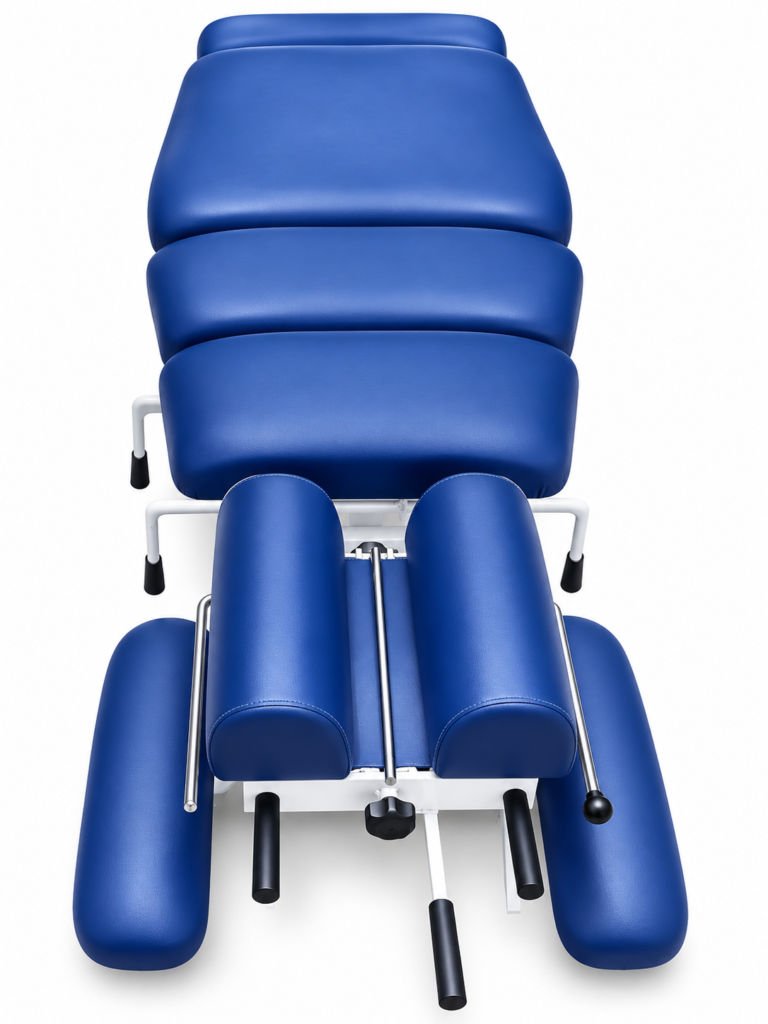
What Is a Manual Chiropractic Bed?
A Manual Chiropractic Bed is a treatment table designed to assist trained practitioners in performing selected manual spinal mobilisation and traction techniques.
The bed provides a stable platform for patient positioning and may include adjustable sections to accommodate different treatment positions. Its manual adjustment mechanism allows the practitioner to control the table configuration according to the treatment technique and patient’s requirements.
It may be considered for professional chiropractic practices, spinal rehabilitation facilities, and physiotherapy clinics.
How Does a Manual Chiropractic Bed Work?
The bed supports therapist-assisted positioning and manual mechanical adjustments during selected spinal treatment procedures.
Manual Adjustment Mechanism
The practitioner adjusts the relevant table sections using the available manual controls or mechanisms.
Patient Positioning
The patient is positioned according to the prescribed treatment approach, with appropriate support for the body.
Controlled Traction Techniques
Depending on the design, the practitioner may use the table to assist with selected manual traction techniques.
Therapist-Controlled Operation
Treatment positioning and adjustments are performed by the practitioner rather than relying entirely on an automatic motorised system.
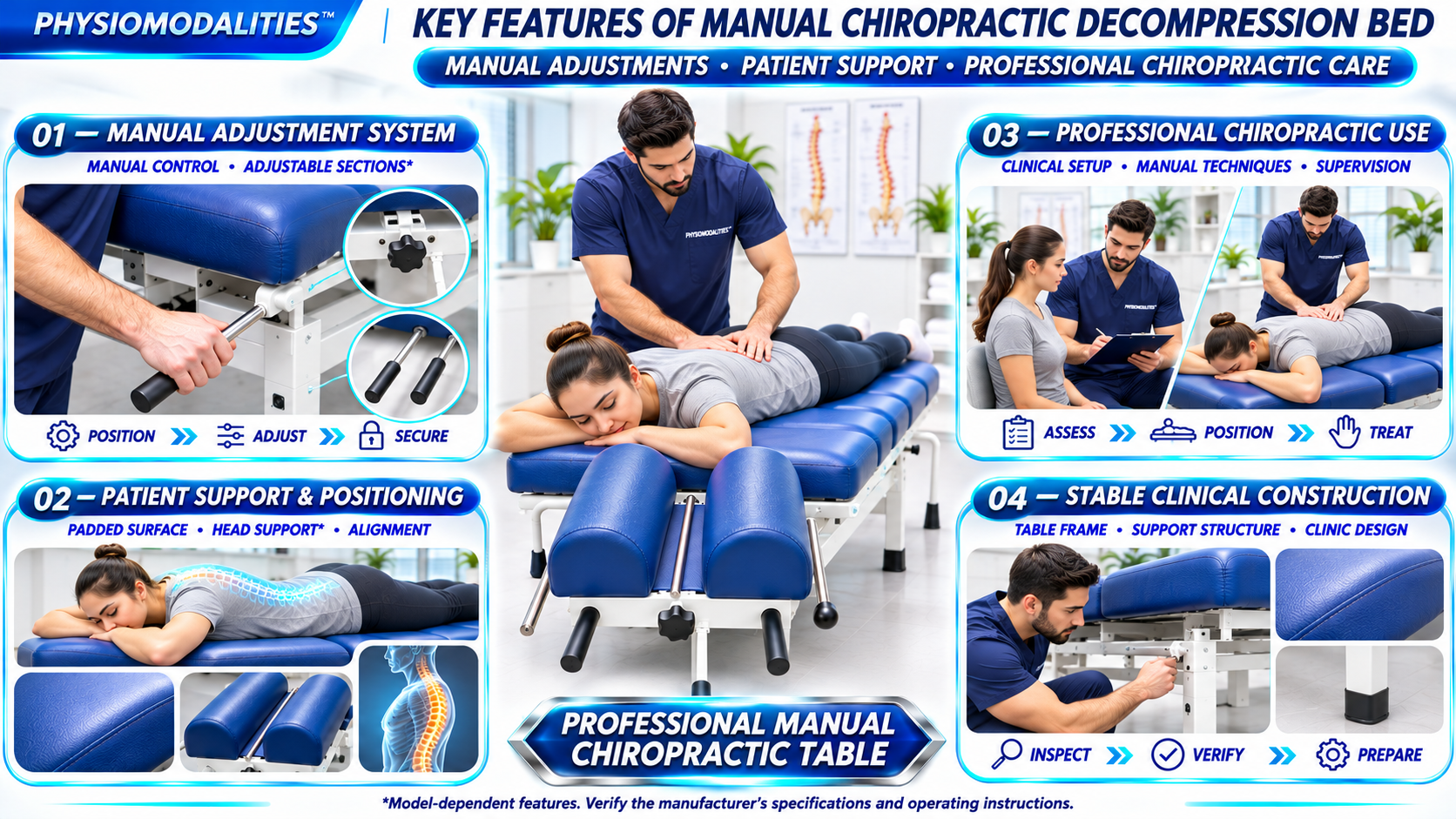
Key Features of Manual Chiropractic Bed
Features depend on the manufacturer and specific model.
- Manual adjustment mechanism
- Patient-support table structure
- Adjustable treatment sections on applicable models
- Therapist-controlled positioning
- Designed for chiropractic treatment environments
- Support for selected manual spinal techniques
- Stable clinical treatment platform
- Model-dependent head and body supports
- Manual control of applicable table movements
- Professional clinic-use design
Applications of Manual Chiropractic Bed
A Manual Chiropractic Bed may be used in professional settings for selected manual treatment and rehabilitation procedures.
Chiropractic Treatment
Designed to support practitioners performing selected chiropractic positioning and manual techniques.
Spinal Rehabilitation
May be incorporated into supervised spinal rehabilitation programs where appropriate.
Manual Spinal Traction
Certain table designs may assist trained practitioners with selected manual traction procedures.
Spinal Mobilisation Techniques
Adjustable table sections may support practitioner-assisted positioning during selected mobilisation techniques.
Physiotherapy and Orthopaedic Clinics
The bed may be considered for facilities providing manual therapy and musculoskeletal rehabilitation services.
Important: The suitability of any or traction technique depends on the patient’s diagnosis, clinical assessment, contraindications, and the exact table design. The bed does not independently diagnose or treat spinal conditions.
Potential Benefits of Manual Chiropractic Bed
The equipment may offer practical advantages in professional treatment environments:
- Therapist-controlled manual adjustments
- Support for selected spinal treatment techniques
- Flexible patient positioning on applicable models
- No dependence on an automatic traction motor for manual adjustments
- Integration into chiropractic and physiotherapy settings
- Dedicated treatment platform for practitioner-assisted procedures
These are equipment-related capabilities, not guaranteed treatment outcomes.

Manual Chiropractic Bed for Clinics
Before purchasing, clinics should confirm the bed’s adjustment mechanism, supported treatment positions, patient weight capacity, dimensions, and compatibility with their intended procedures.
Manual vs Motorised Chiropractic Bed
Both types are designed for professional treatment environments, but their adjustment mechanisms differ.
| Feature | Manual Chiropractic Bed | Motorised Bed |
|---|---|---|
| Adjustment Method | Manual | Electrically powered |
| Operation | Practitioner-controlled | Motor-controlled |
| Power Requirement | Depends on model; manual movement may not require electricity | Generally requires electrical power |
| Treatment Settings | Based on available manual adjustments | May offer programmable settings |
| Positioning | Manually adjusted | Motor-assisted or electronically adjusted |
| Maintenance | Depends on mechanical design | Includes mechanical and electrical components |
| Clinical Use | Selected manual techniques | Selected motorised traction protocols |
The appropriate option depends on the practitioner’s preferred techniques, patient requirements, and clinical workflow.
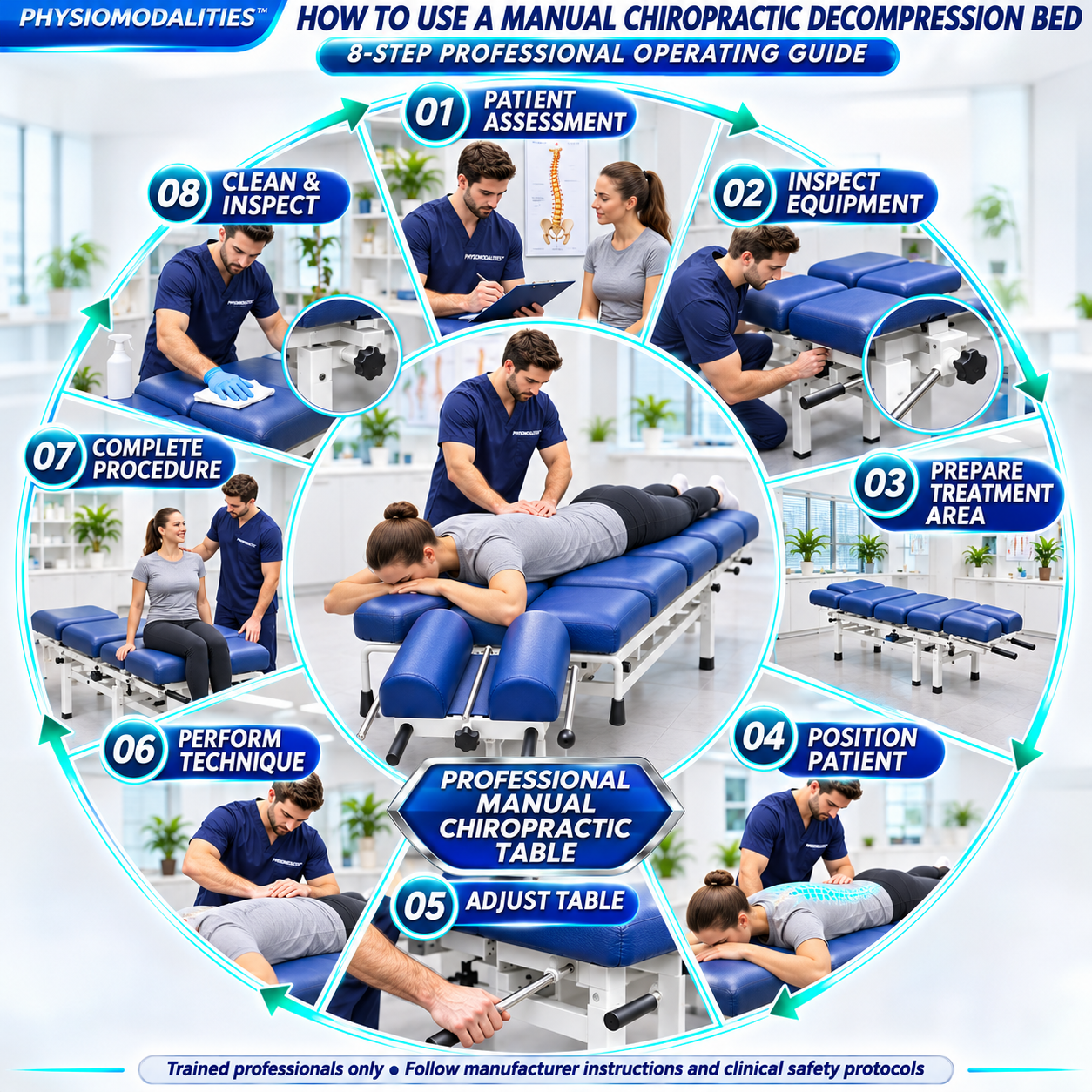
How to Use a Manual Chiropractic Bed
The bed should be used only by trained chiropractic or healthcare professionals who understand spinal anatomy, patient screening, and manual therapy safety.
Step 1: Patient Assessment
Review the patient’s medical history, symptoms, diagnosis, and suitability for the intended procedure.
Step 2: Check the Equipment
Inspect the bed structure, adjustment mechanisms, locks, supports, and moving sections.
Step 3: Prepare the Treatment Area
Ensure that the bed is positioned on a stable surface with sufficient space for practitioner movement.
Step 4: Position the Patient
Assist the patient into the appropriate position according to the treatment technique and manufacturer’s instructions.
Step 5: Adjust the Table
Use the manual adjustment mechanism to configure the table sections as required.
Step 6: Perform the Selected Technique
The trained practitioner carries out the approved manual procedure while monitoring the patient’s response.
Step 7: Complete the Procedure
Return the bed to a safe resting position before helping the patient get off the table.
Step 8: Inspect and Maintain
Clean the contact surfaces and check the adjustment mechanisms after use.
Safety Precautions
- Use the bed only under trained professional supervision.
- Perform patient screening before spinal traction or manual treatment.
- Follow the manufacturer’s operating and maintenance instructions.
- Check all locks and adjustment mechanisms before positioning the patient.
- Confirm the patient’s position and comfort throughout the procedure.
- Never exceed the specified patient weight capacity.
- Avoid sudden or excessive manual force.
- Do not use on patients with suspected spinal fractures or other contraindications unless specifically cleared by the treating specialist.
- Use additional caution with osteoporosis, spinal instability, recent spinal surgery, or acute neurological symptoms.
- Stop the procedure if significant pain, numbness, weakness, or unusual symptoms occur.
- Inspect the bed regularly for loose fittings, damaged upholstery, and mechanical wear.
Technical Specifications
The exact technical specifications should be confirmed from the manufacturer’s datasheet for the selected model.
| Specification | Details |
|---|---|
| Product Name | Manual Chiropractic Bed |
| Equipment Type | Chiropractic Treatment Table |
| Operation | Manual |
| Adjustment Mechanism | Model-Dependent |
| Table Sections | Model-Dependent |
| Head Support | Model-Dependent |
| Patient Positioning | Adjustable, Model-Dependent |
| Frame Material | Confirm with Manufacturer |
| Upholstery | Confirm with Manufacturer |
| Maximum Patient Weight | Confirm with Manufacturer |
| Dimensions | Confirm with Manufacturer |
| Height Adjustment | Model-Dependent |
| Power Requirement | Depends on Model |
| Intended Application | Chiropractic and Rehabilitation Use |
| Intended Operator | Trained Healthcare Professional |
Things to Consider Before Buying
Adjustment Mechanism
Check how the table sections move and lock into position.
Patient Weight Capacity
Confirm the maximum supported patient weight from the manufacturer.
Table Dimensions
Review the length, width, and height to ensure the bed suits the clinic and intended patient population.
Upholstery and Comfort
Consider the quality of the cushioning, upholstery, and patient-contact surfaces.
Stability and Construction
Check the frame, joints, locking systems, and overall structural stability.
Available Supports
Confirm whether headrests, body supports, straps, or other accessories are included.
Maintenance and Warranty
Review servicing requirements, spare-part availability, warranty coverage, and after-sales support.
Who Should Operate a Manual Chiropractic Bed?
The bed should be operated by qualified chiropractors, physiotherapists, or other appropriately trained healthcare professionals who understand spinal anatomy, manual treatment procedures, patient assessment, and contraindications.
Why Choose PHYSIOMODALITIES™?
PHYSIOMODALITIES™ provides physiotherapy, chiropractic, and rehabilitation equipment for professional healthcare environments.
When selecting a Manual Chiropractic Bed, clinics should consider its manual adjustment system, structural stability, patient support, safety mechanisms, and suitability for their treatment requirements.
PHYSIOMODALITIES ENTERPRISES aims to support healthcare professionals and rehabilitation facilities with equipment for clinical practice.
Conclusion
The Manual Chiropractic Bed is a specialised treatment table designed to support therapist-controlled positioning and selected manual spinal treatment techniques. Its manual adjustment mechanism and patient-support structure make it a consideration for chiropractic clinics, physiotherapy centres, and rehabilitation facilities.
Before purchasing, verify the adjustment mechanism, table dimensions, patient weight capacity, available supports, construction quality, warranty, and maintenance requirements. Safe operation requires proper patient assessment and a trained professional.
Frequently Asked Questions
1. What is a Manual Chiropractic Bed?
It is a specialised treatment table designed to support manual chiropractic positioning and selected spinal treatment techniques.
2. Does a manual bed require electricity?
Manual adjustment mechanisms may operate without electricity, but confirm the exact model’s requirements.
3. Who can operate this bed?
Qualified chiropractors, physiotherapists, or appropriately trained healthcare professionals should operate it.
4. What is the difference between manual and motorised beds?
Manual beds use practitioner-controlled adjustments, while motorised beds use powered mechanisms.
5. Is the bed suitable for every patient?
No. Patient suitability depends on clinical assessment, medical history, contraindications, and the intended treatment technique.