
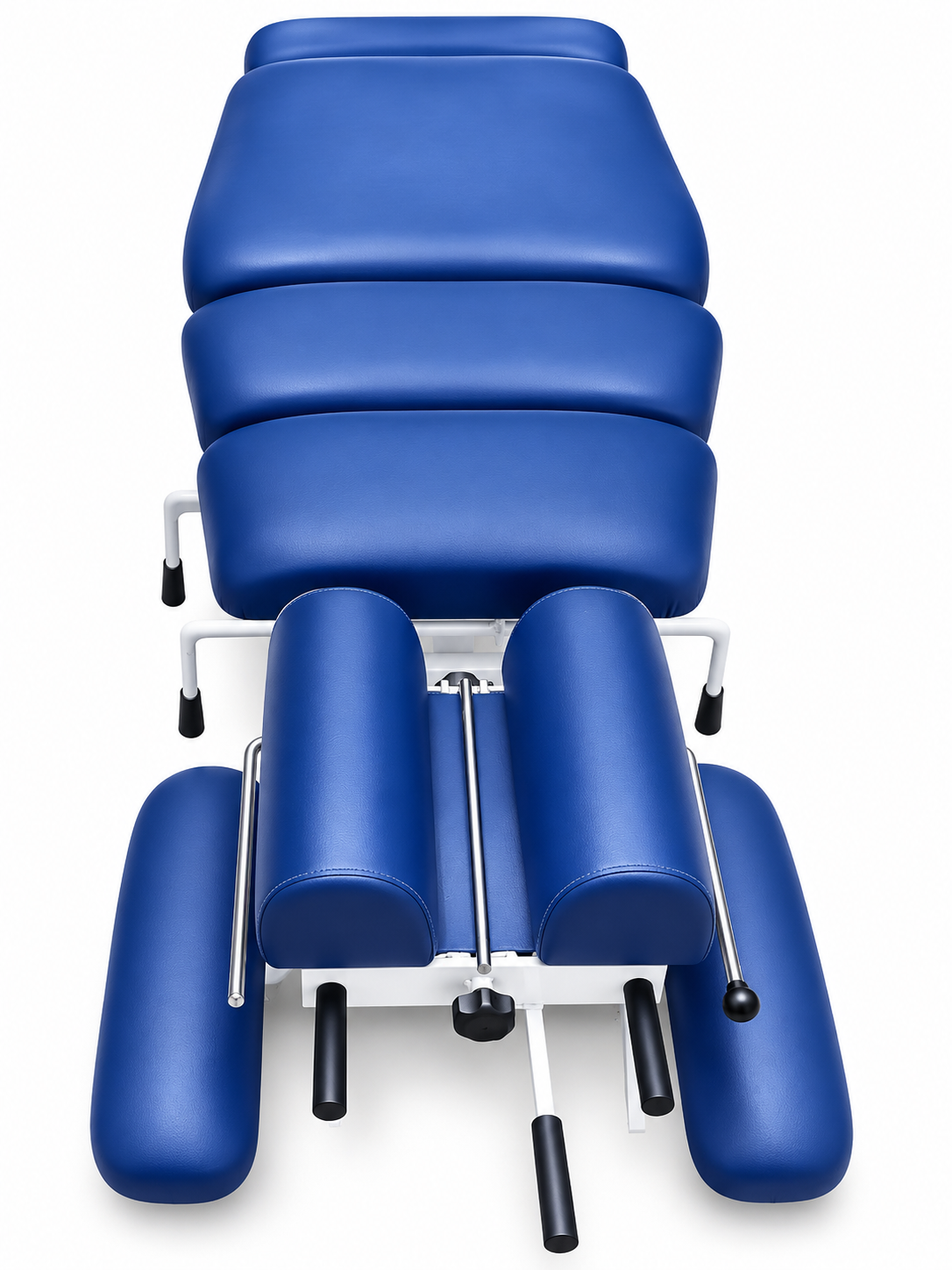
Manual Chiropractic Bed-Professional Chiropractic Treatment Table
Introduction to Manual Chiropractic Bed
The Manual Chiropractic Bed is a specialized treatment table designed for chiropractic care, manual therapy, spinal assessment, and selected musculoskeletal rehabilitation procedures. It provides a supportive platform that allows trained chiropractors and physiotherapists to position patients and perform different manual treatment techniques.
Chiropractic treatment often involves assessing spinal alignment, joint mobility, posture, and musculoskeletal function. A suitable treatment table helps practitioners maintain appropriate patient positioning and access the required body regions during clinical procedures.
A Manual Chiropractic Bed generally uses manual adjustment mechanisms rather than fully automated motorized controls. Depending on the model, it may include adjustable sections, head supports, body positioning components, movable table sections, and other mechanical features.
For chiropractic clinics, physiotherapy centres, hospitals, and rehabilitation facilities, a Manual Chiropractic Bed can be an important part of a professional treatment setup.
PHYSIOMODALITIES ENTERPRISES provides physiotherapy, rehabilitation, orthopedic, and healthcare equipment for professional clinical environments.
What Is a Manual Chiropractic Bed?
A Manual Chiropractic Bed is a purpose-designed treatment table used by healthcare professionals for chiropractic procedures and selected manual therapy applications.
Unlike an ordinary examination couch, a chiropractic treatment table may incorporate specialized sections and adjustment mechanisms to support different patient positions and practitioner techniques.
Depending on the product configuration, the table may offer:
- Supportive patient treatment surface
- Manual height or section adjustments
- Adjustable head section
- Movable table components
- Patient positioning support
- Mechanical adjustment arrangements
- Upholstered treatment surface
The exact features vary by manufacturer and model. Buyers should confirm the available functions through the product specifications.
Importance of a Manual Chiropractic Bed in Clinical Practice
A suitable chiropractic treatment table supports the daily workflow of professionals performing spinal assessment and manual therapy.
1. Patient Positioning
The treatment table provides a stable surface for positioning patients during examination and selected manual procedures.
2. Practitioner Accessibility
A suitable table design helps practitioners access different body regions during clinical assessment and treatment.
3. Support for Manual Therapy
The bed may support selected chiropractic techniques and other manual therapy procedures, depending on its construction.
4. Organized Clinical Setup
A dedicated chiropractic bed helps create a structured treatment environment for professional healthcare facilities.
5. Supports Rehabilitation Services
It can complement other physiotherapy equipment used for mobility training, therapeutic exercises, and musculoskeletal rehabilitation.
Working Principle of a Manual Chiropractic Bed
The Manual Chiropractic Bed works through its mechanical structure and manual adjustment system. It provides a treatment surface and positioning arrangements that allow practitioners to perform selected procedures.
1. Patient Assessment
The practitioner evaluates the patient’s condition, symptoms, mobility, and treatment requirements.
2. Patient Positioning
The patient is placed on the table in the position required for the selected examination or manual therapy procedure.
3. Manual Table Adjustment
The practitioner adjusts the available sections or mechanical components according to the table design and manufacturer’s instructions.
4. Chiropractic or Manual Therapy Procedure
The qualified professional performs the selected procedure using appropriate techniques and controlled movements.
5. Patient Monitoring
The patient’s comfort and response are monitored throughout the procedure.
6. Post-Treatment Assessment
The practitioner reviews the patient’s response and determines the next step in the treatment plan.
Common Applications of Manual Chiropractic Bed
A Manual Chiropractic Bed may be used in professional facilities for selected assessment and treatment procedures.
1. Chiropractic Treatment
It provides a dedicated surface for practitioners performing chiropractic assessment and appropriate manual procedures.
2. Spinal Assessment
The table may support patient positioning during selected cervical, thoracic, and lumbar spine assessments.
3. Manual Therapy
It can be used as a treatment platform for suitable manual therapy techniques involving muscles, joints, and surrounding soft tissues.
4. Musculoskeletal Rehabilitation
The bed may support patient positioning during selected rehabilitation procedures for musculoskeletal conditions.
5. Postural Assessment
Practitioners may use a suitable treatment table to examine posture and selected movement patterns.
6. Orthopedic Physiotherapy
It may complement clinical equipment used in orthopedic and musculoskeletal physiotherapy departments.
The suitability of each application depends on the specific table design and the practitioner’s professional assessment.
Features of a Manual Chiropractic Bed
The features of a Manual Chiropractic Bed depend on the model and manufacturer. Important aspects to evaluate include:
Strong Frame Construction
A stable frame is important for supporting patients and routine professional clinical use.
Supportive Upholstery
The treatment surface should provide suitable patient support and be practical for regular cleaning.
Manual Adjustment Mechanism
The available manual controls may allow practitioners to adjust specific sections of the table.
Adjustable Head Support
Some models provide a movable or adjustable head section for patient positioning.
Sectional Table Design
Certain chiropractic beds include multiple sections that can be adjusted independently.
Patient Positioning Components
The design may include supports that help position the patient for selected treatment procedures.
Clinical-Use Construction
The table should be designed for regular use in chiropractic, physiotherapy, and rehabilitation environments.
These are selection considerations, not confirmed specifications of every Manual Chiropractic Bed. Verify the actual product configuration before publishing model-specific claims.
Benefits of a Manual Chiropractic Bed
Dedicated Chiropractic Treatment Surface
A specialized treatment table provides a suitable platform for selected chiropractic and manual therapy procedures.
Manual Practitioner Control
Manual adjustment mechanisms allow practitioners to manage the supported table functions directly.
Supports Patient Positioning
The table helps practitioners position patients according to the selected clinical procedure.
Professional Clinical Appearance
A dedicated chiropractic bed contributes to an organized treatment environment.
Complements Physiotherapy Equipment
It can be included in a broader clinical setup alongside rehabilitation, exercise, and electrotherapy equipment.
Suitable for Different Healthcare Facilities
Depending on its design, the table may be appropriate for chiropractic clinics, physiotherapy centres, and rehabilitation facilities.
Manual Chiropractic Bed vs Regular Physiotherapy Treatment Table
| Feature | Manual Chiropractic Bed | Regular Physiotherapy Table |
|---|---|---|
| Main purpose | Chiropractic and selected manual therapy procedures | General physiotherapy and patient examination |
| Table design | May include specialized adjustable sections | Often has a simpler treatment surface |
| Adjustment | Manual mechanisms, depending on model | Fixed or adjustable, depending on model |
| Patient positioning | Designed around chiropractic treatment requirements | Supports general clinical positioning |
| Clinical application | Chiropractic and manual therapy | General physiotherapy and rehabilitation |
The actual differences depend on the construction and features of the specific models being compared.
Who Can Use a Manual Chiropractic Bed?
A Manual Chiropractic Bed is intended for professional healthcare environments where trained practitioners provide appropriate clinical services.
It may be considered for:
- Chiropractic Clinics
- Physiotherapy Clinics
- Orthopedic Hospitals
- Rehabilitation Centres
- Sports Therapy Facilities
- Manual Therapy Clinics
- Multispecialty Hospitals
- Medical Colleges
- Healthcare Training Institutions
- Professional Rehabilitation Facilities
Practitioners should operate the table according to their qualifications, professional scope, and manufacturer instructions.
Safety Guidelines for Manual Chiropractic Bed
Patient safety is important during chiropractic and manual therapy procedures. The practitioner should assess each patient before selecting a treatment technique.
- Check the patient’s medical history.
- Confirm that the selected procedure is clinically appropriate.
- Follow the manufacturer’s positioning instructions.
- Check the table’s stability before use.
- Do not exceed the specified patient weight capacity.
- Use adjustment mechanisms only as instructed.
- Avoid sudden or excessive force.
- Monitor patient comfort during treatment.
- Inspect moving parts and mechanical components regularly.
- Clean the treatment surface according to manufacturer recommendations.
Conditions Requiring Additional Clinical Assessment
Particular caution or specialist clearance may be necessary for patients with suspected fractures, severe osteoporosis, spinal instability, recent surgery, spinal infection, malignancy, significant neurological symptoms, or other relevant medical conditions.
Cervical and spinal manipulation procedures require appropriate professional training and patient screening.
How to Choose the Right Manual Chiropractic Bed
1. Frame Quality
Check the construction, stability, material, and suitability for regular clinical use.
2. Table Adjustment
Understand which sections can be adjusted and how the manual mechanisms operate.
3. Patient Support
Review the treatment surface, head support, and other positioning arrangements.
4. Weight Capacity
Confirm the maximum patient weight supported by the manufacturer.
5. Dimensions
Check the table’s length, width, height, and space requirements.
6. Ease of Cleaning
Choose a surface suitable for routine clinical cleaning and maintenance.
7. Safety and Maintenance
Review the operating instructions, mechanical inspection requirements, and servicing recommendations.
8. Warranty and Technical Support
Confirm warranty coverage, spare-part availability, and after-sales support before purchasing.
Why Choose PHYSIOMODALITIES ENTERPRISES?
PHYSIOMODALITIES ENTERPRISES provides professional physiotherapy, electrotherapy, rehabilitation, orthopedic, and healthcare equipment for clinics, hospitals, and healthcare institutions.
When selecting a Manual Chiropractic Bed, healthcare facilities should consider the table’s construction, positioning arrangements, manual adjustment features, safety requirements, and suitability for their intended procedures.
PHYSIOMODALITIES ENTERPRISES supports healthcare professionals and institutions in exploring equipment options for their clinical requirements.
Buyers should confirm the specific model’s technical specifications, available features, warranty, and service support before purchase.
Conclusion
The Manual Chiropractic Bed is specialized clinical furniture designed to support patient positioning, chiropractic assessment, and selected manual therapy procedures.
Its manual adjustment arrangements and treatment surface can help qualified practitioners organize their clinical workflow and perform appropriate procedures in a professional setting.
For chiropractic clinics, physiotherapy centres, orthopedic hospitals, and rehabilitation facilities, selecting the right table requires careful evaluation of construction quality, adjustment mechanisms, patient support, weight capacity, and maintenance requirements.
A Manual Chiropractic Bed should always be used according to its intended purpose and manufacturer instructions by appropriately trained professionals.
Frequently Asked Questions (FAQs)
1. What is a Manual Chiropractic Bed?
A Manual Chiropractic Bed is a specialized treatment table used for chiropractic assessment, patient positioning, and selected manual therapy procedures.
2. What is the main purpose of a Manual Chiropractic Bed?
Its main purpose is to provide a supportive and suitable treatment surface for practitioners performing chiropractic and manual therapy procedures.
3. Is a Manual Chiropractic Bed motorized?
Generally, manual models use mechanical adjustment arrangements rather than fully motorized controls. Specific features depend on the model.
4. Who can use a Manual Chiropractic Bed?
Qualified chiropractors, physiotherapists, and appropriately trained healthcare professionals can use it within their professional scope.
5. Can a Manual Chiropractic Bed be used in physiotherapy clinics?
Yes, it may be suitable for physiotherapy clinics that provide chiropractic, manual therapy, and selected musculoskeletal treatment services.
6. What features should I check before buying a Manual Chiropractic Bed?
Check its frame construction, adjustment mechanism, head support, treatment surface, dimensions, weight capacity, safety, and warranty.
7. Is a Manual Chiropractic Bed the same as a spinal decompression table?
No. A chiropractic bed is a treatment table, while a spinal decompression table is specifically designed to provide a decompression or traction mechanism. Some products may have overlapping functions, depending on their design.
8. Does a Manual Chiropractic Bed require electricity?
Many manual models do not require electricity for their primary adjustment functions. Confirm the specific product specifications.
9. How should a Manual Chiropractic Bed be maintained?
Inspect its frame and mechanical components regularly, clean the upholstery according to instructions, and follow the manufacturer’s maintenance schedule.
10. Where can I purchase a Manual Chiropractic Bed?
You can explore professional physiotherapy and rehabilitation equipment options through PHYSIOMODALITIES ENTERPRISES.



Reviews
There are no reviews yet.