
Single Slide Staircase is a physiotherapy and rehabilitation training equipment designed to support patients during stair-climbing practice, lower-limb rehabilitation, balance training, gait training, and functional mobility exercises. It provides a controlled staircase-style platform where patients can practice stepping movements under the supervision of a physiotherapist or rehabilitation professional.
Stair training is an important part of functional rehabilitation because everyday activities often require a person to step up and down different levels. A Single Slide Staircase allows therapists to introduce these movements in a controlled clinical environment and adjust the training according to the patient’s mobility, strength, balance, and rehabilitation goals.
PHYSIOMODALITIES™ provides practical physiotherapy and rehabilitation equipment for professional clinical environments. A Single Slide Staircase can be used alongside parallel bars, walking aids, standing frames, treatment couches, exercise equipment, and other rehabilitation devices to create a complete mobility-training area.
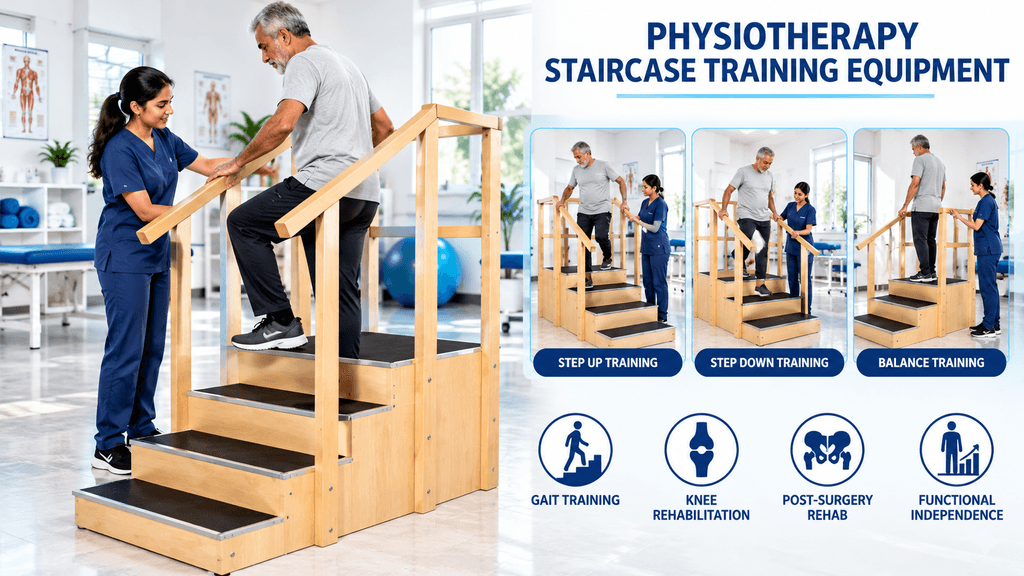
What Is a Single Slide Staircase?
A Single Slide Staircase is a rehabilitation staircase designed for therapeutic step-training activities. It typically consists of a series of steps arranged at a suitable height and width for supervised rehabilitation exercises.
The term “single slide” generally refers to a compact staircase-style rehabilitation configuration. The exact structure, step dimensions, handrail arrangement, frame material, and overall design can vary according to the manufacturer and model.
The equipment is intended to provide a structured environment in which a patient can practice stepping and stair-related movements before progressing to everyday environments.
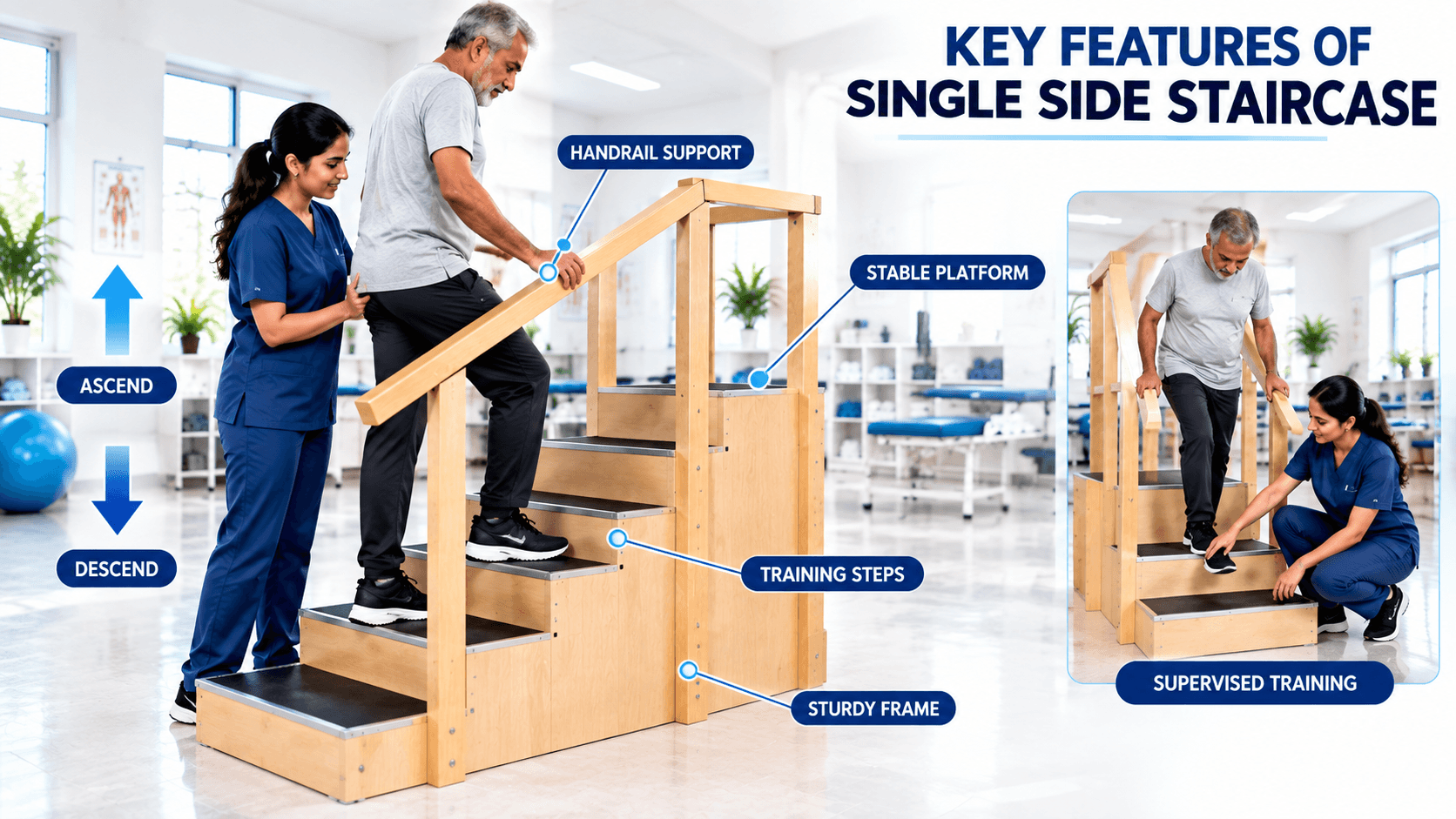
Key Features of Single Slide Staircase
Sturdy Construction
A professional rehabilitation staircase requires a stable structure capable of supporting repeated clinical use. Construction materials and finishing can vary according to the model.
Step Training Platform
The staircase provides multiple levels for practicing controlled stepping movements.
Handrail Support
Depending on the configuration, handrails may be provided to give the patient additional support during ascending and descending exercises.
Rehabilitation-Focused Design
The equipment is designed specifically for therapeutic mobility and functional training rather than ordinary household stair use.
Suitable for Supervised Training
A physiotherapist can monitor the patient’s movement, posture, balance, and stepping technique during the exercise.
Clinic-Friendly Equipment
A compact staircase can be incorporated into the exercise therapy or rehabilitation section of a physiotherapy clinic.
Applications of Single Slide Staircase
The Single Slide Staircase can be used in several areas of physiotherapy and rehabilitation.
Gait Training
Stair practice can be incorporated into gait rehabilitation programs for patients who need to improve functional stepping ability.
Lower-Limb Rehabilitation
The equipment can support selected exercises involving the hips, knees, ankles, and lower-limb movement.
Balance Training
Stepping onto different levels requires controlled weight transfer and balance. A physiotherapist can use the staircase as part of a supervised balance-training program.
Functional Mobility Training
Stair climbing is a common daily activity. Practicing the movement in a clinical setting can help therapists assess and train functional mobility.
Post-Injury Rehabilitation
After appropriate recovery from certain lower-limb injuries, stair practice may be introduced as part of a progressive rehabilitation program.
Neurological Rehabilitation
Patients undergoing neurological rehabilitation may use step-training exercises as part of a broader program for mobility, coordination, balance, and functional movement.
Sports Rehabilitation
Athletes returning to activity may incorporate step exercises into selected rehabilitation programs when clinically appropriate.
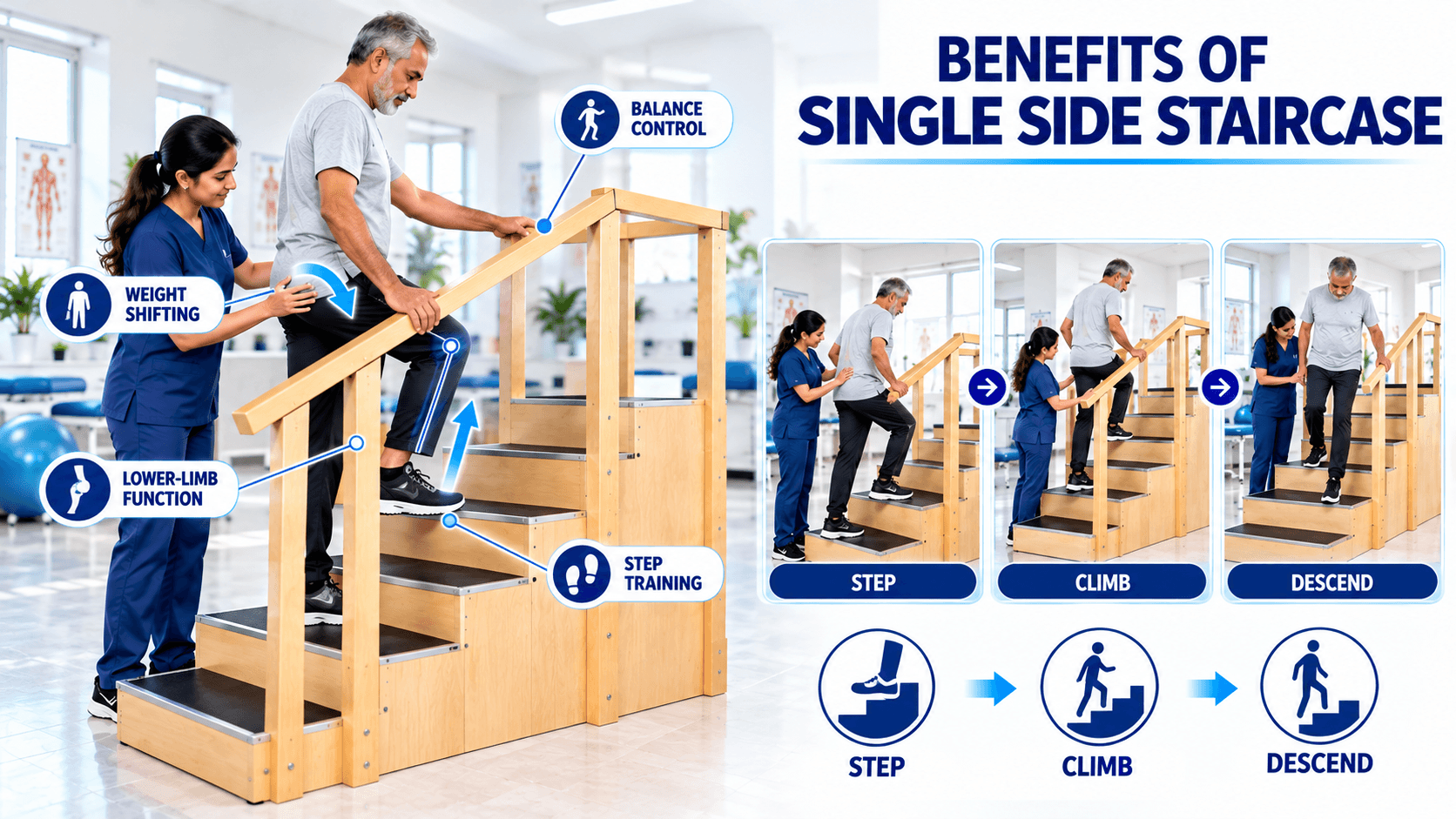
Benefits of Single Slide Staircase
When appropriately incorporated into a professional rehabilitation program, a Single Slide Staircase can provide several practical advantages:
- Supports supervised stair-climbing practice
- Provides a controlled environment for step training
- Helps therapists assess stepping ability
- Supports lower-limb functional exercises
- Can be incorporated into gait rehabilitation
- Allows controlled weight shifting
- Supports selected balance-training activities
- Useful for functional mobility assessment
- Helps introduce stair-related movements progressively
- Suitable for physiotherapy and rehabilitation clinics
The actual therapeutic benefit depends on the patient’s condition, exercise technique, level of assistance, and rehabilitation program.
Single Slide Staircase for Physiotherapy Clinics
A physiotherapy clinic may require dedicated equipment for different stages of rehabilitation. A Single Slide Staircase can form part of the functional mobility area of the clinic.
After completing appropriate assessment, the physiotherapist can use the staircase to observe how a patient manages stepping movements. The therapist may assess factors such as balance, lower-limb control, weight transfer, foot placement, posture, and need for assistance.
The exercise can then be modified according to the patient’s abilities and treatment goals.
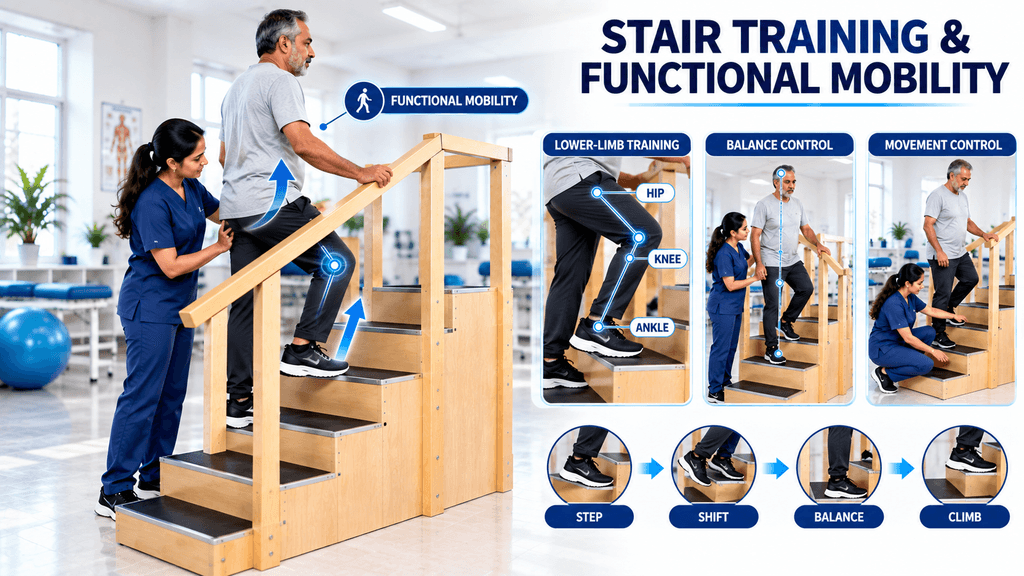
Stair Training and Functional Mobility
Stair climbing involves more than simply lifting one foot onto a step. It requires coordination between the lower limbs, trunk, balance system, and visual control.
During rehabilitation, a therapist may break the activity into smaller components. The patient can first practice controlled weight shifting and individual stepping movements before progressing to a more complete stair-climbing pattern.
The staircase provides a repeatable environment for this type of supervised training.
Single Slide Staircase for Lower-Limb Rehabilitation
Lower-limb rehabilitation may involve progressive exercises designed to improve movement control, strength, coordination, and functional mobility.
A staircase can be incorporated into selected programs involving:
- Step-up exercises
- Step-down exercises
- Controlled weight transfer
- Knee control
- Hip movement
- Ankle movement
- Functional strengthening
- Balance-related activities
- Stair-climbing practice
The physiotherapist determines the appropriate exercise intensity and level of assistance according to the patient’s condition.
Single Slide Staircase for Neurological Rehabilitation
Neurological rehabilitation can involve challenges related to balance, coordination, muscle control, and functional movement.
A staircase can provide a structured environment for practicing stepping movements under close supervision. The therapist can provide appropriate assistance and modify the exercise according to the patient’s capabilities.
Patients with significant balance or mobility limitations should only perform stair exercises when considered appropriate by their healthcare professional.
Single Slide Staircase for Balance Training
Stepping from one level to another requires the patient to shift body weight while maintaining stability.
A physiotherapist can use the staircase as part of a broader balance-training program, starting with an appropriate level of support and gradually modifying the activity as clinically suitable.
Handrails, therapist assistance, or other support methods may be used depending on the patient’s needs and the equipment configuration.
How to Use a Single Slide Staircase
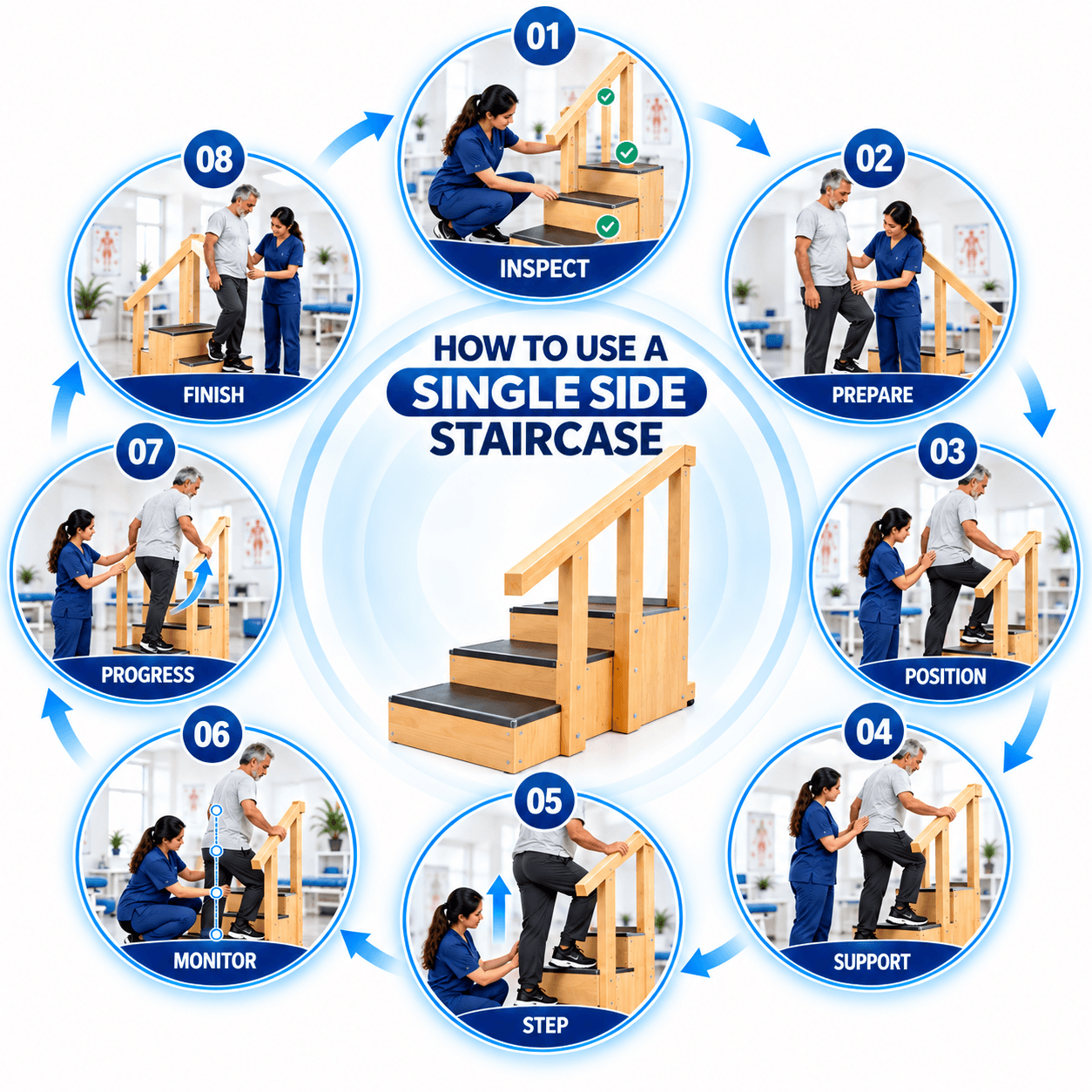
Step 1: Inspect the Equipment
Check the steps, frame, handrails, joints, and other structural components before beginning the session.
Step 2: Prepare the Patient
Ensure the patient is wearing suitable footwear and is ready for supervised mobility training.
Step 3: Position the Patient
Place the patient at the starting point of the staircase and explain the exercise.
Step 4: Provide Appropriate Support
Use handrails, therapist assistance, or other suitable support according to the patient’s mobility level.
Step 5: Begin Step Training
Ask the patient to perform the prescribed stepping movement at a controlled pace.
Step 6: Monitor Movement
Observe foot placement, posture, balance, weight transfer, and movement control throughout the exercise.
Step 7: Progress Gradually
The therapist can modify repetitions, assistance, direction, or exercise difficulty according to the patient’s progress.
Step 8: Finish Safely
Assist the patient when returning to the starting position or leaving the equipment.
Safety Precautions
Stair training should always be performed carefully because loss of balance can result in falls.
- Use the staircase under professional supervision.
- Inspect the equipment before every session.
- Ensure the staircase is positioned on a stable, level floor.
- Check that handrails are secure before use.
- Wear appropriate non-slip footwear.
- Do not exceed the manufacturer’s specified load capacity.
- Provide additional assistance to patients with poor balance or reduced mobility.
- Keep the surrounding area clear of obstacles.
- Do not allow patients to run or perform uncontrolled movements on the staircase.
- Start with an appropriate level of difficulty.
- Stop the exercise if the patient experiences unusual pain, dizziness, or excessive fatigue.
- Do not use damaged steps, handrails, or structural components.
Maintenance of Single Slide Staircase
Regular maintenance helps keep rehabilitation equipment safe and functional.
The steps and frame should be checked periodically for loose components, cracks, damage, or excessive wear. Handrails should be inspected to ensure that they remain securely attached.
The surface should be cleaned regularly using appropriate cleaning materials. Any damaged or unstable component should be repaired or replaced before the equipment is returned to clinical use.
Follow the manufacturer’s maintenance instructions for the specific model.
Who Can Use a Single Slide Staircase?
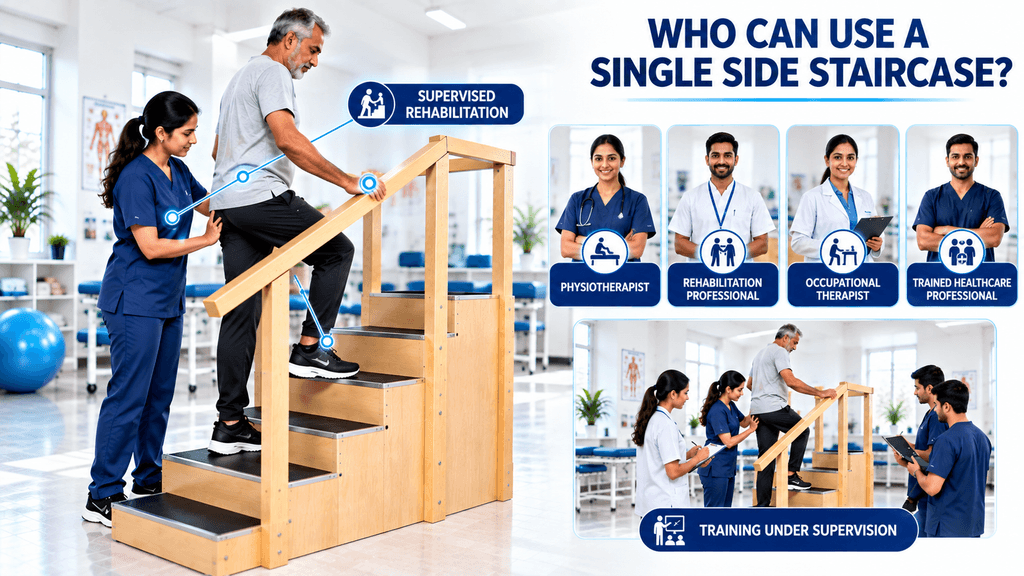
A Single Slide Staircase is intended for use in professional rehabilitation environments.
Potential professional users include:
- Physiotherapists
- Rehabilitation professionals
- Sports rehabilitation professionals
- Occupational therapists, where appropriate
- Physiotherapy students under qualified supervision
- Healthcare professionals trained in therapeutic mobility exercises
Patients should not use rehabilitation stairs independently when professional assessment or assistance is required.
Single Slide Staircase in a Complete Rehabilitation Setup
A staircase can be combined with other rehabilitation equipment to create a functional mobility area.
A physiotherapy clinic may include:
- Parallel bars
- Walking frames
- Standing frames
- Balance boards
- Exercise steps
- Treatment couches
- Treadmills
- Stationary cycles
- Lower-limb exercise equipment
- Suspension therapy equipment
Together, these devices can support different stages of mobility and functional rehabilitation.
Things to Consider Before Buying
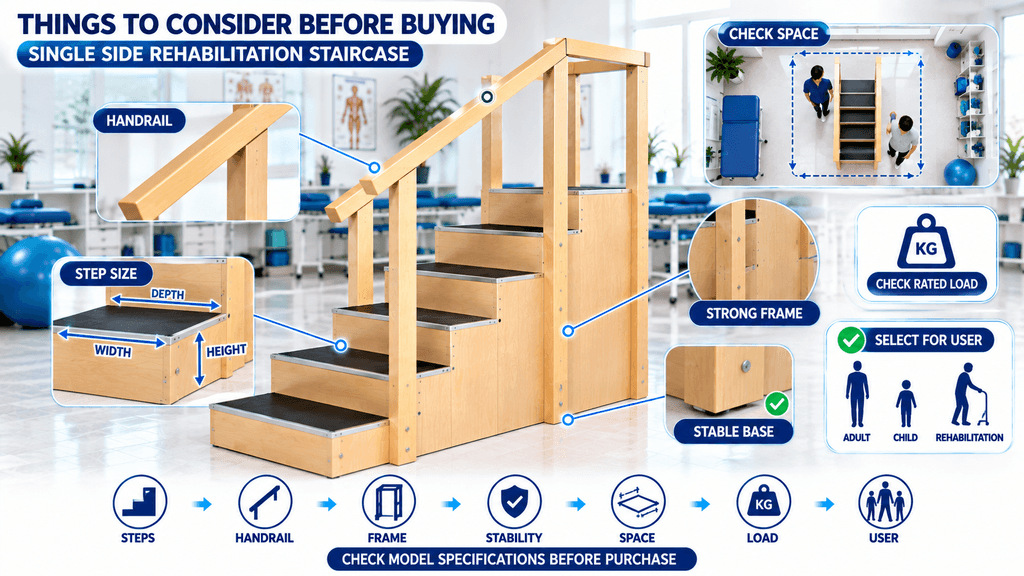
Step Dimensions
Check the height, width, depth, and number of steps to ensure the equipment matches the intended rehabilitation requirements.
Handrail Design
Consider the height, position, grip, and stability of the handrails.
Construction
Look for a strong and stable frame suitable for repeated clinical use.
Floor Stability
The equipment should have a stable base and should not move unexpectedly during normal use.
Available Space
Measure the treatment area before purchasing to ensure sufficient room around the staircase for the patient and therapist.
Weight Capacity
Always verify the manufacturer’s specified maximum user load.
Patient Group
Consider whether the equipment will primarily be used for adults, children, sports rehabilitation, neurological rehabilitation, or general physiotherapy.
Technical Specifications
| Specification | Details |
|---|---|
| Product Name | Single Slide Staircase |
| Product Type | Physiotherapy & Rehabilitation Staircase |
| Primary Application | Stair Training & Functional Mobility |
| Frame Construction | Durable Clinical-Grade Construction |
| Steps | Multiple Rehabilitation Steps |
| Handrails | Available / Configuration Dependent |
| Step Dimensions | Model Dependent |
| Overall Dimensions | Model Dependent |
| Height | Model Dependent |
| Load Capacity | As specified by manufacturer |
| Operation | Manual |
| Applications | Gait, Mobility, Balance & Rehabilitation Training |
| Suitable Environment | Physiotherapy Clinics, Hospitals & Rehabilitation Centres |
| Brand | PHYSIOMODALITIES™ |
Specifications may vary according to the selected model. Confirm step dimensions, overall dimensions, handrail configuration, construction material, and load capacity before purchase.
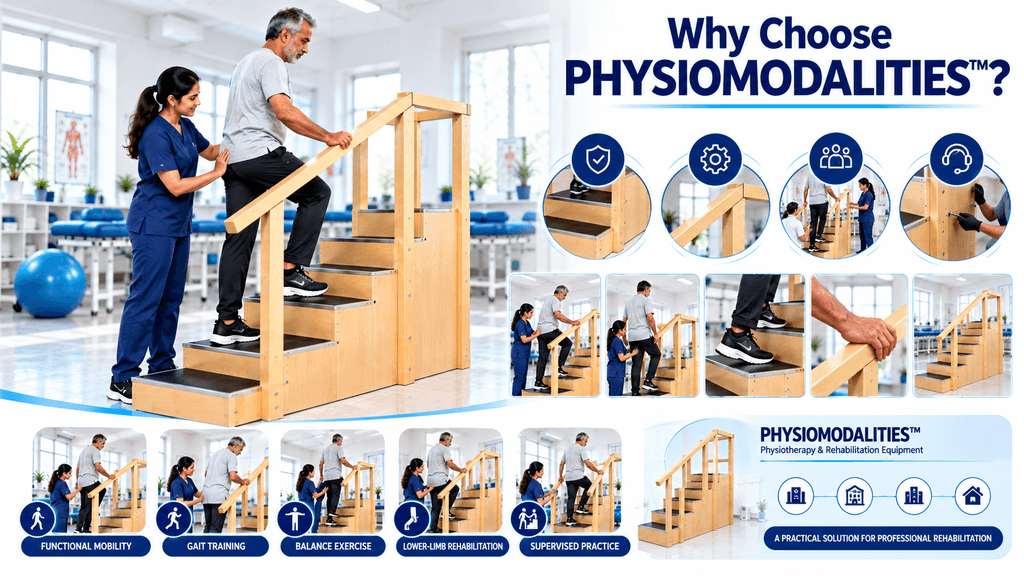
Why Choose PHYSIOMODALITIES™?
PHYSIOMODALITIES™ focuses on practical physiotherapy, rehabilitation, and exercise therapy equipment for professional healthcare environments.
A Single Slide Staircase can be a useful addition to clinics that provide functional mobility and gait rehabilitation. It provides a structured platform for supervised stair practice while allowing the physiotherapist to monitor movement and adjust the activity according to the patient’s rehabilitation requirements.
When choosing rehabilitation equipment, clinics should consider construction quality, dimensions, stability, patient requirements, available space, safety features, and after-sales support.
Conclusion
A Single Slide Staircase is a practical physiotherapy and rehabilitation equipment solution designed for supervised stair-climbing practice, gait training, balance exercises, lower-limb rehabilitation, and functional mobility training.
By providing a controlled staircase environment, it allows physiotherapists to introduce and monitor step-related movements according to an individual’s rehabilitation program. It can be useful in physiotherapy clinics, hospitals, neurological rehabilitation centres, sports rehabilitation facilities, and other professional healthcare environments.
PHYSIOMODALITIES™ offers practical rehabilitation equipment designed to help clinics create organized and functional treatment and exercise areas.
Frequently Asked Questions
1. What is a Single Slide Staircase?
A Single Slide Staircase is a physiotherapy rehabilitation device designed to provide a controlled platform for stair-climbing, step training, gait, balance, and functional mobility exercises.
2. What is a Single Slide Staircase used for?
It is primarily used for supervised stair training, lower-limb rehabilitation, gait training, balance activities, and functional mobility exercises.
3. Can it be used for neurological rehabilitation?
Yes. It can be incorporated into selected neurological rehabilitation programs involving stepping, balance, coordination, and functional mobility.
4. Does a Single Slide Staircase have handrails?
Handrail availability and configuration depend on the specific model. The exact design should be confirmed before purchase.
5. Who should use a Single Slide Staircase?
It should be used under the guidance of a qualified physiotherapist or appropriately trained rehabilitation professional, particularly for patients with mobility or balance limitations.