
Rowing Machine Rehabilitation Device is a rehabilitation and exercise therapy equipment designed to support controlled upper-body, lower-body, and full-body movement training. The rowing-style movement combines pulling and pushing actions with coordinated leg and trunk movement, making it useful for selected mobility, strengthening, endurance, and functional rehabilitation programs.
A rehabilitation rowing machine can be incorporated into physiotherapy clinics, rehabilitation centres, sports rehabilitation facilities, hospitals, fitness rehabilitation areas, and other professional healthcare environments. Depending on the patient’s condition and treatment goals, the therapist can select an appropriate resistance level, movement range, duration, and exercise intensity.
PHYSIOMODALITIES™ provides practical physiotherapy and rehabilitation equipment designed for professional clinical environments. A Rowing Machine Rehabilitation Device can be used alongside treatment couches, exercise cycles, parallel bars, shoulder rehabilitation equipment, resistance equipment, and other therapeutic exercise devices.
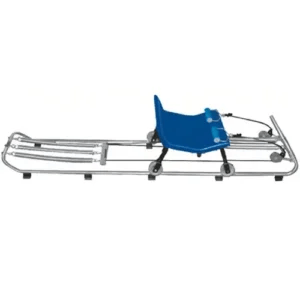
What Is a Rowing Machine Rehabilitation Device?
A Rowing Machine Rehabilitation Device is an exercise apparatus that reproduces a rowing-type movement in a controlled environment. The user generally sits on a seat, places the feet on designated supports, holds the handles, and performs a coordinated pulling movement.
Depending on the design, resistance may be provided through a mechanical, hydraulic, magnetic, elastic, or other resistance mechanism. The exact mechanism depends on the particular model.
Unlike a conventional rowing machine designed primarily for fitness training, rehabilitation-oriented equipment may be used within a professionally supervised exercise program where movement quality, resistance, range, posture, and patient tolerance are carefully considered.
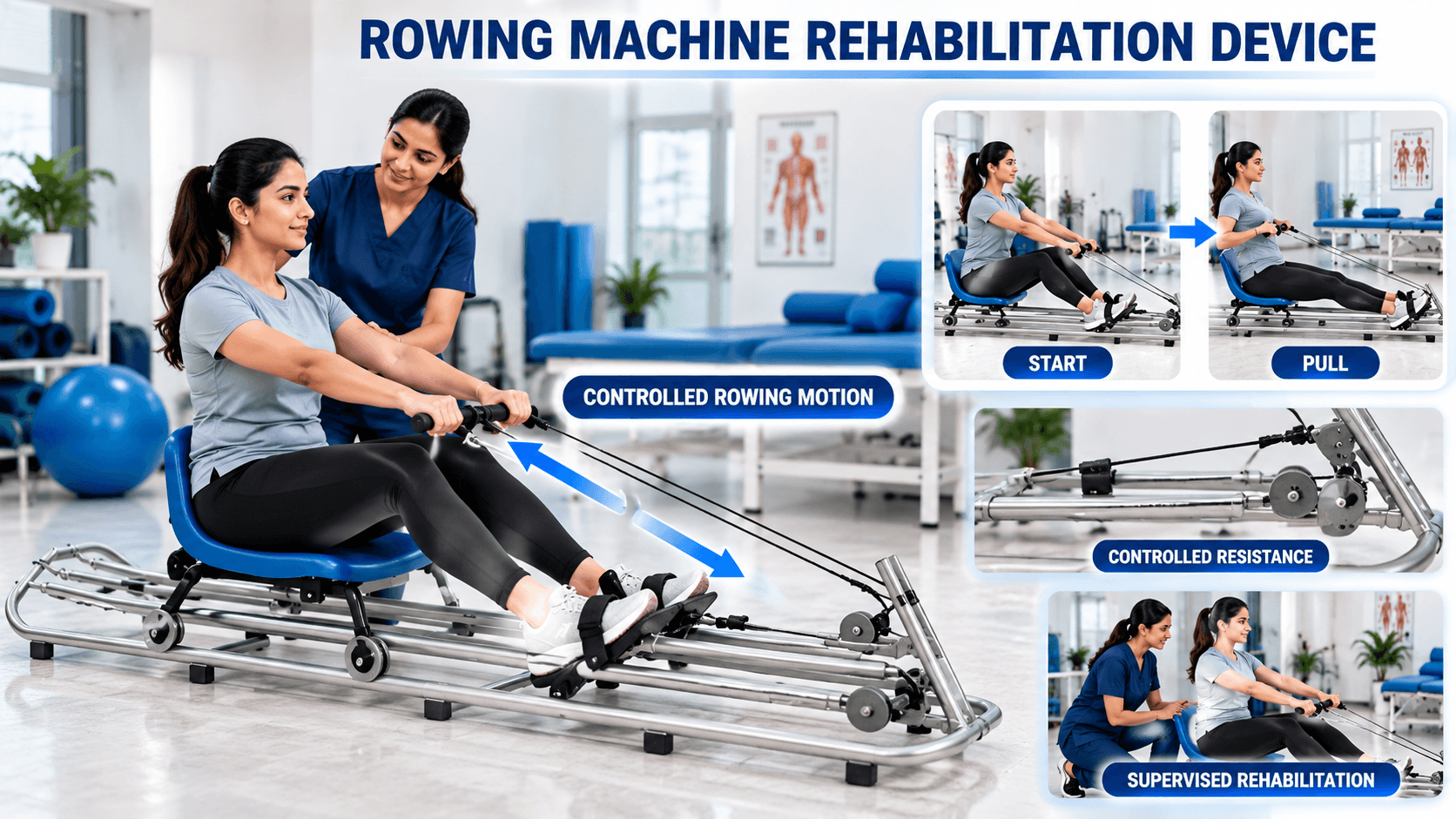
Key Features of Rowing Machine Rehabilitation Device
Controlled Rowing Movement
The equipment allows repetitive rowing-style movements that can involve the arms, shoulders, trunk, and legs.
Adjustable Resistance
Depending on the model, resistance can be adjusted to provide a suitable level of exercise for different users and rehabilitation stages.
Supportive Seating
A stable seat provides a controlled starting position for rowing exercises.
Foot Support
Footrests can help maintain a stable lower-body position while performing the rowing movement.
Ergonomic Handles
Handles provide a secure gripping surface for controlled upper-limb movement.
Full-Body Exercise Design
Rowing movements can involve coordinated action from the upper and lower limbs along with trunk movement.
Manual or Mechanical Operation
The equipment operates through patient movement and its built-in resistance mechanism. Electrical requirements depend on the specific model.
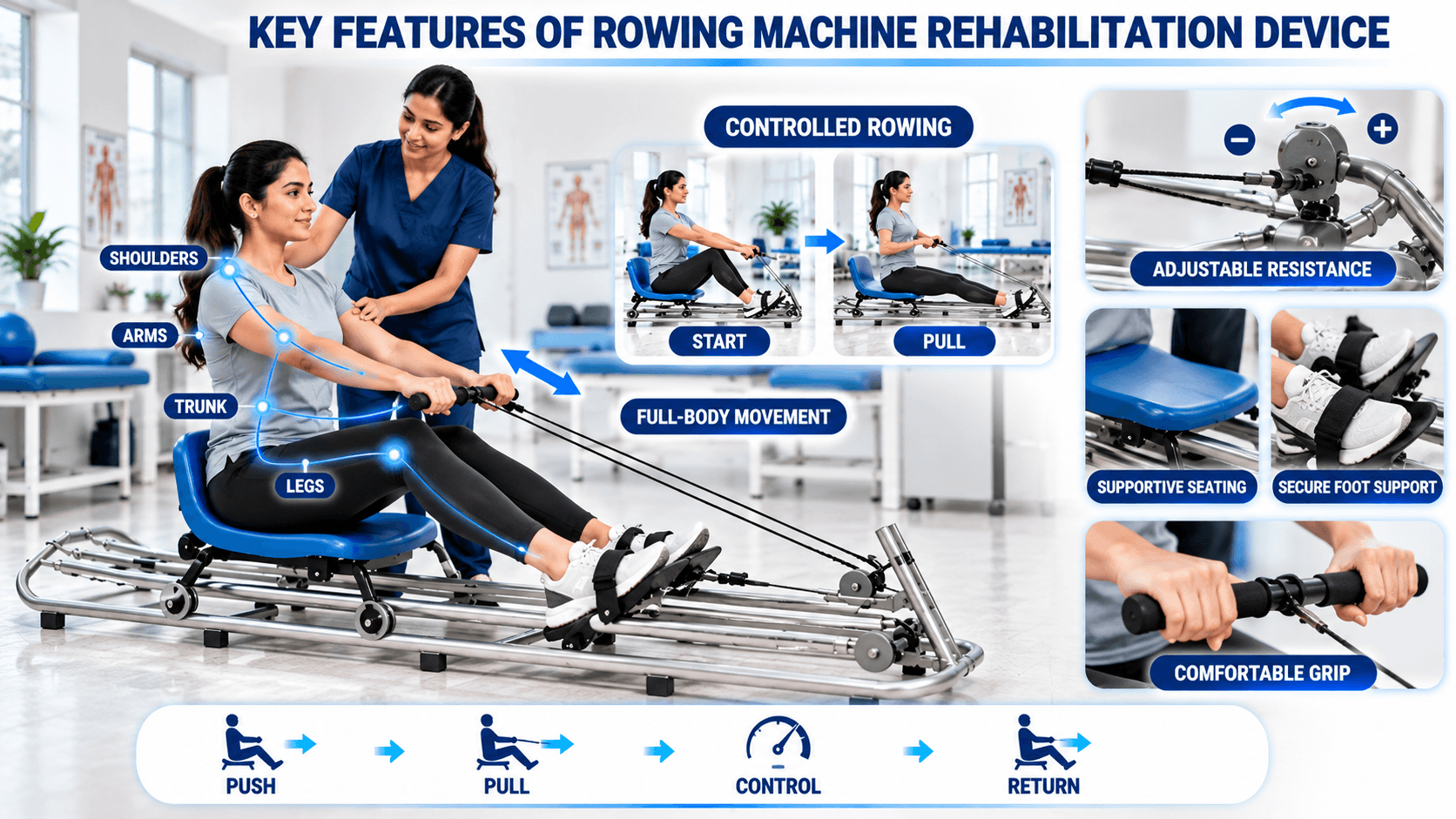
How Does a Rowing Machine Rehabilitation Device Work?
The Rowing Machine Rehabilitation Device works by guiding the user through a repeated rowing movement.
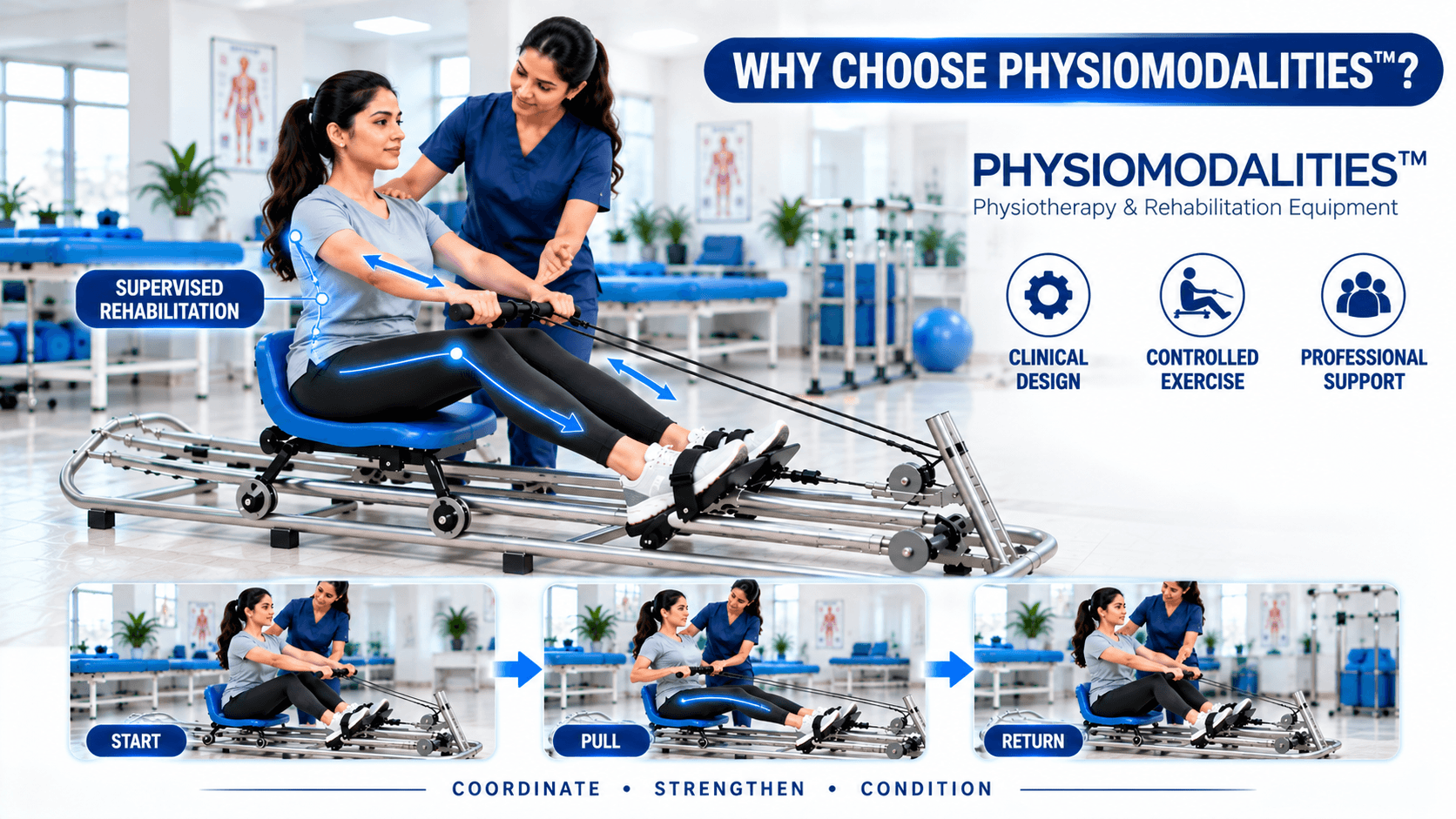
The user sits on the seat, positions the feet securely, holds the handles, and pulls the handles toward the body while coordinating the movement of the legs and trunk. The user then returns to the starting position in a controlled manner.
The physiotherapist can modify the exercise according to the patient’s rehabilitation requirements. Variables such as resistance, repetitions, duration, movement range, and exercise speed can be adjusted where the equipment permits.
The exact technique should always be selected according to the individual’s physical condition and professional rehabilitation plan.
Applications of Rowing Machine Rehabilitation Device
The device can be incorporated into several types of therapeutic exercise programs.
Physiotherapy Rehabilitation
A rowing machine can be included in selected physiotherapy exercise programs involving controlled movement, strengthening, and physical conditioning.
Sports Rehabilitation
Sports rehabilitation professionals may use rowing movements as part of progressive conditioning and return-to-activity programs when clinically appropriate.
General Mobility Training
Controlled repetitive movement can be incorporated into selected programs for improving functional exercise capacity and movement coordination.
Muscle Strengthening
Depending on the resistance and exercise technique, rowing can provide resistance-based activity involving multiple muscle groups.
Endurance Training
Longer-duration, appropriately paced exercise may be incorporated into endurance-oriented rehabilitation programs for suitable patients.
Functional Rehabilitation
The coordinated movement pattern can be used as part of broader functional exercise programs.
Benefits of Rowing Machine Rehabilitation Device
When appropriately incorporated into a professionally designed rehabilitation program, a Rowing Machine Rehabilitation Device can provide several practical benefits:
- Supports controlled repetitive exercise
- Provides resistance-based movement training
- Engages upper and lower body movement
- Encourages coordinated movement
- Can support muscle-strengthening programs
- May be incorporated into endurance training
- Supports progressive exercise conditioning
- Provides adjustable exercise intensity on suitable models
- Can be used in sports rehabilitation
- Suitable for selected functional rehabilitation programs
- Allows therapists to monitor exercise performance
The actual benefit depends on the patient’s condition, exercise technique, resistance level, and overall rehabilitation program.
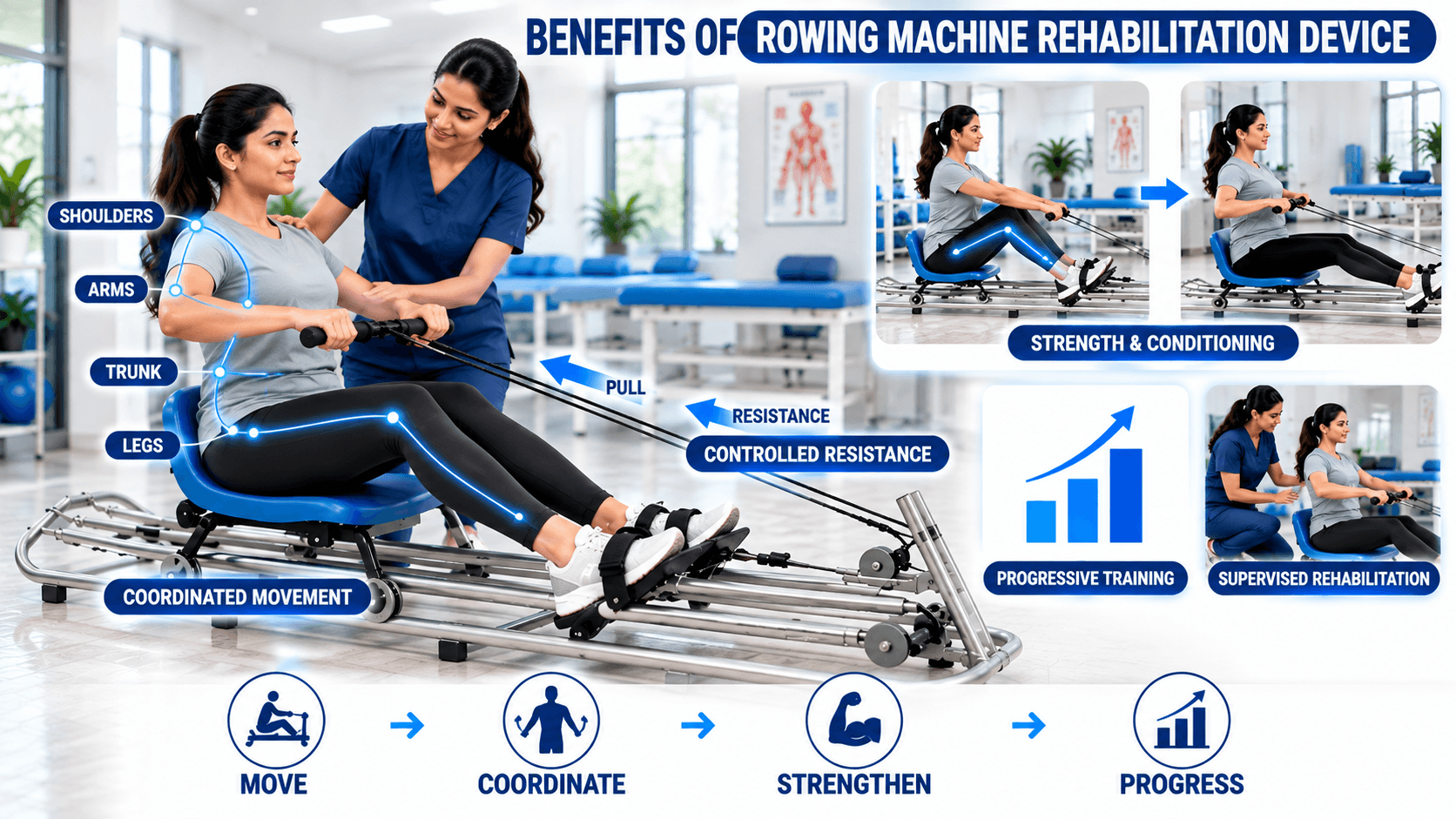
Rowing Machine for Physiotherapy Clinics
A physiotherapy clinic may use different exercise devices depending on the patient’s rehabilitation stage.
A rowing machine can be positioned within the clinic’s exercise therapy area and used after appropriate assessment. The therapist can observe the patient’s posture, coordination, movement pattern, tolerance, and ability to maintain the prescribed exercise technique.
The machine may be particularly useful when a clinic wants to include controlled resistance-based exercise within a broader rehabilitation program.
Rowing Exercise for Upper-Limb Rehabilitation
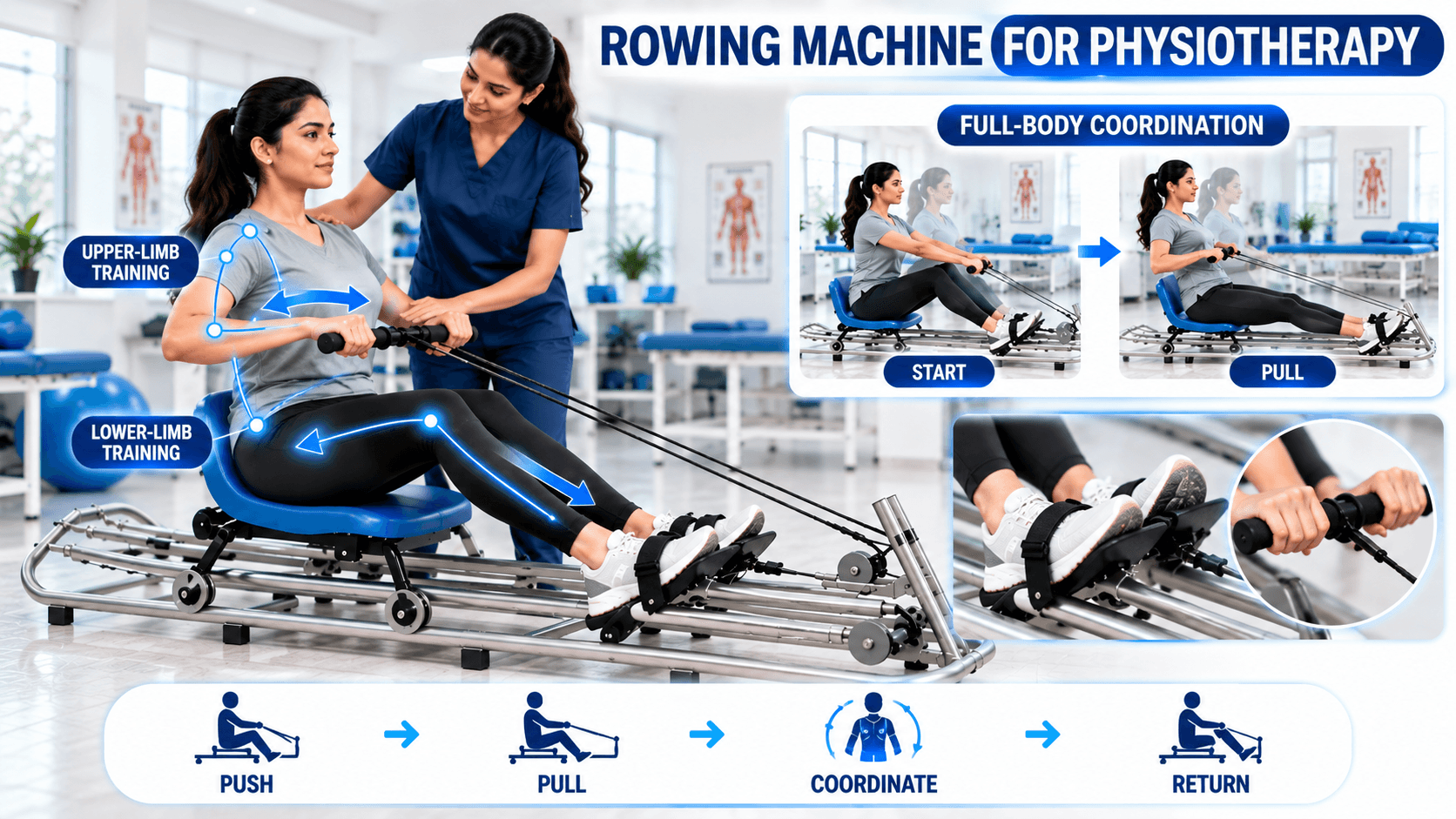
The pulling component of rowing requires repeated upper-limb movement.
Depending on the exercise configuration, the movement can involve the shoulders, elbows, forearms, and hands. A therapist can select an appropriate resistance level and movement range according to the patient’s rehabilitation requirements.
For patients with upper-limb limitations, the exercise should be introduced only when considered appropriate by the treating professional.
Rowing Exercise for Lower-Limb Rehabilitation
Although rowing involves the arms, the movement can also include coordinated leg action.
The legs may contribute during the pushing phase of the movement, while the patient returns to the starting position in a controlled manner. This can make the rowing pattern suitable for selected lower-limb strengthening and functional exercise programs.
The amount of lower-limb involvement should be adjusted according to the patient’s ability and rehabilitation stage.
Rowing Machine for Full-Body Exercise
One of the distinctive characteristics of rowing movement is the coordination between multiple body regions.
A complete rowing stroke may involve:
- Leg drive
- Hip movement
- Trunk control
- Shoulder movement
- Elbow movement
- Grip control
This makes the equipment suitable for selected full-body exercise programs when the patient is able to safely perform the movement.
Rowing Machine for Strength Training
Resistance-based rowing can be incorporated into strengthening programs when appropriate.
The therapist can select a suitable resistance level and exercise duration according to the patient’s condition. Progressive resistance should be introduced gradually rather than increasing the workload too quickly.
Correct movement technique is more important than simply increasing resistance.
Rowing Machine for Endurance Training
A rowing machine can also be incorporated into endurance-oriented rehabilitation.
The therapist may modify exercise duration, resistance, and pace to create an appropriate workload. Patients should be monitored for fatigue and exercise tolerance, particularly when beginning a new rehabilitation program.
Rowing Machine for Sports Rehabilitation
Athletes may require progressive exercise programs after injury before returning to normal training.
A rowing machine can be incorporated into selected rehabilitation stages to provide controlled resistance-based movement and conditioning. The exercise should be progressed according to the athlete’s injury, recovery stage, movement quality, and professional rehabilitation plan.
How to Use Rowing Machine Rehabilitation Device
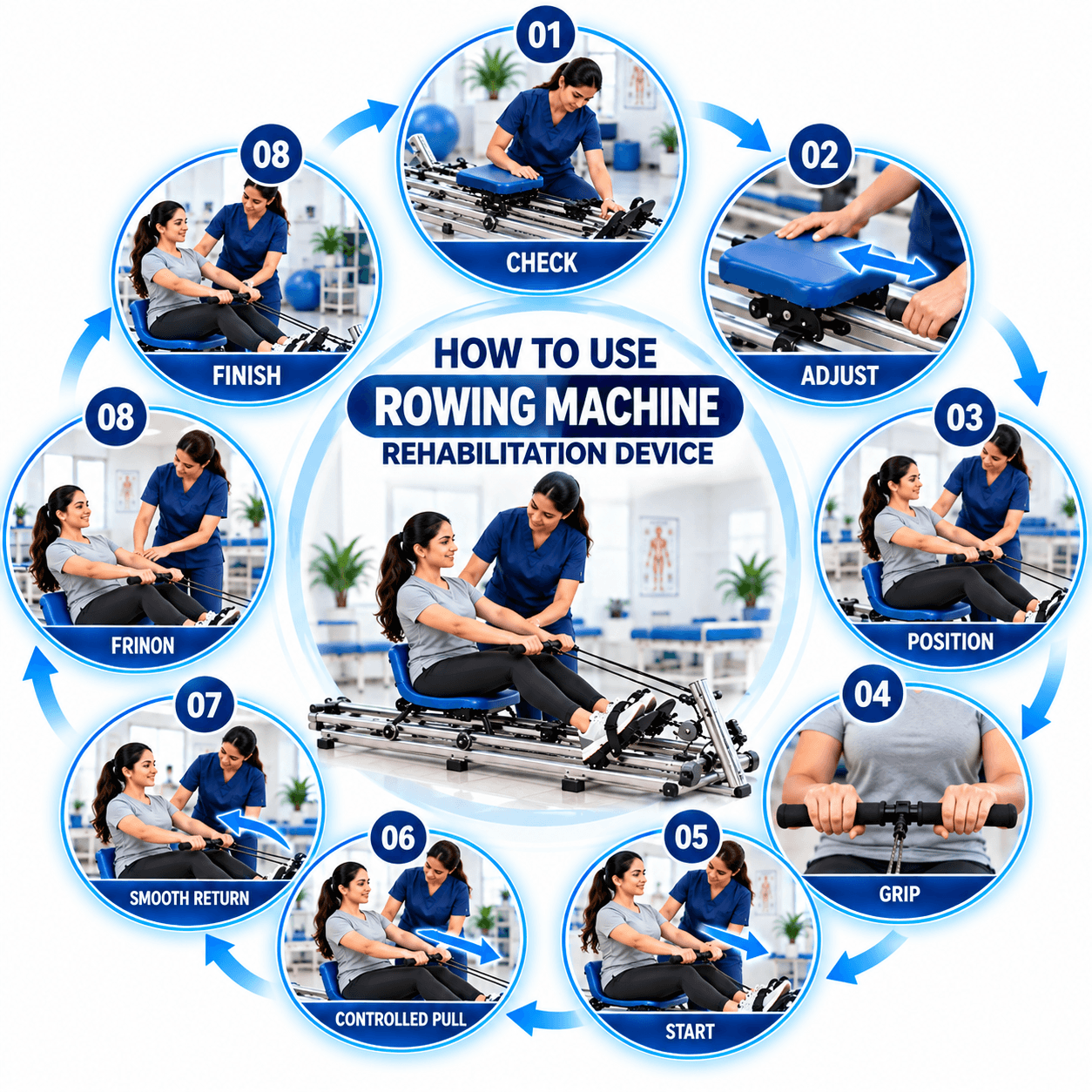
Step 1: Inspect the Equipment
Check the seat, handles, resistance system, foot supports, frame, and other components before use.
Step 2: Adjust the Equipment
Set the seat, foot supports, resistance, or other adjustable components according to the user’s requirements.
Step 3: Sit Correctly
Position the patient comfortably on the seat with the feet securely placed on the foot supports.
Step 4: Hold the Handles
Maintain a comfortable grip without unnecessarily tightening the hands.
Step 5: Begin the Movement
Start the rowing movement slowly and maintain controlled coordination between the legs, trunk, and arms.
Step 6: Maintain Proper Technique
Keep the movement smooth and avoid sudden pulling, excessive trunk movement, or uncontrolled return.
Step 7: Follow the Prescribed Program
Perform the required repetitions, duration, and resistance according to the rehabilitation plan.
Step 8: Finish Gradually
Reduce the exercise pace before stopping and carefully leave the equipment.
Safety Precautions
- Inspect the equipment before each session.
- Ensure the machine is positioned on a stable surface.
- Adjust the seat and foot supports correctly.
- Start with an appropriate resistance level.
- Maintain controlled movement throughout the exercise.
- Avoid sudden or jerky pulling movements.
- Do not exceed the manufacturer’s recommended load or resistance.
- Maintain appropriate posture.
- Use the machine under professional supervision when required.
- Patients with significant mobility or balance limitations should receive appropriate assistance.
- Stop exercise if unusual pain, dizziness, breathing difficulty, or other concerning symptoms occur.
- Follow the rehabilitation professional’s instructions.
Maintenance of Rowing Machine Rehabilitation Device
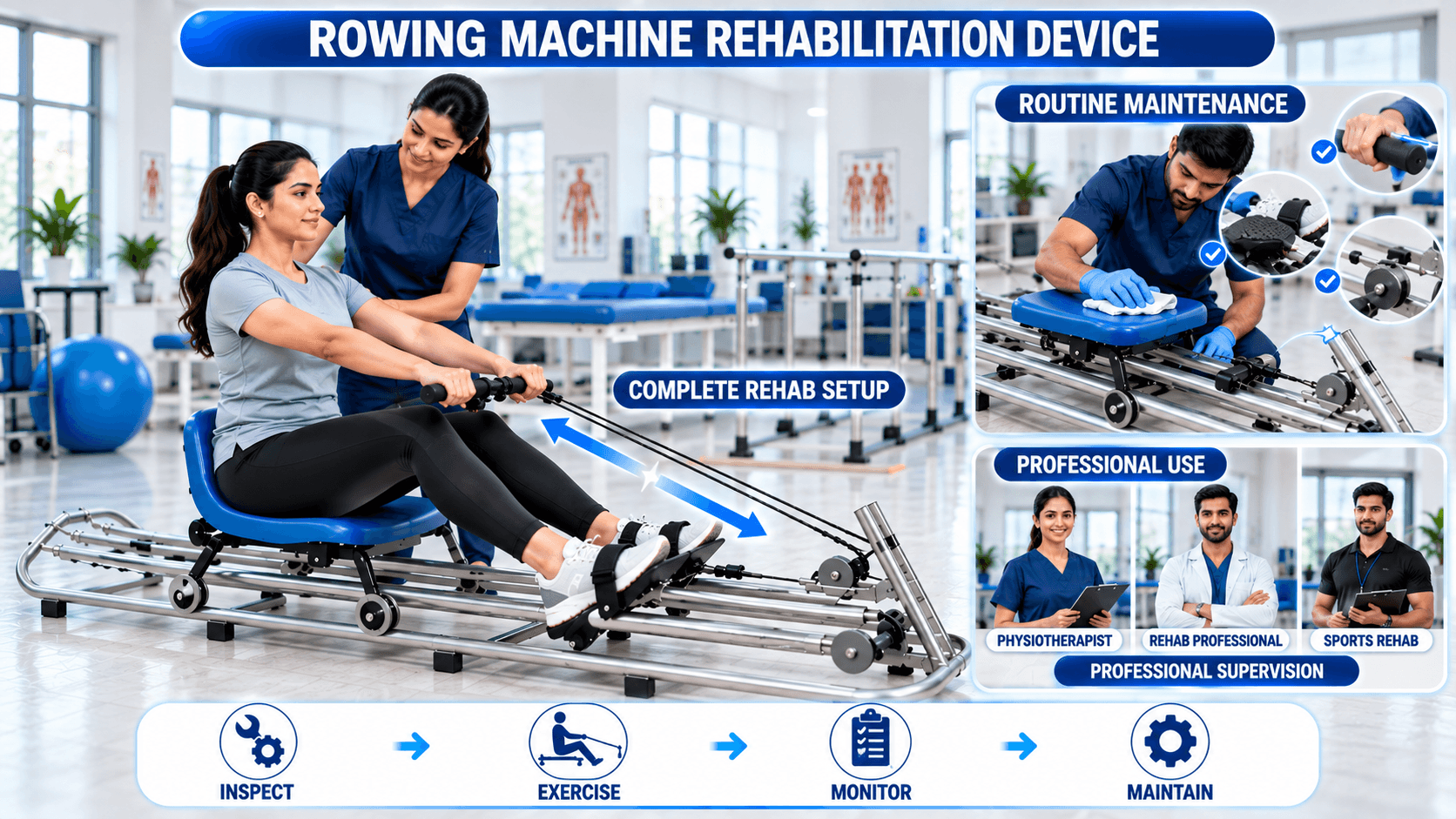
Regular maintenance helps preserve the performance and safety of rehabilitation exercise equipment.
The frame should be inspected periodically for loose components, cracks, or other structural problems. The seat and sliding mechanism, where applicable, should be kept clean and checked for smooth operation.
Handles, foot supports, straps, resistance components, cables, and moving parts should be inspected according to the manufacturer’s maintenance schedule.
Any damaged component should be repaired or replaced before the equipment is used again.
Who Can Use a Rowing Machine Rehabilitation Device?
A Rowing Machine Rehabilitation Device is intended for use in professional physiotherapy, rehabilitation, and exercise therapy environments.
Potential professional users include:
- Physiotherapists
- Rehabilitation professionals
- Sports rehabilitation professionals
- Exercise therapists
- Occupational therapists, where appropriate
- Physiotherapy students under qualified supervision
The equipment should be selected according to the patient’s physical abilities, rehabilitation goals, and clinical requirements.
Rowing Machine in a Complete Rehabilitation Setup
A rowing machine can be combined with other physiotherapy and rehabilitation equipment to create a complete exercise therapy area.
A clinic may include:
- Treatment tables
- Parallel bars
- Standing frames
- Exercise cycles
- Treadmills
- Shoulder pulley systems
- Suspension frames
- Balance equipment
- Resistance bands
- Exercise steps
- Lower-limb rehabilitation equipment
This allows therapists to select different forms of exercise according to each patient’s rehabilitation requirements.
Things to Consider Before Buying
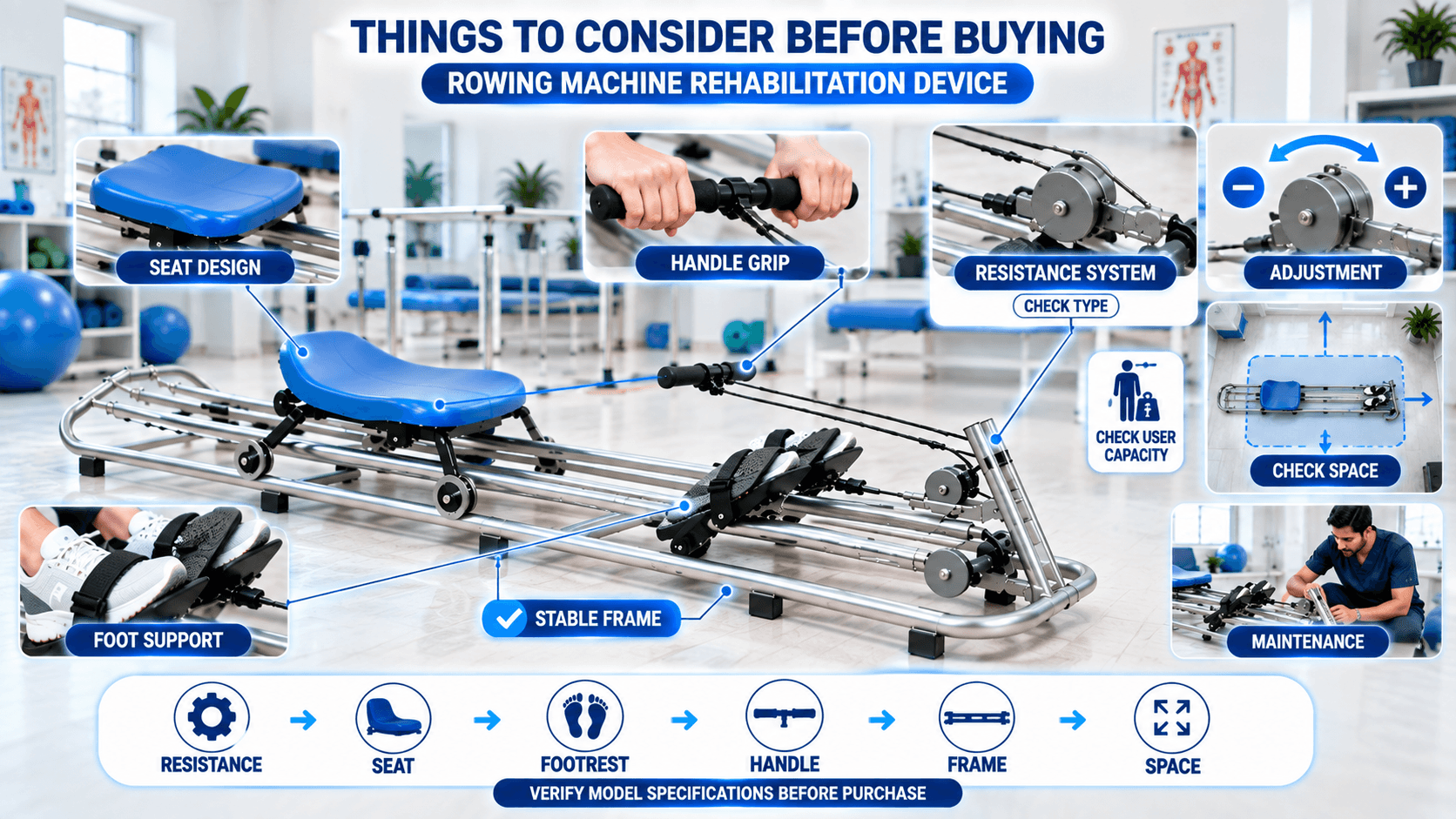
Resistance Mechanism
Check whether the machine uses hydraulic, magnetic, mechanical, elastic, air, or another resistance system.
Resistance Adjustment
Confirm whether resistance can be adjusted and how many resistance levels are available.
Seat Design
Consider seat comfort, stability, adjustment range, and movement mechanism.
Foot Support
Check whether the footrests are adjustable and whether straps are provided.
Handle Design
Look for a comfortable grip suitable for repeated clinical use.
Frame Stability
The frame should provide adequate stability during repeated rowing movements.
User Capacity
Confirm the manufacturer’s recommended maximum user weight.
Dimensions
Check the overall size and available space in the clinic.
Maintenance
Consider the availability of replacement components and maintenance requirements.
Technical Specifications
| Specification | Details |
|---|---|
| Product Name | Rowing Machine Rehabilitation Device |
| Product Type | Rehabilitation & Exercise Equipment |
| Primary Application | Therapeutic Exercise & Physical Rehabilitation |
| Exercise Type | Rowing / Resistance Exercise |
| Resistance | Adjustable / Model Dependent |
| Seat | Supportive Sliding or Fixed Seat, Model Dependent |
| Foot Support | Adjustable / Model Dependent |
| Handles | Ergonomic Grip Handles |
| Frame | Durable Clinical-Grade Construction |
| Operation | Manual / Mechanical |
| Power Requirement | Model Dependent |
| User Capacity | As specified by manufacturer |
| Dimensions | Model Dependent |
| Applications | Physiotherapy, Rehabilitation & Sports Training |
| Brand | PHYSIOMODALITIES™ |
Specifications may vary according to the selected model. Confirm resistance mechanism, dimensions, user capacity, seat design, foot support, and power requirements before purchase.
Why Choose PHYSIOMODALITIES™?
PHYSIOMODALITIES™ focuses on practical physiotherapy, rehabilitation, and exercise therapy equipment designed for professional healthcare environments.
A Rowing Machine Rehabilitation Device can be a useful addition to a clinic that provides progressive exercise, conditioning, mobility, and rehabilitation programs. Its coordinated rowing movement can provide an adaptable exercise option when used according to the patient’s capabilities.
When selecting rehabilitation exercise equipment, clinics should consider construction quality, resistance adjustment, patient comfort, safety features, dimensions, maintenance requirements, and after-sales support.
Conclusion
A Rowing Machine Rehabilitation Device is a practical exercise and rehabilitation solution designed to support controlled rowing-style movement, resistance exercise, coordination, strengthening, endurance, and functional conditioning.
The coordinated involvement of the arms, legs, and trunk makes rowing a versatile exercise pattern that can be incorporated into selected physiotherapy, sports rehabilitation, and general rehabilitation programs.
The machine should always be used according to the patient’s capabilities and the rehabilitation professional’s recommendations. Proper adjustment, controlled technique, and gradual progression are important for safe and effective exercise.
PHYSIOMODALITIES™ provides practical rehabilitation equipment designed to help clinics create organized and functional exercise therapy environments.
Frequently Asked Questions
1. What is a Rowing Machine Rehabilitation Device?
It is a rehabilitation exercise machine designed to provide controlled rowing-style movement for selected strengthening, mobility, endurance, coordination, and functional exercise programs.
2. Can a rowing machine be used in physiotherapy?
Yes. It can be incorporated into appropriate physiotherapy and rehabilitation programs under professional supervision.
3. Does rowing exercise the whole body?
A rowing movement can involve the arms, legs, trunk, and hips, although the exact muscle involvement depends on technique and exercise configuration.
4. Can resistance be adjusted?
Many rehabilitation rowing machines provide adjustable resistance, but the adjustment mechanism and available levels depend on the specific model.
5. Who should use a Rowing Machine Rehabilitation Device?
It should be used according to the patient’s rehabilitation requirements and, where necessary, under the guidance of a qualified physiotherapist or rehabilitation professional.