The Longwave Diathermy Therapy Machine is a physiotherapy device designed to deliver electromagnetic energy for therapeutic heating applications in professional rehabilitation settings. It may be incorporated into selected physiotherapy programs where controlled heating is considered appropriate following patient assessment.
Longwave diathermy equipment uses electromagnetic energy to produce a heating effect in tissues. Depending on the machine’s design, treatment may be delivered through dedicated applicators or electrodes positioned according to the manufacturer’s instructions. The operating frequency, output power, treatment modes, and applicator configuration vary between models.
The Longwave Diathermy Therapy Machine may be considered by physiotherapy clinics, rehabilitation centres, orthopedic practices, sports rehabilitation facilities, and hospitals that require diathermy equipment for professionally supervised treatment.
PHYSIOMODALITIES™ provides physiotherapy and rehabilitation equipment for professional clinical environments.
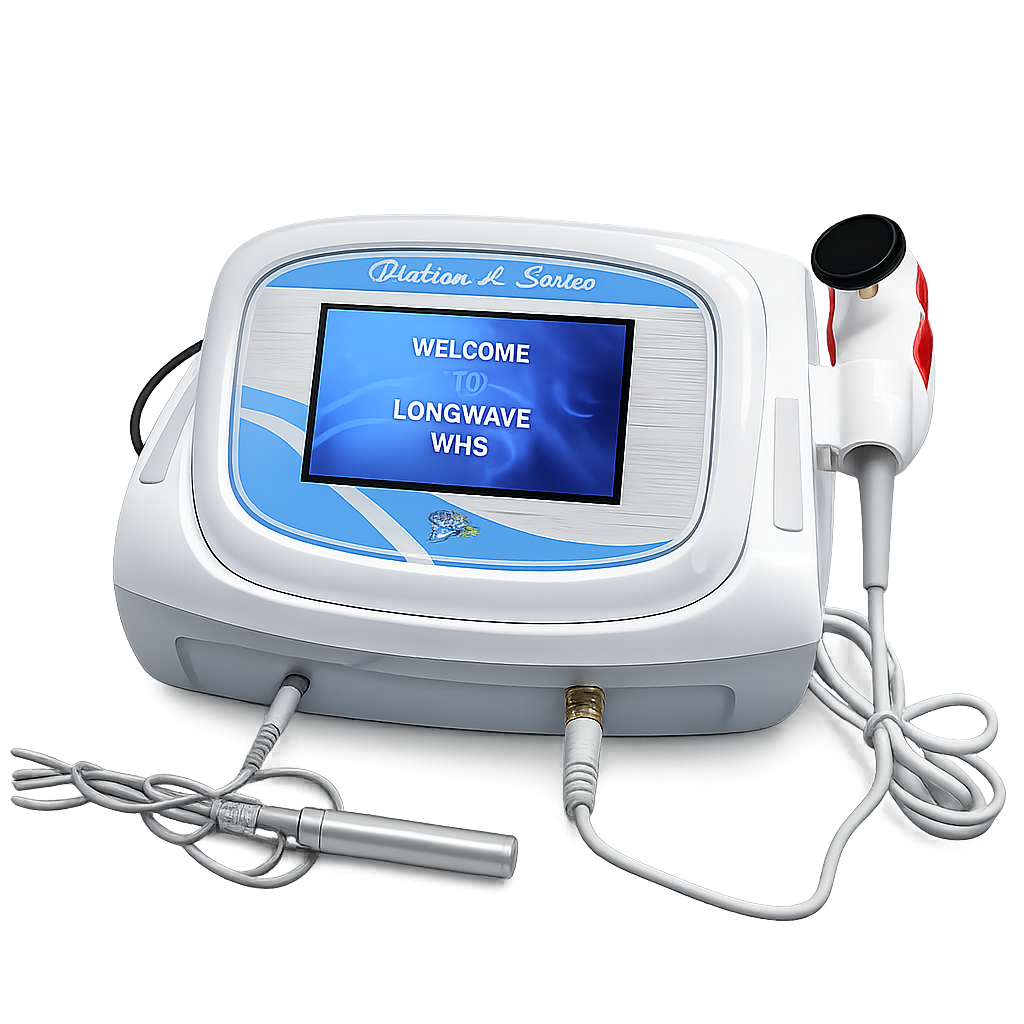
What Is a Longwave Diathermy Therapy Machine?
A Longwave Diathermy Therapy Machine is an electromagnetic therapy device designed to deliver energy at a specified longwave radiofrequency for therapeutic applications.
Diathermy is a treatment modality that uses electromagnetic or other energy sources to generate heat in body tissues. Longwave diathermy differs from shortwave and microwave diathermy in its operating frequency and energy-delivery characteristics.
The machine’s specific working frequency, applicator type, output characteristics, and treatment controls depend on the manufacturer’s design. These details should be verified using the technical datasheet for the exact model.
Longwave diathermy should be used as part of an individualized treatment plan rather than as a replacement for appropriate diagnosis, medical care, or active rehabilitation.
How Does Longwave Diathermy Work?
The Longwave Diathermy Therapy Machine uses electromagnetic energy to produce a therapeutic heating effect, depending on its design and operating parameters.
A qualified professional selects the appropriate treatment setup and settings according to the patient’s condition, the intended treatment area, and the manufacturer’s instructions.
A typical treatment workflow may include:
- Assessing the patient and identifying the treatment objective.
- Confirming that diathermy is appropriate for the intended application.
- Positioning the patient comfortably.
- Selecting the appropriate applicator or electrode arrangement.
- Setting the treatment parameters according to the device instructions.
- Starting treatment at the prescribed settings.
- Monitoring patient comfort and response.
- Completing the session and inspecting the equipment.
The actual heating effect depends on the technology, treatment settings, tissue characteristics, and individual patient factors. The operator must follow the model-specific operating manual.
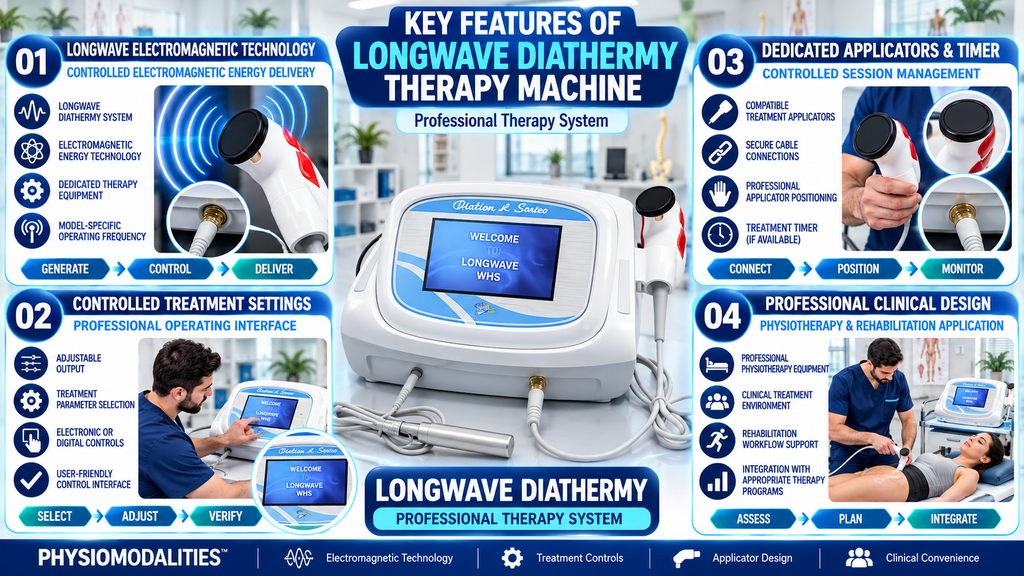
Key Features of a Longwave Diathermy Therapy Machine
Longwave Electromagnetic Technology
The machine is designed to deliver electromagnetic energy within its specified longwave operating range. The exact frequency must be confirmed from the manufacturer’s documentation.
Controlled Treatment Settings
Depending on the model, the operator may be able to adjust output intensity, treatment duration, and other operating parameters.
Dedicated Treatment Applicators
Longwave diathermy systems use applicators or electrodes designed for the specific machine. Their configuration and positioning requirements vary by model.
Digital or Electronic Controls
Depending on the design, the machine may feature electronic controls or a digital interface for selecting treatment settings.
Treatment Timer
A timer may be provided to help the operator manage session duration. Availability and control options should be verified for the exact configuration.
Professional Clinical Design
The equipment is intended for professional physiotherapy environments where treatment is provided by appropriately trained healthcare professionals.
Integration into Rehabilitation Programs
Where clinically appropriate, diathermy may be incorporated into a wider rehabilitation plan alongside exercise therapy, mobility training, and other interventions.
Applications of the Longwave Diathermy Therapy Machine
The Longwave Diathermy Therapy Machine may be considered for selected therapeutic heating applications when supported by the machine’s intended use and professional assessment.
Physiotherapy and Rehabilitation
Diathermy may be incorporated into selected physiotherapy programs when controlled heating is appropriate for the patient’s condition.
Musculoskeletal Rehabilitation
The modality may be considered for certain musculoskeletal rehabilitation applications, depending on the specific technology and treatment protocol.
Soft-Tissue Treatment
Therapeutic heating may be included in selected soft-tissue treatment plans where clinically appropriate.
Joint-Related Rehabilitation
Diathermy may be considered as an adjunct in certain joint-related rehabilitation programs when supported by professional assessment.
Sports Rehabilitation
Sports rehabilitation facilities may evaluate diathermy as one component of a broader recovery program that also includes suitable exercise and functional rehabilitation.
Important: These are general categories of possible diathermy use, not confirmation that every Longwave Diathermy Therapy Machine is indicated for every condition. The exact clinical applications must be verified for the specific model.
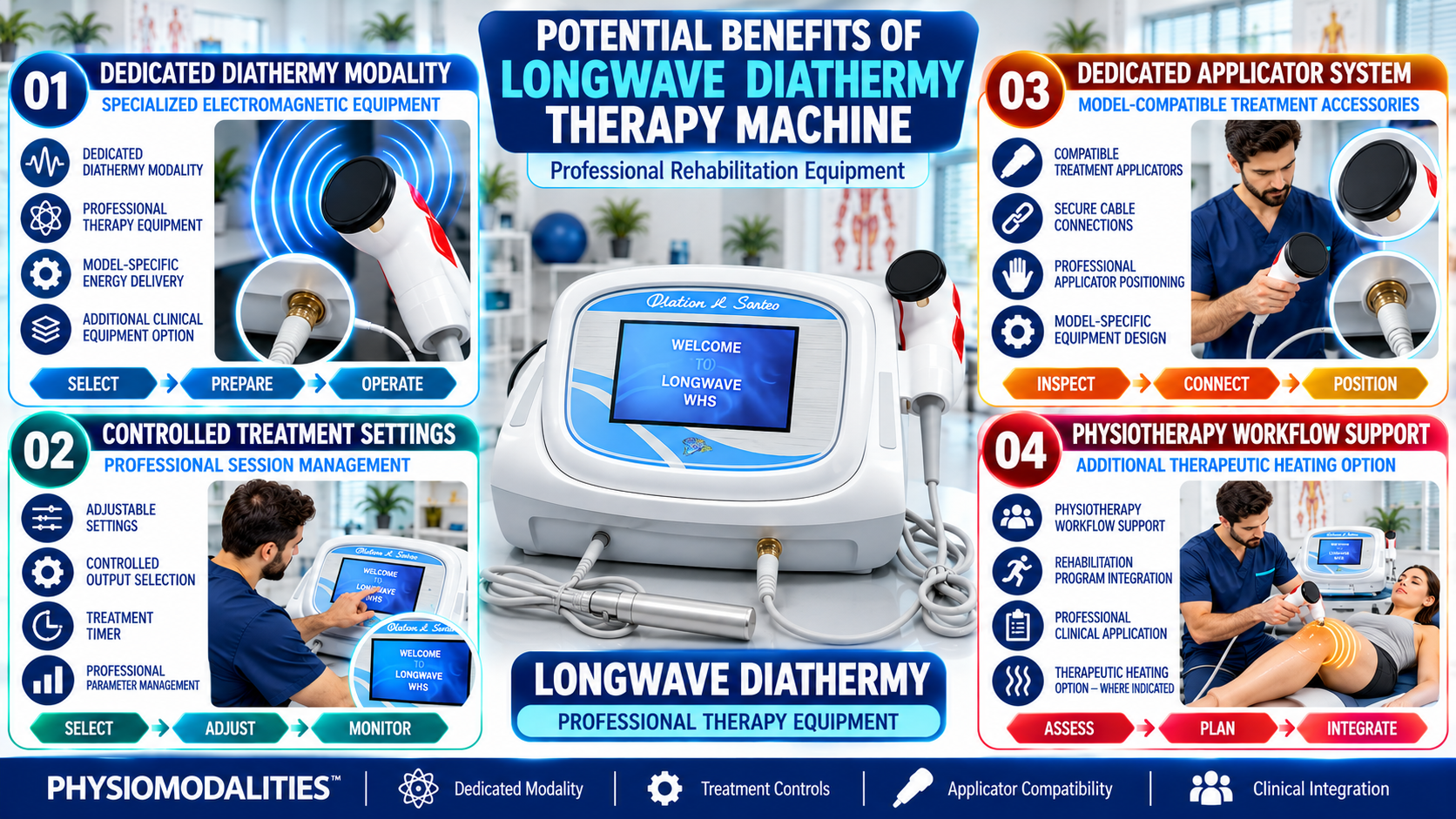
Potential Benefits of Longwave Diathermy Equipment
The practical benefits of a Longwave Diathermy Therapy Machine depend on its technical specifications and the way it is used within a clinical treatment plan.
Potential equipment-level advantages include:
- Access to a dedicated diathermy modality
- Controlled treatment settings on supported models
- A treatment timer where provided
- Dedicated applicators for the specified system
- Integration into selected physiotherapy workflows
- An additional therapeutic heating option for professional clinics
These are equipment-related considerations, not guarantees of clinical outcomes. The suitability and effectiveness of treatment depend on the condition, patient assessment, treatment parameters, and available clinical evidence.
Longwave Diathermy vs Shortwave and Microwave Diathermy
Diathermy systems differ in their operating frequencies and energy-delivery characteristics. The correct equipment depends on the intended clinical application and the device’s specifications.
| Feature | Longwave Diathermy | Shortwave Diathermy | Microwave Diathermy |
|---|---|---|---|
| Energy Type | Electromagnetic energy | Electromagnetic energy | Electromagnetic energy |
| Frequency Range | Model-specific longwave frequency | Commonly around 27.12 MHz, depending on the system | Commonly 915 MHz or 2.45 GHz, depending on the system |
| Energy Delivery | Model-specific applicator or electrode arrangement | Capacitive or inductive arrangements, depending on the system | Microwave applicator |
| Treatment Effect | Depends on device and settings | Depends on device and settings | Depends on device and settings |
| Clinical Selection | Based on intended use and assessment | Based on intended use and assessment | Based on intended use and assessment |
The frequencies shown for shortwave and microwave diathermy are common examples, not specifications for the Longwave Diathermy Therapy Machine. Always check the exact model datasheet.
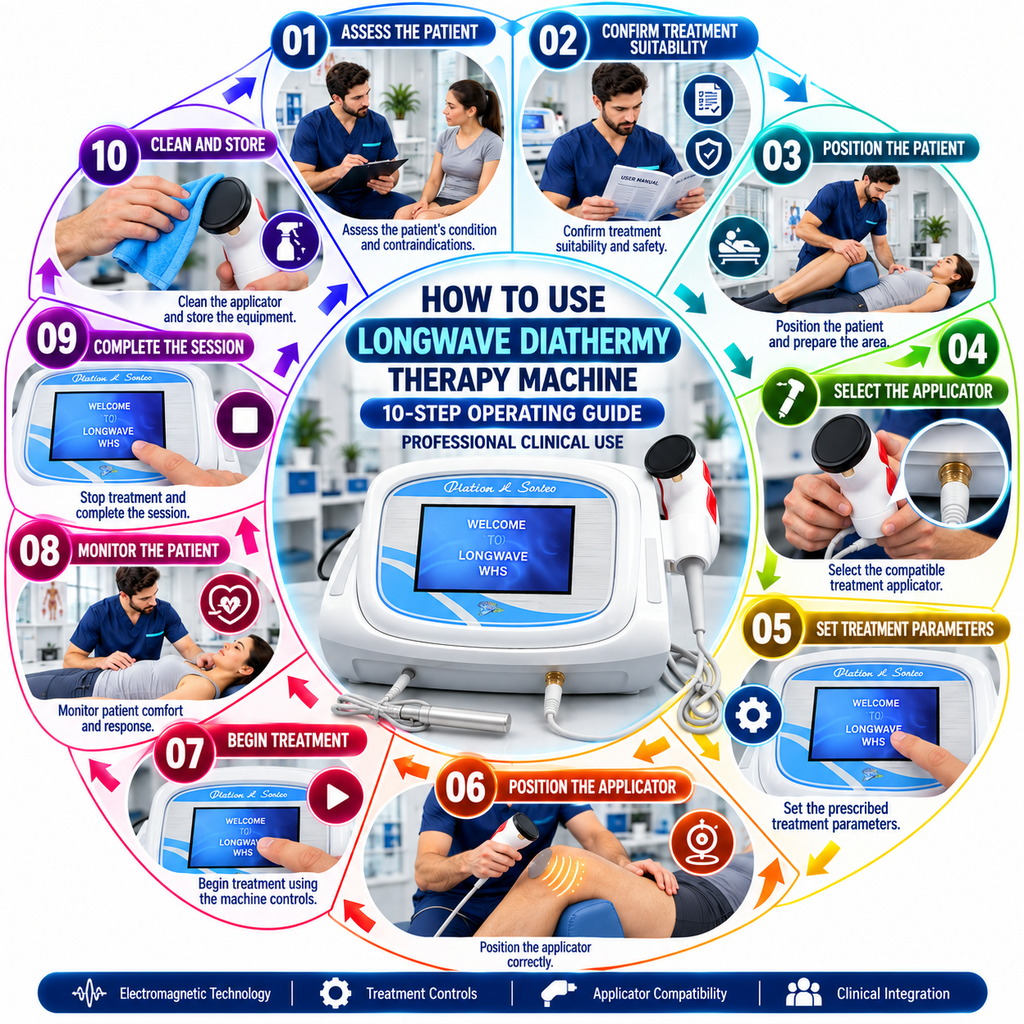
How to Use the Longwave Diathermy Therapy Machine
The machine should be operated only by appropriately trained healthcare professionals who understand diathermy principles and the specific equipment.
Step 1: Assess the Patient
Review the patient’s condition, medical history, treatment objectives, and contraindications before selecting diathermy.
Step 2: Confirm Treatment Suitability
Check that the intended application is supported by the manufacturer’s instructions and that the patient meets the required safety criteria.
Step 3: Position the Patient
Place the patient comfortably and prepare the treatment area according to the prescribed protocol.
Step 4: Select the Applicator
Choose the compatible applicator or electrode arrangement specified for the machine.
Step 5: Set Treatment Parameters
Select the appropriate settings according to the treatment plan and the manufacturer’s operating manual. Do not copy settings from another diathermy model.
Step 6: Position the Applicator
Position the applicator or electrodes according to the manufacturer’s instructions, including the required spacing and placement.
Step 7: Begin Treatment
Start the session using the prescribed settings and follow the model-specific operating procedure.
Step 8: Monitor the Patient
Monitor patient comfort and response throughout treatment. Stop the session if unusual heat, burning, discomfort, or another concerning reaction occurs.
Step 9: Complete the Session
End the output according to the operating manual before removing or repositioning the applicator.
Step 10: Inspect and Maintain the Equipment
Inspect cables, applicators, controls, and connectors. Clean and maintain the equipment according to the manufacturer’s instructions.
Safety Precautions
Diathermy equipment requires careful operation because electromagnetic energy and therapeutic heating can pose risks when used incorrectly.
- Use the machine only after appropriate training.
- Assess the patient and review contraindications before treatment.
- Follow the manufacturer’s operating instructions.
- Confirm the correct applicator and electrode arrangement.
- Follow manufacturer guidance regarding implanted electronic devices.
- Check precautions concerning pregnancy, impaired sensation, circulation problems, and other relevant medical conditions.
- Follow the instructions for metallic objects and other potential sources of heating or interference.
- Do not use damaged cables, applicators, or connectors.
- Keep the equipment away from unnecessary moisture.
- Monitor patient comfort throughout treatment.
- Stop treatment if unexpected heating, burning, pain, or another concerning reaction occurs.
- Do not modify the machine or its accessories.
- Follow the specified electrical supply and maintenance requirements.
The exact contraindications depend on the technology and model. The manufacturer’s safety documentation must take precedence over general instructions.
Technical Specifications of the Longwave Diathermy Therapy Machine
The following table provides a product specification framework. Values not confirmed for the exact model are marked accordingly.
| Specification | Details |
|---|---|
| Product Name | Longwave Diathermy Therapy Machine |
| Therapy Type | Longwave Diathermy |
| Technology | Electromagnetic Energy |
| Operating Frequency | Confirm from manufacturer |
| Output Power | Confirm from manufacturer |
| Output Intensity Control | Model-dependent |
| Treatment Modes | Confirm from manufacturer |
| Applicator Type | Confirm from manufacturer |
| Treatment Timer | Model-dependent |
| Control Interface | Model-dependent |
| Input Voltage | Confirm from manufacturer |
| Dimensions and Weight | Confirm from manufacturer |
| Included Accessories | Confirm package contents |
| Intended Application | As stated in the manufacturer’s documentation |
| Intended Operator | Trained Healthcare Professional |
| Warranty | Confirm with supplier |
Specification note: Do not publish a fixed operating frequency, output power, dimensions, or accessory list without verifying the datasheet for the exact machine being supplied.
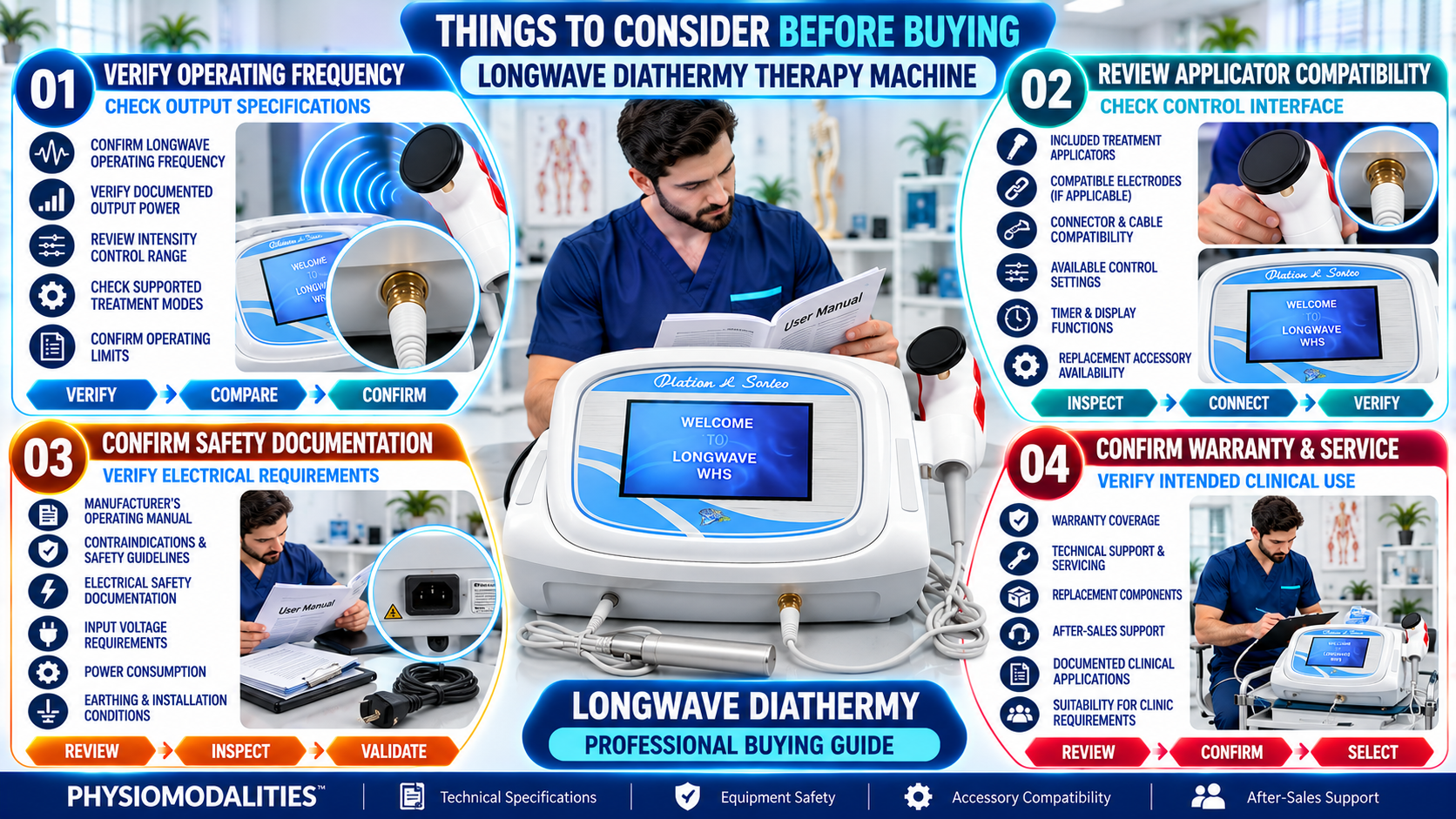
Things to Consider Before Buying
Verify the Operating Frequency
Confirm the exact operating frequency and ensure the machine is specifically designed for longwave diathermy.
Check the Output Specifications
Request documented output power, intensity controls, treatment modes, and operating limits.
Review Applicator Compatibility
Confirm which applicators or electrodes are included and whether replacement accessories are available.
Check the Control Interface
Review the available settings, timer functions, and display features.
Confirm Safety Documentation
Request the operating manual, contraindications, electrical safety information, and applicable product documentation.
Review Electrical Requirements
Check the input voltage, power consumption, earthing requirements, and installation instructions.
Confirm Warranty and Technical Support
Review warranty coverage, servicing arrangements, replacement components, and after-sales support.
Verify the Intended Clinical Use
Make sure the manufacturer’s documentation supports the clinical applications planned for your facility.
Who Should Operate a Longwave Diathermy Therapy Machine?
The Longwave Diathermy Therapy Machine should be operated by appropriately trained physiotherapists or other qualified healthcare professionals in accordance with the device’s intended use and applicable local requirements.
The operator should understand:
- Diathermy principles
- Patient assessment and treatment selection
- Applicator or electrode positioning
- Treatment parameter selection
- Contraindications and safety precautions
- Patient monitoring
- Equipment maintenance
- Manufacturer-specific operating instructions
Professional training is essential for safe and responsible operation.
Why Choose PHYSIOMODALITIES™?
PHYSIOMODALITIES™ provides physiotherapy and rehabilitation equipment for professional clinical environments.
When selecting a Longwave Diathermy Therapy Machine, clinics should evaluate the verified technical specifications, intended use, safety documentation, accessories, warranty, and after-sales support.
Choosing equipment according to clinical requirements and confirmed manufacturer information helps clinics make informed purchasing decisions and supports responsible integration into rehabilitation workflows.
Conclusion
The Longwave Diathermy Therapy Machine is designed to provide electromagnetic energy for therapeutic heating applications in professional physiotherapy settings. Depending on the specific model, it may offer dedicated applicators, adjustable treatment settings, and electronic controls for supervised clinical use.
Before purchasing, clinics should verify the exact operating frequency, output power, treatment modes, applicator configuration, electrical requirements, safety documentation, warranty, and technical support. Appropriate patient assessment, professional training, and adherence to the manufacturer’s instructions are essential for responsible use.
Frequently Asked Questions
1. What is a Longwave Diathermy Therapy Machine?
It is a physiotherapy device designed to deliver electromagnetic energy for therapeutic heating applications, with exact operation depending on the model.
2. How is longwave diathermy different from shortwave diathermy?
The two modalities use different operating frequency ranges and may differ in their energy-delivery systems. Confirm the exact specifications of the equipment before comparing models.
3. Who can operate a Longwave Diathermy Therapy Machine?
It should be operated by appropriately trained healthcare professionals who follow the manufacturer’s instructions and applicable requirements.
4. What should I check before buying a longwave diathermy machine?
Check the operating frequency, output power, applicator type, controls, safety documentation, electrical requirements, warranty, and technical support.
5. Can longwave diathermy be used for every musculoskeletal condition?
No. Suitability depends on the patient’s assessment, contraindications, clinical evidence, and the machine’s documented intended use.