
The Heel & Ankle Exercise equipment is designed to support controlled rehabilitation exercises for the foot, heel, ankle, and lower leg. It can be incorporated into physiotherapy and rehabilitation programs focused on ankle mobility, flexibility, strengthening, balance, coordination, and progressive functional movement.
Heel and ankle rehabilitation often involves controlled movements such as ankle flexion and extension, foot inversion and eversion, and progressive strengthening exercises. A dedicated exercise device can provide a stable platform and help therapists guide patients through appropriate movements.
The Heel & Ankle Exercise equipment from PHYSIOMODALITIES™ is suitable for physiotherapy clinics, rehabilitation centres, sports rehabilitation facilities, hospitals, and exercise therapy areas where focused lower-limb rehabilitation is required.
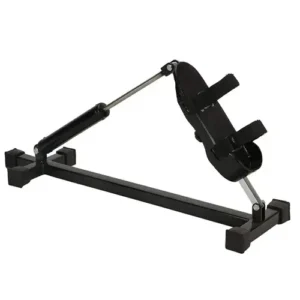
What Is Heel & Ankle Exercise?
Heel & Ankle Exercise refers to controlled therapeutic exercises designed to improve movement and functional use of the ankle and foot.
Depending on the equipment design, a Heel & Ankle Exercise unit may provide a platform, pedal, resistance mechanism, or guided movement system for performing selected ankle and foot exercises.
It can be incorporated into programs involving:
- Ankle mobility
- Heel and foot movement
- Plantarflexion and dorsiflexion
- Foot strengthening
- Ankle strengthening
- Inversion and eversion exercises
- Range-of-motion exercises
- Lower-limb coordination
- Balance preparation
- Progressive functional rehabilitation
How Does Heel & Ankle Exercise Work?
The Heel & Ankle Exercise equipment provides a controlled environment for performing repeated foot and ankle movements. Depending on the model, resistance or mechanical support can be used to make the exercise easier or more challenging.
Ankle Mobility
Controlled ankle movement can be incorporated into rehabilitation programs where improving functional ankle range is an appropriate goal.
Dorsiflexion and Plantarflexion
The foot may be moved upward and downward against gravity, resistance, or a guided mechanism depending on the equipment design.
Inversion and Eversion
Selected equipment designs can support controlled inward and outward foot movements for targeted ankle exercise.
Heel Movement
Heel-focused exercises may be used as part of progressive foot and ankle rehabilitation.
Strengthening
Resistance-based exercises can be incorporated to gradually challenge the muscles involved in ankle and foot movement.
Coordination
Repeated controlled movements can help therapists incorporate foot and ankle coordination into a broader rehabilitation program.
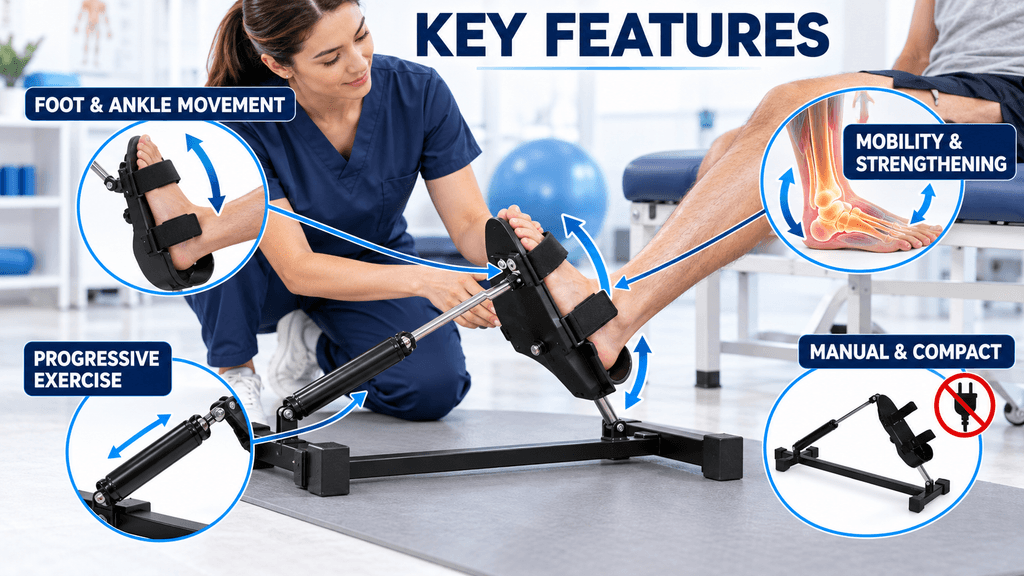
Key Features
- Dedicated foot and ankle rehabilitation design
- Suitable for controlled ankle exercises
- Supports foot and heel movement
- Useful for ankle mobility training
- Can support strengthening exercises
- Suitable for range-of-motion exercises
- Useful for progressive rehabilitation
- Manual operation
- No electrical power required
- Compact rehabilitation equipment
- Suitable for physiotherapy clinics
- Can be incorporated into sports rehabilitation
- Useful for lower-limb exercise programs
- Durable construction depending on model
- Easy to incorporate into exercise therapy setups
Applications of Heel & Ankle Exercise
The Heel & Ankle Exercise equipment can be incorporated into different physiotherapy and rehabilitation programs.
Ankle Rehabilitation
Controlled ankle exercises can form part of rehabilitation programs following selected injuries, periods of immobilization, or reduced activity.
Foot Rehabilitation
The equipment may be used for selected foot movement and strengthening exercises according to professional assessment.
Post-Injury Exercise
After appropriate clinical assessment, controlled ankle and foot exercises may be incorporated during progressive recovery.
Sports Rehabilitation
Athletes can use selected ankle mobility and strengthening exercises as part of a structured sports rehabilitation program.
Mobility Training
Ankle movement plays an important role in walking and lower-limb function. Controlled exercises can therefore be incorporated into functional mobility programs.
Post-Immobilization Rehabilitation
Following a period of reduced ankle movement, therapists may introduce progressive mobility and strengthening exercises according to the patient’s condition.
Lower-Limb Conditioning
The equipment can form part of a broader lower-limb exercise routine involving the foot, ankle, calf, and related muscle groups.
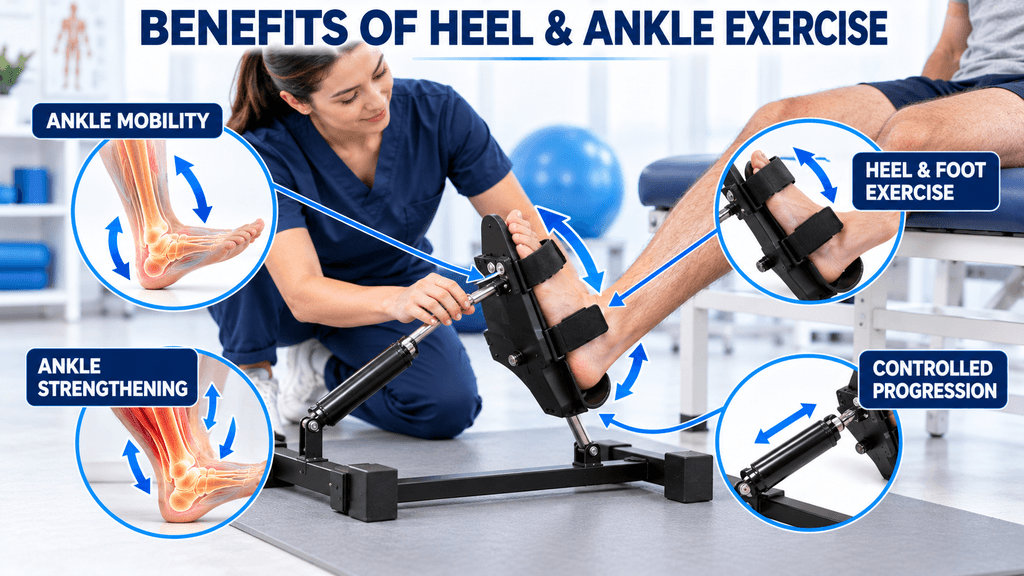
Benefits of Heel & Ankle Exercise
When appropriately incorporated into a rehabilitation program, Heel & Ankle Exercise may provide several practical benefits:
- Supports controlled ankle movement
- Helps facilitate foot mobility exercises
- Supports progressive ankle strengthening
- Can be used for range-of-motion exercises
- Provides a structured exercise position
- Supports selected heel and foot exercises
- Can be incorporated into sports rehabilitation
- Useful during progressive lower-limb rehabilitation
- Allows repetitive controlled exercise
- Helps therapists modify exercises according to rehabilitation stage
- Suitable for regular clinical exercise sessions
The actual therapeutic benefit depends on the patient’s condition, exercise technique, resistance, frequency, and overall rehabilitation program.
Heel & Ankle Exercise for Physiotherapy Clinics
A Heel & Ankle Exercise unit can be a useful addition to the lower-limb rehabilitation section of a physiotherapy clinic.
Ankle and foot rehabilitation may require repeated controlled movements with gradual progression. A dedicated exercise device gives therapists a practical platform for incorporating focused exercises into a patient’s treatment plan.
It can be used alongside:
- Ankle exercisers
- Foot steppers
- Balance boards
- Resistance bands
- Exercise mats
- Parallel bars
- Heel raises
- Lower-limb strengthening equipment
- Gait training equipment
This makes it suitable for clinics that provide orthopaedic, neurological, sports, and general rehabilitation services.
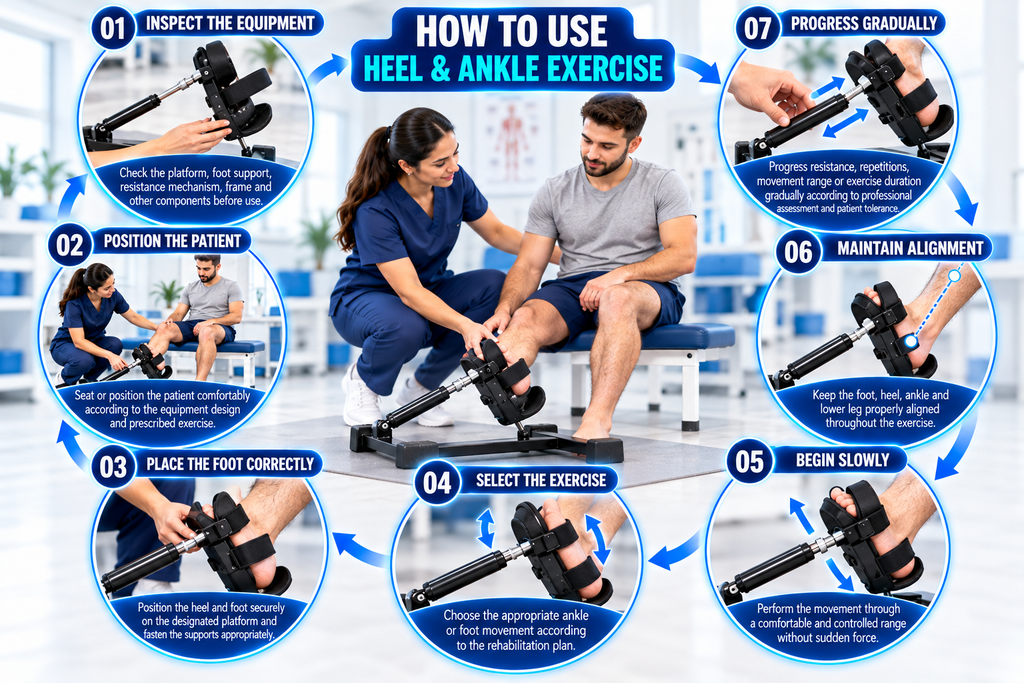
How to Use Heel & Ankle Exercise
Step 1: Inspect the Equipment
Check the platform, pedals, resistance mechanism, frame, and other components before starting.
Step 2: Position the Patient
Seat or position the patient according to the equipment design and prescribed exercise.
Step 3: Place the Foot Correctly
Position the heel and foot securely on the designated exercise surface.
Step 4: Select the Exercise
Choose the appropriate ankle or foot movement according to the rehabilitation plan.
Step 5: Begin Slowly
Perform the movement through a comfortable and controlled range without sudden force.
Step 6: Maintain Alignment
Keep the foot and ankle properly aligned throughout the exercise.
Step 7: Progress Gradually
Resistance, repetitions, movement range, or exercise duration can be progressed according to professional assessment and patient tolerance.
Safety Precautions
- Inspect the equipment before each use.
- Ensure the foot is positioned correctly.
- Start with an appropriate movement range.
- Avoid sudden or forceful ankle movements.
- Do not use excessive resistance.
- Stop if significant pain develops.
- Patients recovering from fractures, surgery, or significant injuries should follow professional rehabilitation instructions.
- Maintain proper ankle and knee alignment.
- Keep the equipment on a stable surface.
- Do not use damaged components.
- Follow the manufacturer’s instructions for resistance and loading.
- Provide supervision when required.
Who Can Use Heel & Ankle Exercise?
The equipment may be incorporated into rehabilitation programs for:
- Physiotherapy patients
- Orthopaedic rehabilitation patients
- Sports rehabilitation patients
- Patients recovering from selected ankle injuries
- Patients requiring ankle mobility exercises
- Patients performing foot strengthening
- Individuals undergoing lower-limb rehabilitation
- Patients progressing toward functional mobility
- General exercise users when appropriate
The exercise type, resistance, and progression should be selected according to individual requirements.
Heel & Ankle Exercise vs Standard Ankle Exercise
| Feature | Heel & Ankle Exercise Equipment | Standard Ankle Exercise |
|---|---|---|
| Exercise Setup | Dedicated equipment | May require floor or chair |
| Foot Positioning | Structured | Usually self-positioned |
| Resistance | Model dependent | Often bodyweight or bands |
| Ankle Mobility | Supported | Supported |
| Heel Exercise | Dedicated depending on model | Exercise dependent |
| Portability | Model dependent | Generally simple |
| Power | Not required | Not required |
| Clinical Use | Suitable | Suitable |
The appropriate option depends on the patient’s rehabilitation requirements and the type of ankle and foot exercises prescribed.
Technical Specifications
| Specification | Details |
|---|---|
| Product Name | Heel & Ankle Exercise |
| Equipment Type | Foot & Ankle Rehabilitation Equipment |
| Primary Use | Heel, Foot & Ankle Exercise |
| Operation | Manual |
| Power Requirement | None |
| Exercise Type | Mobility, Strengthening & Coordination |
| Target Areas | Heel, Foot, Ankle & Lower Leg |
| Resistance | Model dependent |
| Foot Platform | Model dependent |
| Frame Material | Model dependent |
| Dimensions | Model dependent |
| Maximum Load | Model dependent |
| Usage | Physiotherapy & Rehabilitation |
Exact dimensions, materials, resistance mechanism, foot-platform configuration, and load capacity may vary according to the selected PHYSIOMODALITIES™ model.
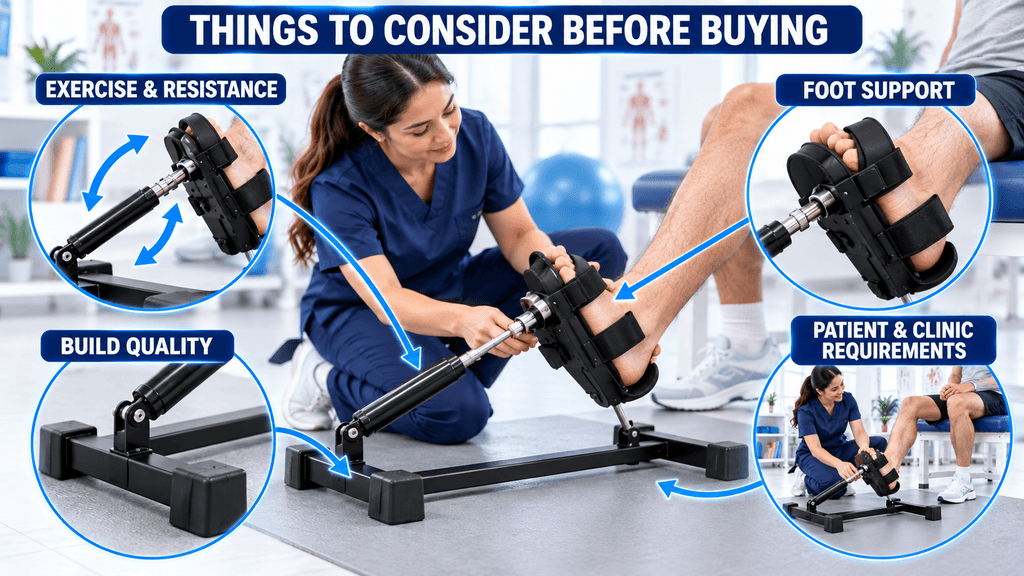
Things to Consider Before Buying
Exercise Mechanism
Check whether the equipment is designed for the specific ankle and foot movements required in your rehabilitation setup.
Resistance
If progressive strengthening is required, consider a model that provides an appropriate resistance mechanism.
Foot Support
A stable and comfortable foot platform can help maintain consistent positioning during exercise.
Construction Quality
A durable frame and stable base are important for repeated clinical use.
Patient Requirements
Consider the range of users, including orthopaedic, sports rehabilitation, neurological, and general physiotherapy patients.
Clinic Space
Ensure adequate space around the equipment for safe patient positioning and therapist assistance.
Why Choose PHYSIOMODALITIES™?
PHYSIOMODALITIES™ provides physiotherapy and rehabilitation equipment designed for professional clinical environments.
The Heel & Ankle Exercise equipment can complement a rehabilitation setup by providing a dedicated option for controlled foot, heel, ankle, and lower-limb exercises.
PHYSIOMODALITIES ENTERPRISES offers equipment across physiotherapy, rehabilitation, exercise therapy, electrotherapy, and clinical treatment categories, helping clinics develop equipment setups according to their individual requirements.
Conclusion
The Heel & Ankle Exercise equipment is designed to support controlled foot, heel, and ankle rehabilitation exercises. It can be incorporated into mobility, range-of-motion, strengthening, coordination, and progressive functional training programs.
Its dedicated exercise setup can help therapists introduce focused ankle and foot movements while adapting exercise intensity according to the patient’s rehabilitation stage.
When appropriately selected, installed, and used under professional guidance, Heel & Ankle Exercise equipment can be a practical addition to physiotherapy, sports rehabilitation, orthopaedic rehabilitation, and exercise therapy environments.
Frequently Asked Questions
1. What is Heel & Ankle Exercise equipment used for?
It is used for controlled heel, foot, and ankle exercises involving mobility, strengthening, range of motion, and coordination.
2. Is Heel & Ankle Exercise suitable for physiotherapy clinics?
Yes. It can be incorporated into physiotherapy and rehabilitation programs focused on lower-limb and ankle function.
3. Can it be used after an ankle injury?
It may be incorporated into rehabilitation after selected ankle injuries, but the timing and type of exercise should be determined by a qualified healthcare professional.
4. Does Heel & Ankle Exercise equipment require electricity?
No. Standard manual models do not require electrical power.
5. Can the resistance be adjusted?
Resistance depends on the equipment design. Some models provide adjustable resistance, while other models use bodyweight or fixed mechanical resistance.