The Handy Laser Therapy Machine is a compact physiotherapy device designed for professional rehabilitation and physical therapy environments. Its handy format can make it convenient to handle, position, and incorporate into treatment workflows, depending on the model’s design and operating specifications.
Laser therapy equipment is used by trained healthcare professionals as part of selected physiotherapy protocols. The appropriate application depends on the device’s laser type, wavelength, output power, operating mode, treatment area, and the patient’s individual assessment.
For physiotherapy clinics, rehabilitation centres, and sports therapy facilities, a Handy Laser Therapy Machine may provide a practical option when a compact laser device is required. Before purchasing, clinics should verify the exact technical specifications, safety features, included accessories, and manufacturer’s instructions for the selected model.
What Is a Handy Laser Therapy Machine?
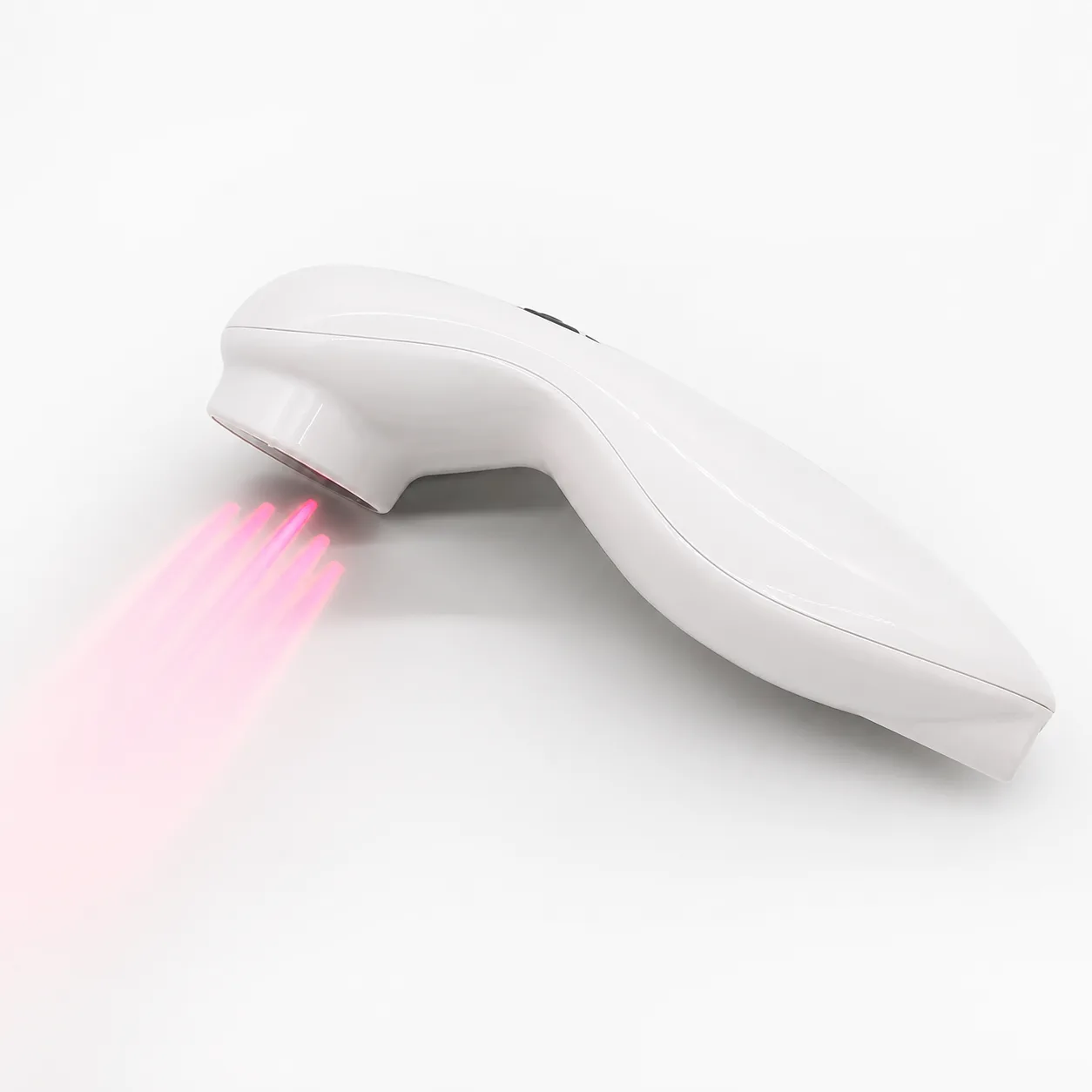
A Handy Laser Therapy Machine is a laser-based physiotherapy device designed to deliver controlled optical energy to a selected treatment area according to the device’s specifications.
Depending on the model, the device may use a handheld probe, an integrated applicator, or another treatment delivery arrangement. The laser technology, output settings, treatment modes, and operating method can vary between models.
The compact design may help professionals position the applicator over the intended area during a treatment session. However, the suitability of the device for a particular condition should be determined through professional assessment and the manufacturer’s approved indications.
Key Features of the Handy Laser Therapy Machine
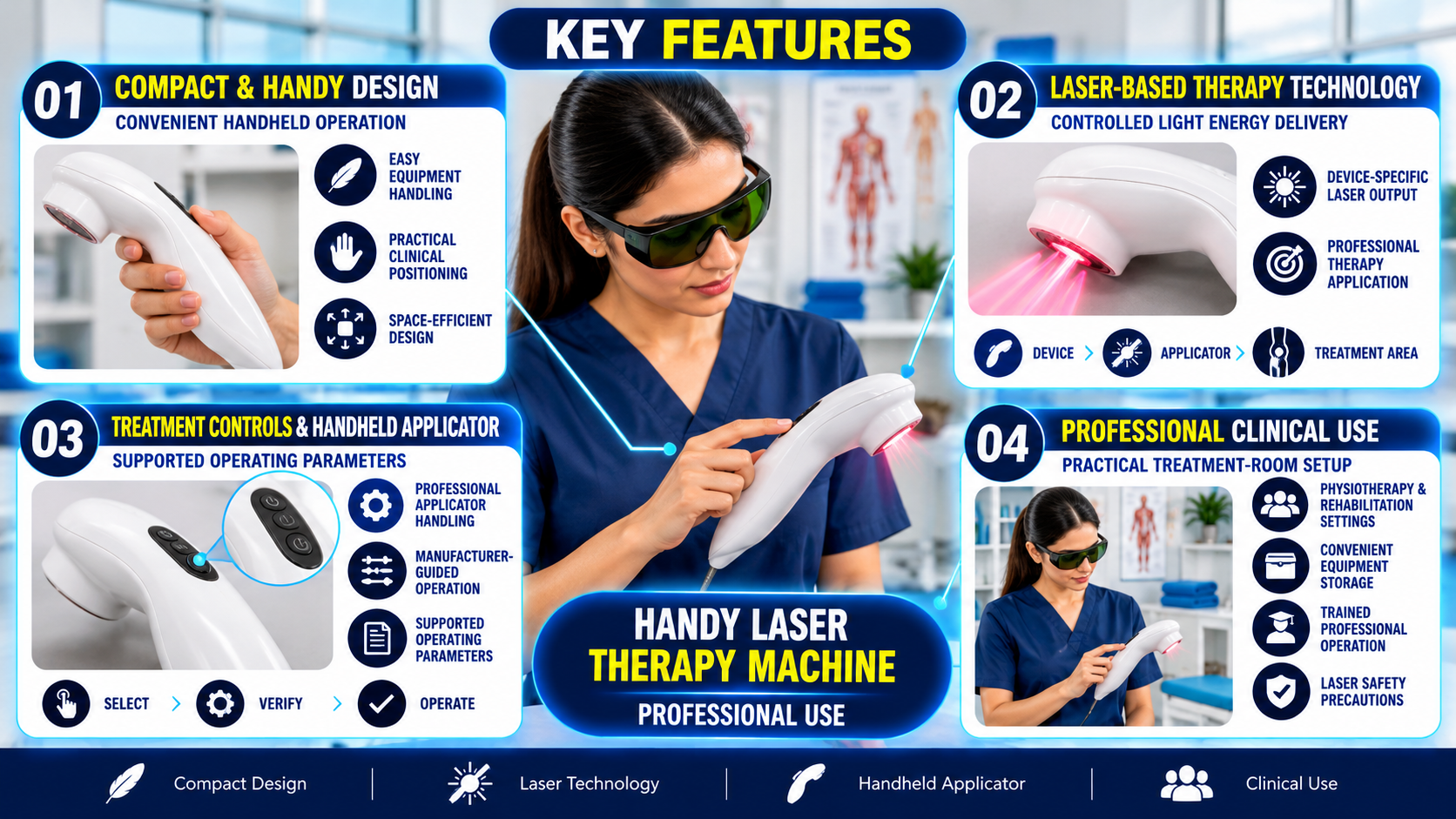
1. Compact and Handy Design
The device is designed around a compact format that may support convenient handling and positioning during professional treatment sessions. Actual size, weight, and portability should be confirmed for the specific model.
2. Laser-Based Therapy
The machine delivers laser energy according to its specified operating parameters. Wavelength and output power are important technical factors that influence how a particular device is intended to be used.
3. Treatment Control Settings
Depending on the configuration, the device may provide controls for treatment time, output level, operating mode, or energy delivery. Confirm which settings are available on the selected model.
4. Handheld Applicator
Some handy laser devices use a handheld applicator to direct treatment toward a selected area. Applicator type, contact requirements, and positioning technique depend on the manufacturer’s instructions.
5. Professional Physiotherapy Use
The device is intended for use in appropriate professional treatment environments when its intended use and specifications meet the clinic’s requirements.
6. Practical Treatment-Room Setup
A compact device may be useful where clinicians need equipment that can be positioned and stored conveniently between treatment sessions.
How Does a Handy Laser Therapy Machine Work?
A Handy Laser Therapy Machine delivers laser energy through its specified optical delivery system. The device’s wavelength, output power, operating mode, and exposure duration determine its technical output.
In physiotherapy, laser-based treatment may be considered as one component of a broader rehabilitation plan. Its use should be based on the patient’s assessment, the device’s approved indications, and the clinician’s treatment protocol.
The operator should follow the manufacturer’s guidance for applicator placement, treatment distance, exposure duration, and output settings. Laser therapy should not be assumed to produce the same results for every patient or condition.
Applications of the Handy Laser Therapy Machine
Depending on the device’s specifications and approved indications, a Handy Laser Therapy Machine may be incorporated into selected professional physiotherapy protocols.
Physiotherapy Clinics
Physiotherapy professionals may use laser equipment as part of selected treatment plans where laser therapy is considered appropriate.
Sports Rehabilitation
Laser therapy may be considered within selected sports rehabilitation programs alongside other interventions, depending on professional assessment and the device’s intended use.
Musculoskeletal Rehabilitation
A laser device may be incorporated into selected musculoskeletal treatment protocols. The appropriate application depends on the patient’s condition and the specific equipment.
Orthopaedic Rehabilitation
Clinicians may consider laser therapy as one component of selected orthopaedic rehabilitation plans where appropriate.
Rehabilitation Centres
A compact laser device may support treatment workflows in rehabilitation facilities that use laser-based modalities.
Important: These are potential professional-use contexts, not a guarantee that the device is suitable for every condition. Always verify the manufacturer’s approved indications and contraindications.
Potential Benefits of a Handy Laser Therapy Machine
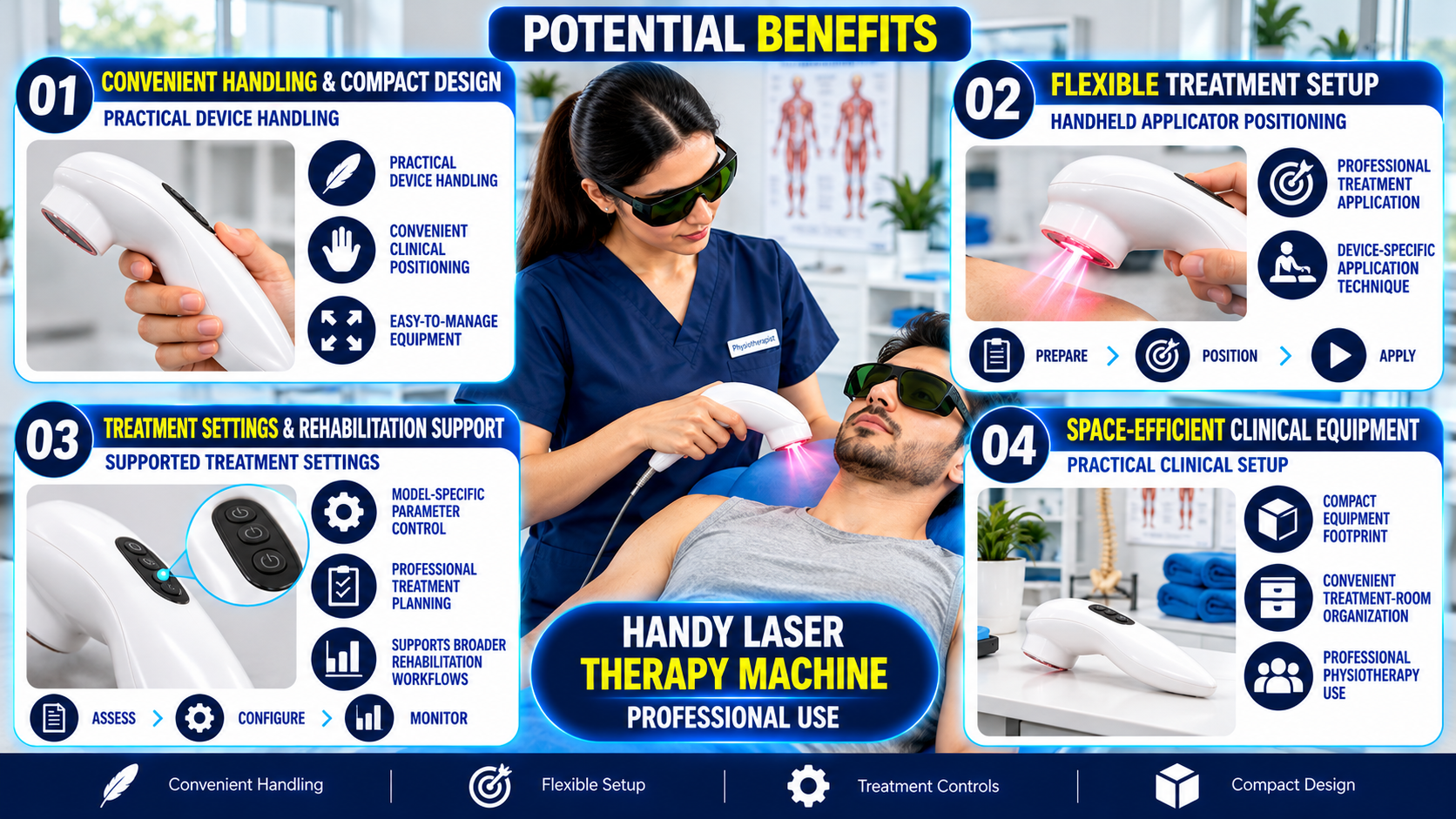
Convenient Handling
A compact design may make the device convenient to handle and position during treatment, depending on its construction.
Flexible Treatment Setup
A handheld applicator, where provided, may allow the operator to position the device over the selected treatment area according to the operating instructions.
Adjustable Treatment Parameters
Where supported, adjustable settings may allow trained professionals to configure treatment according to the device’s specifications and the selected protocol.
Integration with Rehabilitation Programs
Laser therapy equipment may be incorporated into a broader rehabilitation plan alongside other appropriate clinical interventions.
Space-Efficient Equipment
A handy format may be useful for clinics that prefer compact equipment and have limited treatment-room space.
Technical Specifications
The following specifications should be verified for the exact Handy Laser Therapy Machine model before publication or purchase.
| Specification | Details |
|---|---|
| Product Name | Handy Laser Therapy Machine |
| Product Type | Laser Therapy Device |
| Technology | Laser-based; exact technology to be confirmed |
| Laser Wavelength | Confirm with manufacturer |
| Output Power | Confirm with manufacturer |
| Laser Class | Confirm from the device label and documentation |
| Operating Modes | Model-dependent |
| Treatment Timer | Confirm with manufacturer |
| Energy Settings | Model-dependent |
| Applicator Type | Confirm with manufacturer |
| Display and Controls | Model-dependent |
| Power Supply | Confirm with manufacturer |
| Dimensions | Confirm with manufacturer |
| Weight | Confirm with manufacturer |
| Included Accessories | Confirm from the package list |
| Intended Use | According to manufacturer documentation |
| Warranty | Confirm with supplier |
Note: Do not assume the wavelength, output power, laser class, treatment modes, or energy settings. These values must match the exact product datasheet and device label.
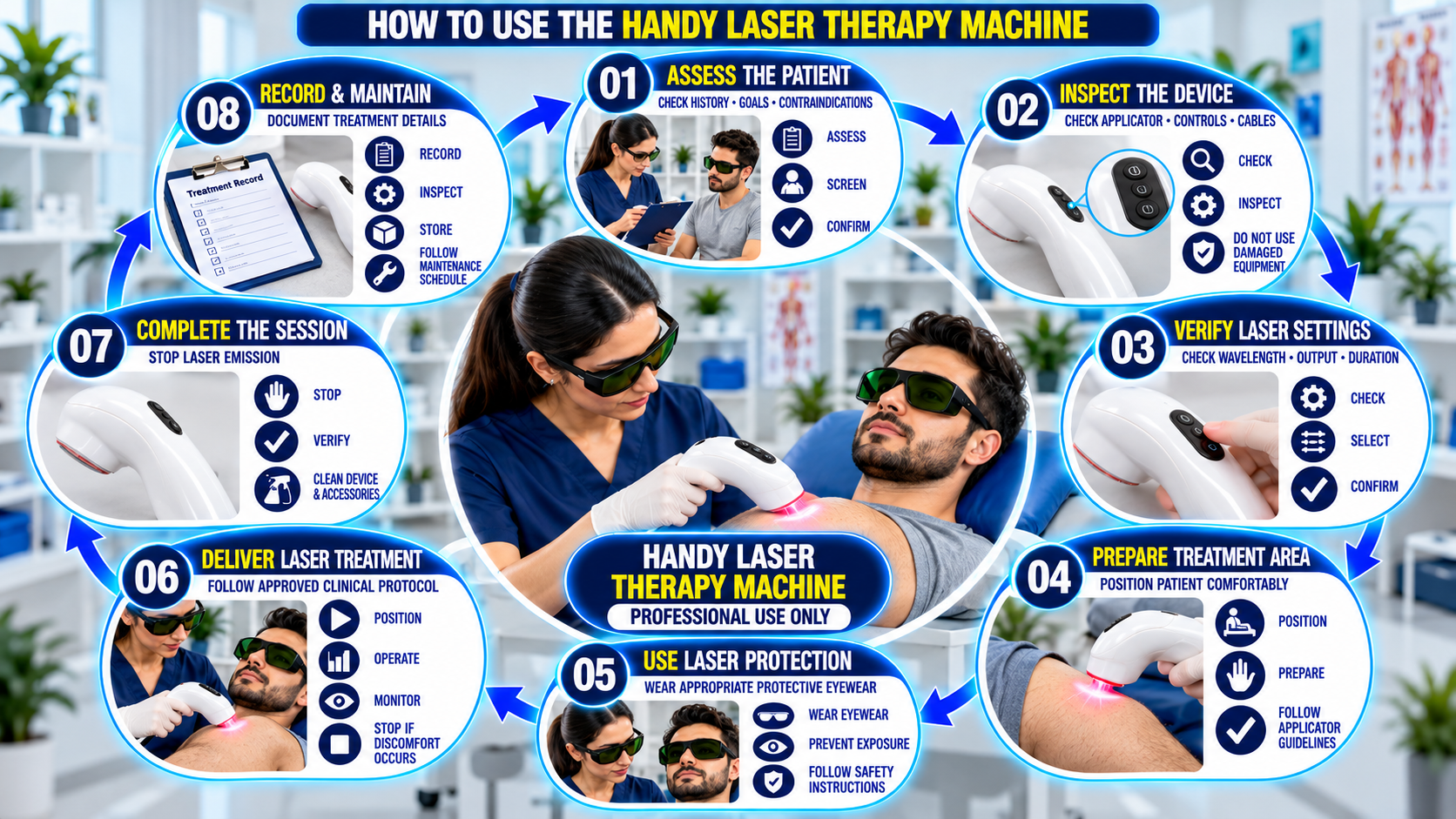
How to Use the Handy Laser Therapy Machine
The machine should be operated only by a trained professional who understands the device’s specifications and laser safety requirements.
Step 1: Assess the Patient
Review the patient’s condition, treatment objective, relevant history, and any contraindications specified by the manufacturer.
Step 2: Inspect the Device
Check the applicator, housing, controls, cables, connectors, and other supplied components. Do not use damaged equipment.
Step 3: Verify the Laser Settings
Confirm the wavelength, output level, operating mode, and treatment duration supported by the specific model. Select settings only according to professional assessment and the manufacturer’s instructions.
Step 4: Prepare the Treatment Area
Position the patient comfortably and prepare the intended area according to the device’s instructions. Follow the manufacturer’s guidance on applicator contact, distance, and positioning.
Step 5: Use Required Laser Protection
Follow the laser safety instructions for the device. Use the specified protective eyewear for the relevant wavelength and laser classification, and ensure that other people in the treatment area are protected as required.
Step 6: Deliver Treatment
Operate the device according to the approved protocol and the manufacturer’s instructions. Monitor the patient and stop if an unexpected reaction or discomfort occurs.
Step 7: Complete the Session
Switch off the output before moving or storing the applicator. Clean the device and accessories according to the manufacturer’s guidance.
Step 8: Record and Maintain
Document treatment details where required by the clinical protocol. Inspect and maintain the device at the intervals specified by the manufacturer.
Laser Safety Precautions
Laser safety is essential when operating a Handy Laser Therapy Machine.
- Use the device only according to the manufacturer’s instructions.
- Allow only appropriately trained personnel to operate the machine.
- Never direct laser emission toward the eyes.
- Use protective eyewear suitable for the device’s wavelength and laser classification.
- Ensure that patients and relevant personnel follow the specified eye-protection requirements.
- Avoid directing the laser toward reflective surfaces where this could create an exposure hazard.
- Follow all manufacturer-specific contraindications and warnings.
- Confirm the device’s laser class and required controlled-area precautions.
- Do not use the device if the applicator, housing, controls, or cables are damaged.
- Do not modify the laser output system or bypass safety features.
- Keep the device away from water and unsuitable environmental conditions.
- Stop treatment if an unexpected response occurs.
- Store and maintain the device according to manufacturer recommendations.
Who Should Operate This Machine?
The Handy Laser Therapy Machine should be operated by a qualified physiotherapist or appropriately trained healthcare professional authorized to use the specific device.
The operator should understand:
- Laser safety and eye protection
- Device wavelength and output specifications
- Treatment controls and operating modes
- Patient assessment and contraindications
- Applicator positioning and treatment technique
- Treatment documentation and equipment maintenance
The device’s controls do not replace clinical judgment. Treatment must be selected according to the patient’s needs and the manufacturer’s instructions.
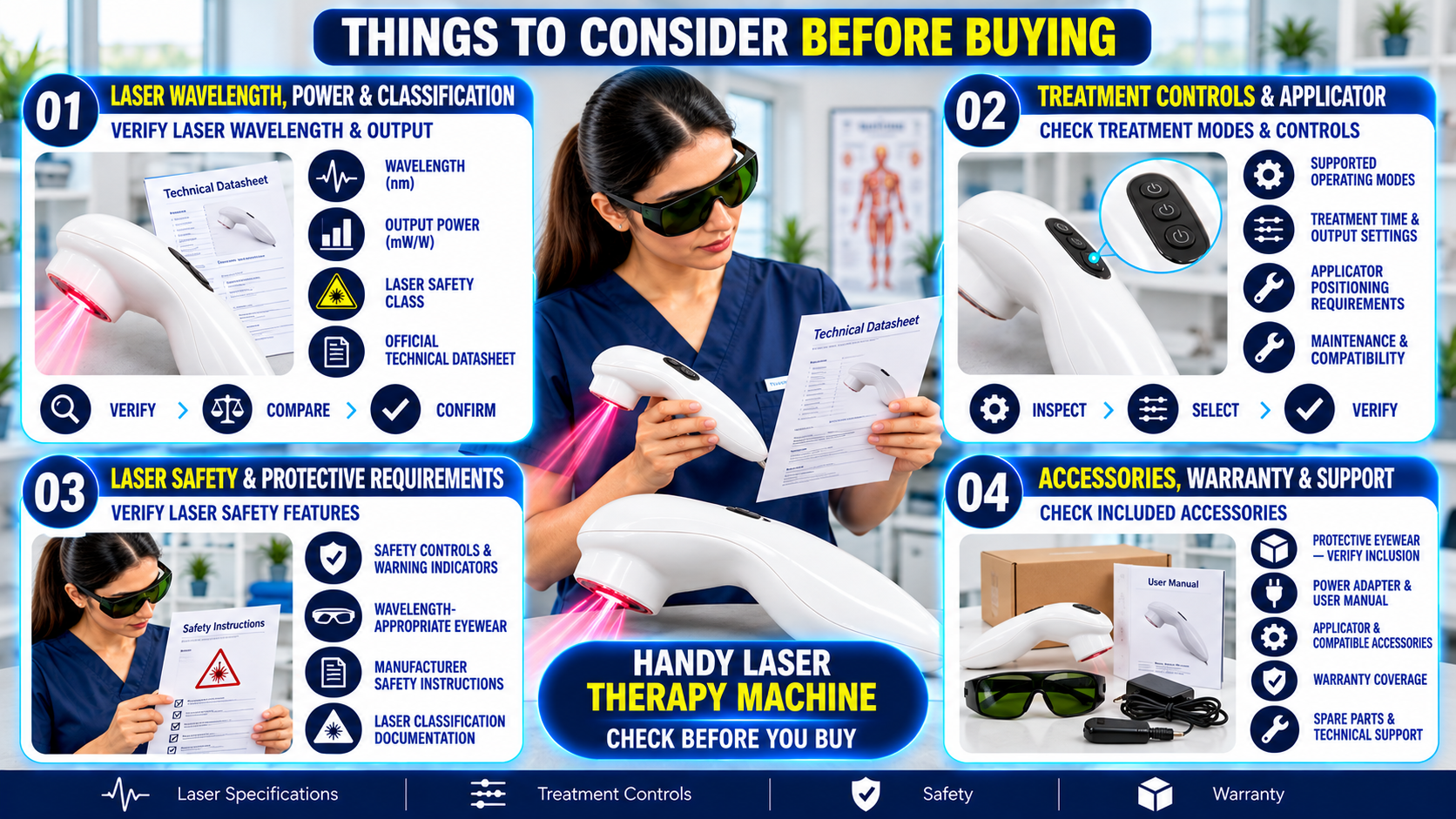
Things to Consider Before Buying
Laser Wavelength and Output Power
Confirm the exact wavelength and output power from the technical datasheet. These are essential specifications when evaluating laser therapy equipment.
Laser Classification
Check the device’s laser class and the associated safety requirements. Confirm that the labeling and documentation are supplied with the machine.
Treatment Modes and Controls
Ask which operating modes, timer settings, output adjustments, and energy controls are available.
Applicator Design
Check the applicator type, intended positioning method, and any maintenance requirements.
Safety Features
Review the device’s safety controls, warning indicators, protective eyewear requirements, and operating instructions.
Accessories and Package Contents
Confirm whether protective eyewear, applicators, a power adapter, a user manual, and other required accessories are included.
Warranty and After-Sales Support
Check warranty coverage, servicing availability, replacement parts, and technical support before purchasing.
Why Choose PHYSIOMODALITIES™?
PHYSIOMODALITIES™, from PHYSIOMODALITIES ENTERPRISES, focuses on physiotherapy and rehabilitation equipment for professional treatment environments.
When evaluating a Handy Laser Therapy Machine, clinics should consider the device’s technical specifications, intended use, applicator design, safety documentation, accessories, warranty, and after-sales service.
Requesting the exact product datasheet before ordering helps ensure that the selected model meets the clinic’s requirements. All technical claims should be verified against the manufacturer’s documentation.
Conclusion
The Handy Laser Therapy Machine is a compact laser-based physiotherapy device designed for professional treatment environments. Its handy format may support convenient handling and treatment setup, while its clinical applications depend on the exact laser technology, wavelength, output power, operating modes, and approved indications.
Before purchasing, verify the laser specifications, classification, treatment controls, applicator, safety requirements, accessories, warranty, and service support. Safe operation requires appropriate professional training, patient assessment, and adherence to the manufacturer’s instructions.
Frequently Asked Questions
1. What is a Handy Laser Therapy Machine?
It is a compact laser-based device intended for selected professional physiotherapy applications according to its specifications and approved use.
2. What should I check before buying a laser therapy machine?
Verify wavelength, output power, laser class, operating modes, applicator, safety documentation, accessories, and warranty.
3. Is the Handy Laser Therapy Machine suitable for clinics?
It may be suitable for professional clinics if its specifications, intended use, and safety requirements meet the clinic’s needs.
4. Is protective eyewear necessary?
Laser protection requirements depend on the device’s wavelength and classification. Follow the manufacturer’s instructions and use appropriate protective eyewear.
5. Who should operate this machine?
A qualified or appropriately trained healthcare professional authorized to use the device should operate it.