
The High-Low 3 Fold Traction Therapy Table is designed for professional physiotherapy clinics, rehabilitation centres, and treatment facilities that require an adjustable treatment surface for traction procedures and other selected physiotherapy applications. Its three-fold tabletop design supports positioning flexibility, while the high-low adjustment feature allows the table height to be changed according to the patient’s positioning needs and the therapist’s working requirements.
A High-Low 3 Fold Traction Therapy Table can be a useful addition to a clinical environment where patient positioning, therapist access, and efficient use of treatment-room space are important. The specific adjustment mechanism, traction compatibility, weight capacity, and included accessories depend on the exact model and should be confirmed before purchase.
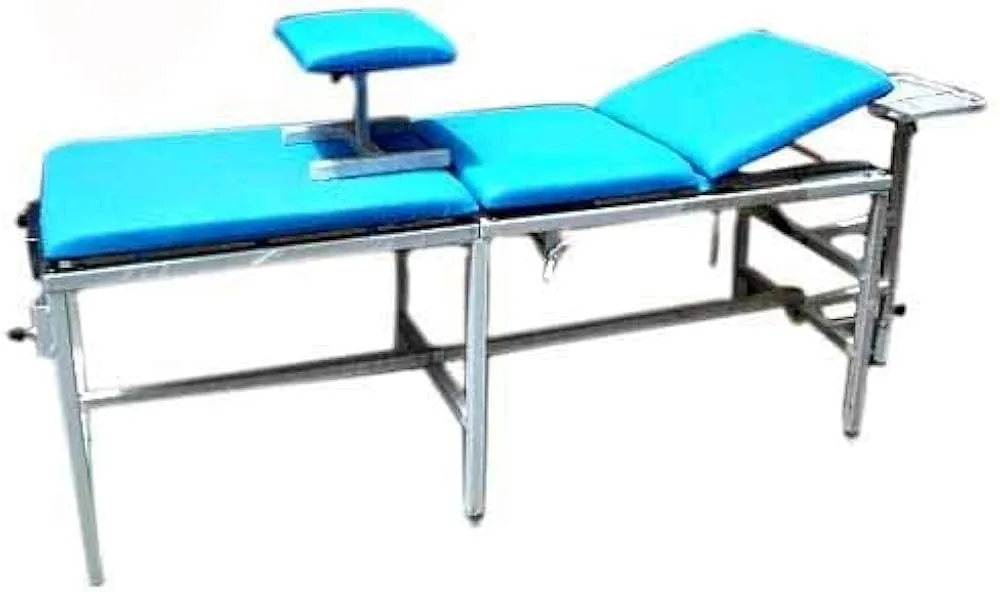
What Is a High-Low 3 Fold Traction Therapy Table?
A High-Low 3 Fold Traction Therapy Table is a professional treatment table designed with a height-adjustable structure and a tabletop divided into three sections. Depending on its configuration, the separate sections may help support different patient positions during physiotherapy and rehabilitation sessions.
The high-low function allows the working height to be adjusted, depending on the mechanism provided. This can help therapists position the table at a suitable level for patient transfer, treatment setup, and clinical access.
The three-fold construction may provide positioning flexibility for selected treatment procedures. However, the exact movement of each section and the table’s suitability for specific traction equipment must be verified from the manufacturer’s specifications.
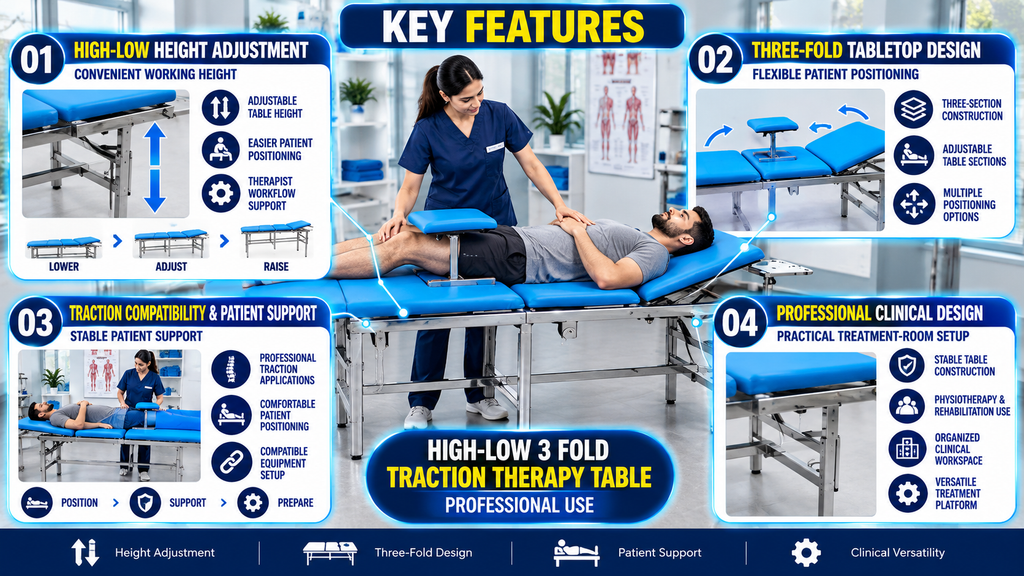
Key Features of the High-Low 3 Fold Traction Therapy Table
1. High-Low Height Adjustment
The adjustable-height design allows the tabletop height to be changed according to the model’s operating mechanism. This can support convenient patient positioning and help therapists work at a more suitable level during treatment.
2. Three-Fold Tabletop Design
The three-section tabletop is designed to support different positioning requirements. The movement and adjustment range of each section depend on the table configuration.
3. Traction Therapy Compatibility
The table is intended for traction-related physiotherapy applications when configured and approved for the required traction equipment. Before using a traction device, confirm compatibility, attachment points, load limits, and operating instructions.
4. Patient Positioning Support
The treatment surface provides a platform for positioning patients during selected physiotherapy and rehabilitation procedures.
5. Professional Clinical Design
The table is intended for professional treatment environments, including physiotherapy clinics and rehabilitation centres. Frame construction, upholstery, and adjustment mechanisms vary by model.
6. Practical Treatment-Room Setup
Combining height adjustment and a three-fold design in one table can help clinics organize their treatment space efficiently.
How Does a High-Low 3 Fold Traction Therapy Table Work?
The table provides a stable treatment surface for patient positioning. Its high-low mechanism changes the working height, while the three-fold tabletop allows positioning adjustments according to the available section movements.
During a traction procedure, the patient is positioned according to the selected clinical protocol. If a traction device is used, the device must be compatible with the table and installed according to the relevant manufacturer’s instructions.
The table itself does not necessarily generate traction. The traction force, treatment settings, and movement are determined by the compatible traction equipment and its operating specifications.
Applications of the High-Low 3 Fold Traction Therapy Table
The table may be incorporated into professional treatment environments for selected applications, depending on its design and approved use.
Physiotherapy Clinics
Physiotherapy clinics can use the table as part of their treatment setup for patient positioning and selected rehabilitation procedures.
Rehabilitation Centres
Rehabilitation facilities may use an adjustable treatment table to support clinical workflows involving mobility, positioning, and supervised rehabilitation.
Cervical and Lumbar Traction Setup
When specifically compatible with the relevant traction equipment, the table may be used as a platform for selected cervical or lumbar traction procedures. Confirm the approved configuration before use.
Orthopaedic Rehabilitation
The table may support positioning during selected orthopaedic physiotherapy sessions, depending on the patient’s requirements and the treatment protocol.
Manual Therapy and Assessment
If the tabletop sections and adjustment mechanisms are suitable, the table may also support selected assessment and manual therapy procedures.
Professional Treatment Rooms
Its adjustable height and segmented tabletop may be useful in clinics that need a flexible treatment surface for different patient-positioning requirements.
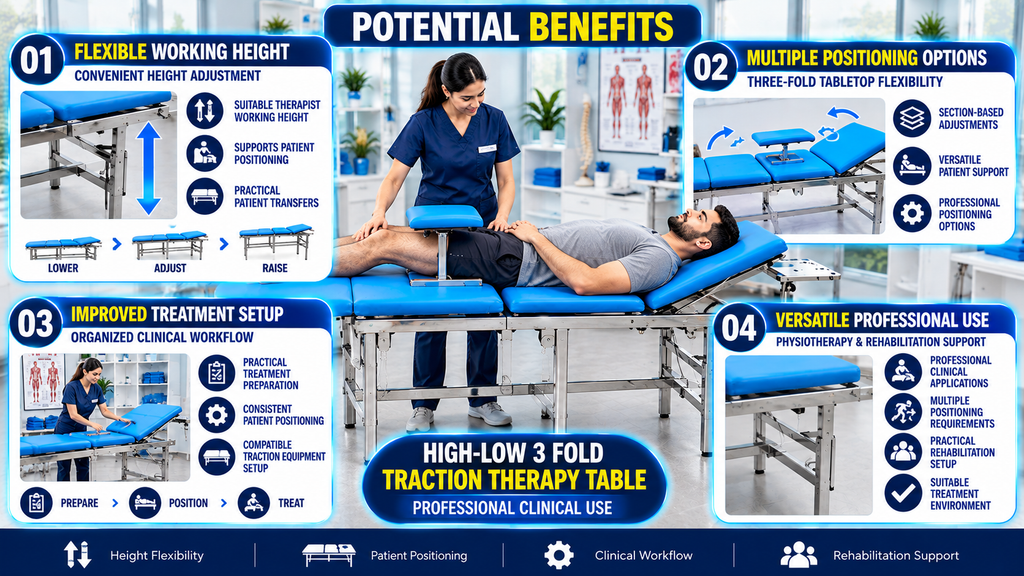
Benefits of a High-Low 3 Fold Traction Therapy Table
Flexible Working Height
The high-low mechanism can help therapists adjust the working surface to a suitable height for different procedures and patient transfers.
Multiple Positioning Options
The three-fold tabletop provides section-based positioning options, depending on the model’s available adjustments.
Improved Treatment Setup
An adjustable table can make it easier to prepare the treatment area for different procedures, provided the table is configured for the intended use.
Organized Clinical Workflow
A dedicated treatment table can help establish a consistent setup for patient positioning and compatible traction equipment.
Versatile Professional Use
Depending on the manufacturer’s intended-use specifications, the table may support a range of positioning and rehabilitation activities.
Technical Specifications
The following table lists the main specification categories to check for the High-Low 3 Fold Traction Therapy Table. Exact values should be confirmed against the specific model’s datasheet.
| Specification | Details |
|---|---|
| Product Name | High-Low 3 Fold Traction Therapy Table |
| Product Type | Physiotherapy Treatment Table |
| Tabletop Design | Three-fold |
| Height Adjustment | High-low; mechanism to be confirmed |
| Traction Compatibility | Model-dependent |
| Tabletop Sections | Three; individual movements to be confirmed |
| Frame Material | Confirm with manufacturer |
| Upholstery | Confirm with manufacturer |
| Height Range | Confirm with manufacturer |
| Table Dimensions | Confirm with manufacturer |
| Safe Working Load | Confirm with manufacturer |
| Adjustment Controls | Model-dependent |
| Traction Attachments | Confirm according to configuration |
| Accessories | As specified in the product package |
| Intended Environment | Professional physiotherapy and rehabilitation settings |
| Warranty | Confirm with supplier |
Important: Do not assume that the table includes a motorized height-adjustment system, a traction unit, a specific weight capacity, or particular accessories unless these features are confirmed for the exact model.
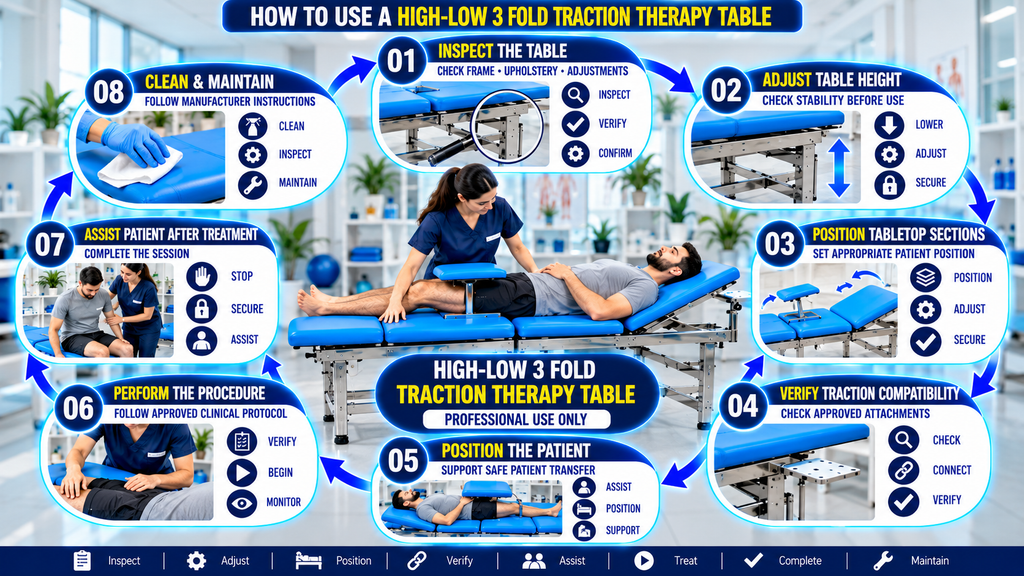
How to Use the High-Low 3 Fold Traction Therapy Table
The table should be used by appropriately trained healthcare professionals according to the manufacturer’s instructions.
Step 1: Inspect the Table
Check the frame, tabletop, upholstery, adjustment controls, hinges, locking mechanisms, and any traction attachment points before use.
Step 2: Check Height Adjustment
Adjust the table to a suitable working height using the mechanism provided. Ensure that the table is stable and the height adjustment is secured before positioning the patient.
Step 3: Position the Tabletop Sections
Set the three tabletop sections according to the intended procedure and the table’s permitted adjustment range. Lock or secure adjustable sections as instructed by the manufacturer.
Step 4: Confirm Traction Equipment Compatibility
If a traction unit will be used, verify that the equipment is approved for the table and that all required attachments are fitted correctly.
Step 5: Position the Patient
Help the patient onto the table using an appropriate transfer method. Follow the clinical protocol and the patient’s individual mobility requirements.
Step 6: Perform the Procedure
Proceed only after checking the patient’s position, table stability, equipment setup, and relevant safety requirements. Traction settings must be selected by a qualified professional using the compatible device’s instructions.
Step 7: Assist the Patient After Treatment
Ensure the table and any attached equipment are in a safe state before helping the patient get off the table.
Step 8: Clean and Maintain
Clean the tabletop and contact surfaces using manufacturer-approved products. Inspect the adjustment mechanism and attachments regularly, and report any damage before further use.
Safety Precautions
- Use the table only for its intended purpose and within the manufacturer’s specified load limits.
- Confirm traction equipment compatibility before attaching or operating a traction unit.
- Ensure height adjustments and movable tabletop sections are properly secured.
- Keep hands and fingers clear of moving sections and pinch points.
- Assist patients who have difficulty getting onto or off the table.
- Do not leave a patient unattended if the clinical situation requires supervision.
- Inspect the frame, hinges, locks, controls, and attachments before use.
- Do not use the table if it is unstable, damaged, or malfunctioning.
- Follow cleaning, disinfection, inspection, and maintenance instructions.
- Traction procedures should be prescribed or selected by an appropriately qualified healthcare professional following patient assessment.
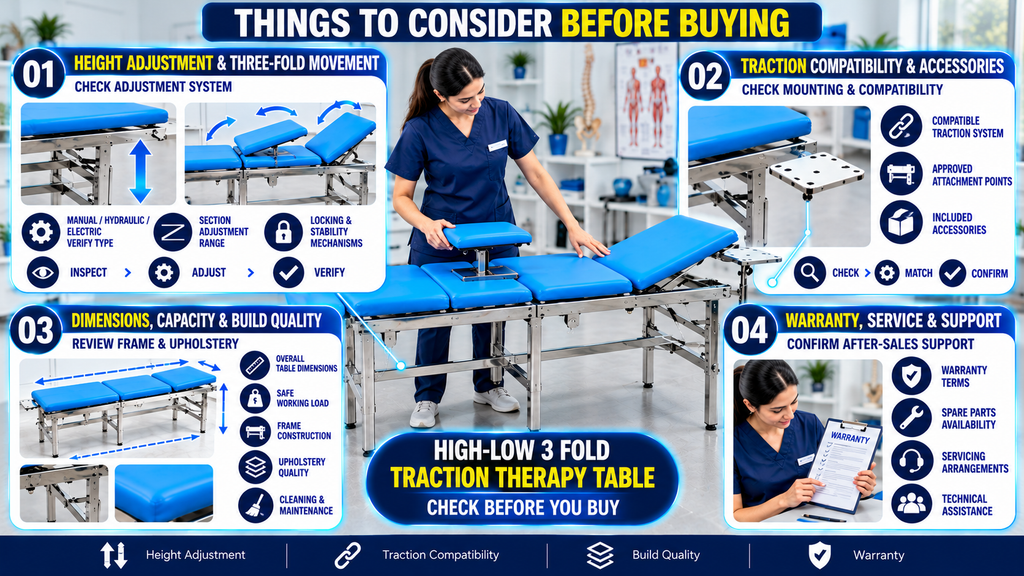
Things to Consider Before Buying
Before purchasing a High-Low 3 Fold Traction Therapy Table, review the following factors.
Height Adjustment Mechanism
Confirm whether the height is adjusted manually, hydraulically, electrically, or by another mechanism.
Three-Fold Section Movement
Check which sections can be adjusted, the available movement range, and the locking method for each section.
Traction Compatibility
Verify whether the table is designed for a specific traction system and whether the necessary mounting points and accessories are included.
Dimensions and Weight Capacity
Check the table’s overall dimensions, height range, and safe working load against the needs of your clinic.
Frame and Upholstery
Ask about frame construction, upholstery material, ease of cleaning, and routine maintenance requirements.
Warranty and Service Support
Confirm warranty coverage, spare-part availability, servicing arrangements, and after-sales support before placing an order.
Why Choose PHYSIOMODALITIES™?
PHYSIOMODALITIES™, from PHYSIOMODALITIES ENTERPRISES, offers physiotherapy and rehabilitation equipment for professional treatment environments.
When selecting a High-Low 3 Fold Traction Therapy Table, clinics should evaluate the adjustment mechanism, tabletop design, traction compatibility, dimensions, safe working load, accessories, warranty, and service support.
Choosing a configuration that meets the clinic’s clinical requirements and space limitations can help create a practical treatment setup. Buyers should request the product datasheet and confirm all technical details for the exact model before ordering.
Conclusion
The High-Low 3 Fold Traction Therapy Table is designed to provide an adjustable treatment surface for professional physiotherapy and rehabilitation settings. Its high-low feature and three-fold tabletop can support flexible patient positioning, while traction-related use depends on compatibility with the required equipment.
Before purchasing, confirm the height-adjustment mechanism, tabletop movements, dimensions, safe working load, traction attachments, included accessories, warranty, and maintenance requirements. Appropriate professional use and regular inspection are essential for safe operation.
Frequently Asked Questions
1. What is a High-Low 3 Fold Traction Therapy Table?
It is a physiotherapy treatment table featuring height adjustment and a three-section tabletop, with traction use dependent on the model’s compatibility.
2. What does the high-low feature do?
It allows the table height to be adjusted using the mechanism provided by the manufacturer.
3. What is the purpose of the three-fold tabletop?
It provides section-based positioning options, depending on the movements supported by the specific model.
4. Can this table be used for cervical and lumbar traction?
Only when the table is compatible with the required traction equipment and approved for that intended use.
5. What should I check before buying?
Confirm the adjustment mechanism, tabletop movement, dimensions, safe working load, traction compatibility, accessories, warranty, and after-sales service.