
The Ankle Exerciser Rehabilitation is a practical physiotherapy and exercise therapy device designed to support controlled ankle movement, mobility, strengthening, flexibility, and progressive rehabilitation. It can be incorporated into supervised rehabilitation programs where patients need structured ankle exercises following injury, immobilisation, surgery, sports-related problems, or reduced joint mobility.
Ankle rehabilitation generally requires gradual and controlled movement rather than sudden loading. A dedicated ankle exerciser provides a convenient way to perform repeated ankle movements against controlled resistance or through a guided movement pattern. Depending on the equipment design, exercises may include dorsiflexion, plantarflexion, inversion, and eversion.
The Ankle Exerciser Rehabilitation from PHYSIOMODALITIES™ is suitable for physiotherapy clinics, rehabilitation centres, orthopaedic departments, sports rehabilitation facilities, and exercise therapy areas.
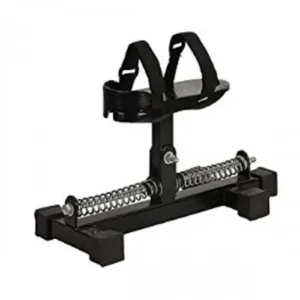
What Is Ankle Exerciser Rehabilitation?
Ankle Exerciser Rehabilitation refers to the use of dedicated ankle exercise equipment for controlled rehabilitation and strengthening of the ankle and foot.
The device supports targeted ankle exercises while keeping the foot positioned on a designated support or platform. Depending on the model, resistance can be provided through springs or another mechanical resistance system.
This makes the equipment useful for progressive exercise programs in which the therapist controls the movement, repetitions, resistance, and overall exercise progression according to the patient’s condition.
How Does an Ankle Exerciser Work?
An ankle exerciser works by allowing the foot and ankle to perform controlled movements through a defined exercise pattern.
Dorsiflexion Exercise
Dorsiflexion is the movement in which the foot moves upward toward the lower leg. Controlled dorsiflexion exercises can be incorporated into rehabilitation programs focusing on ankle mobility and lower-leg muscle function.
Plantarflexion Exercise
Plantarflexion moves the foot downward. It can be included in strengthening and movement exercises involving the muscles responsible for pushing the foot downward.
Inversion Exercise
Inversion involves turning the sole of the foot inward. Where supported by the equipment design, this movement can be included in targeted ankle rehabilitation.
Eversion Exercise
Eversion involves moving the sole of the foot outward. Some ankle exercise devices allow controlled side-to-side movement for a more comprehensive ankle exercise routine.
Resistance-Based Training
Spring or mechanical resistance can provide an additional challenge during ankle exercises. Resistance should be selected according to the patient’s rehabilitation stage and professional assessment.
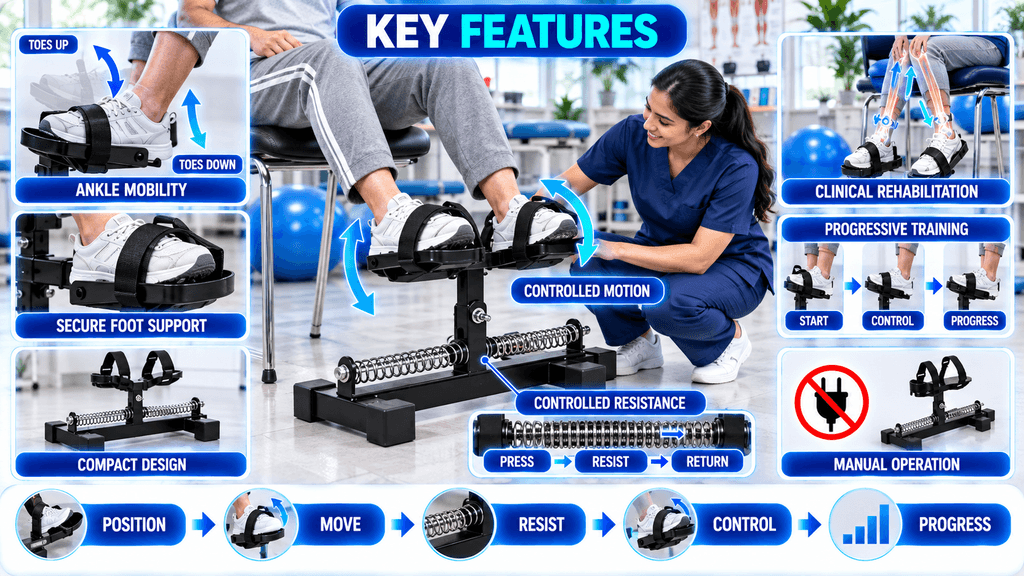
Key Features
- Dedicated ankle and foot exercise equipment
- Designed for physiotherapy rehabilitation
- Supports controlled ankle movements
- Suitable for dorsiflexion exercises
- Suitable for plantarflexion exercises
- Inversion and eversion on applicable models
- Mechanical or spring-based resistance depending on model
- Supports progressive exercise
- Stable foot positioning
- Compact rehabilitation equipment
- Manual operation
- No electrical power required for conventional models
- Suitable for repeated clinical use
- Easy to incorporate into exercise therapy programs
Applications of Ankle Exerciser Rehabilitation
The Ankle Exerciser Rehabilitation can be incorporated into different physiotherapy and rehabilitation programs.
Ankle Injury Rehabilitation
Controlled ankle exercises can form part of rehabilitation after suitable ankle injuries. Exercise intensity and movement range should be selected according to the patient’s condition.
Sports Rehabilitation
Athletes recovering from ankle-related injuries may require progressive mobility and strengthening exercises before returning to normal sporting activity.
Post-Fracture Rehabilitation
After appropriate fracture management and immobilisation, patients may experience stiffness and weakness. A controlled ankle exercise program can help reintroduce movement and strengthening when permitted by the treating professional.
Post-Operative Rehabilitation
Selected orthopaedic rehabilitation programs include progressive ankle movement after surgery. The timing, movement range, and resistance must follow the surgeon or physiotherapist’s instructions.
Ankle Stiffness
Reduced activity or prolonged immobilisation can affect ankle movement. Controlled exercise can be incorporated into a rehabilitation plan to work on mobility and flexibility.
Muscle Strengthening
Ankle exercises can target the muscles involved in dorsiflexion, plantarflexion, inversion, and eversion.
Functional Rehabilitation
Ankle mobility and strength contribute to activities such as standing, walking, balance, and stair climbing. An ankle exerciser can therefore be used as one component of a broader functional rehabilitation program.
Benefits of Ankle Exerciser Rehabilitation
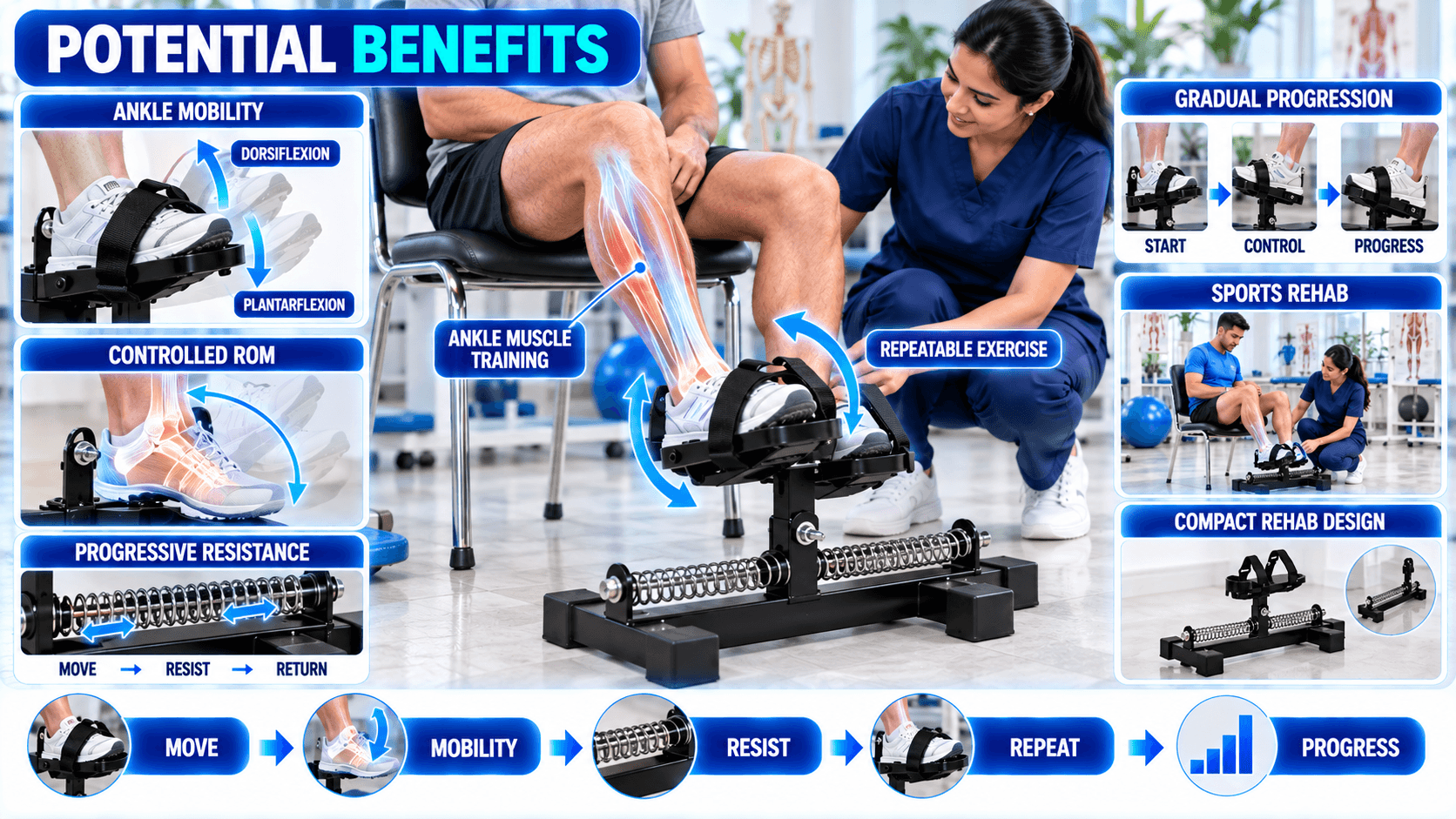
When appropriately used within a supervised rehabilitation program, the equipment may provide several practical benefits:
- Supports controlled ankle movement
- Helps perform repetitive ankle exercises
- Supports ankle range-of-motion training
- Can be used for progressive resistance exercises
- Helps target ankle and lower-leg muscles
- Supports flexibility and mobility exercises
- Provides consistent exercise positioning
- Can be incorporated into post-immobilisation rehabilitation
- Useful for sports rehabilitation programs
- Compact and convenient for physiotherapy clinics
- Supports structured exercise therapy
The actual rehabilitation outcome depends on the patient’s diagnosis, exercise program, consistency, resistance level, and clinical management.
Ankle Exerciser for Physiotherapy Clinics
A dedicated ankle exerciser can be a useful addition to the exercise therapy section of a physiotherapy clinic.
It provides a targeted method for ankle and foot exercise without requiring a large motorised rehabilitation system. Therapists can use it alongside other rehabilitation equipment for patients working on lower-limb mobility, strength, balance, and functional movement.
The compact nature of this type of equipment also makes it suitable for clinics where exercise therapy space needs to be used efficiently.
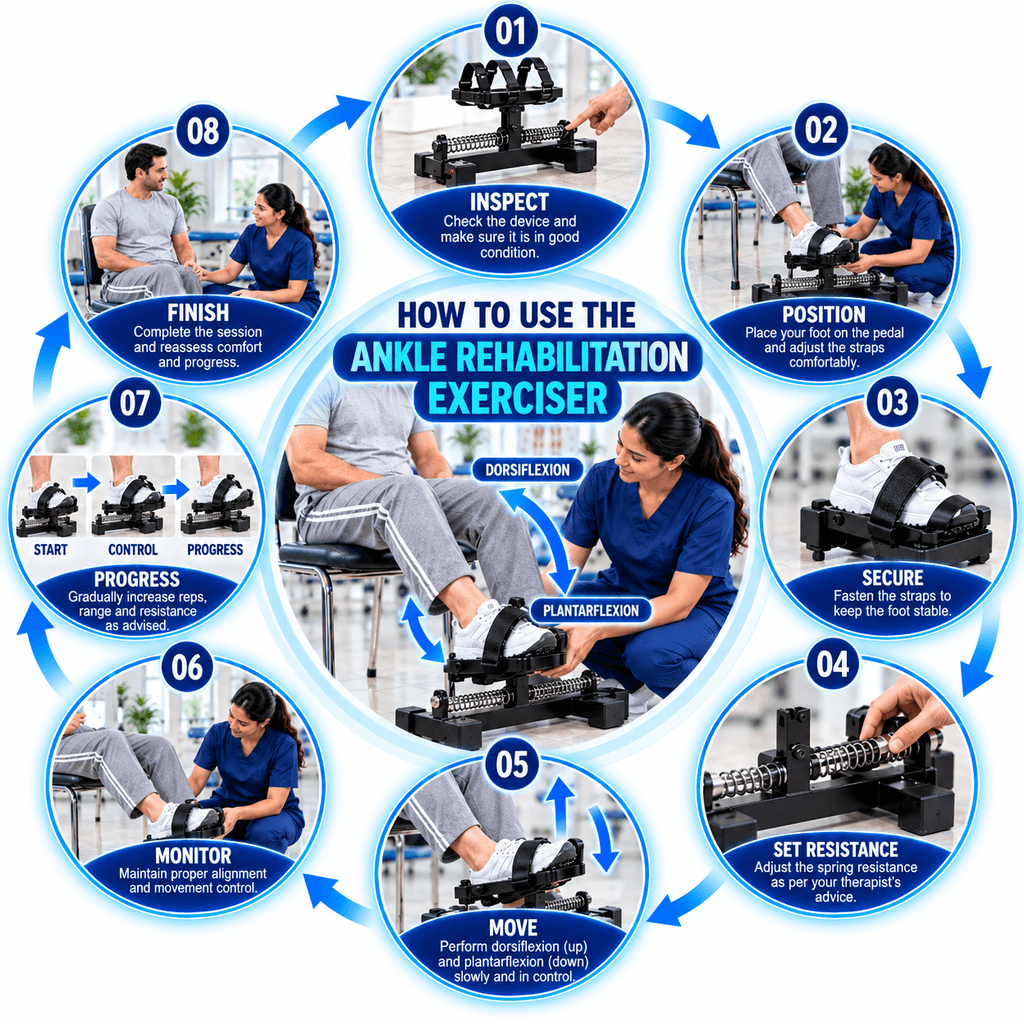
How to Use Ankle Exerciser Rehabilitation Equipment
Step 1: Inspect the Equipment
Before use, check the base, foot support, resistance mechanism, springs, straps, and other components for visible damage or looseness.
Step 2: Position the Patient
Place the patient in a stable and comfortable position suitable for the exercise and equipment design.
Step 3: Place the Foot
Position the affected foot correctly on the foot platform or support area.
Step 4: Secure the Foot
If a strap or securing mechanism is provided, adjust it so the foot remains appropriately positioned without excessive pressure.
Step 5: Select Resistance
For adjustable models, choose an appropriate resistance level based on the patient’s rehabilitation stage.
Step 6: Perform the Exercise
Perform the prescribed ankle movement slowly and in a controlled manner.
Step 7: Monitor the Patient
Observe movement quality, discomfort, fatigue, compensatory movement, and exercise tolerance.
Step 8: Progress Gradually
Resistance, repetitions, and movement range should be increased only when clinically appropriate.
Safety Precautions
- Use the equipment according to professional rehabilitation instructions.
- Inspect the equipment before every session.
- Do not use damaged or loose components.
- Do not apply excessive resistance.
- Avoid forcing the ankle through painful movement.
- Follow post-operative and post-fracture restrictions carefully.
- Patients with significant swelling, instability, recent surgery, or acute injury should use the equipment only under appropriate professional guidance.
- Maintain proper patient positioning throughout the exercise.
- Stop exercise if significant pain or unusual symptoms develop.
- Clean patient-contact surfaces according to the clinic’s hygiene protocol.
Who Can Use Ankle Exerciser Rehabilitation Equipment?
The equipment may be incorporated into rehabilitation programs for:
- Ankle injury rehabilitation
- Sports injury rehabilitation
- Post-fracture rehabilitation
- Selected post-operative rehabilitation
- Ankle mobility training
- Ankle strengthening programs
- Post-immobilisation exercise
- Orthopaedic rehabilitation
- General physiotherapy exercise therapy
The appropriate exercise and resistance should always be determined according to the patient’s individual rehabilitation requirements.
Manual Ankle Exerciser vs Motorized Rehabilitation Equipment
| Feature | Manual Ankle Exerciser | Motorized Ankle Equipment |
|---|---|---|
| Operation | Manual | Motor driven |
| Power | Usually not required | Electrical power required |
| Exercise | Active/resisted | Often passive or guided |
| Resistance | Mechanical/spring depending on model | Model dependent |
| Control | Patient/therapist | Motor/control system |
| Main Purpose | Exercise and strengthening | Guided movement/passive rehabilitation |
| Size | Generally compact | Usually larger |
The exact functionality depends on the equipment model.
Technical Specifications
| Specification | Details |
|---|---|
| Product Name | Ankle Exerciser Rehabilitation |
| Equipment Type | Physiotherapy Exercise Equipment |
| Target Area | Ankle & Foot |
| Operation | Manual |
| Exercise Type | Controlled ankle movement |
| Primary Movements | Dorsiflexion & Plantarflexion |
| Additional Movements | Inversion/Eversion on applicable models |
| Resistance | Mechanical/Spring based, model dependent |
| Resistance Adjustment | Model dependent |
| Foot Support | Foot platform/foot holder |
| Power Requirement | Not required for conventional manual models |
| Application | Physiotherapy & Rehabilitation |
| Suitable For | Clinics, Rehabilitation Centres & Exercise Therapy Areas |
Exact dimensions, resistance range, materials, and other specifications may vary according to the selected PHYSIOMODALITIES™ model.
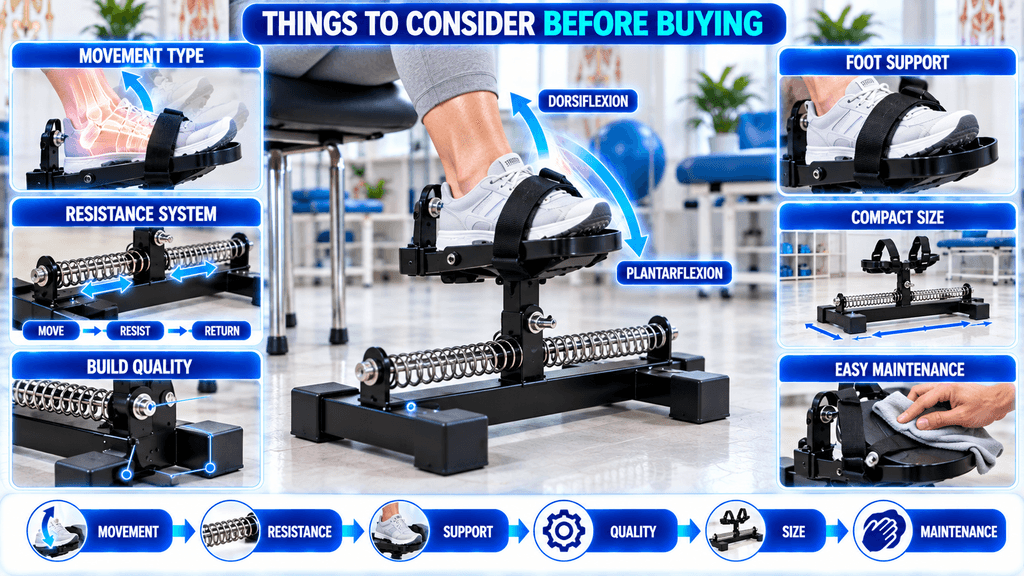
Things to Consider Before Buying
Movement Range
Check which ankle movements are supported by the particular model and whether they match the requirements of your rehabilitation programs.
Resistance
Consider whether the equipment provides fixed or adjustable resistance and whether the available resistance is suitable for your patient population.
Foot Positioning
A stable foot platform helps maintain consistent positioning during repeated exercises.
Construction
For regular clinical use, choose equipment with a stable base and durable mechanical components.
Space Requirements
A compact design can be beneficial for physiotherapy clinics with limited exercise therapy space.
Maintenance
The equipment should be easy to inspect, clean, and maintain between patient sessions.
Why Choose PHYSIOMODALITIES™?
PHYSIOMODALITIES™ offers physiotherapy and rehabilitation equipment designed for professional clinical environments.
The Ankle Exerciser Rehabilitation can complement a clinic’s rehabilitation setup by providing dedicated equipment for controlled ankle exercise, mobility training, and strengthening programs.
PHYSIOMODALITIES ENTERPRISES offers equipment across physiotherapy, electrotherapy, exercise therapy, rehabilitation, and clinical treatment categories, allowing clinics to build equipment setups according to their specific requirements.
Conclusion
The Ankle Exerciser Rehabilitation is a practical piece of physiotherapy equipment designed for controlled ankle movement, mobility, flexibility, and strengthening exercises. Its compact and straightforward design makes it suitable for incorporating targeted ankle exercises into rehabilitation programs.
It can be used as part of post-injury, sports, post-immobilisation, orthopaedic, and selected post-operative rehabilitation programs when appropriate. With correct patient positioning, suitable resistance, and professional supervision, the equipment can support a structured approach to ankle exercise therapy.
Frequently Asked Questions
1. What is Ankle Exerciser Rehabilitation equipment used for?
It is used for controlled ankle and foot exercises, including mobility, strengthening, flexibility, and range-of-motion training.
2. Which ankle movements can be performed?
Depending on the model, exercises may include dorsiflexion, plantarflexion, inversion, and eversion.
3. Does an ankle exerciser require electricity?
Conventional manual and spring-based ankle exercisers generally do not require electrical power.
4. Can it be used after an ankle injury?
It may be included in a rehabilitation program after an ankle injury when exercise has been clinically approved and the appropriate movement and resistance have been selected.
5. Is it suitable for physiotherapy clinics?
Yes. It can be incorporated into physiotherapy, orthopaedic rehabilitation, sports rehabilitation, and exercise therapy setups.