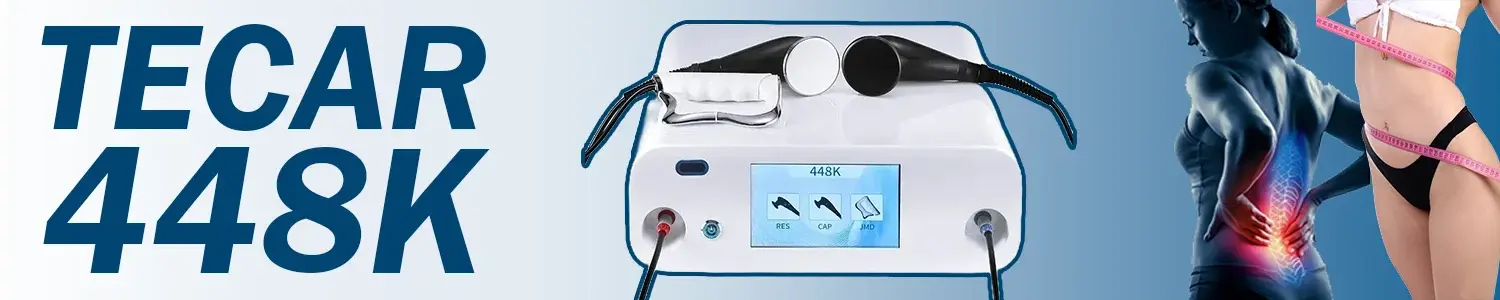
TECAR 448K Therapy Unit: A Deep Dive into Therapy
The TECAR 448K Therapy Unit is an advanced radiofrequency-based physiotherapy device designed for use in selected rehabilitation settings. TECAR stands for Transfer of Energy Capacitive and Resistive. The technology uses radiofrequency energy transfer and may produce controlled heating in tissues, depending on the equipment settings and treatment method.
Physiotherapy clinics and rehabilitation professionals may consider TECAR therapy as one component of a wider treatment plan. Understanding its working principles, potential applications, safety considerations, and equipment specifications helps clinics make informed purchasing decisions.
What Is a TECAR 448K Therapy Unit?
A TECAR 448K Therapy Unit is a physiotherapy device that transfers radiofrequency energy through capacitive and resistive application methods. The term 448K generally refers to a frequency of approximately 448 kilohertz (kHz).
Unlike a conventional hot pack, which transfers heat from an external source, TECAR therapy can generate heat within tissues through radiofrequency energy transfer. The distribution of energy depends on factors such as electrode design, tissue properties, treatment technique, and device output.
The device may be used by trained professionals as an adjunct to selected musculoskeletal rehabilitation programmes. It does not replace clinical assessment, prescribed exercise, manual therapy, or other appropriate treatment.
How Does 448 kHz TECAR Therapy Work?
TECAR therapy uses a treatment electrode and a return electrode or plate to establish an electrical circuit. Radiofrequency energy passes through the treatment area, and tissue characteristics influence the energy distribution and resulting thermal effects.
A qualified practitioner selects the treatment method and device settings according to the patient's clinical assessment, comfort, and manufacturer's instructions.
1. Capacitive Energy Transfer (CET)
Capacitive energy transfer generally uses an insulated treatment electrode. It is commonly associated with applications involving tissues with relatively high water content, including muscles and superficial soft tissues.
Depending on the device and clinical application, this mode may be incorporated into treatment plans addressing muscle discomfort or movement limitations. The expected response varies by patient and condition.
2. Resistive Energy Transfer (RET)
Resistive energy transfer generally uses a non-insulated electrode. The method changes how energy is distributed through the treatment circuit and may be selected for applications involving relatively resistive tissues, such as tendons and certain structures around joints.
The actual depth and distribution of energy depend on several factors. Resistive mode should not automatically be assumed to reach every deep tissue or provide a specific therapeutic outcome.
3. Why Is the 448 kHz Frequency Important?
The 448 kHz frequency has been investigated in research involving capacitive-resistive electrical transfer. Studies have examined potential effects on pain and physical function in selected musculoskeletal conditions.
However, results vary across studies and treatment protocols. Frequency alone does not establish that a device is more effective than another physiotherapy modality.
Potential Applications of a TECAR 448K Therapy Unit
TECAR therapy may be considered as an adjunct in selected rehabilitation settings. A qualified healthcare professional should determine whether it is appropriate for an individual patient.
Muscle Discomfort and Tightness
Muscle discomfort can occur following physical activity, repetitive movements, prolonged postures, or musculoskeletal injury. When clinically appropriate, TECAR therapy may be included alongside mobility exercises, strengthening, and other physiotherapy interventions.
Sports Rehabilitation
Sports rehabilitation can involve muscle strains, tendon-related problems, ligament injuries, and exercise-related discomfort. TECAR therapy has been explored as an additional modality in sports and orthopaedic rehabilitation.
Its use should depend on the injury stage, clinical findings, and the overall rehabilitation programme. It should not replace appropriate injury assessment or progressive exercise.
Joint Stiffness and Restricted Movement
Some patients experience stiffness or restricted movement following an injury or a period of reduced activity. A physiotherapist may consider suitable modalities as part of a broader plan to support mobility.
Persistent swelling, severe pain, recent trauma, or unexplained loss of movement requires appropriate clinical assessment.
Tendon and Ligament Rehabilitation
Tendon and ligament conditions often require load management, progressive exercises, and a carefully planned return to activity. TECAR therapy has been investigated as an adjunct for some musculoskeletal problems, but evidence differs by condition.
It should not be described as a guaranteed method for repairing damaged tendons or ligaments.
Musculoskeletal Pain Management
Clinical research has examined capacitive-resistive electrical transfer for selected musculoskeletal complaints, including some spinal and knee-related conditions. Some studies report improvements in pain or function, but the strength of evidence and long-term outcomes vary.
Treatment decisions should consider the patient's assessment, goals, medical history, and the available clinical evidence.
Important Features to Check Before Buying
1. Operating Frequency
Check the operating frequency in the manufacturer's technical documentation. Confirm that the advertised 448 kHz specification applies to the exact model being purchased.
2. Capacitive and Resistive Modes
Confirm whether both treatment modes are available. Review the included electrodes, mode selection, and the manufacturer's instructions for each application.
3. Output and Intensity Controls
Review the available output settings and controls. These should allow trained practitioners to follow the appropriate device-specific treatment protocols. Do not assume that different models have identical power output or parameters.
4. Electrodes and Accessories
Check the treatment electrodes, return plate, cables, contact materials, and other accessories included in the package. Confirm whether replacement accessories are available for the selected model.
5. Safety Documentation
Professional equipment should have clear operating instructions, safety precautions, maintenance guidance, and documentation identifying the manufacturer and model. The clinic should also establish suitable patient-screening procedures.
6. Warranty and Technical Support
Before purchasing, confirm warranty coverage, installation requirements, training availability, service arrangements, and access to replacement parts. Verify these details directly with the supplier.
TECAR Therapy Compared with Other Physiotherapy Modalities
| Modality | General Working Principle | Clinical Consideration |
|---|---|---|
| TECAR Therapy | Capacitive-resistive radiofrequency energy transfer | May be considered as an adjunct for selected musculoskeletal conditions. |
| TENS | Electrical stimulation primarily used for pain modulation | Suitability depends on patient needs and electrode placement. |
| IFT | Interferential electrical stimulation | Used in selected physiotherapy programmes for pain management. |
| Ultrasonic Therapy | Acoustic energy delivered through a treatment applicator | Use depends on the clinical indication and device guidance. |
| Superficial Heat Therapy | Heat applied from an external source | Skin condition and heat tolerance must be considered. |
These modalities are not interchangeable. The appropriate choice depends on the clinical assessment, treatment objectives, available evidence, and patient-specific safety considerations.
Safety Considerations and Contraindications
TECAR therapy requires appropriate training, patient screening, and adherence to the instructions supplied with the device. Radiofrequency treatment may not be suitable for every patient or body area.
Before treatment, the practitioner should review the manufacturer's contraindications and precautions. Particular care is needed when considering treatment for patients with implanted electronic devices, during pregnancy, in areas with impaired sensation or circulation, over suspected or confirmed malignancy, or where infection, bleeding, acute injury, or another medical concern is present.
This is not a complete list of contraindications. Restrictions vary according to the device and clinical situation, so a qualified practitioner must make the final decision.
During treatment, patient feedback and the treated area should be monitored. Stop treatment if unexpected pain, excessive heat, burning, dizziness, or another concerning reaction occurs.
TECAR therapy should not be self-administered without appropriate instruction. Patients with severe, unexplained, new, or worsening symptoms should seek medical assessment.
How TECAR Therapy Fits into a Rehabilitation Programme
A rehabilitation programme typically begins with an assessment of symptoms, movement, medical history, functional limitations, and treatment goals. If TECAR therapy is considered appropriate, the clinician selects the method and settings according to the device instructions and the patient's needs.
The modality may be combined with therapeutic exercise, mobility work, manual therapy, education, and a gradual return to normal activity.
Progress should be monitored using relevant measures, such as pain, range of motion, activity tolerance, and functional performance. If the patient does not improve as expected, the treatment plan should be reassessed.
There is no single session duration or treatment schedule suitable for every patient. Settings and protocols should not be copied from another device or condition without clinical justification.
Choosing Physiotherapy Equipment for Your Clinic
When evaluating a TECAR 448K Therapy Unit, clinics and medical equipment dealers should compare the complete product specifications rather than focusing only on the operating frequency.
- Verify the operating frequency for the exact model.
- Confirm the availability of capacitive and resistive modes.
- Review the included electrodes and accessories.
- Check the operating manual and safety documentation.
- Ask about training, installation, and technical support.
- Confirm warranty coverage and service terms.
- Check compliance documentation and intended professional use.
- Compare the complete package and ongoing maintenance requirements.
TECAR 448K Therapy Equipment from PHYSIOMODALITIES™
PHYSIOMODALITIES™, associated with PHYSIOMODALITIES ENTERPRISES, focuses on physiotherapy and rehabilitation equipment. Clinics, rehabilitation centres, and medical equipment dealers evaluating TECAR technology should review the specifications and documentation of the particular product they intend to purchase.
Before placing an order, ask the supplier to confirm the operating frequency, available modes, included accessories, technical requirements, warranty, and after-sales support for the selected model.
Accurate product information and clear technical documentation help professional buyers make informed purchasing decisions and support responsible equipment use in clinical environments.
Frequently Asked Questions (FAQs)
1. What is a TECAR 448K Therapy Unit?
It is a radiofrequency-based physiotherapy device that uses capacitive and resistive energy transfer. The 448K designation generally refers to approximately 448 kHz.
2. What are capacitive and resistive modes?
Capacitive mode generally uses an insulated electrode, while resistive mode generally uses a non-insulated electrode. The choice depends on the device and clinical application.
3. Is TECAR therapy used for musculoskeletal pain?
It has been studied as an adjunct for selected musculoskeletal conditions. Suitability depends on the patient's condition and available clinical evidence.
4. Is TECAR therapy suitable for every patient?
No. Patient screening is essential, and some conditions or implanted devices may require avoiding treatment or obtaining specialist guidance.
5. What should clinics check before buying a TECAR 448K Therapy Unit?
Clinics should verify the frequency, treatment modes, accessories, safety documentation, warranty, technical support, and intended use of the exact model.
Conclusion
The TECAR 448K Therapy Unit uses capacitive and resistive radiofrequency energy transfer and has been investigated for selected musculoskeletal rehabilitation applications. However, evidence varies between conditions, and it should not be promoted as a guaranteed cure or a replacement for appropriate clinical care.
For clinics and medical equipment dealers, important purchasing factors include verified specifications, treatment modes, accessories, safety documentation, service support, and suitability for intended professional use. When selected appropriately and applied by a qualified practitioner, TECAR therapy may form one part of an individualised rehabilitation programme.