
The Wall Mounted Climbing Ladder is a versatile physiotherapy and rehabilitation equipment designed to support assisted exercise, stretching, mobility training, shoulder and upper-limb rehabilitation, posture exercises, and progressive functional training. Also known as a wall ladder, stall bar, or therapy ladder in different rehabilitation settings, it provides multiple height-adjustable hand positions for controlled therapeutic exercises.
The ladder is fixed securely against a wall and provides a stable framework that allows patients to perform different exercises while using the rungs for support. It can be incorporated into physiotherapy clinics, rehabilitation centres, sports rehabilitation facilities, orthopaedic departments, and exercise therapy areas.
The Wall Mounted Climbing Ladder from PHYSIOMODALITIES™ is designed as a practical addition to rehabilitation setups where controlled stretching, mobility, strengthening, and supported exercise are required.
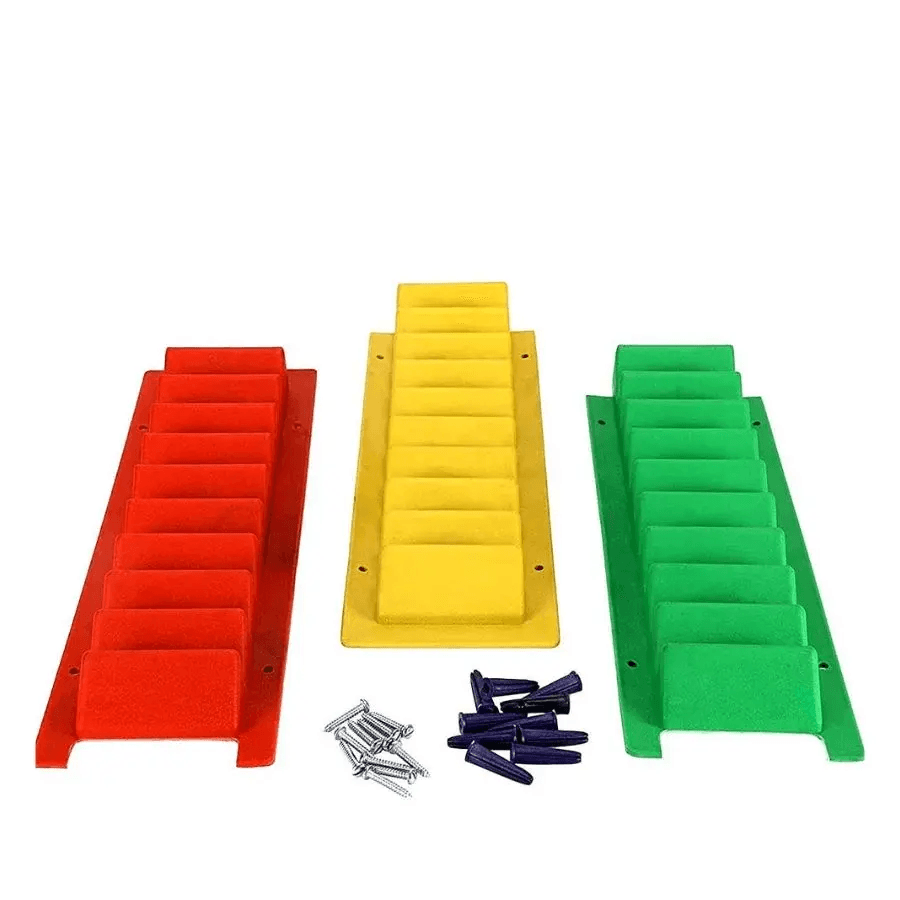
What Is a Wall Mounted Climbing Ladder?
A Wall Mounted Climbing Ladder is a fixed rehabilitation exercise structure consisting of vertical side supports and multiple horizontal rungs mounted securely to a wall.
Unlike a conventional climbing ladder, its primary purpose in a physiotherapy environment is controlled therapeutic exercise rather than climbing. The multiple rungs provide different hand and foot positions, allowing therapists to adapt exercises according to the patient’s height, mobility, strength, and rehabilitation stage.
It can be used for:
- Assisted stretching
- Shoulder mobility exercises
- Upper-limb rehabilitation
- Lower-limb exercises
- Balance and weight-shifting activities
- Postural training
- Supported standing
- Functional exercise
- Progressive mobility training
How Does a Wall Mounted Climbing Ladder Work?
The Wall Mounted Climbing Ladder provides a series of fixed support points at different heights. Patients can hold, reach, or place their feet on selected rungs while performing controlled exercises.
Assisted Stretching
The different rung heights allow patients to use the ladder as a stable support during selected stretching exercises.
Shoulder Mobility
The upper rungs can be used for controlled reaching and assisted shoulder movement exercises according to the patient’s rehabilitation program.
Upper-Limb Exercise
Patients can perform selected reaching, lifting, and mobility exercises while maintaining a stable support point.
Lower-Limb Exercise
The lower rungs can be incorporated into selected lower-limb stretching and strengthening exercises.
Supported Standing
Patients who require an external support during exercise can use the ladder for appropriate standing and weight-shifting activities.
Functional Training
Therapists can use different rung positions to progressively modify the difficulty of selected exercises.
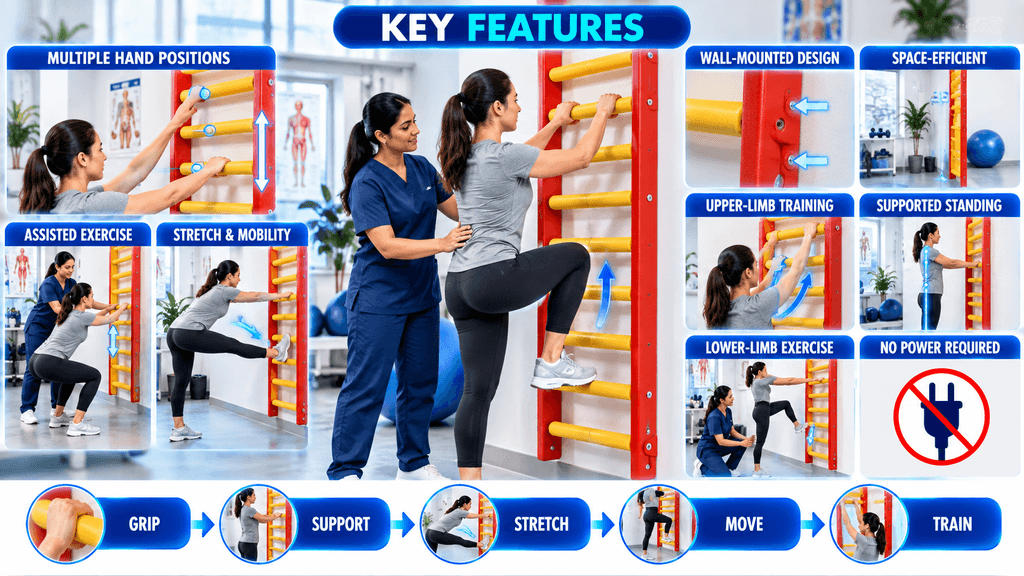
Key Features
- Wall-mounted rehabilitation exercise design
- Multiple horizontal rungs
- Strong fixed wall support
- Suitable for assisted exercise
- Useful for stretching and mobility training
- Supports upper-limb rehabilitation
- Can be used for shoulder mobility exercises
- Suitable for selected lower-limb exercises
- Useful for supported standing activities
- Helps provide different hand positions
- Space-efficient rehabilitation equipment
- Suitable for professional physiotherapy environments
- Durable construction depending on model
- Low-maintenance exercise equipment
- No electrical power required
Applications of Wall Mounted Climbing Ladder
The Wall Mounted Climbing Ladder can be incorporated into a wide range of physiotherapy and rehabilitation programs.
Shoulder Rehabilitation
The ladder can provide different reaching heights for controlled shoulder mobility exercises. Therapists can select a suitable rung according to the patient’s current range of movement.
Upper-Limb Rehabilitation
It can support selected exercises involving the shoulder, elbow, wrist, and hand as part of a progressive rehabilitation program.
Stretching Exercises
The ladder provides a stable structure that can be used during appropriately prescribed stretching exercises.
Balance Training
When appropriate and supervised, patients can use the ladder as an external support during balance and weight-shifting activities.
Postural Training
The ladder can be incorporated into exercises that focus on controlled standing posture, body alignment, and movement.
Lower-Limb Rehabilitation
Selected lower-limb exercises can be performed using the ladder for support.
Functional Mobility
The ladder can form part of functional exercise programs designed to improve controlled movement and confidence during rehabilitation.
Sports Rehabilitation
Sports physiotherapy facilities can incorporate the ladder into mobility, stretching, strengthening, and functional exercise routines.
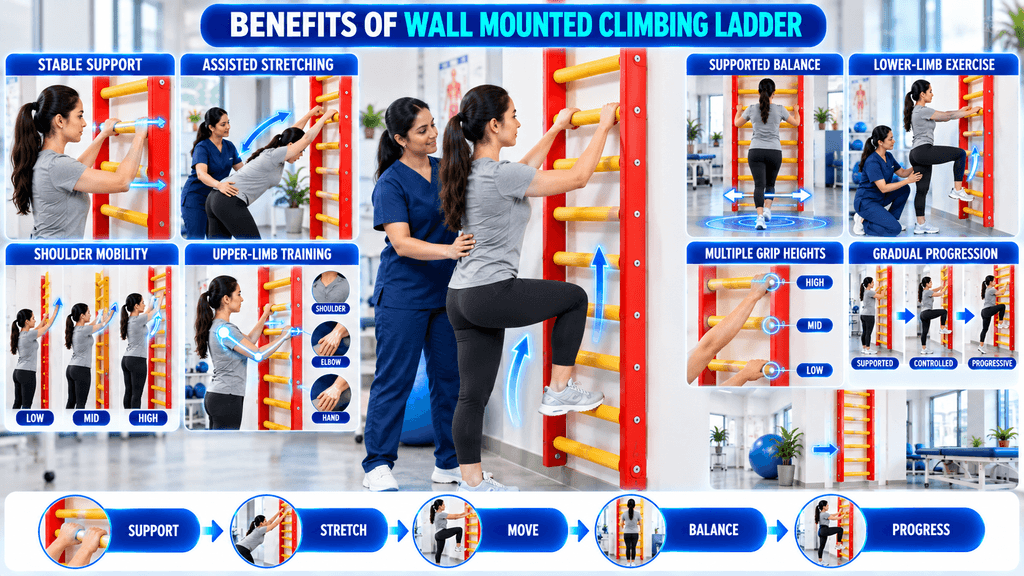
Benefits of Wall Mounted Climbing Ladder
When appropriately incorporated into a rehabilitation program, the Wall Mounted Climbing Ladder may provide several practical benefits:
- Provides stable external support during exercise
- Supports assisted stretching
- Allows different exercise positions
- Helps facilitate controlled shoulder movement
- Supports upper-limb rehabilitation
- Can be incorporated into lower-limb exercise
- Useful for supported balance activities
- Provides multiple height options for hand placement
- Supports progressive exercise difficulty
- Saves floor space because it is wall mounted
- Suitable for repeated clinical use
- Can be incorporated into different rehabilitation programs
The actual therapeutic benefit depends on the patient’s condition, exercise selection, supervision, and overall rehabilitation program.
Wall Mounted Climbing Ladder for Physiotherapy Clinics
A Wall Mounted Climbing Ladder can be a valuable addition to the exercise therapy area of a physiotherapy clinic.
Its wall-mounted design allows therapists to provide patients with a fixed support structure without occupying significant floor space. This makes it particularly useful for clinics where the available rehabilitation area needs to accommodate multiple types of equipment.
It can be used alongside treatment tables, parallel bars, exercise balls, resistance bands, pulley systems, balance equipment, and other rehabilitation devices.
Because the ladder offers multiple support points, therapists can adapt exercises for different patient abilities and rehabilitation stages.
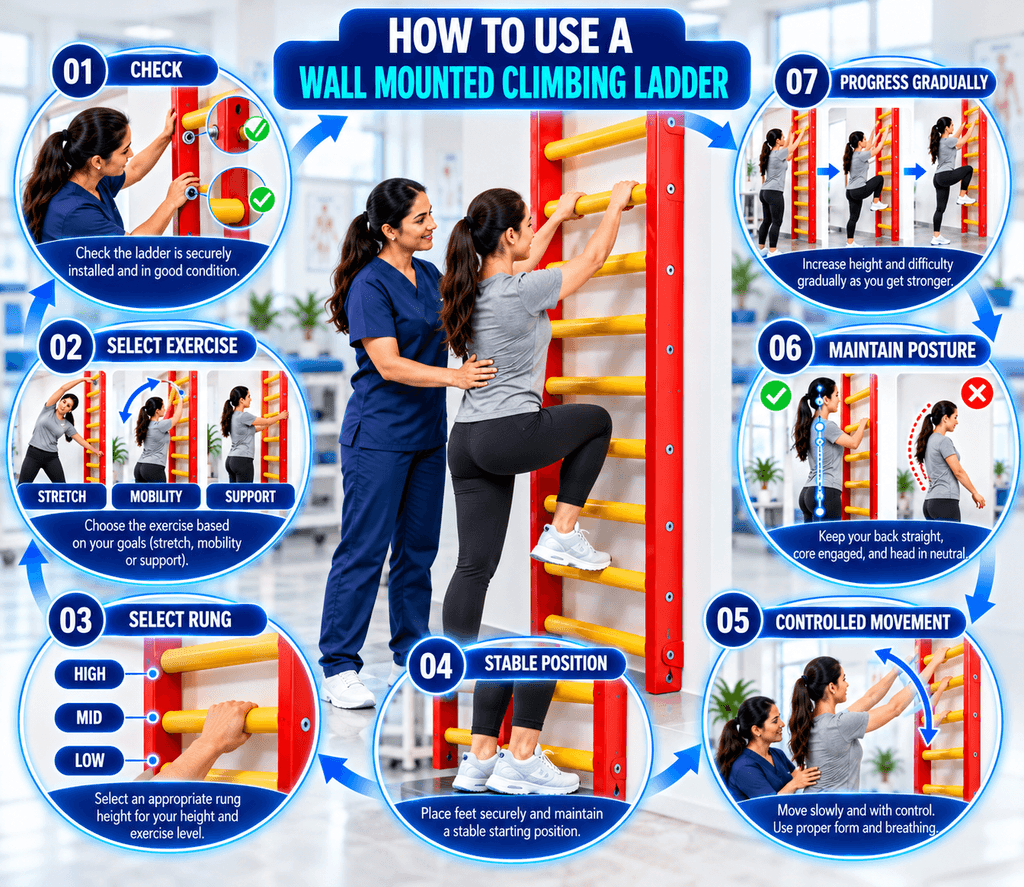
How to Use a Wall Mounted Climbing Ladder
Step 1: Inspect the Installation
Before use, check that the ladder is securely mounted and that all rungs and fixing points are stable.
Step 2: Select the Exercise
Choose an exercise appropriate for the patient’s condition, mobility, strength, and rehabilitation stage.
Step 3: Select the Rung
Choose a suitable rung based on the patient’s height and required movement range.
Step 4: Establish a Stable Position
The patient should maintain a stable stance or appropriate exercise position before beginning the movement.
Step 5: Perform Controlled Movement
Use the ladder for the prescribed stretching, reaching, mobility, or strengthening exercise.
Step 6: Maintain Proper Posture
The therapist should monitor body alignment and prevent unnecessary compensatory movements.
Step 7: Progress Gradually
As mobility and strength improve, exercise difficulty or movement range can be progressed according to professional assessment.
Safety Precautions
- Ensure the ladder is professionally and securely wall mounted.
- Check all mounting points before use.
- Do not use loose, damaged, or cracked rungs.
- Ensure the wall and mounting hardware are suitable for the intended load.
- Keep the surrounding floor area clear.
- Use non-slip flooring where appropriate.
- Patients with significant balance limitations should receive suitable supervision.
- Do not use the ladder for unsupported climbing unless the equipment is specifically designed and rated for that purpose.
- Avoid sudden pulling or excessive loading of individual rungs.
- Follow the manufacturer’s weight and load recommendations.
- Stop exercise if significant pain, dizziness, or other concerning symptoms occurs.
- Regularly inspect the equipment as part of the clinic’s maintenance routine.
Who Can Use a Wall Mounted Climbing Ladder?
The equipment may be incorporated into rehabilitation programs for:
- Physiotherapy patients
- Orthopaedic rehabilitation patients
- Sports rehabilitation patients
- Patients working on shoulder mobility
- Patients performing assisted stretching
- Patients requiring supported standing exercises
- Individuals performing functional mobility exercises
- Patients undergoing progressive exercise therapy
The specific exercise should be selected according to the individual’s clinical requirements.
Wall Mounted Climbing Ladder vs Freestanding Exercise Equipment
| Feature | Wall Mounted Climbing Ladder | Freestanding Exercise Equipment |
|---|---|---|
| Installation | Fixed to wall | Usually movable |
| Floor Space | Low | Generally higher |
| Support Points | Multiple fixed rungs | Equipment dependent |
| Stability | Fixed installation | Depends on design |
| Portability | Not portable | Often portable |
| Exercise Use | Stretching, mobility & support | Varies by equipment |
| Power | Not required | Usually not required |
The choice depends on the clinic layout, intended exercises, available wall structure, and rehabilitation requirements.
Technical Specifications
| Specification | Details |
|---|---|
| Product Name | Wall Mounted Climbing Ladder |
| Equipment Type | Physiotherapy & Rehabilitation Equipment |
| Installation | Wall Mounted |
| Structure | Vertical supports with horizontal rungs |
| Exercise Type | Stretching, Mobility & Supported Exercise |
| Target Areas | Upper Limb, Shoulder, Lower Limb & Functional Mobility |
| Operation | Manual |
| Power Requirement | None |
| Rung Configuration | Model dependent |
| Overall Dimensions | Model dependent |
| Material | Model dependent |
| Maximum Load | Model dependent |
| Usage | Physiotherapy & Rehabilitation |
| Suitable For | Clinics, Rehabilitation Centres & Exercise Therapy Areas |
Exact dimensions, materials, rung spacing, mounting requirements, and load capacity may vary according to the selected PHYSIOMODALITIES™ model.
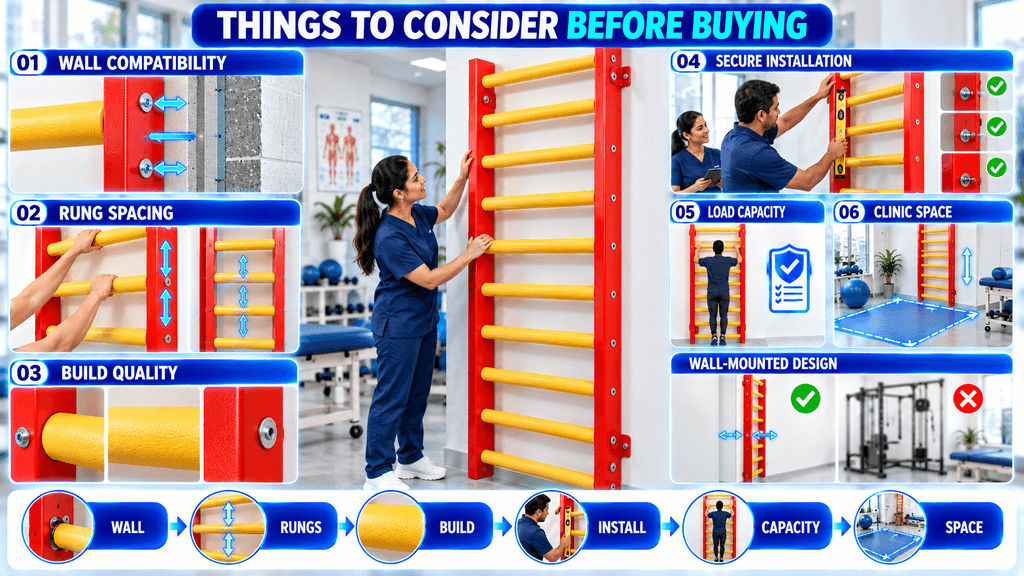
Things to Consider Before Buying
Wall Compatibility
The wall must be structurally suitable for secure installation. The appropriate fixing system should be selected according to the wall construction and equipment requirements.
Rung Spacing
Consider the spacing between rungs according to the exercises and patient population for which the equipment will be used.
Construction Quality
A strong frame and properly finished rungs are important for repeated clinical use.
Installation
Professional installation is recommended to ensure that the equipment is securely fixed and correctly aligned.
Load Capacity
Always check the manufacturer’s specified load capacity before use.
Clinic Space
Although the ladder saves floor space, adequate clear space should remain around it for safe exercise.
Why Choose PHYSIOMODALITIES™?
PHYSIOMODALITIES™ provides physiotherapy and rehabilitation equipment designed for professional clinical environments.
The Wall Mounted Climbing Ladder can complement a clinic’s exercise therapy setup by providing a fixed support structure for stretching, mobility, strengthening, balance, and functional exercises.
PHYSIOMODALITIES ENTERPRISES offers equipment across physiotherapy, rehabilitation, exercise therapy, electrotherapy, and clinical treatment categories, allowing clinics to develop equipment setups according to their individual requirements.
Conclusion
The Wall Mounted Climbing Ladder is a space-efficient rehabilitation equipment designed to provide stable support during stretching, mobility, strengthening, posture, balance, and functional exercise activities.
Its multiple rungs allow therapists to modify hand and foot positions according to the patient’s height, movement ability, and rehabilitation stage. The wall-mounted construction also helps conserve valuable floor space in physiotherapy clinics.
When properly installed and used under appropriate supervision, the equipment can be incorporated into a wide range of physiotherapy and rehabilitation programs.
Frequently Asked Questions
1. What is a Wall Mounted Climbing Ladder used for?
It is used in physiotherapy and rehabilitation for assisted stretching, shoulder mobility, upper-limb exercises, supported standing, balance activities, and functional training.
2. Is a Wall Mounted Climbing Ladder suitable for physiotherapy clinics?
Yes. Its fixed structure and multiple rungs make it suitable for exercise therapy and rehabilitation environments.
3. Can it be used for shoulder rehabilitation?
Yes. Selected shoulder mobility and reaching exercises can be performed using different rung heights under appropriate professional guidance.
4. Does a Wall Mounted Climbing Ladder require electricity?
No. It is a manual rehabilitation equipment and does not require electrical power.
5. How should a Wall Mounted Climbing Ladder be installed?
It should be securely fixed to a structurally suitable wall using appropriate mounting hardware, preferably with professional installation according to the manufacturer’s requirements.