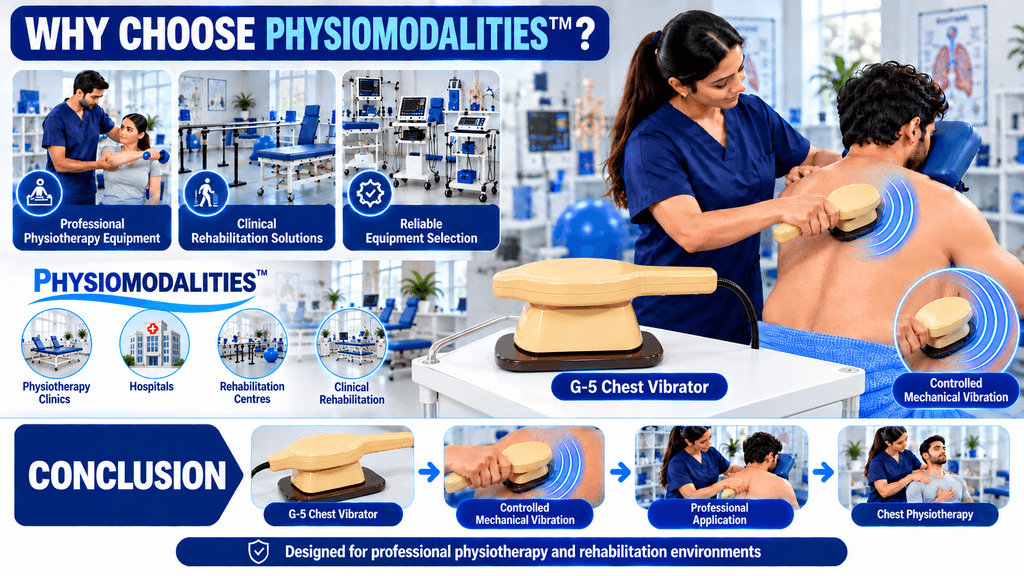
The G-5 Chest Vibrator Massager Machine for Physiotherapy is a specialised mechanical vibration device designed for use in chest physiotherapy and selected respiratory rehabilitation programs. It provides rhythmic mechanical vibration through an applicator and can be incorporated into professional chest physiotherapy techniques when clinically appropriate.
G5-type chest vibrator equipment is commonly associated with chest physiotherapy, mechanical chest vibration and mobilisation of respiratory secretions. Chest vibration is also recognised as one component of chest physiotherapy and airway-clearance techniques.
The G-5 Chest Vibrator Massager Machine for Physiotherapy can be suitable for physiotherapy clinics, hospitals, rehabilitation centres and other professional healthcare environments where chest physiotherapy equipment is required.
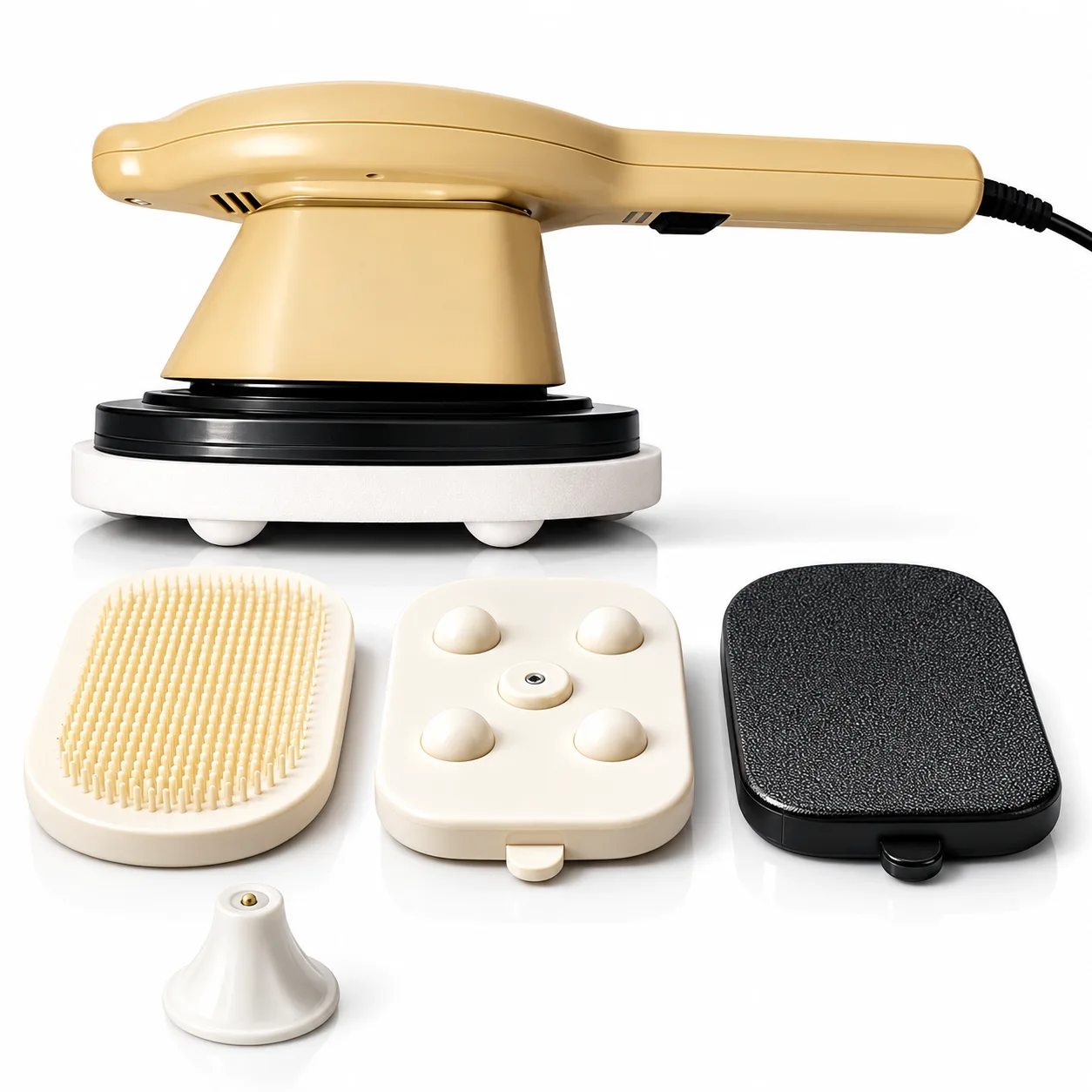
What Is a G-5 Chest Vibrator Massager Machine?
A G-5 Chest Vibrator Massager Machine for Physiotherapy is an electrically powered therapeutic device that produces mechanical vibrations through a handheld applicator.
During chest physiotherapy, controlled vibration may be applied over appropriate areas of the chest wall or back as part of a clinician-directed airway-clearance or respiratory physiotherapy program. The mechanical vibration is intended to assist with techniques used for mobilisation of respiratory secretions.
G5-type devices are also known as chest vibrators, G5 massagers, medical massagers or chest physiotherapy vibrators in different product listings. Some Indian suppliers specifically identify a G5 massager as a chest vibrator.
The exact vibration frequency, speed, applicator configuration and operating controls depend on the particular machine model.
How Does the G-5 Chest Vibrator Work?
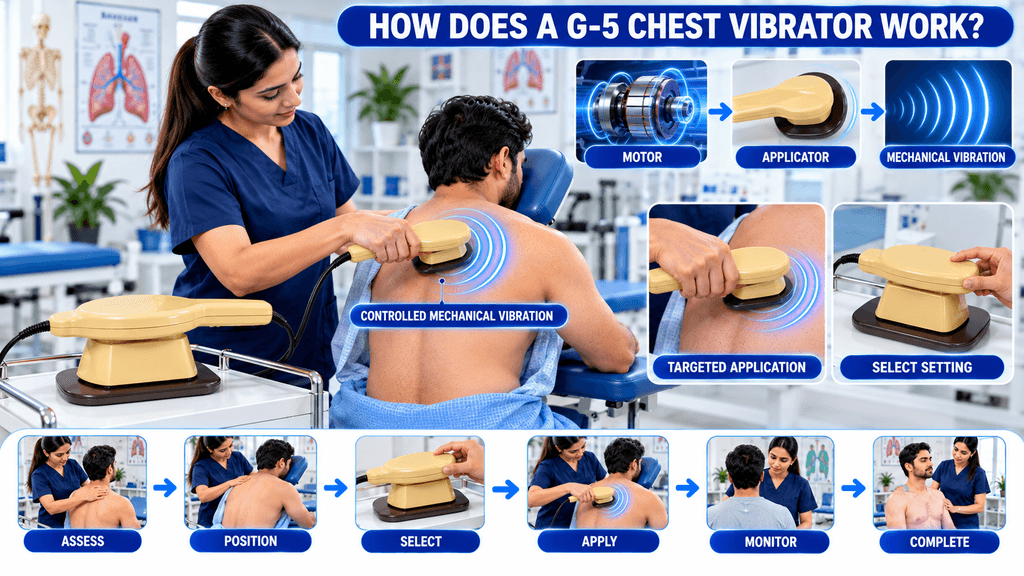
The machine uses an electrically powered motor to create mechanical vibration. The vibration is transferred through a suitable applicator to the treatment area.
In a professional chest physiotherapy session, the therapist selects an appropriate technique and applies the device according to the patient’s condition and treatment plan.
The general process includes:
- Assessing the patient’s condition and suitability for treatment.
- Positioning the patient comfortably.
- Selecting the appropriate applicator.
- Starting the machine at an appropriate setting.
- Applying controlled vibration to the prescribed treatment area.
- Monitoring the patient’s response.
- Adjusting the technique or intensity when clinically appropriate.
- Completing the session and cleaning the applicator.
The machine should be used as part of an appropriate physiotherapy protocol rather than as a stand-alone treatment for respiratory disease.
Key Features
Mechanical Vibration Therapy
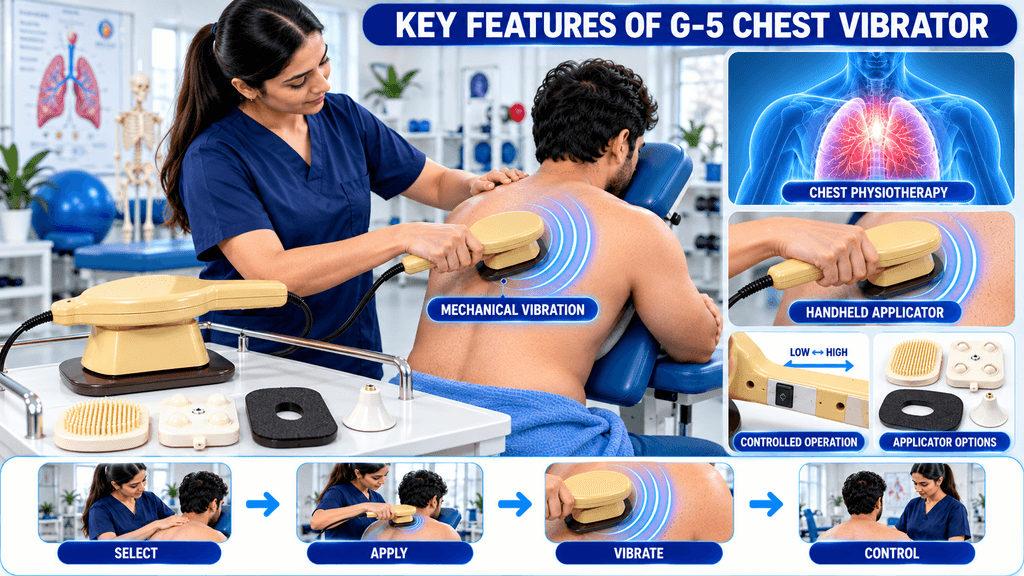
The G-5 system produces mechanical vibration designed for controlled therapeutic application.
Chest Physiotherapy Application
It can be incorporated into chest physiotherapy procedures where mechanical vibration is clinically indicated.
Handheld Applicator
The handheld applicator allows the therapist to direct vibration to the selected treatment area.
Controlled Operation
Depending on the model, vibration intensity or speed may be adjustable to suit different treatment requirements.
Multiple Applicator Options
Some G5-style chest vibrators are supplied with multiple applicators designed for different therapeutic applications. Exact accessories vary by manufacturer and model.
Professional Physiotherapy Equipment
The machine is suitable for use alongside other physiotherapy and respiratory rehabilitation equipment.
Compact Therapeutic Design
Many chest vibrator configurations are designed for convenient handling and routine clinical use.
Applications of G-5 Chest Vibrator
The G-5 Chest Vibrator Massager Machine for Physiotherapy may be incorporated into professional treatment programs involving chest physiotherapy and respiratory care.
Chest Physiotherapy
Mechanical vibration can be used as one component of chest physiotherapy techniques under professional supervision.
Airway Clearance Programs
Chest vibration may be incorporated into selected airway-clearance protocols intended to help mobilise respiratory secretions.
Respiratory Physiotherapy
Physiotherapists may use chest vibration as part of a broader respiratory physiotherapy program depending on the patient’s clinical requirements.
Post-Operative Respiratory Care
In selected patients after surgery, chest physiotherapy techniques may be prescribed as part of respiratory care. The exact technique and timing should be determined by the treating healthcare team.
Hospital Physiotherapy
Hospitals and rehabilitation departments may use chest vibrator equipment for supervised respiratory physiotherapy.
OPD and IPD Physiotherapy
G5-type chest vibrator equipment is marketed for professional physiotherapy use in both outpatient and inpatient settings.
Potential Benefits
The potential benefits of mechanical chest vibration depend on the patient’s condition and the overall physiotherapy protocol.
- Provides consistent mechanical vibration
- Supports selected chest physiotherapy techniques
- May assist with mobilisation of respiratory secretions
- Reduces the need for continuous manual vibration by the therapist
- Provides repeatable mechanical movement
- Can be incorporated into respiratory physiotherapy programs
- Suitable for supervised clinical use
- Can complement positioning, breathing exercises and other airway-clearance techniques
- Provides a dedicated mechanical option for chest physiotherapy
A chest vibrator does not replace clinical assessment or other respiratory-care interventions when those are required.
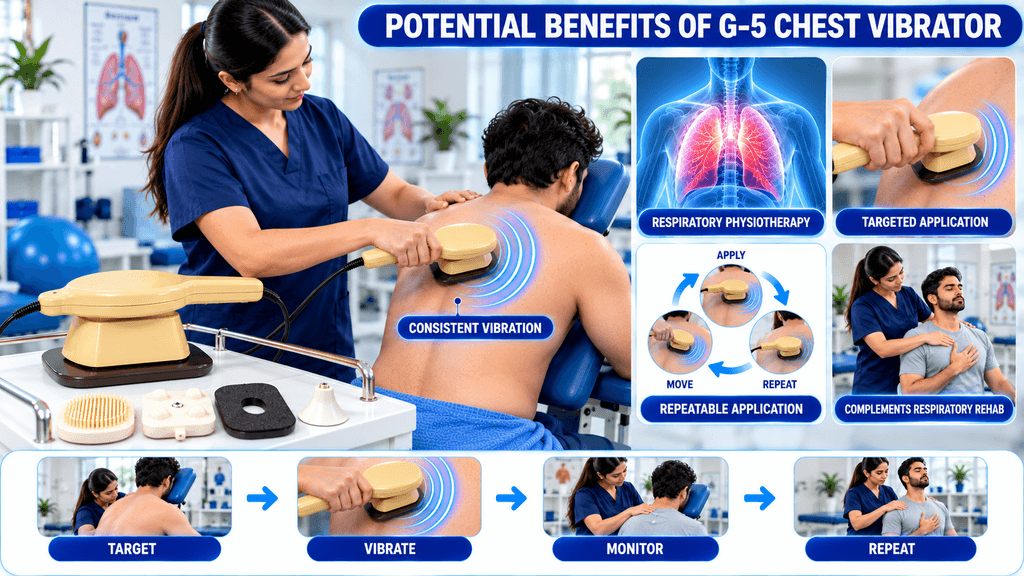
G-5 Chest Vibrator in Respiratory Physiotherapy
Respiratory physiotherapy can involve several techniques depending on the patient’s condition. These may include breathing exercises, positioning, airway-clearance techniques, mobilisation and other clinician-directed interventions.
The G-5 Chest Vibrator Massager Machine for Physiotherapy can provide mechanical vibration as one part of such a treatment program.
A physiotherapist may determine whether mechanical vibration is appropriate based on factors such as respiratory status, secretion load, medical history, mobility and treatment goals.
Chest Vibration for Secretion Mobilisation
Chest vibration is traditionally used as part of chest physiotherapy and may be combined with percussion and positioning techniques for selected patients.
Government health documentation identifies chest vibration as a technique used during chest physiotherapy and describes chest physiotherapy as being used for airway secretion clearance in appropriate patients.
A 2024 clinical study of mechanically ventilated patients investigated mechanical chest vibration using a G5 Vibracare device alongside conventional chest physiotherapy and suctioning. The study reported a difference in secretion quantity between groups but did not find significant between-group differences for several measured oxygenation and lung-compliance outcomes. This supports describing the machine as a component of a broader respiratory-care protocol rather than claiming that it independently improves all respiratory outcomes.
Physiotherapy Clinic Applications
The G-5 Chest Vibrator Massager Machine for Physiotherapy can be incorporated into clinics providing:
- Cardiopulmonary physiotherapy
- Respiratory rehabilitation
- Post-operative rehabilitation
- General physiotherapy
- Hospital-based physiotherapy
- Rehabilitation services
- Geriatric rehabilitation where clinically appropriate
- Critical-care physiotherapy under appropriate medical supervision
It can be used alongside breathing-training equipment, positioning techniques, exercise therapy and other physiotherapy modalities.
How to Use the G-5 Chest Vibrator
Step 1: Patient Assessment
Assess the patient’s respiratory and general medical condition before treatment.
Step 2: Position the Patient
Position the patient according to the prescribed chest physiotherapy technique.
Step 3: Select the Applicator
Choose the appropriate applicator supplied with the machine, if multiple applicators are provided.
Step 4: Check the Machine
Inspect the cable, motor, applicator and controls before operation.
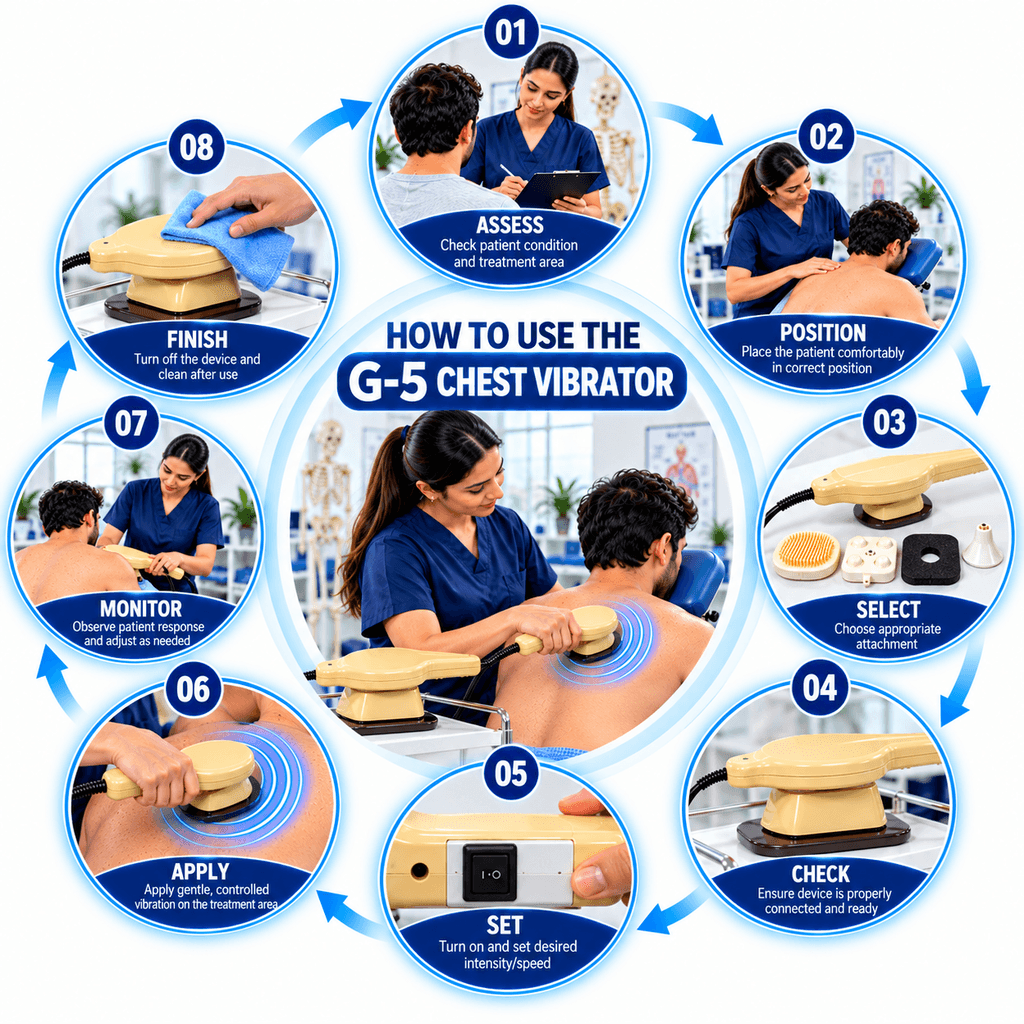
Step 5: Start at an Appropriate Setting
Begin at a clinically appropriate vibration setting rather than immediately using maximum intensity.
Step 6: Apply Controlled Vibration
Apply the applicator over the prescribed treatment area using the technique taught by the physiotherapist.
Step 7: Monitor the Patient
Observe comfort, breathing pattern and overall response throughout the session.
Step 8: Finish the Treatment
Stop the machine, remove the applicator carefully and clean the equipment according to the manufacturer’s hygiene instructions.
Safety Precautions
The G-5 Chest Vibrator should be operated by appropriately trained healthcare or physiotherapy professionals.
Important precautions include:
- Perform appropriate patient assessment before treatment.
- Follow the manufacturer’s operating instructions.
- Use the correct applicator.
- Avoid excessive pressure over the chest.
- Do not apply vibration over areas where it is clinically contraindicated.
- Monitor the patient’s respiratory response.
- Stop treatment if significant discomfort, breathing difficulty or another concerning response occurs.
- Follow hospital or clinic infection-control procedures.
- Clean and disinfect reusable applicators appropriately.
- Inspect electrical components regularly.
- Do not modify the motor or electrical system without manufacturer authorisation.
Patients with serious respiratory conditions, recent surgery or complex medical conditions should only receive chest vibration when it has been considered appropriate by their treating healthcare professional.
Who Can Operate a G-5 Chest Vibrator?
The machine is primarily intended for trained professionals, including:
- Physiotherapists
- Respiratory physiotherapists
- Cardiopulmonary rehabilitation professionals
- Hospital physiotherapy teams
- Rehabilitation specialists
- Other appropriately trained healthcare professionals
The exact operator requirements depend on the healthcare setting and local clinical protocols.
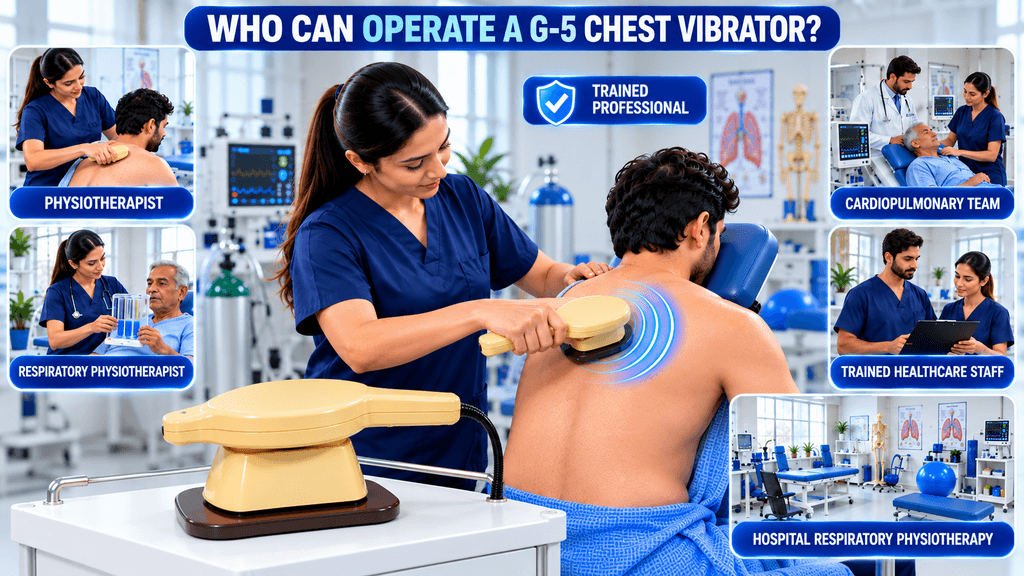
G-5 Chest Vibrator for Hospitals
Hospitals may require dedicated respiratory physiotherapy equipment for inpatient and post-operative care.
A G-5 chest vibrator can form part of a wider physiotherapy setup alongside:
- Nebulisers
- Suction equipment
- Incentive spirometers
- Pulse oximeters
- Breathing-exercise devices
- Respiratory training equipment
- Physiotherapy treatment tables
- Exercise therapy equipment
A published physiotherapy equipment list for a cardiopulmonary physiotherapy department also includes a chest vibrator among respiratory rehabilitation equipment.
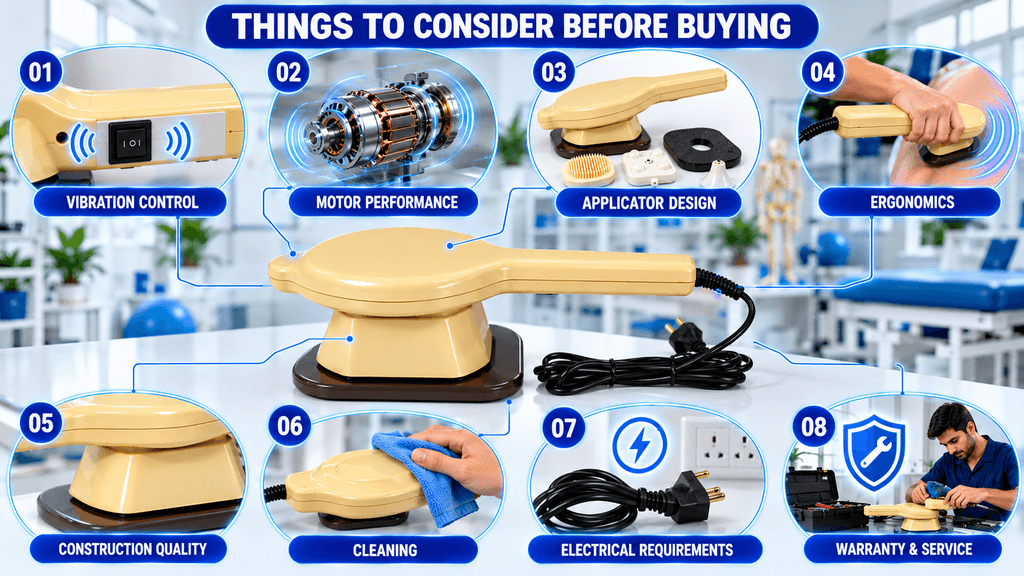
Things to Consider Before Buying
Before purchasing a G-5 Chest Vibrator Massager Machine for Physiotherapy, consider the following:
Vibration Control
Check whether the model offers adjustable speed or intensity.
Motor Performance
A reliable motor is important for consistent mechanical vibration during repeated clinical use.
Applicator Design
Check the type, size and number of applicators supplied with the machine.
Ergonomics
The handle and applicator should be comfortable for therapists during repeated sessions.
Construction Quality
Choose a robust design suitable for the expected clinical workload.
Cleaning
Check whether the applicator and external surfaces can be cleaned easily between patients.
Electrical Requirements
Confirm voltage, frequency and power requirements before installation.
Warranty and Service
Check warranty coverage, spare-parts availability and technical support.
Technical Specifications
| Specification | Details |
|---|---|
| Product Name | G-5 Chest Vibrator Massager Machine for Physiotherapy |
| Product Type | Mechanical Chest Vibrator / Physiotherapy Equipment |
| Therapy | Mechanical Vibration Therapy |
| Primary Application | Chest Physiotherapy |
| Treatment Area | Chest / Back as clinically prescribed |
| Operation | Electrically Powered |
| Applicator | Handheld |
| Vibration Control | Adjustable / Model Dependent |
| Vibration Frequency | Model Dependent |
| Motor Speed | Model Dependent |
| Applicators | Model Dependent |
| Power Supply | Model Dependent |
| Construction | Clinical-Grade / Model Dependent |
| Usage | Physiotherapy Clinics, Hospitals & Rehabilitation Centres |
| Brand | PHYSIOMODALITIES™ |
Note: Exact RPM, vibration frequency, power consumption, dimensions, weight, voltage and applicator specifications should be confirmed from the specific PHYSIOMODALITIES™ model datasheet before publishing fixed numerical specifications.
Why Choose PHYSIOMODALITIES™?
PHYSIOMODALITIES™ provides physiotherapy and rehabilitation equipment designed for professional healthcare environments.
The G-5 Chest Vibrator Massager Machine for Physiotherapy can be a useful addition to clinics and hospitals that provide chest physiotherapy or respiratory rehabilitation services.
For professional equipment selection, factors such as mechanical reliability, ease of handling, applicator quality, cleaning requirements, warranty, technical support and suitability for the intended clinical workflow should all be considered.
Conclusion
The G-5 Chest Vibrator Massager Machine for Physiotherapy is a specialised mechanical vibration device designed for use in chest physiotherapy and selected respiratory rehabilitation programs. It provides controlled mechanical vibration through a handheld applicator and can be incorporated into professional techniques used for chest physiotherapy and secretion mobilisation.
The equipment can be suitable for physiotherapy clinics, hospitals, rehabilitation centres and cardiopulmonary physiotherapy departments. Its role should be considered as part of a broader, patient-specific treatment program rather than as an independent treatment for respiratory conditions.
With appropriate assessment, positioning, technique and professional supervision, a G-5 chest vibrator can provide a practical mechanical option for repetitive chest vibration during physiotherapy.
Frequently Asked Questions
1. What is a G-5 Chest Vibrator?
A G-5 Chest Vibrator is an electrically powered mechanical vibration device used as part of selected chest physiotherapy and respiratory rehabilitation techniques.
2. What is the main use of a G-5 Chest Vibrator?
Its primary application is controlled mechanical chest vibration, which may be incorporated into chest physiotherapy and secretion-mobilisation programs.
3. Can a G-5 Chest Vibrator be used in hospitals?
Yes. Chest vibrators are used as part of cardiopulmonary and chest physiotherapy equipment in hospital and rehabilitation settings.
4. Does the G-5 Chest Vibrator remove mucus by itself?
The machine provides mechanical vibration; secretion clearance depends on the complete clinical protocol, which may include positioning, breathing techniques, coughing or suctioning where appropriate.
5. Who should operate a G-5 Chest Vibrator?
It should preferably be operated by a trained physiotherapist or appropriately trained healthcare professional according to the patient’s clinical requirements and the manufacturer’s instructions.