The Digital Ultrasonic Physiotherapy Machine – 1 MHz & 3 MHz, 27 Programs is designed for professional physiotherapy and rehabilitation environments that require a digital ultrasonic therapy system with two operating frequencies and multiple preset programs. The 1 MHz and 3 MHz frequencies provide different operating options, while the 27 programs offer preset selections according to the machine’s supported functionality.
Ultrasonic therapy equipment delivers high-frequency acoustic energy through a compatible treatment applicator. Trained healthcare professionals may incorporate an appropriate device into selected treatment plans after assessing the individual and reviewing the manufacturer’s instructions.
For physiotherapy clinics, rehabilitation centres, and professional treatment facilities, this machine offers a combination of dual-frequency operation and preset program selection. Buyers should confirm the output specifications, treatment modes, applicator configuration, safety features, and accessories before purchasing.
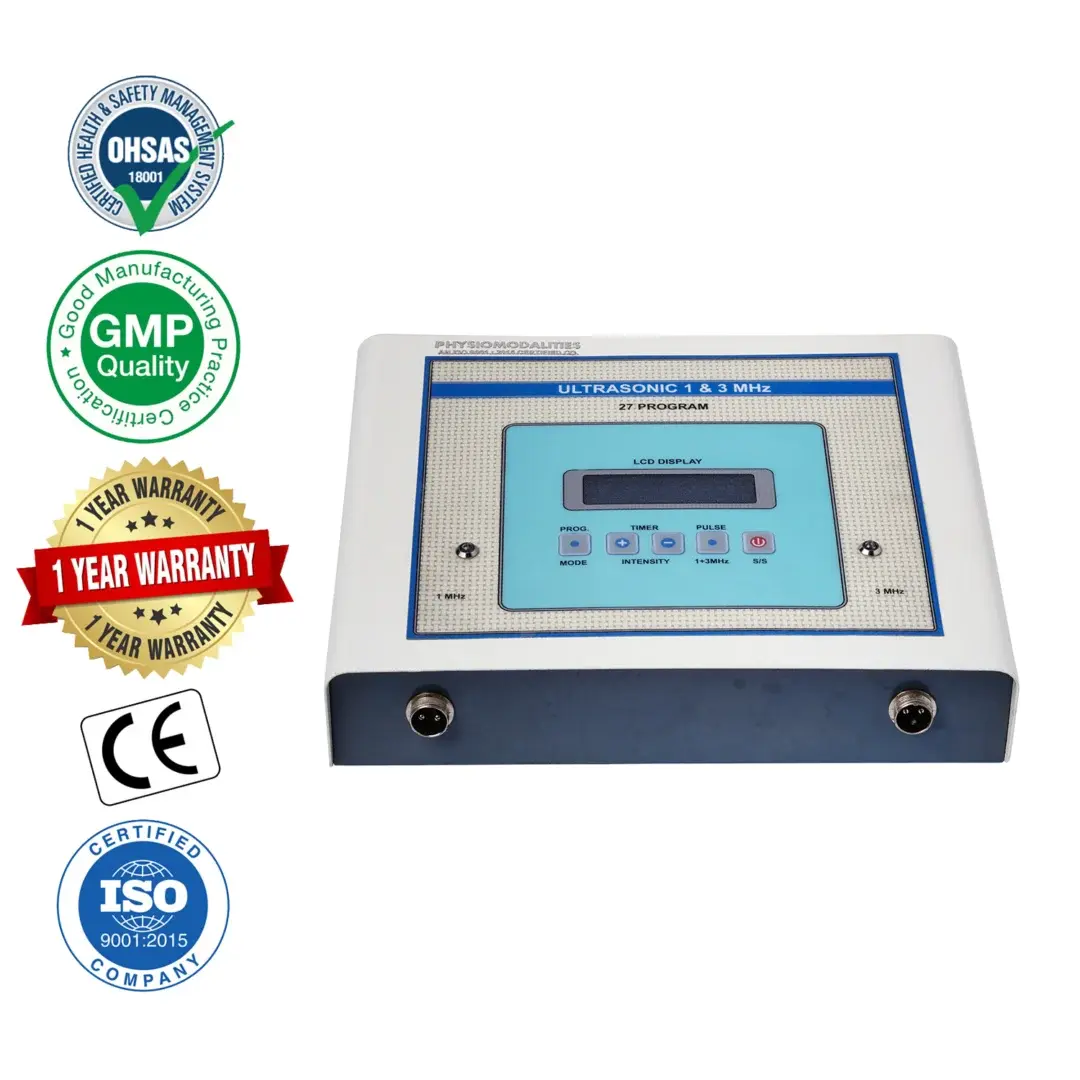
What Is a Digital Ultrasonic Physiotherapy Machine – 1 MHz & 3 MHz, 27 Programs?
A Digital Ultrasonic Physiotherapy Machine is a therapy device designed to deliver ultrasonic energy through a treatment applicator. This model is identified by its 1 MHz and 3 MHz operating frequencies and 27 programs.
The two frequencies provide different operating options for professional use. In general, 1 MHz energy is associated with greater penetration into tissue than 3 MHz energy under comparable conditions, while 3 MHz energy is absorbed more superficially. Actual energy distribution depends on the device, tissue characteristics, applicator technique, and treatment parameters.
The 27 programs refer to preset options indicated by the product name. Their specific treatment settings and intended applications should be checked in the manufacturer’s program list rather than assumed from the number of presets alone.
Key Features of the Digital Ultrasonic Physiotherapy Machine
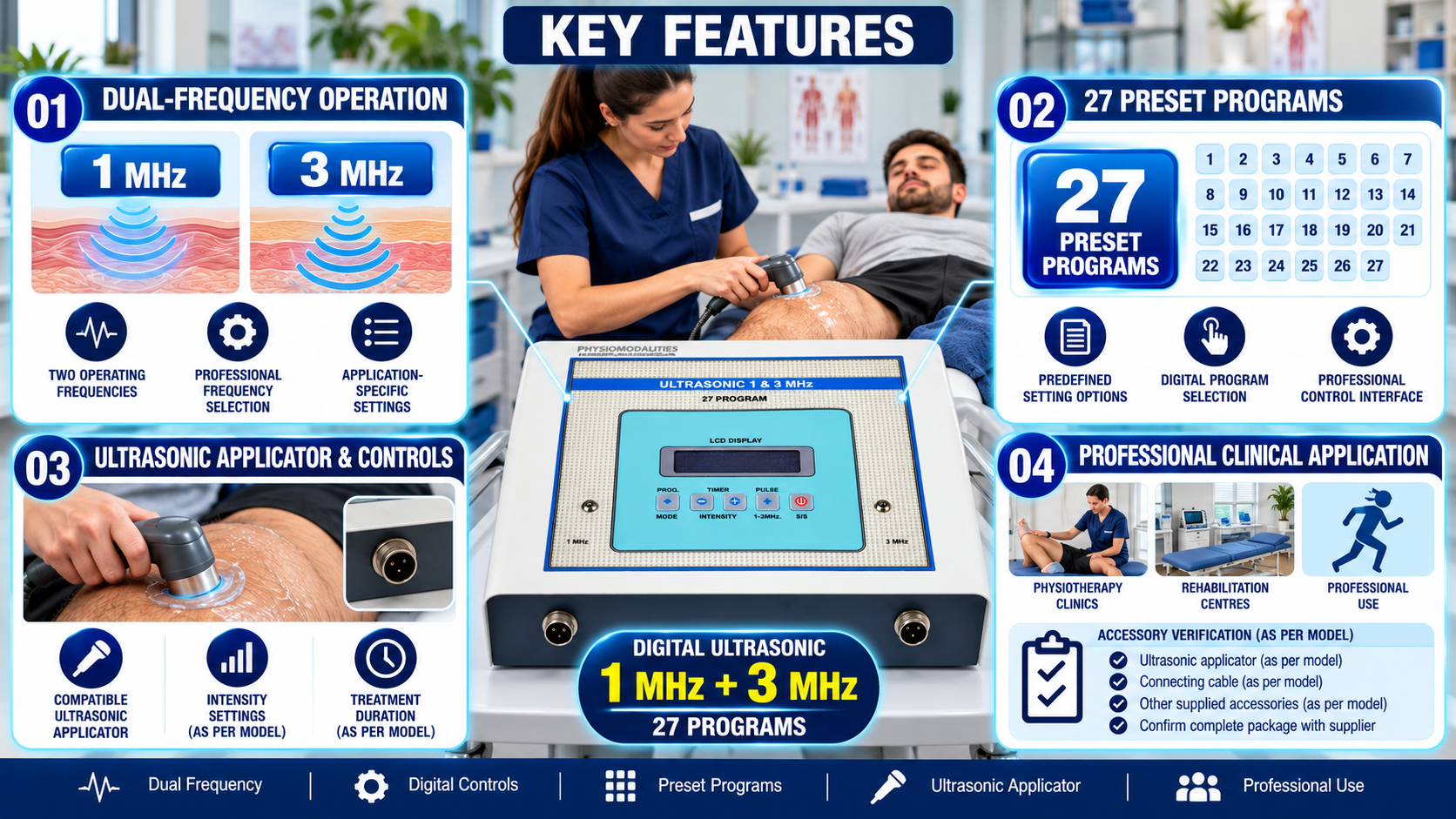
1. Dual-Frequency Operation: 1 MHz and 3 MHz
The machine supports the two frequencies specified in its product name. This gives the practitioner frequency options according to the device’s instructions and the intended treatment protocol.
2. 27 Preset Programs
The machine includes 27 programs, as indicated by the product title. The available presets may help operators select predefined settings, but the exact parameters and purpose of each program should be verified from the official manual.
3. Digital Control Interface
The digital control system allows the operator to navigate supported settings and manage the treatment session. The screen type, control layout, and displayed information depend on the specific model.
4. Ultrasonic Therapy Applicator
The device uses a compatible applicator to deliver ultrasonic energy. Applicator size, design, frequency compatibility, and replacement availability should be confirmed before purchase.
5. Treatment Parameter Selection
Depending on the model, the machine may provide controls for output intensity, treatment duration, or other operating parameters. Only settings supported by the device should be used.
6. Professional Clinical Setup
The equipment may be considered for physiotherapy clinics and rehabilitation facilities where ultrasonic therapy is appropriate and falls within the device’s intended use.
7. Model-Specific Accessories
The supplied applicator, cable, power accessories, coupling medium, and other items may vary by configuration. Confirm the full list of included accessories with the supplier.
Understanding 1 MHz and 3 MHz Ultrasonic Frequencies
Frequency is an important consideration when selecting an ultrasonic therapy device. The two frequencies in this model provide different acoustic operating characteristics.
1 MHz Frequency
A frequency of 1 MHz is generally associated with greater penetration than 3 MHz under comparable conditions. A qualified practitioner may select this frequency when it is appropriate for the intended treatment area and supported by the device’s instructions.
3 MHz Frequency
A frequency of 3 MHz is generally absorbed more superficially than 1 MHz. It may be selected for suitable applications involving more superficial tissues, according to professional assessment and the manufacturer’s treatment guidance.
Why Dual-Frequency Operation Matters
A dual-frequency device gives the operator a choice between two supported frequencies instead of relying on a single-frequency configuration. Frequency selection must still be based on the clinical objective, the patient’s assessment, and the device-specific protocol.
Neither frequency is universally better than the other. Correct selection depends on the intended application and professional guidance.
Applications of a Digital Ultrasonic Physiotherapy Machine
The machine may be considered for professional treatment settings where its specified ultrasonic technology and intended use are appropriate.
Physiotherapy Clinics
Qualified physiotherapists may incorporate suitable ultrasonic therapy equipment into selected treatment plans following assessment and review of the device instructions.
Rehabilitation Centres
Rehabilitation facilities may use appropriate ultrasonic therapy equipment as part of a broader programme when it aligns with the patient’s needs and the device’s approved applications.
Musculoskeletal Treatment Settings
Some ultrasonic therapy devices are intended for selected musculoskeletal applications. The suitability of a particular device and its application should be determined through professional assessment and relevant clinical guidance.
Professional Treatment Rooms
The digital interface, dual-frequency operation, and preset programs may be useful for practitioners who want multiple supported settings in one device.
Important: These are general descriptions of possible professional settings, not a guarantee of clinical benefit. Use the machine only for applications supported by the manufacturer’s instructions and applicable professional guidance.
Benefits of the Digital Ultrasonic Physiotherapy Machine – 1 MHz & 3 MHz, 27 Programs
Selecting a suitable dual-frequency device may provide practical advantages for treatment-room workflow.
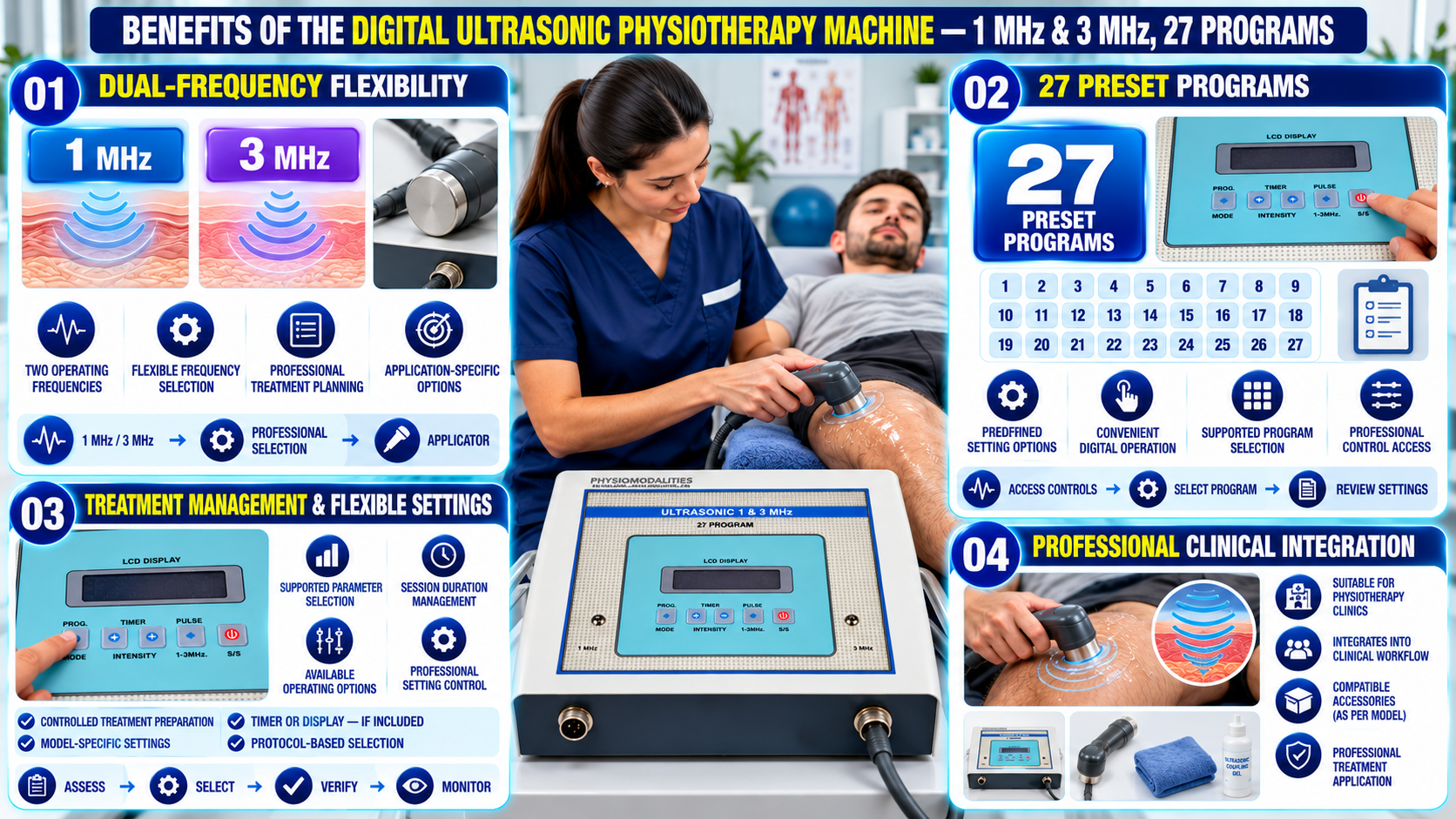
- Dual-frequency flexibility: Offers 1 MHz and 3 MHz operating options.
- Preset program selection: Includes 27 programs, as specified in the product name.
- Digital controls: Provide access to the machine’s supported settings.
- Treatment management: Available timers and displays, if included, may help the operator monitor the session.
- Professional integration: May be incorporated into suitable physiotherapy workflows.
- Multiple operating options: Allows the practitioner to select supported settings according to the treatment plan.
These are equipment-related features. Clinical outcomes vary and depend on the individual’s condition, professional assessment, treatment protocol, and correct equipment use.
Technical Specifications
| Specification | Details |
|---|---|
| Product Name | Digital Ultrasonic Physiotherapy Machine – 1 MHz & 3 MHz, 27 Programs |
| Equipment Category | Ultrasonic Therapy Equipment |
| Operating Frequencies | 1 MHz and 3 MHz |
| Preset Programs | 27 |
| Control Interface | Digital |
| Output Power | Confirm with manufacturer |
| Intensity Range | Confirm with manufacturer |
| Treatment Timer | Confirm availability |
| Operating Modes | Confirm with manufacturer |
| Applicator Type | Confirm with manufacturer |
| Continuous / Pulsed Operation | Confirm supported modes |
| Display Type | Confirm with manufacturer |
| Power Supply | Confirm with manufacturer |
| Dimensions and Weight | Confirm with manufacturer |
| Accessories Included | Confirm with supplier |
| Warranty | Confirm with supplier |
| Brand | PHYSIOMODALITIES™ |
Note: The two operating frequencies and 27 programs are taken from the supplied product title. Confirm all other specifications against the official technical data sheet before publishing.
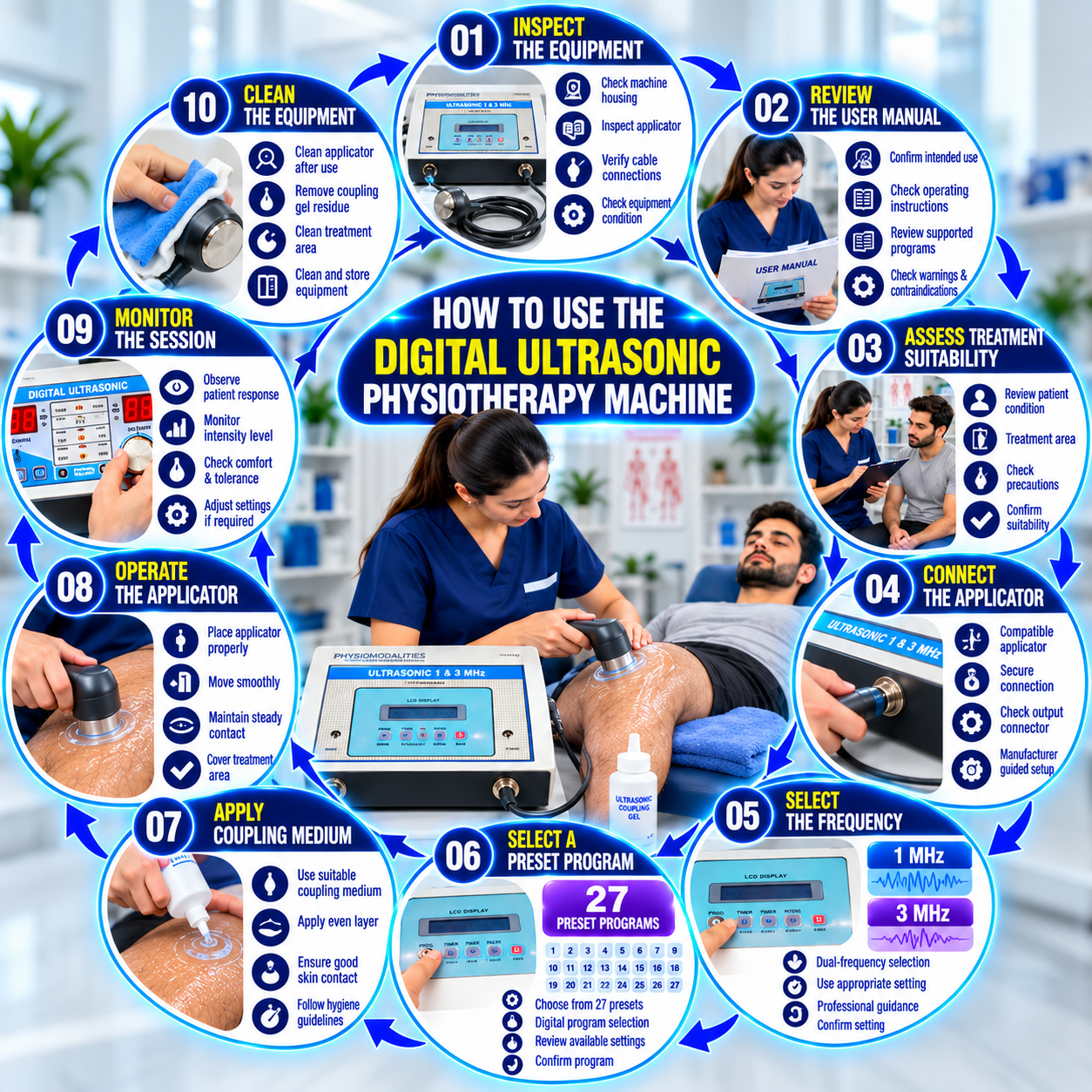
How to Use the Digital Ultrasonic Physiotherapy Machine
The following steps provide a general equipment-use overview. The manufacturer’s operating manual and professional treatment protocol must take priority.
Step 1: Inspect the Equipment
Check the machine, applicator, cables, connectors, and housing for visible damage. Do not operate damaged equipment.
Step 2: Review the User Manual
Confirm the device’s intended use, operating instructions, supported frequencies, preset program descriptions, warnings, and contraindications.
Step 3: Assess the Treatment Area
A qualified professional should determine whether ultrasonic therapy is appropriate for the individual and intended application.
Step 4: Connect the Applicator
Connect the supplied compatible applicator according to the manufacturer’s instructions. Check the connection before starting the session.
Step 5: Select the Frequency
Choose 1 MHz or 3 MHz only as appropriate for the intended application and supported treatment protocol.
Step 6: Select a Program
Choose from the 27 available programs only after confirming what the selected preset does. Do not assume that a program name alone establishes its suitability for a particular condition.
Step 7: Apply the Coupling Medium
Use the coupling medium specified by the manufacturer, where required, and prepare the treatment area according to the approved protocol.
Step 8: Apply the Applicator Correctly
Follow the specified contact method, movement, and treatment technique. Do not improvise an applicator technique or leave it stationary unless explicitly permitted by the manufacturer.
Step 9: Monitor the Session
Monitor the equipment and the individual’s response throughout treatment. Stop if unexpected discomfort, excessive heating, equipment malfunction, or another concerning response occurs.
Step 10: Clean and Store
End the session using the prescribed controls. Clean the applicator and accessories using manufacturer-approved methods and store them appropriately.
Safety Precautions
Before using this machine:
- Ensure that the operator has appropriate training.
- Follow the manufacturer’s instructions and treatment protocols.
- Review the device-specific contraindications and precautions.
- Avoid treatment over areas or conditions restricted by the device instructions.
- Use only compatible applicators and accessories.
- Follow the specified coupling and applicator technique.
- Monitor the treatment area and the individual’s response.
- Stop if unexpected discomfort or equipment malfunction occurs.
- Clean the applicator according to the manufacturer’s instructions.
- Arrange regular inspection and maintenance as recommended.
A qualified professional must determine suitability for the individual and intended application. The 27 preset programs should not be treated as a substitute for clinical judgement.
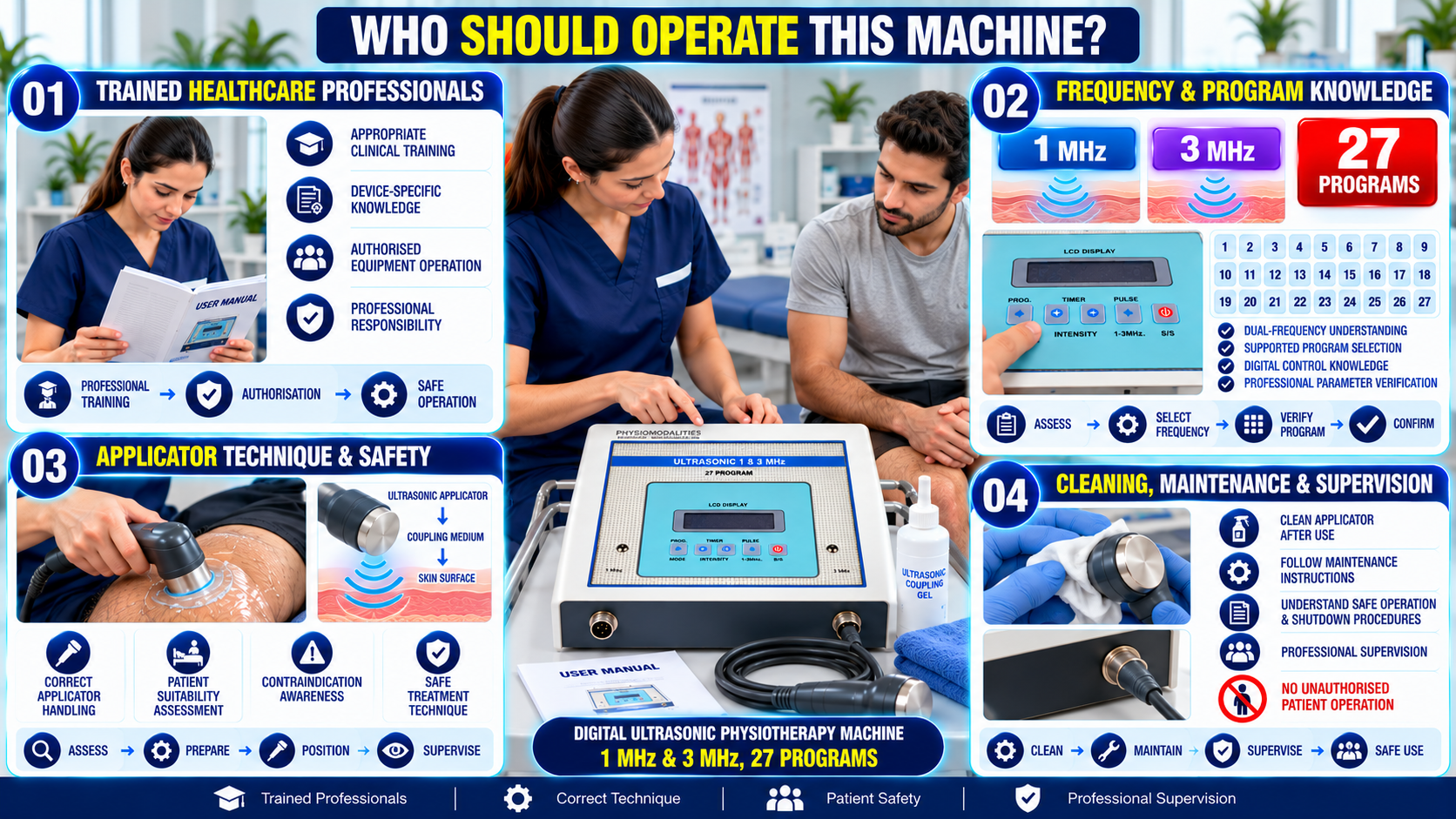
Who Should Operate This Machine?
The Digital Ultrasonic Physiotherapy Machine should be operated by appropriately trained healthcare professionals or other personnel authorised under the device’s instructions and applicable regulations.
Operators should understand frequency selection, program settings, applicator technique, safety precautions, contraindications, and cleaning procedures. Patients should not independently operate professional equipment unless the device is specifically designed and authorised for that purpose.
1 MHz vs 3 MHz Ultrasonic Frequency
| Feature | 1 MHz | 3 MHz |
|---|---|---|
| Relative penetration | Generally greater under comparable conditions | Generally more superficial under comparable conditions |
| Relative absorption | Typically lower than 3 MHz in comparable tissue | Typically higher than 1 MHz in comparable tissue |
| Selection | Based on the intended treatment area and protocol | Based on the intended treatment area and protocol |
| Best frequency | Depends on professional assessment | Depends on professional assessment |
Frequency alone does not determine treatment effectiveness. The device’s output, treatment technique, tissue characteristics, and clinical objective also matter.
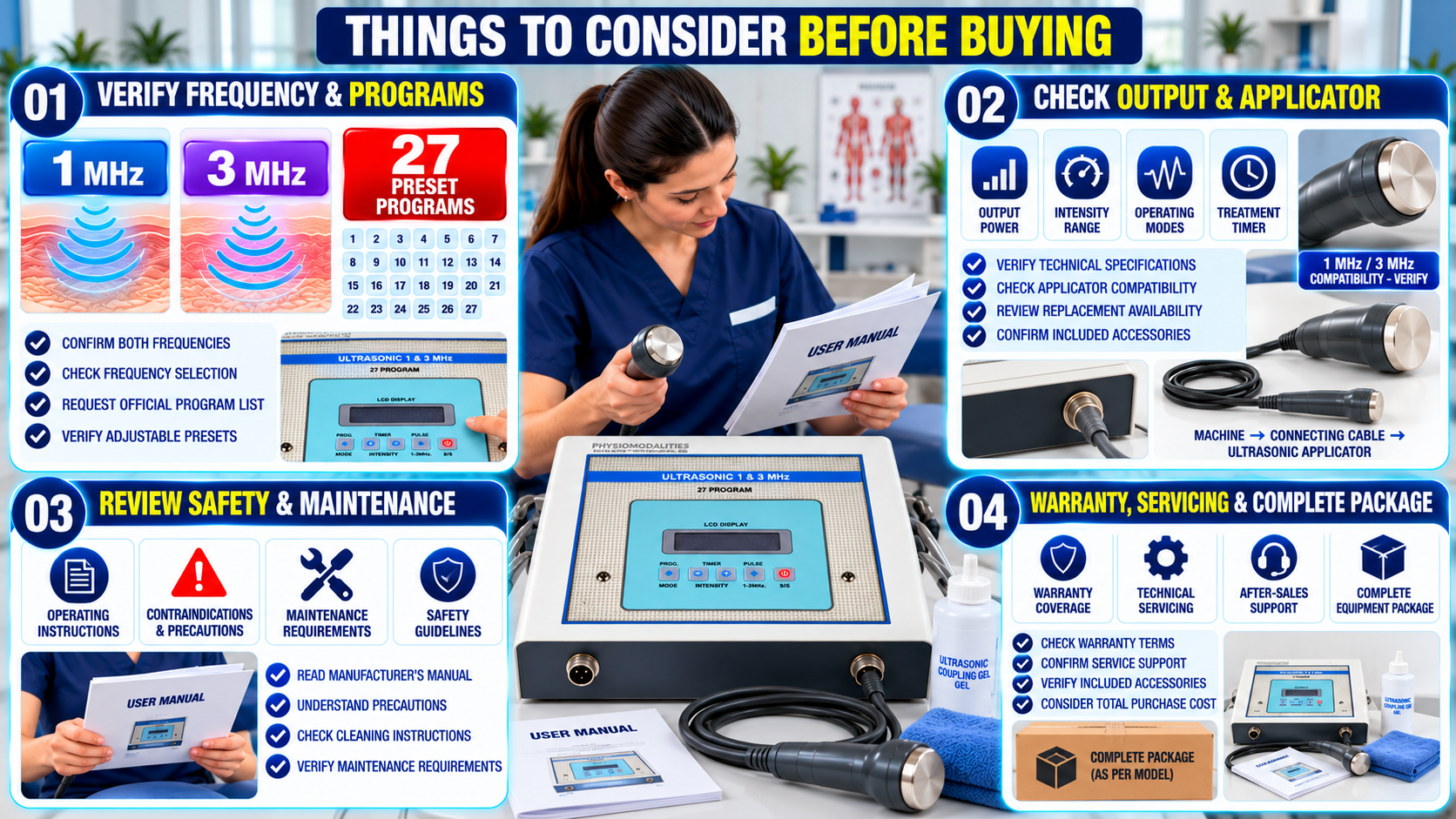
Things to Consider Before Buying
1. Verify Dual-Frequency Operation
Confirm that the supplied model supports both 1 MHz and 3 MHz and check how frequency selection is performed.
2. Confirm the 27 Programs
Request the official program list and check which parameters are preset and which can be adjusted.
3. Review Output Specifications
Verify output power, intensity range, operating modes, and treatment timer details.
4. Check the Applicator
Confirm the applicator configuration, compatibility with both frequencies, replacement availability, and included accessories.
5. Assess Safety and Maintenance
Review contraindications, operating precautions, cleaning instructions, and maintenance requirements.
6. Check Warranty and Service
Confirm warranty coverage, technical support, servicing, and availability of replacement accessories.
7. Compare the Complete Package
Review the total price and all included accessories rather than comparing the equipment price alone.
Why Choose PHYSIOMODALITIES™?
PHYSIOMODALITIES™ by PHYSIOMODALITIES ENTERPRISES offers physiotherapy and rehabilitation equipment for professional environments. When evaluating the Digital Ultrasonic Physiotherapy Machine – 1 MHz & 3 MHz, 27 Programs, buyers should consider its dual-frequency operation, preset program list, verified technical specifications, applicator configuration, safety requirements, and after-sales support.
Request the latest product specification sheet before placing an order to confirm the supplied configuration and included accessories.
Conclusion
The Digital Ultrasonic Physiotherapy Machine – 1 MHz & 3 MHz, 27 Programs is designed for professional environments that require dual-frequency ultrasonic therapy equipment with multiple preset programs. Its key stated features are 1 MHz and 3 MHz operation and 27 programs. Before purchasing, verify the output specifications, program functions, applicator configuration, safety information, and warranty to ensure the machine meets your facility’s requirements.
Frequently Asked Questions
1. What frequencies does this machine support?
The product title specifies 1 MHz and 3 MHz operating frequencies.
2. How many preset programs are included?
The product title specifies 27 programs. Their individual functions should be confirmed in the manufacturer’s manual.
3. What is the difference between 1 MHz and 3 MHz?
Under comparable conditions, 1 MHz is generally associated with greater penetration, while 3 MHz is generally absorbed more superficially.
4. Who should operate this machine?
Appropriately trained and authorised professionals should operate it according to the manual and applicable regulations.
5. What should I check before purchasing?
Confirm output power, intensity range, program functions, applicator compatibility, safety instructions, warranty, and after-sales support.