The Digital Laser Therapy Machine is designed for professional physiotherapy clinics, rehabilitation centres, and healthcare facilities that incorporate laser-based treatment into their therapy services. With a digital control interface, this equipment can support the delivery of laser therapy according to the device’s specifications and the treatment protocol selected by a qualified professional.
A Digital Laser Therapy Machine may offer features such as adjustable treatment settings, a digital display, and a dedicated applicator, depending on the model. These features can help practitioners manage treatment parameters and operate the equipment according to the manufacturer’s instructions. At PHYSIOMODALITIES™, we focus on physiotherapy and rehabilitation equipment designed to support professional clinical environments.
Before purchasing, users should verify the machine’s laser wavelength, output power, operating modes, safety classification, applicator design, and other technical specifications with the manufacturer.
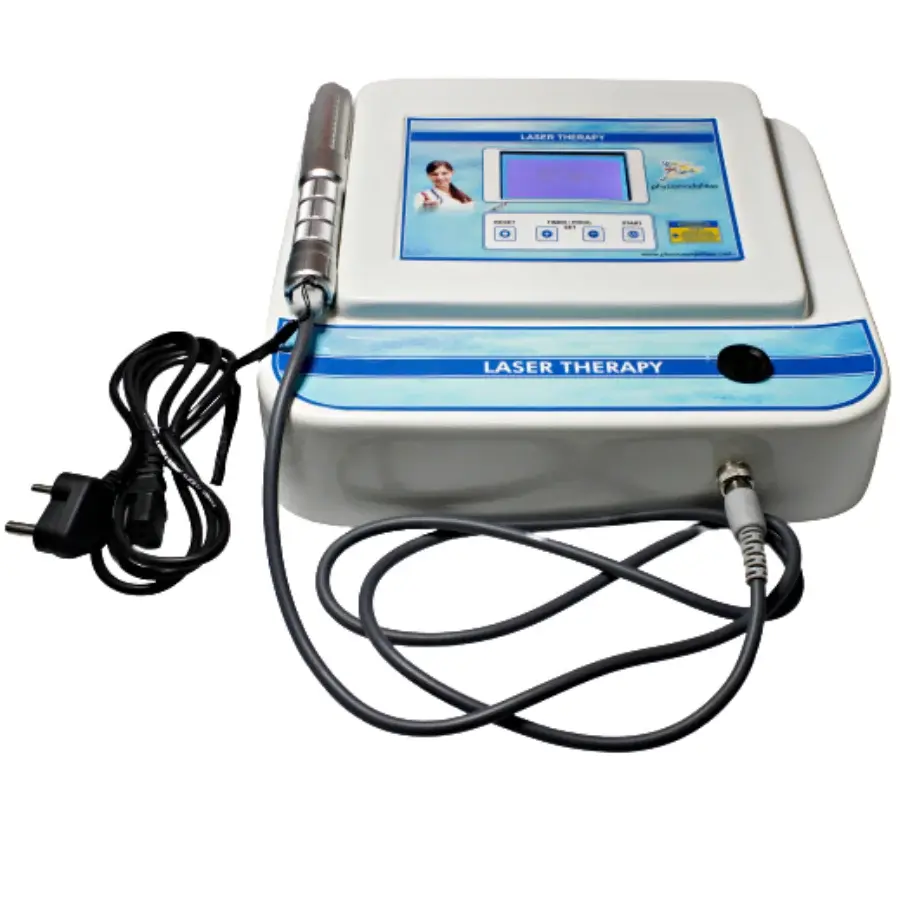
What Is a Digital Laser Therapy Machine?
A Digital Laser Therapy Machine is a physiotherapy device that uses controlled laser light as part of selected therapeutic protocols. The digital interface allows the operator to configure available treatment parameters according to the machine’s design.
Laser therapy equipment is used in some physiotherapy and rehabilitation settings as part of a broader treatment plan. The appropriate application depends on the patient’s condition, professional assessment, device specifications, and established safety procedures.
Unlike equipment that delivers electrical stimulation or thermal energy, a laser therapy device delivers optical energy. The exact mechanism and intended use depend on the laser technology incorporated into the particular model.
Key Features of the Digital Laser Therapy Machine
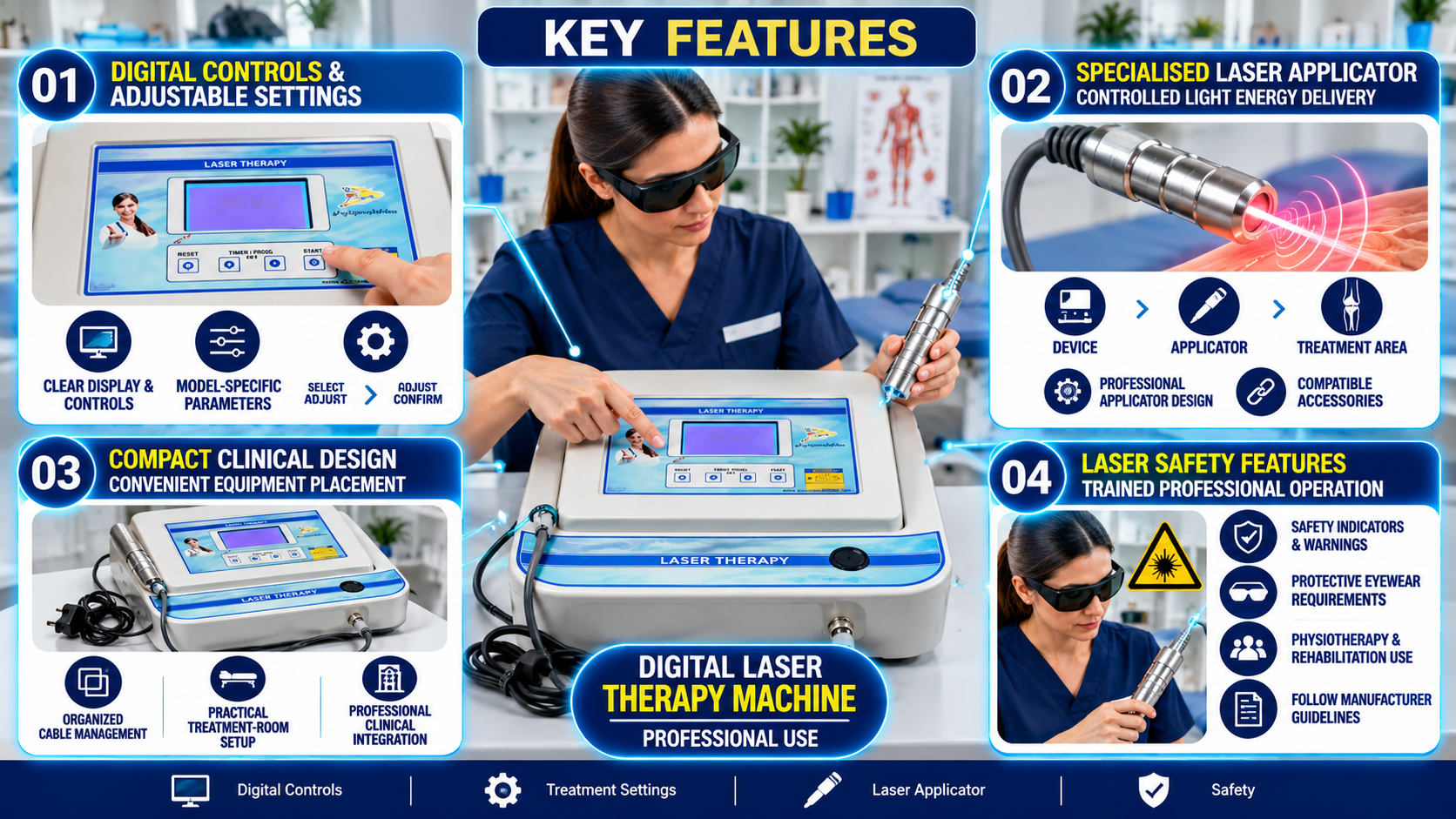
The available features may differ between models. Important features to review include:
1. Digital Control Panel
A digital control panel can help the operator view and adjust supported treatment parameters. The display and controls should be clear, accessible, and suitable for routine clinical use.
2. Adjustable Treatment Settings
Depending on the model, operators may be able to configure treatment duration, output level, operating mode, or other supported parameters. Always follow the manufacturer’s recommended settings and treatment protocols.
3. Laser Applicator
The applicator delivers laser light to the intended treatment area. Its design, handling requirements, and compatible accessories should be confirmed before purchasing.
4. Compact Clinical Design
The machine’s size, mounting options, portability, and cable arrangement can affect its suitability for different clinic layouts. Consider the available treatment space and frequency of use.
5. Safety Features
Check whether the device includes the required safety indicators, emission controls, interlocks, protective eyewear guidance, and other safeguards appropriate to its laser classification.
6. Professional Physiotherapy Use
The Digital Laser Therapy Machine should be selected for the intended clinical application and operated by trained personnel who understand laser safety and the device’s operating instructions.
How Does a Digital Laser Therapy Machine Work?
A laser therapy device delivers light energy at a wavelength and output specified by its manufacturer. The interaction between the light and biological tissue depends on several factors, including wavelength, power, treatment duration, delivery method, and the characteristics of the target tissue.
The practitioner first assesses the patient and determines whether laser therapy is appropriate. The operator then selects the permitted treatment parameters, positions the applicator according to the device instructions, and follows the recommended safety procedures.
The machine’s digital controls may simplify parameter selection, but they do not replace professional assessment or clinical judgement. Treatment settings should never be chosen solely on the basis of a preset program without considering the patient’s needs and the manufacturer’s guidance.
Applications in Physiotherapy and Rehabilitation
Depending on the model’s intended use and specifications, a Digital Laser Therapy Machine may be incorporated into selected physiotherapy and rehabilitation protocols.
Musculoskeletal Rehabilitation
Laser therapy may be considered as one component of a professionally designed rehabilitation plan for selected musculoskeletal complaints. Suitability depends on the condition being treated and the device’s approved or intended application.
Sports Rehabilitation
Some rehabilitation professionals incorporate laser-based modalities into treatment plans for sports-related musculoskeletal conditions. The choice of modality should be based on an appropriate assessment rather than the patient’s activity level alone.
Joint and Soft-Tissue Conditions
A qualified practitioner may consider laser therapy for certain joint or soft-tissue complaints when it is appropriate for the patient and consistent with the device instructions.
Physiotherapy Clinics
The machine may be suitable for clinics that provide a range of rehabilitation services and have the training, space, and safety procedures required for laser equipment.
Important: These are general examples of possible clinical contexts, not a guarantee of results or an indication that every laser device is suitable for every condition. Follow the manufacturer’s intended-use information and applicable clinical guidance.
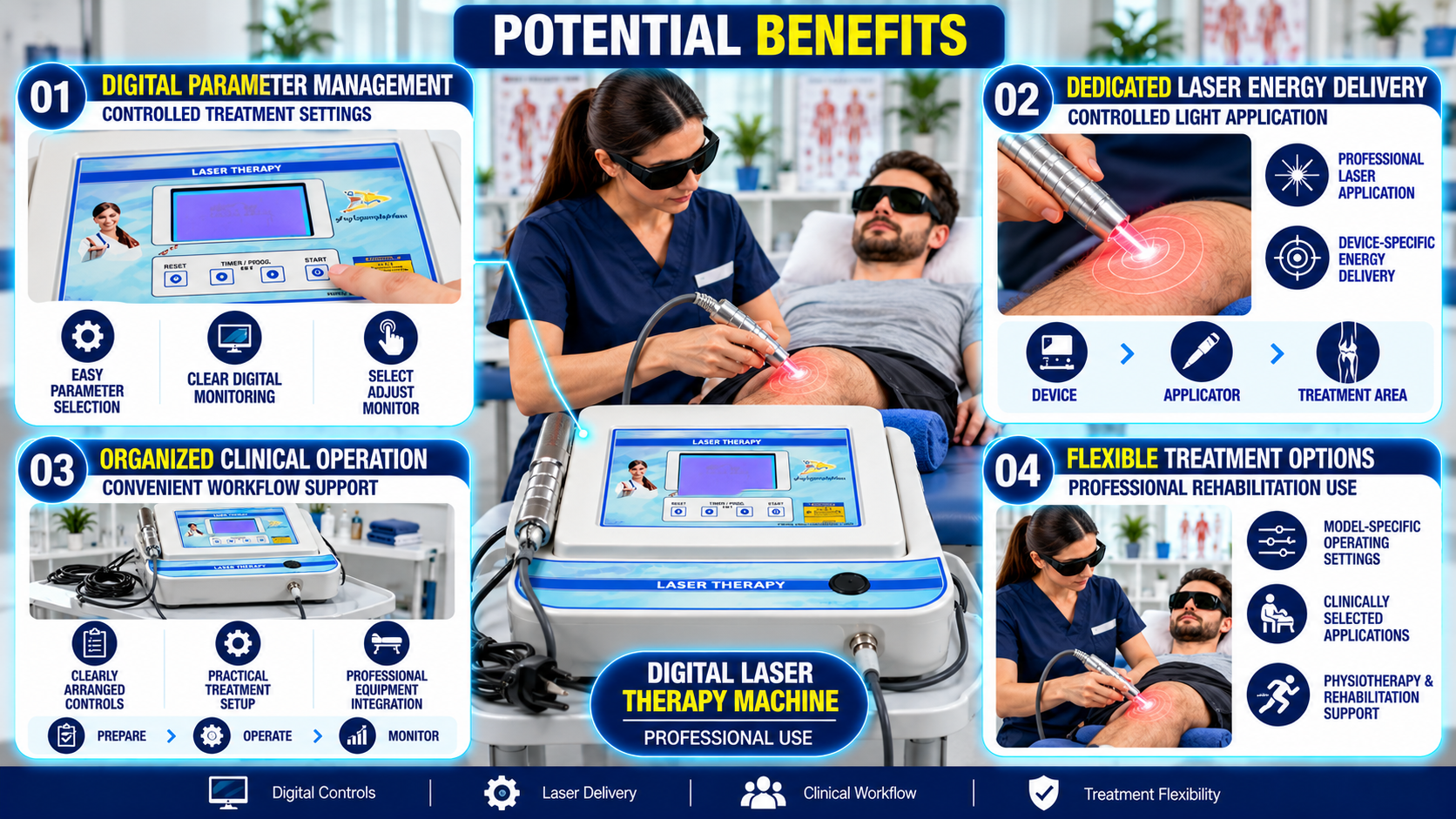
Potential Benefits of a Digital Laser Therapy Machine
The practical benefits depend on the specific model and how it is incorporated into a treatment service.
- Digital parameter management: Supported settings can be selected and monitored through the machine’s interface.
- Organised operation: A clearly labelled display and controls may help make routine operation more straightforward.
- Dedicated laser delivery: The applicator is designed to deliver laser energy according to the device’s specifications.
- Clinical workflow support: The equipment may be integrated into a broader physiotherapy service when appropriate.
- Treatment flexibility: Available settings may allow trained practitioners to select from different operating options, depending on the model.
- Professional rehabilitation use: It can form part of a treatment plan when clinically appropriate.
These are equipment and workflow considerations, not promises of therapeutic outcomes. Clinical results vary, and laser therapy may not be suitable for every patient or condition.
Digital Laser Therapy Machine vs. Other Physiotherapy Equipment
| Feature | Digital Laser Therapy Machine | Electrical Stimulation Equipment |
|---|---|---|
| Energy delivered | Laser light | Electrical current |
| Delivery method | Laser applicator | Electrodes or other designated accessories |
| Treatment parameters | Laser-specific settings | Current and stimulation settings |
| Main consideration | Wavelength, output, laser safety | Waveform, intensity, electrode placement, electrical safety |
| Clinical use | Depends on laser type and intended use | Depends on the modality and intended use |
These devices are not interchangeable. A practitioner should choose equipment based on the clinical objective, patient assessment, and the manufacturer’s instructions.
Technical Specifications of the Digital Laser Therapy Machine
The following specifications should be confirmed for the exact model before publication or purchase. They are not assumed specifications.
| Specification | Details |
|---|---|
| Product Name | Digital Laser Therapy Machine |
| Equipment Type | Laser therapy equipment |
| Control System | Digital control; confirm model |
| Laser Wavelength | Confirm with manufacturer |
| Laser Output Power | Confirm with manufacturer |
| Laser Classification | Confirm with manufacturer |
| Operating Modes | Model dependent |
| Treatment Timer | Confirm availability |
| Applicator Type | Confirm model and accessories |
| Display Type | Confirm model |
| Power Supply | Confirm nameplate or technical datasheet |
| Safety Accessories | Confirm supplied items |
| Warranty | Confirm seller or manufacturer terms |
| Country of Origin | Confirm product documentation |
Accurate specifications are important for product comparison, safe operation, and SEO credibility. Do not publish a wavelength, power rating, number of programs, or laser classification unless it has been verified for the actual device.
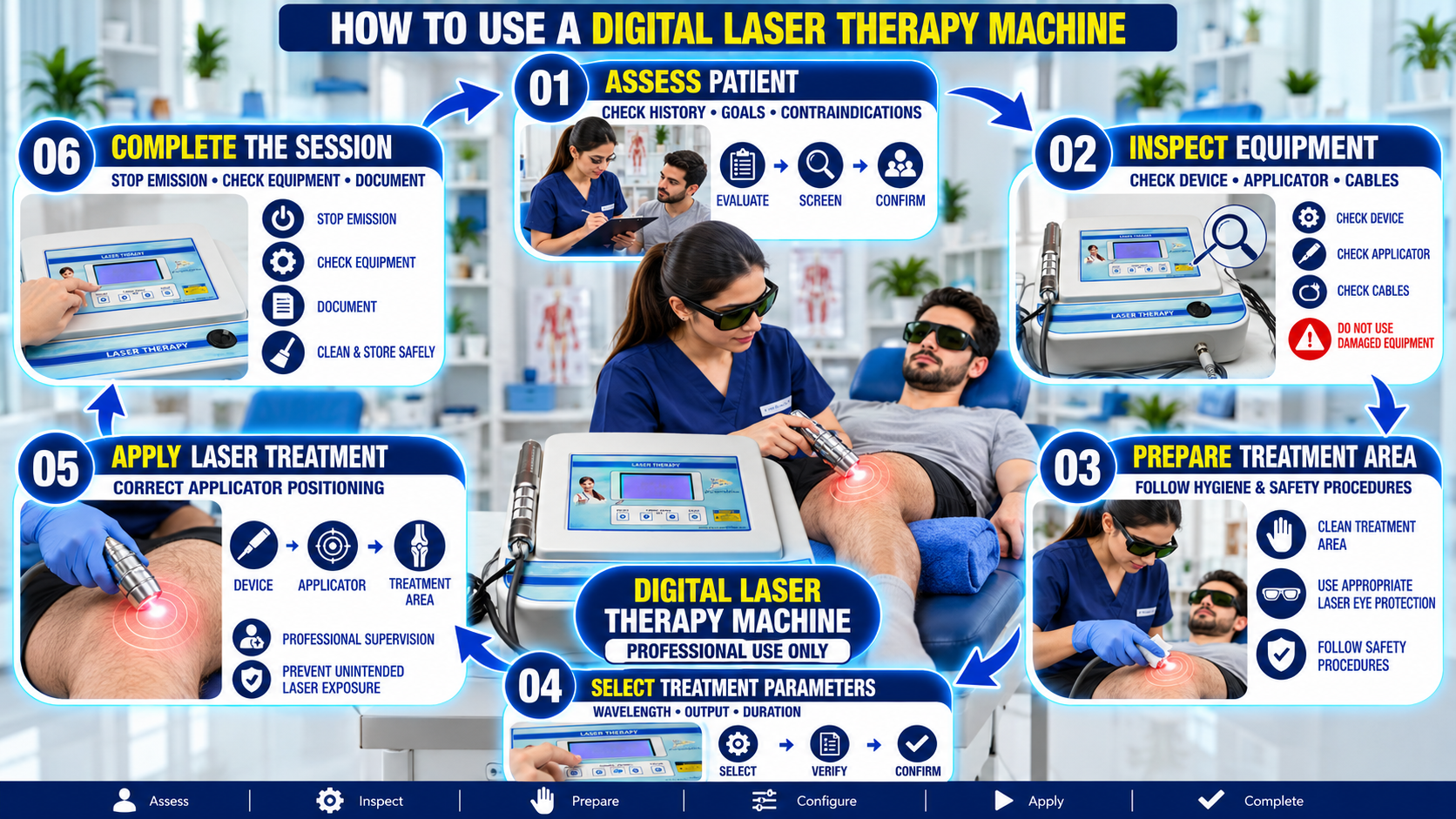
How to Use a Digital Laser Therapy Machine
Operation must follow the user manual and the training requirements applicable to the device. The following is a general workflow, not a substitute for model-specific instructions.
Step 1: Assess the Patient
A qualified professional should assess the patient’s condition, relevant medical history, treatment goals, and any contraindications or precautions.
Step 2: Inspect the Equipment
Check the machine, applicator, cables, controls, and safety accessories. Do not use damaged equipment or accessories.
Step 3: Prepare the Treatment Area
Prepare the area according to the manufacturer’s instructions and the clinic’s infection-control procedures. Ensure that all laser safety requirements are followed.
Step 4: Configure the Treatment Parameters
Select only settings supported by the machine and appropriate to the prescribed protocol. Confirm the wavelength, output, treatment duration, and other relevant parameters from the manual.
Step 5: Apply the Laser Treatment
Position and operate the applicator exactly as instructed by the manufacturer. Use the required protective eyewear and prevent unintended exposure to the laser beam.
Step 6: Complete the Session
Stop the emission before moving or storing the applicator, as directed by the manual. Check the equipment and document the session according to clinic procedures.
Laser Safety Precautions
Laser equipment requires specific safety measures. Before operating the Digital Laser Therapy Machine:
- Ensure the operator has appropriate training for the device and its laser classification.
- Use protective eyewear suitable for the specific wavelength and laser hazard.
- Prevent direct or reflected laser exposure to the eyes.
- Follow the manufacturer’s instructions concerning treatment areas, exposure limits, and contraindications.
- Do not use the device on a patient or treatment area unless the application is appropriate under the device instructions and professional assessment.
- Keep unauthorised individuals away from the treatment area during operation.
- Inspect the applicator and cables regularly and remove faulty equipment from service.
- Follow cleaning, maintenance, calibration, and servicing instructions.
- Do not modify safety systems or operate the device outside its specified parameters.
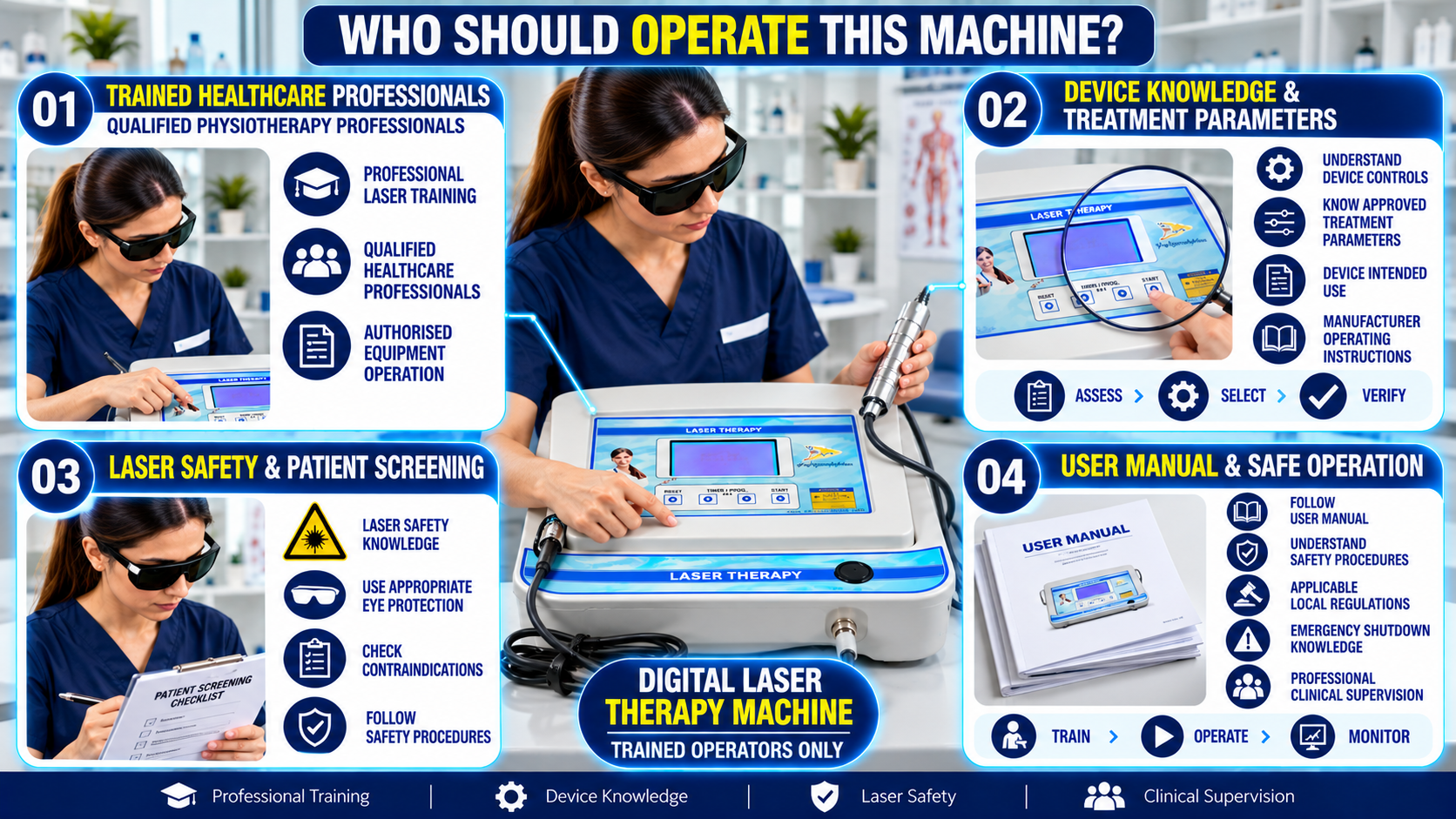
Who Should Operate This Machine?
The Digital Laser Therapy Machine should be operated by appropriately trained healthcare or physiotherapy professionals who understand the device’s intended use, treatment parameters, and laser safety requirements.
Clinics should ensure that staff are familiar with the user manual, safety procedures, patient screening requirements, and applicable local regulations before using the equipment.
Things to Consider Before Buying a Digital Laser Therapy Machine
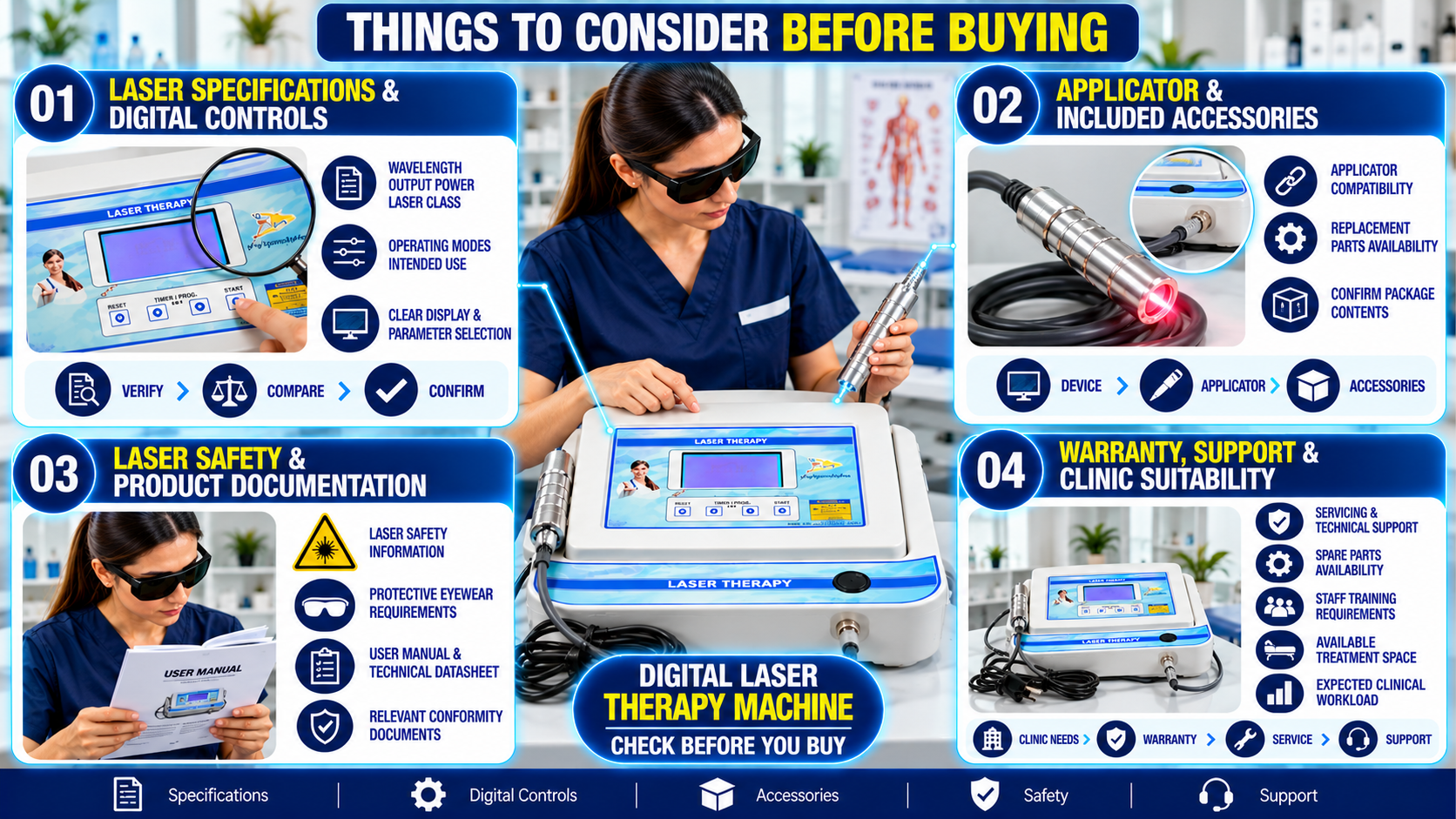
Choosing a suitable device involves more than comparing price or appearance. Consider these points before placing an order.
Verify the Laser Specifications
Confirm the wavelength, output power, operating modes, laser classification, and intended use. These details determine whether the device is appropriate for your requirements.
Review the Digital Interface
Check that the display, controls, and parameter-selection process are practical for the clinic’s workflow.
Check the Applicator and Accessories
Confirm what is included in the package, whether additional accessories are required, and how replacement parts can be obtained.
Ask About Safety and Documentation
Request the user manual, technical datasheet, relevant conformity documentation, and laser safety information.
Confirm Warranty and After-Sales Support
Review the warranty period, servicing arrangements, spare-parts availability, and technical support before buying.
Match the Machine to Your Clinic
Consider the range of services offered, the intended patient population, staff training, available space, and expected equipment usage.
Why Choose PHYSIOMODALITIES™?
PHYSIOMODALITIES™ offers physiotherapy and rehabilitation equipment for professional healthcare environments. When considering a Digital Laser Therapy Machine, buyers should review the exact model’s features, documentation, accessories, and support arrangements to determine whether it suits their requirements.
PHYSIOMODALITIES ENTERPRISES encourages buyers to confirm product specifications before purchase so that equipment selection is based on accurate information and intended clinical use.
For product enquiries, request the current technical datasheet and confirm the applicable warranty, delivery, and service details with the supplier.
Conclusion
The Digital Laser Therapy Machine is an option for physiotherapy clinics and rehabilitation facilities that use laser-based modalities as part of professional treatment services. Its suitability depends on the verified laser specifications, control features, applicator design, safety provisions, and intended application.
Before purchasing, confirm the technical datasheet, user manual, warranty terms, and available support. Selecting the right model and ensuring trained operation can help clinics integrate equipment into their workflow responsibly.
Frequently Asked Questions
1. What is a Digital Laser Therapy Machine?
It is a physiotherapy device that delivers laser light using the specifications and controls provided by its manufacturer.
2. Who can operate a Digital Laser Therapy Machine?
Appropriately trained healthcare or physiotherapy professionals should operate the device according to its instructions and applicable safety requirements.
3. Does every Digital Laser Therapy Machine have the same specifications?
No. Wavelength, output power, operating modes, applicator design, and safety classification can vary by model.
4. What safety precautions are required?
Operators must follow the device manual, use suitable protective eyewear, prevent unintended exposure, and comply with all applicable laser safety procedures.
5. What should I check before purchasing this machine?
Confirm the technical specifications, intended use, accessories, safety documentation, warranty, servicing, and after-sales support.