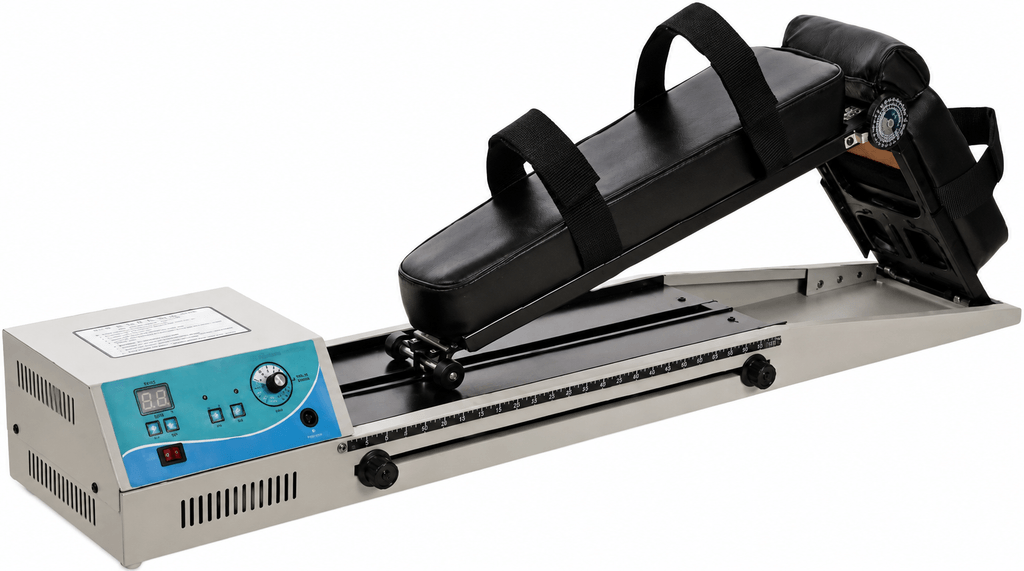
The CPM Continuous Passive Motion Machine is a rehabilitation device designed to gently move a patient’s joint through a controlled range of motion without requiring active muscle effort from the patient. It is commonly used as part of rehabilitation programs following selected orthopedic procedures and injuries.
CPM devices are available in different configurations for different joints, so the exact movement range, settings, and applications depend on the specific machine model.
What Is a CPM Continuous Passive Motion Machine?
CPM stands for Continuous Passive Motion.
A CPM machine is designed to move a joint slowly and repeatedly through a pre-set range of motion. The machine performs the movement while the patient remains relaxed, allowing controlled passive joint movement during rehabilitation.
Depending on the model, CPM machines may be designed for areas such as:
- Knee
- Hip
- Ankle
- Shoulder
- Elbow
The machine should be selected according to the joint being treated and the patient’s rehabilitation requirements.

How Does a CPM Machine Work?
A CPM machine supports the affected limb and moves the joint in a controlled, repetitive manner.
The therapist can set the available parameters, such as:
- Range of motion
- Movement speed
- Treatment duration
- Starting position
- End position
The exact adjustment options depend on the machine model.
Unlike active exercise, the patient does not need to generate the movement themselves. The machine provides the passive motion according to the prescribed rehabilitation protocol.
Key Features of CPM Continuous Passive Motion Machine
Controlled Joint Movement
The machine provides controlled and repetitive passive movement through the selected range of motion.
Adjustable Range of Motion
Many CPM machines allow the therapist to set the desired movement range according to the patient’s rehabilitation plan.
Adjustable Speed
Depending on the model, movement speed can be adjusted to provide slow and controlled joint motion.
Treatment Timer
A built-in timer can help manage the duration of the rehabilitation session.

Adjustable Limb Support
The support structure can generally be adjusted to accommodate the patient’s limb and provide comfortable positioning.
Stable Construction
A stable frame helps keep the limb properly positioned during passive movement.
Professional Rehabilitation Application
CPM machines can be used in hospitals, physiotherapy clinics, rehabilitation centers, orthopedic facilities, and other supervised rehabilitation environments.
Applications of CPM Continuous Passive Motion Machine
Depending on the patient’s condition and professional treatment plan, CPM may be incorporated into rehabilitation following selected:
- Orthopedic procedures
- Joint surgeries
- Knee rehabilitation
- Ligament-related procedures
- Joint injuries
- Post-operative rehabilitation
- Joint mobility programs
- Physiotherapy and rehabilitation protocols
CPM is not appropriate for every patient or every condition, so its use should be determined by the treating healthcare professional.

Benefits of CPM Continuous Passive Motion Machine
A CPM machine may provide several rehabilitation advantages when appropriately prescribed:
- Controlled passive joint movement
- Helps maintain prescribed joint mobility
- Allows repetitive movement without active muscle effort
- Adjustable movement range on supported models
- Adjustable movement speed on supported models
- Controlled treatment duration
- Useful during selected post-operative rehabilitation
- Can support structured physiotherapy programs
The expected benefits vary depending on the patient’s condition, joint involved, surgical procedure if applicable, and rehabilitation plan.
How to Use CPM Continuous Passive Motion Machine
The CPM machine should be used under the guidance of a qualified physiotherapist or healthcare professional.
Step 1: Assess the Patient
The therapist should assess the patient’s condition and confirm that CPM is appropriate.
Check the affected joint, prescribed range of motion, and any movement restrictions.
Step 2: Check the Machine
Inspect the machine, frame, controls, straps, supports, and power cable.
Make sure everything is secure and functioning correctly.
Step 3: Position the Patient
Place the patient comfortably in the recommended position.
The affected limb should be aligned correctly with the machine’s joint axis.
Step 4: Adjust the Limb Support
Adjust the machine’s support sections to match the patient’s limb length.
Secure the limb gently using the available straps or supports.
Step 5: Set the Range of Motion
Set the starting and ending angles according to the prescribed rehabilitation plan.
Do not exceed the range of motion recommended by the treating professional.

Step 6: Set the Speed
Select an appropriate movement speed according to the machine’s available settings and treatment plan.
Step 7: Set the Treatment Time
Set the required treatment duration using the timer if available.
Step 8: Start the Machine
Start the CPM machine at a slow and controlled setting.
Observe the first few movements carefully to make sure the patient’s limb remains correctly positioned.
Step 9: Monitor the Patient
Monitor the patient throughout the session.
The patient should report unexpected pain, excessive pressure, numbness, or other unusual discomfort immediately.
Stop the machine if significant discomfort or an unexpected problem occurs.
Step 10: Finish the Session
After the prescribed treatment duration, stop the machine.
Remove the limb carefully and check the patient’s comfort before completing the session.
Things to Check Before Buying
Before purchasing a CPM Continuous Passive Motion Machine, consider these important points:
1. Joint Compatibility
Confirm which joint the machine is designed to treat, such as knee, hip, shoulder, ankle, or elbow.
2. Range of Motion
Check the available minimum and maximum movement angles.
3. Speed Adjustment
Check whether movement speed can be adjusted according to treatment requirements.
4. Timer
A treatment timer can make session management easier.

5. Limb Support
Check whether the supports can accommodate different patient sizes.
6. Controls
Look for simple and clearly labelled controls for convenient professional operation.
7. Construction
Check the frame quality, stability, padding, straps, and overall build.
8. Warranty & Service
Check warranty coverage and after-sales technical support before purchasing.
Safety Precautions
CPM machines should be used carefully and according to the prescribed rehabilitation protocol.
- Use the machine under qualified professional supervision.
- Follow the manufacturer’s instructions.
- Confirm the prescribed range of motion before starting.
- Do not force a joint beyond its recommended range.
- Ensure proper alignment of the patient’s joint with the machine.
- Secure the limb comfortably without excessive pressure.
- Monitor the patient throughout treatment.
- Stop treatment if significant pain, numbness, swelling, or other unusual symptoms develop.
- Do not change post-operative movement restrictions without approval from the treating healthcare professional.
- Inspect the machine and supports before every session.
Who Should Operate a CPM Machine?
A CPM Continuous Passive Motion Machine should be set up and operated by a trained physiotherapist, rehabilitation professional, or other qualified healthcare professional.
The professional should determine the appropriate range of motion, speed, treatment duration, and progression according to the patient’s condition and prescribed rehabilitation plan.

Why Choose a CPM Continuous Passive Motion Machine?
A CPM Machine provides controlled passive joint movement in a structured rehabilitation setup.
Its adjustable movement parameters, limb-support design, and controlled repetitive motion can make it a useful rehabilitation tool for selected post-operative and orthopedic recovery programs.
Conclusion
The CPM Continuous Passive Motion Machine is a rehabilitation device designed to provide controlled, repetitive passive movement of a joint.
With features such as adjustable range of motion, controlled speed, limb support, and treatment timing, it can be incorporated into selected physiotherapy and post-operative rehabilitation programs.
The correct joint alignment, movement range, speed, and treatment duration should always be determined by a qualified healthcare professional according to the patient’s condition and rehabilitation plan.
Frequently Asked Questions
1. What does CPM stand for?
CPM stands for Continuous Passive Motion.
2. What is a CPM machine used for?
It is used to provide controlled passive joint movement during selected rehabilitation programs.
3. Can the range of motion be adjusted?
Yes, many CPM machines allow the movement range to be adjusted.
4. Does the patient need to move the joint actively?
No, the machine provides the passive movement.
5. Who should operate a CPM machine?
A trained physiotherapist or qualified healthcare professional should operate it.