


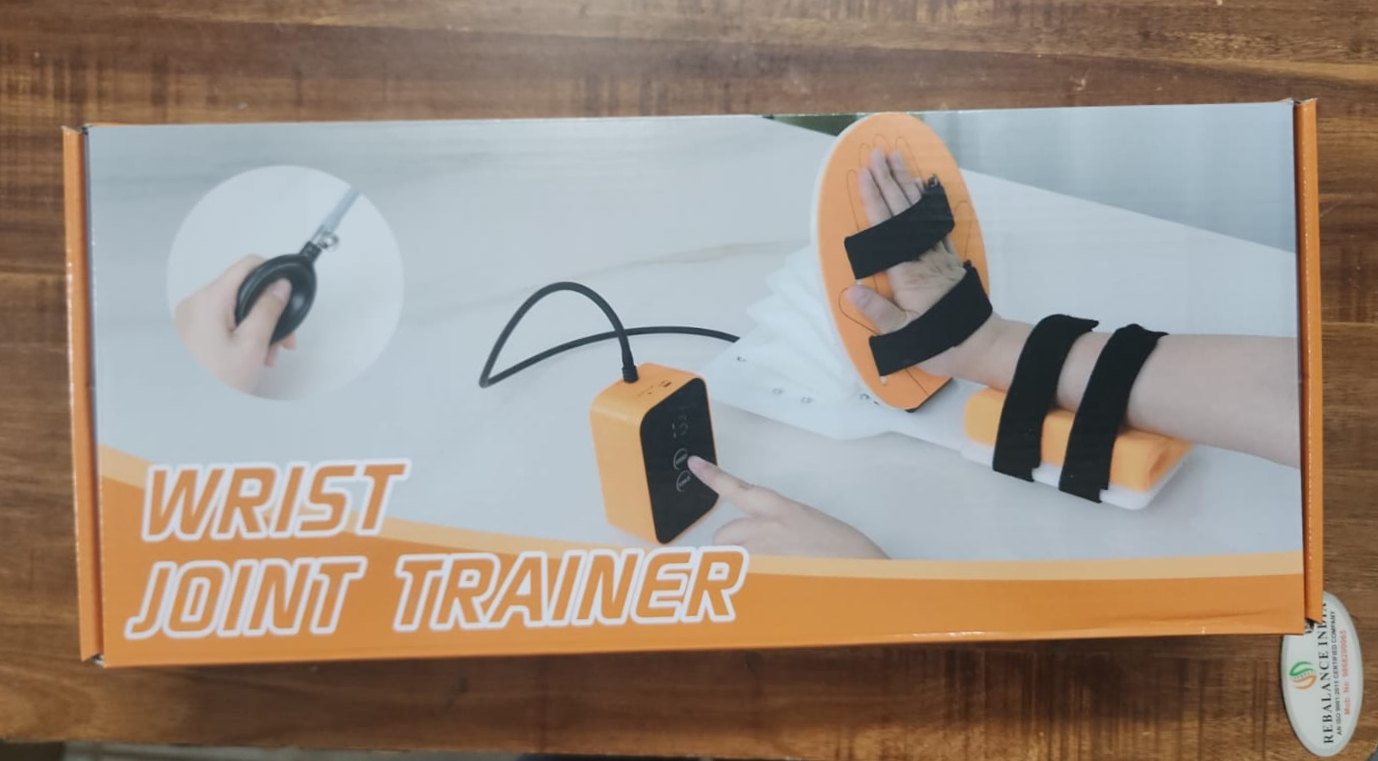
Advanced Wrist Joint Trainer for Physiotherapy and Rehabilitation
The Wrist Joint Trainer Exercise Machine is a rehabilitation device designed to support wrist mobility, controlled movement, and exercise-based rehabilitation. It can be used in physiotherapy clinics, hospitals, orthopedic departments, rehabilitation centres, and other professional healthcare environments.
The wrist plays an important role in everyday activities such as writing, lifting objects, gripping, typing, and performing fine motor tasks. Wrist injuries, joint stiffness, surgery, or prolonged immobilization can affect normal movement and functional activities. A structured wrist rehabilitation program may help patients work towards improving mobility, coordination, strength, and functional use of the hand and wrist.
The Wrist Joint Trainer provides a dedicated exercise platform for selected wrist rehabilitation activities. Depending on its mechanical design and available adjustment options, it may support controlled wrist movements and repetitive exercise under the supervision of a qualified physiotherapist.
Key Features of Wrist Joint Trainer Exercise Machine
- Designed for Wrist Joint Rehabilitation
- Supports Controlled Wrist Exercise
- Helps Practise Wrist Mobility Movements
- Supports Repetitive Exercise Sessions
- Designed for Professional Physiotherapy Use
- Suitable for Upper-Limb Rehabilitation
What Is a Wrist Joint Trainer?
A Wrist Joint Trainer is a rehabilitation exercise device designed to help patients practise wrist movements as part of a structured physiotherapy program.
The wrist joint complex allows movements in different directions, including bending, straightening, and side-to-side movement. A wrist trainer provides a dedicated setup for practising selected movements according to the equipment’s design.
Depending on the model, the device may support active exercise, resistance-based training, or controlled movement practice. The exact exercise functions should be confirmed from the product configuration.
The machine can be incorporated into rehabilitation programs when recommended by a qualified healthcare professional. It does not replace clinical assessment, individualized exercise prescription, or other rehabilitation interventions.
Importance of Wrist Joint Rehabilitation
Wrist joint rehabilitation focuses on improving or maintaining appropriate wrist mobility, strength, coordination, and functional movement.
The wrist works together with the hand and forearm during many everyday activities. Restricted wrist movement or reduced strength can affect tasks such as:
- Holding and lifting objects
- Writing and drawing
- Typing and computer work
- Opening containers
- Turning handles
- Performing daily self-care activities
- Supporting the hand during functional movements
A structured wrist physiotherapy exercise program may include mobility exercises, strengthening activities, coordination training, grip exercises, and functional tasks.
A Wrist Joint Trainer can provide an additional exercise option within an appropriately designed rehabilitation program.
Wrist Movements Practised During Rehabilitation
The wrist performs several movements that contribute to normal hand function. A wrist exercise device may support some of these movements depending on its mechanical design.
1. Wrist Flexion
Wrist flexion involves bending the palm towards the inner side of the forearm. It is used in several everyday hand and wrist activities.
2. Wrist Extension
Wrist extension involves moving the back of the hand towards the upper side of the forearm. It contributes to positioning the wrist during gripping and functional tasks.
3. Radial Deviation
Radial deviation refers to moving the wrist towards the thumb side.
4. Ulnar Deviation
Ulnar deviation refers to moving the wrist towards the little-finger side.
Not every wrist trainer supports all four movement directions. The available exercise movements depend on the particular machine design and should be verified before purchase.
How Does a Wrist Joint Trainer Work?
The general use of a Wrist Joint Trainer involves positioning the hand and wrist correctly and performing the exercises supported by the device.
A typical supervised exercise session may involve:
- Patient Positioning: The patient sits comfortably and positions the forearm and hand according to the equipment instructions.
- Device Adjustment: The physiotherapist adjusts the available support or resistance settings, if provided.
- Wrist Alignment: The wrist is positioned correctly to support the intended exercise movement.
- Exercise Selection: The professional selects suitable movements based on the patient’s rehabilitation requirements.
- Controlled Exercise: The patient performs the prescribed wrist movements using the device.
- Progress Monitoring: The physiotherapist observes movement quality, comfort, and exercise tolerance.
The exact operating procedure depends on the machine’s design and manufacturer’s instructions.
Wrist Mobility Exercise and Movement Training
Wrist mobility exercises are commonly included in rehabilitation programs when appropriate for the patient’s condition.
A Wrist Joint Trainer may provide a structured setup for practising selected wrist movements. Controlled exercise can help patients work on movement coordination and joint mobility within their prescribed limits.
The physiotherapist determines the exercise type, repetitions, movement range, and progression according to the patient’s assessment.
Wrist Strengthening and Resistance Exercise
Some wrist exercise devices are designed to provide resistance-based training. If the selected model includes resistance adjustment, it may be used for progressive wrist exercise under professional supervision.
Wrist strengthening programs may focus on the muscles responsible for bending, straightening, and stabilizing the wrist.
The resistance level should be selected according to the patient’s current strength, comfort, and rehabilitation stage. Do not assume that every wrist trainer includes adjustable resistance; confirm this feature from the actual model specifications.
Common Applications of Wrist Joint Trainer
The Wrist Joint Trainer Exercise Machine may be incorporated into suitable professional rehabilitation programs involving:
- Wrist Joint Rehabilitation
- Wrist Mobility Training
- Wrist Stiffness Rehabilitation
- Upper-Limb Rehabilitation
- Selected Post-Injury Rehabilitation
- Selected Post-Operative Wrist Rehabilitation
- Functional Hand and Wrist Exercise
- Wrist Movement Coordination
- Orthopedic Rehabilitation
- General Physiotherapy
Treatment suitability depends on the patient’s condition and should be determined by a qualified healthcare professional.
Wrist Joint Trainer for Post-Injury Rehabilitation
Wrist injuries can affect movement, strength, coordination, and everyday hand function. Rehabilitation requirements vary depending on the type of injury and the stage of recovery.
A wrist exercise device may be considered as part of a structured rehabilitation plan when movement and exercise are permitted.
Wrist Sprain Rehabilitation
A wrist sprain involves injury to the ligaments supporting the wrist. Depending on the severity and recovery stage, rehabilitation may include appropriate mobility exercises and progressive strengthening.
Wrist Fracture Rehabilitation
Following a wrist fracture, movement and exercise must follow the treating surgeon’s instructions. A wrist trainer may be considered only when the healthcare professional confirms that the prescribed exercise is appropriate.
Post-Immobilization Rehabilitation
After a period of immobilization, some patients may experience restricted movement or weakness. A progressive rehabilitation program may include gentle mobility and strengthening activities when clinically permitted.
Wrist Joint Trainer for Orthopedic Rehabilitation
Orthopedic rehabilitation may involve restoring appropriate movement and function after selected injuries, surgical procedures, or joint conditions.
The Wrist Joint Trainer can provide an exercise option for suitable wrist rehabilitation programs. It may be used alongside other physiotherapy interventions according to the patient’s requirements.
A complete rehabilitation plan may also include:
- Wrist Mobility Exercises
- Grip Strengthening
- Finger Movement Exercises
- Forearm Strengthening
- Hand Coordination Activities
- Functional Hand Training
The physiotherapist selects appropriate exercises based on clinical assessment and the patient’s progress.
Benefits of Wrist Joint Trainer Exercise Machine
1. Supports Wrist Mobility Training
The device provides a dedicated setup for practising selected wrist movements as part of a rehabilitation program.
2. Provides Structured Exercise Practice
A wrist trainer can help organize repetitive exercise sessions according to the prescribed routine.
3. Supports Upper-Limb Rehabilitation
Wrist exercise may form one part of a broader hand, wrist, and upper-limb rehabilitation program.
4. Encourages Controlled Movement Practice
The device can provide a consistent exercise setup, helping the patient practise movements with professional guidance.
5. Suitable for Physiotherapy Environments
It can be incorporated into suitable clinical exercise areas alongside other hand and upper-limb rehabilitation equipment.
6. Supports Individualized Exercise Programs
Exercise type and progression can be selected according to patient assessment and the capabilities of the specific device.
Wrist Joint Trainer vs Conventional Wrist Exercises
| Feature | Wrist Joint Trainer | Conventional Wrist Exercise |
|---|---|---|
| Exercise setup | Uses a dedicated device | May require no equipment |
| Movement | Depends on device design | Patient performs prescribed movements |
| Resistance | Available only if supported by model | May use body weight or exercise accessories |
| Exercise progression | Depends on available adjustments | Guided by the physiotherapist |
| Main purpose | Structured wrist exercise | Mobility, strength and functional training |
Both methods can be useful in rehabilitation. The appropriate approach depends on the patient’s condition and exercise requirements.
Suitable For
The Wrist Joint Trainer Exercise Machine may be suitable for professional use in:
- Physiotherapy Clinics
- Hospitals
- Orthopedic Clinics
- Rehabilitation Centres
- Hand Rehabilitation Units
- Occupational Therapy Departments
- Sports Rehabilitation Facilities
- Physical Therapy Departments
- Professional Healthcare Facilities
Factors to Consider Before Buying a Wrist Joint Trainer
Before purchasing a wrist rehabilitation exercise device, clinics and healthcare facilities should consider the following points.
Exercise Movements
Confirm which wrist movements the device supports, such as flexion, extension, radial deviation, or ulnar deviation.
Resistance Adjustment
If the model includes resistance-based training, check whether resistance can be adjusted and review the available settings.
Hand and Forearm Support
Check whether the device provides suitable hand and forearm positioning for the intended exercises.
Ease of Operation
A practical design can make exercise setup and routine use more convenient for trained professionals.
Patient Comfort
The device should support comfortable positioning and allow exercise within the patient’s prescribed movement limits.
Build Quality
Review the construction, stability, materials, and suitability for regular clinical use.
Maintenance and Service
Confirm cleaning requirements, maintenance instructions, warranty, and service support.
Product Specifications
Always verify the exact movement capabilities, dimensions, accessories, and adjustment options of the supplied model.
Safety and Operating Guidelines
The Wrist Joint Trainer should be used according to the manufacturer’s instructions and the patient’s prescribed rehabilitation plan.
- Obtain professional assessment before beginning wrist exercises after an injury or surgery.
- Confirm that the selected movement is permitted.
- Position the hand and forearm correctly.
- Begin with the prescribed movement range and resistance.
- Avoid forcing the wrist through painful movements.
- Stop exercise if unusual pain, swelling, numbness, or increased discomfort occurs.
- Follow the physiotherapist’s instructions for repetitions and exercise progression.
- Check the device before use and follow the manufacturer’s maintenance recommendations.
Patients with recent fractures, surgical repairs, significant swelling, or other restrictions should not begin device-based wrist exercise without clearance from their treating healthcare professional.
Why Choose PHYSIOMODALITIES ENTERPRISES?
PHYSIOMODALITIES ENTERPRISES provides physiotherapy, electrotherapy, orthopedic, and rehabilitation equipment for professional healthcare environments.
For clinics, hospitals, and rehabilitation centres looking for a Wrist Joint Trainer Exercise Machine, it is important to select equipment that matches the intended exercise requirements and patient population.
Before purchasing, healthcare providers and dealers should confirm the model’s supported movements, adjustment options, accessories, warranty, and technical specifications.
Conclusion
The Wrist Joint Trainer Exercise Machine is a dedicated rehabilitation exercise device designed to support wrist mobility and selected wrist exercise activities. It can be incorporated into appropriate Wrist Joint Rehabilitation programs involving controlled movement practice, coordination, and strengthening when supported by the machine’s design.
For physiotherapy clinics, hospitals, and orthopedic rehabilitation facilities, a wrist trainer can provide an additional option for structured upper-limb exercise sessions.
The device should always be selected and used according to its actual specifications, patient assessment, professional exercise prescription, and manufacturer instructions.
Frequently Asked Questions (FAQs)
1. What is a Wrist Joint Trainer Exercise Machine?
It is a rehabilitation exercise device designed to support selected wrist movements and exercise activities as part of a professional physiotherapy program.
2. What is a Wrist Joint Trainer used for?
It may be used for wrist mobility training, selected strengthening exercises, movement coordination, and upper-limb rehabilitation, depending on the device’s capabilities.
3. Which wrist movements can be practised?
Depending on the model, exercises may include wrist flexion, extension, radial deviation, and ulnar deviation.
4. Can a Wrist Joint Trainer be used after wrist surgery?
It may be considered only when the treating surgeon or physiotherapist confirms that the selected exercises are appropriate for the patient’s recovery stage.
5. Is the Wrist Joint Trainer suitable for physiotherapy clinics?
Yes. It is intended for suitable professional physiotherapy and rehabilitation environments, subject to its model specifications and intended use.
6. Does the machine provide adjustable resistance?
Resistance adjustment depends on the particular model. Confirm this feature from the manufacturer’s specifications before purchase.
7. Who should operate the Wrist Joint Trainer?
It should be used under the guidance of appropriately trained physiotherapists or healthcare professionals.
8. Can this device replace regular physiotherapy?
No. It is an exercise aid and does not replace a complete rehabilitation program or professional assessment.
9. Where can a Wrist Joint Trainer be used?
It may be used in physiotherapy clinics, hospitals, orthopedic departments, hand rehabilitation units, occupational therapy departments, and rehabilitation centres.
10. Is the Wrist Joint Trainer suitable for home use?
It is intended for professional rehabilitation environments unless home use is specifically recommended and explained by a qualified healthcare professional.


Reviews
There are no reviews yet.