
A Cerebral Palsy (CP) Chair is a specialized physiotherapy and rehabilitation support chair designed to assist children and individuals with cerebral palsy during therapeutic exercises, positioning, postural training, and functional rehabilitation. It provides a structured seating environment that can help support the body during supervised therapy sessions.
For physiotherapy clinics, pediatric rehabilitation centres, special-needs therapy units, hospitals, and occupational therapy departments, a Cerebral Palsy (CP) Chair can be incorporated into rehabilitation programs where stable positioning and controlled therapeutic activities are required.
PHYSIOMODALITIES™ offers rehabilitation and physiotherapy equipment designed to support professional therapy environments with practical, durable, and patient-focused solutions.
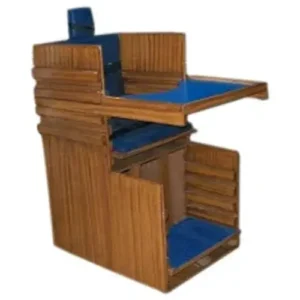
What Is a Cerebral Palsy (CP) Chair?
A Cerebral Palsy (CP) Chair is a therapeutic seating and positioning device intended for individuals who require additional postural support during rehabilitation or daily therapeutic activities. Cerebral palsy can affect muscle tone, movement coordination, balance, and posture, so appropriate seating support may be an important part of a comprehensive rehabilitation program.
Depending on the design, a CP chair may include a supportive backrest, seat, arm supports, foot support, positioning straps, adjustable components, and other features intended to provide a stable sitting position.
The exact configuration varies between models and manufacturers. Some chairs are designed specifically for pediatric use, while others may be available in different sizes to accommodate different body dimensions.
How Does a Cerebral Palsy Chair Support Rehabilitation?
A CP chair provides a structured seating position so that the therapist can conduct selected activities while the patient remains appropriately supported.
During a supervised session, the chair may be used for:
- Postural positioning
- Sitting balance activities
- Upper-limb exercises
- Functional reaching activities
- Trunk-control exercises
- Fine-motor activities
- Occupational therapy tasks
- Pediatric rehabilitation
- Assisted daily activity training
The objective is not simply to provide a seat but to create an appropriate therapeutic environment in which positioning and movement activities can be performed according to the individual’s rehabilitation requirements.
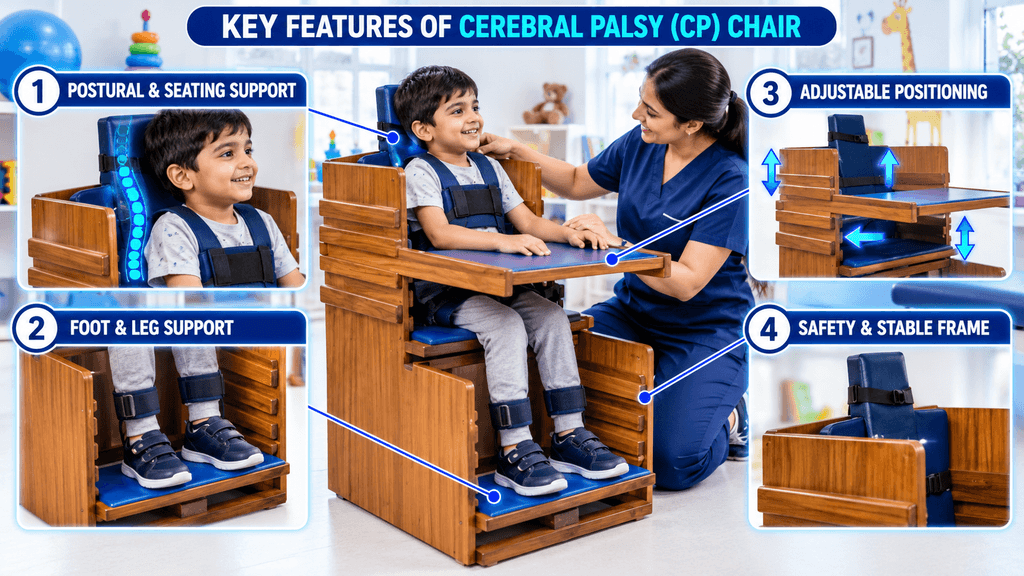
Key Features of Cerebral Palsy (CP) Chair
Supportive Seating Design
The chair is designed to provide a stable seating platform for individuals who need additional support during therapy.
Postural Support
A supportive backrest and positioning components can help therapists maintain an appropriate sitting posture during selected exercises.
Adjustable Components
Depending on the model, seat height, back support, footrest, arm support, or other positioning elements may be adjustable.
Foot and Leg Support
Proper lower-limb positioning can be important during seated therapy. Some CP chairs incorporate dedicated foot supports or adjustable leg positioning.
Positioning Straps
Certain models may include safety or positioning straps to help maintain an appropriate seated position under professional supervision.
Pediatric Rehabilitation Application
The chair can be incorporated into pediatric physiotherapy, occupational therapy, and developmental rehabilitation programs.
Stable Construction
A sturdy frame can provide stability during supervised therapeutic activities.
Therapy-Friendly Design
The seating arrangement is intended to make it easier for therapists to conduct controlled exercises and functional activities.
Applications of Cerebral Palsy (CP) Chair
A Cerebral Palsy (CP) Chair can be used across different rehabilitation environments depending on the patient’s individual needs and the design of the chair.
Pediatric Physiotherapy
Used as a supportive seating system during pediatric physiotherapy sessions involving posture, balance, mobility preparation, and controlled exercises.
Cerebral Palsy Rehabilitation
The chair can support positioning and therapeutic activities for individuals with cerebral palsy as part of an individualized rehabilitation plan.
Occupational Therapy
A stable seated position can help therapists conduct selected upper-limb, coordination, reaching, and functional activities.
Postural Training
Therapists may use supportive seating while working on trunk control and sitting posture.
Developmental Therapy
It may be incorporated into developmental rehabilitation programs for children requiring additional seating support.
Special Education and Therapy Centres
CP chairs can be useful in specialized educational and rehabilitation environments where supported seating is required for therapy or structured activities.
Hospitals and Rehabilitation Centres
The equipment may be used in pediatric rehabilitation departments, physical therapy units, and multidisciplinary rehabilitation centres.
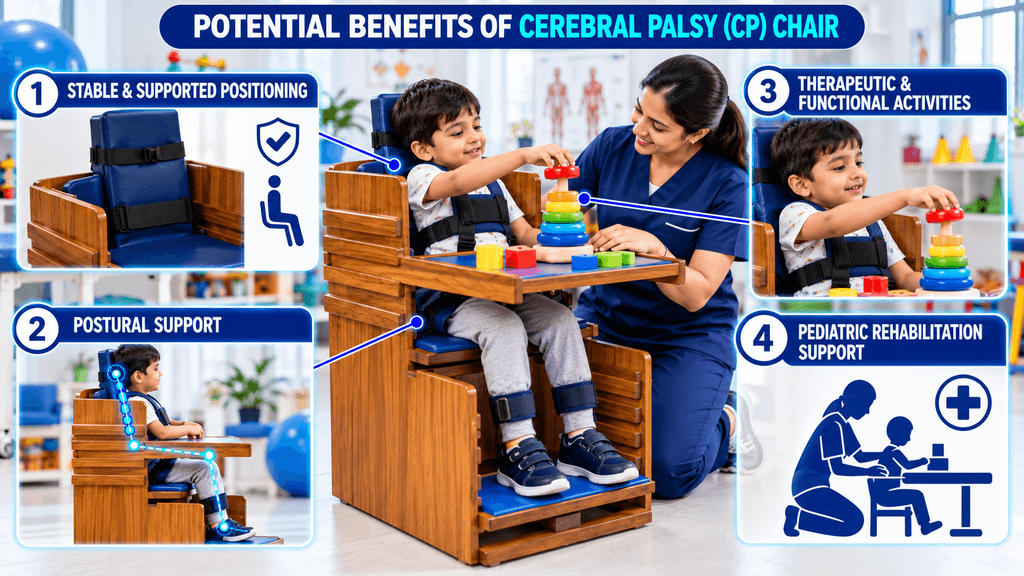
Potential Benefits
The potential benefits of using a Cerebral Palsy (CP) Chair depend on the individual, chair configuration, and therapy program.
Supports Stable Positioning
A structured seating system can provide additional support during therapeutic activities.
Helps Facilitate Therapeutic Exercises
By providing a stable seated position, the chair may allow therapists to focus on specific exercises without requiring the patient to maintain unsupported sitting throughout the activity.
Supports Postural Activities
Appropriate positioning may assist therapists when conducting postural and trunk-control exercises.
Useful for Pediatric Rehabilitation
A purpose-designed chair can provide a more suitable therapeutic seating environment for children requiring additional support.
Supports Functional Activities
The chair may be used during reaching, hand activities, communication tasks, and other functional exercises performed in a seated position.
Improves Therapy Organization
A dedicated rehabilitation chair can make positioning and exercise setup more consistent between therapy sessions.
Adjustable for Different Requirements
Model-specific adjustments can allow therapists to modify the chair according to patient size and positioning requirements.
Common Therapy Activities
A CP chair may be incorporated into several supervised activities, including:
| Activity | Rehabilitation Focus |
|---|---|
| Supported sitting | Postural control |
| Reaching exercises | Upper-limb coordination |
| Ball activities | Coordination and movement |
| Hand exercises | Fine-motor development |
| Trunk-control exercises | Core and postural control |
| Supported weight shifting | Balance training |
| Functional reaching | Daily activity preparation |
| Visual-motor activities | Coordination |
| Feeding-position practice | Functional positioning |
| Occupational therapy tasks | Functional independence |
The exact activities should be selected according to the patient’s abilities and the assessment of a qualified therapist.
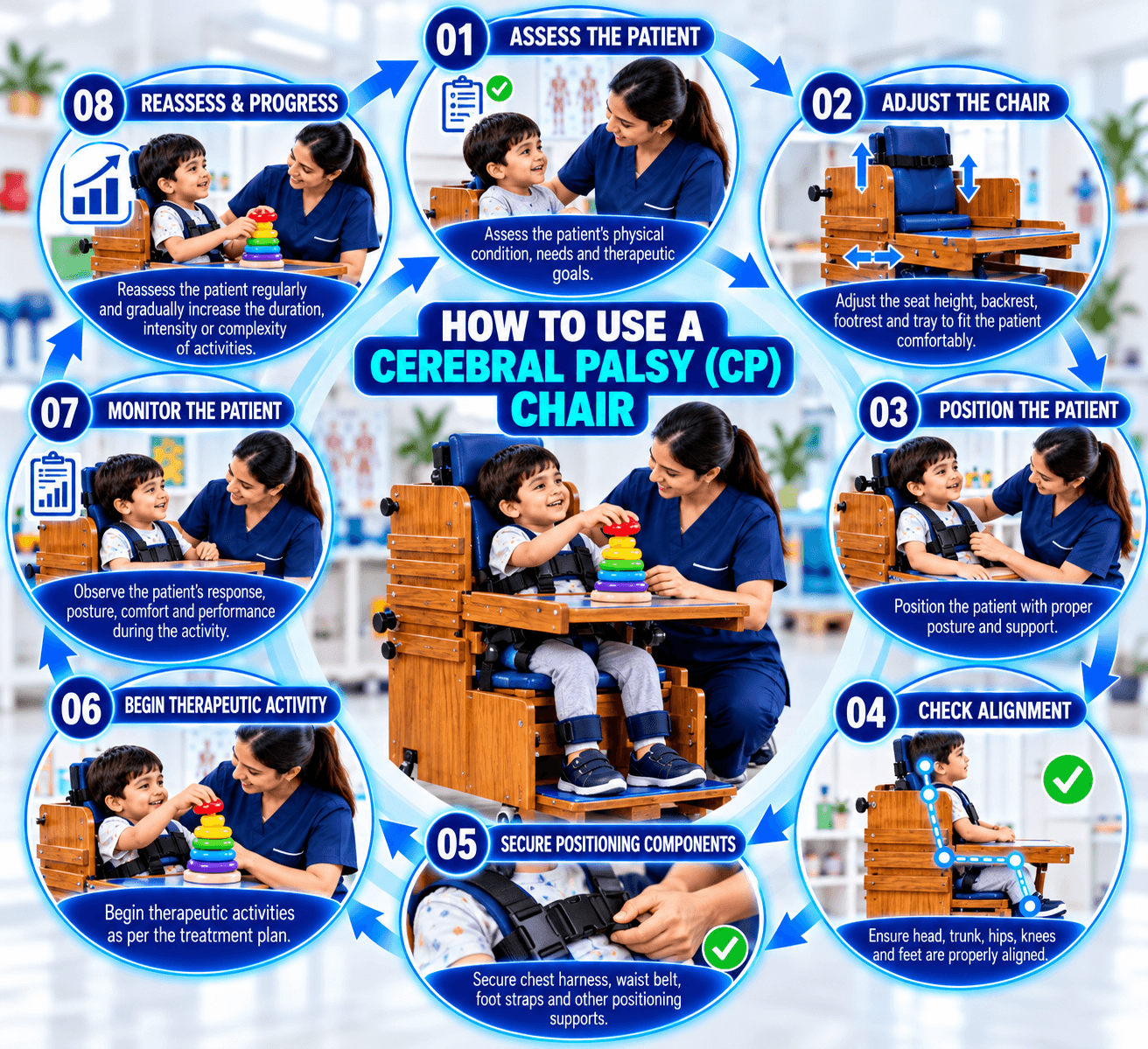
How to Use a Cerebral Palsy (CP) Chair
Correct setup is important when using a Cerebral Palsy (CP) Chair.
Step 1: Assess the Patient
The therapist should consider the individual’s height, weight, posture, muscle tone, movement ability, and positioning requirements.
Step 2: Adjust the Chair
Adjust available seating, backrest, foot support, arm support, and positioning components according to the patient’s requirements and the manufacturer’s instructions.
Step 3: Position the Patient
Place the patient carefully into the chair while maintaining appropriate support for the trunk, pelvis, legs, and feet.
Step 4: Check Alignment
Check that the patient is comfortably positioned and that the available supports are correctly placed.
Step 5: Secure Positioning Components
If the model includes positioning straps, use them according to the manufacturer’s instructions. They should provide appropriate support without causing unnecessary restriction.
Step 6: Begin Therapeutic Activity
The therapist can then conduct the planned exercises or functional activities.
Step 7: Monitor the Patient
Observe comfort, posture, movement quality, fatigue, and any signs of discomfort throughout the session.
Step 8: Reassess After the Session
The therapist can evaluate how the positioning worked and make adjustments for future sessions if required.
Safety Precautions
A Cerebral Palsy (CP) Chair should be used under appropriate professional supervision, particularly for individuals with significant postural, balance, or mobility limitations.
- Check the chair before every use.
- Confirm that all adjustable components are securely locked.
- Follow the manufacturer’s weight capacity.
- Ensure the chair is positioned on a stable surface.
- Use positioning straps only as intended.
- Do not leave a patient unattended when supervision is required.
- Monitor for discomfort, pressure, fatigue, or unusual movement.
- Do not force a patient’s joints or limbs into a position.
- Make adjustments gradually.
- Follow the rehabilitation plan prepared by the treating professional.
- Keep moving components clear of fingers and clothing.
- Stop the activity if the patient shows significant discomfort or distress.
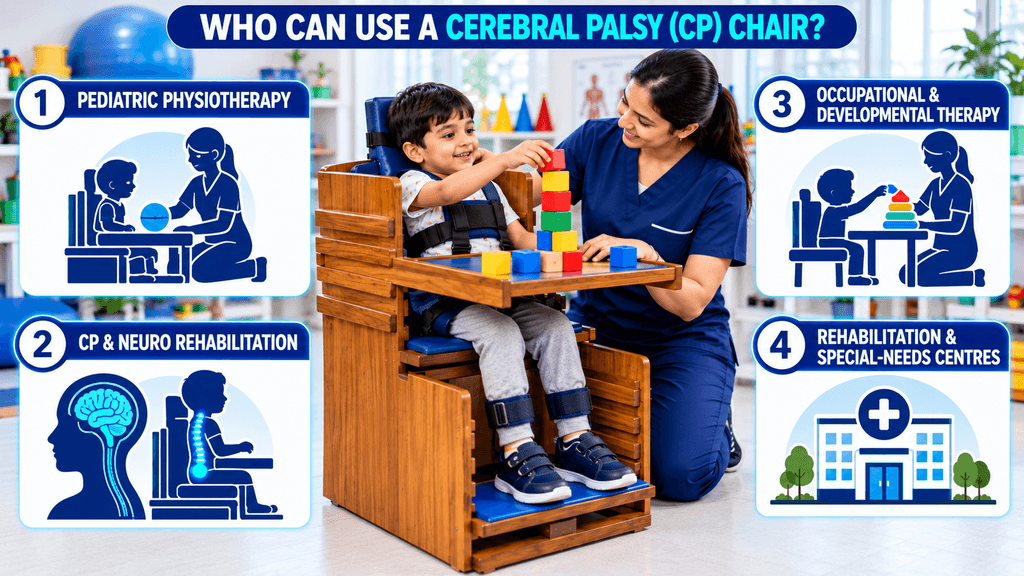
Who Can Use a Cerebral Palsy (CP) Chair?
A CP chair may be used in:
- Pediatric physiotherapy clinics
- Cerebral palsy rehabilitation centres
- Occupational therapy centres
- Pediatric hospitals
- Special-needs therapy centres
- Developmental therapy clinics
- Rehabilitation hospitals
- Neurological rehabilitation departments
- Special education therapy units
- Multidisciplinary rehabilitation centres
The appropriate chair size and configuration should be selected according to the patient’s physical requirements.
Cerebral Palsy Chair vs Standard Rehabilitation Chair
| Feature | Cerebral Palsy (CP) Chair | Standard Rehabilitation Chair |
|---|---|---|
| Primary purpose | Supported therapeutic positioning | General rehabilitation seating |
| Postural support | Often more specialized | Usually basic |
| Pediatric use | Commonly available | Model dependent |
| Positioning adjustments | Model dependent | Model dependent |
| Foot support | Often available | May vary |
| Therapy activities | Designed for supported activities | General therapy use |
| Specialized positioning | Yes, depending on model | Usually limited |
| Clinical application | Pediatric and neurological rehabilitation | General rehabilitation |
The appropriate option depends on the patient’s individual positioning requirements and the intended therapy activities.
Technical Specifications
| Specification | Details |
|---|---|
| Product Name | Cerebral Palsy (CP) Chair |
| Equipment Type | Pediatric Rehabilitation & Positioning Chair |
| Primary Application | Cerebral Palsy Rehabilitation |
| Main Function | Supported Seating and Therapeutic Positioning |
| Suitable Users | Children and individuals requiring additional seating support |
| Frame | Model dependent |
| Seat | Supportive therapeutic seating |
| Backrest | Supportive backrest |
| Foot Support | Model dependent |
| Arm Support | Model dependent |
| Positioning Straps | Model dependent |
| Adjustments | Model dependent |
| Operation | Manual |
| Power Requirement | Normally none |
| Therapy Application | Physiotherapy, Occupational Therapy & Rehabilitation |
| Weight Capacity | Model dependent |
| Size Options | Model dependent |
| Manufacturer | PHYSIOMODALITIES™ |
Specifications may vary according to the exact model supplied. Always verify dimensions, weight capacity, adjustment range, and accessories before purchase.
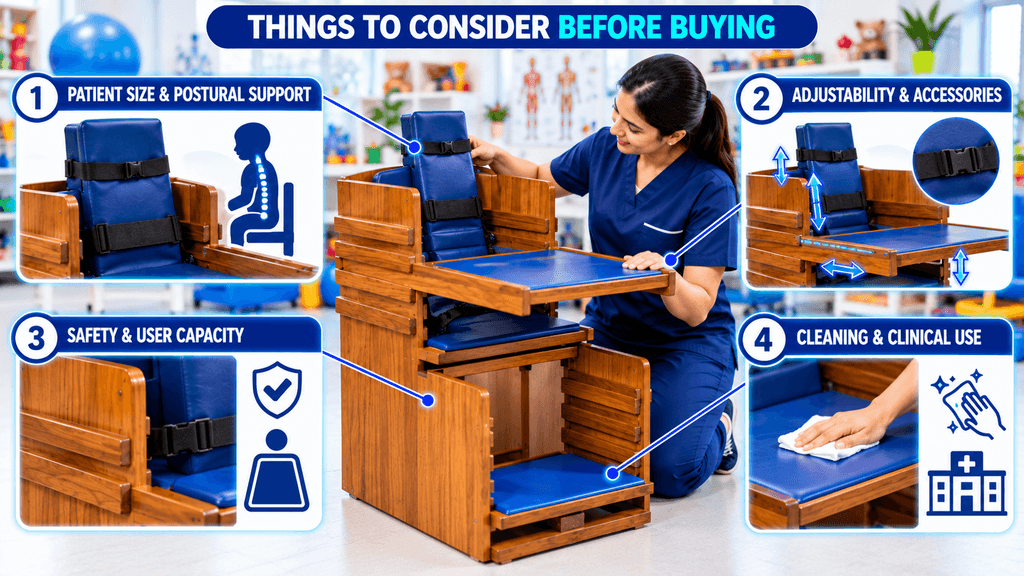
Things to Consider Before Buying
When selecting a Cerebral Palsy (CP) Chair, consider:
Patient Size
The seat dimensions and adjustment range should be appropriate for the intended patient.
Postural Requirements
Consider the amount of trunk, pelvic, head, leg, and foot support required.
Adjustability
Check whether the chair provides the adjustments needed for the intended therapy program.
Safety Features
Review the stability of the frame, locking mechanisms, positioning supports, and other safety features.
Weight Capacity
Always confirm the manufacturer’s specified patient weight capacity.
Therapy Environment
Consider whether the chair will be used in a physiotherapy clinic, pediatric rehabilitation centre, hospital, or therapy room.
Cleaning and Maintenance
A practical clinical design should be easy to clean and maintain between therapy sessions.
Accessories
Check whether foot supports, positioning straps, cushions, trays, or other accessories are included or available separately.
Why Choose PHYSIOMODALITIES™?
PHYSIOMODALITIES™ focuses on physiotherapy, rehabilitation, and clinical equipment designed for professional therapy environments.
The Cerebral Palsy (CP) Chair can be incorporated into pediatric and neurological rehabilitation setups where supported seating and controlled therapeutic positioning are required.
PHYSIOMODALITIES™ equipment solutions are intended to help physiotherapists, occupational therapists, rehabilitation professionals, hospitals, and therapy centres create organized clinical treatment environments.
Conclusion
A Cerebral Palsy (CP) Chair is a specialized rehabilitation seating solution designed to support positioning, postural activities, and supervised therapeutic exercises for individuals who require additional sitting support. It can be particularly useful in pediatric physiotherapy, cerebral palsy rehabilitation, occupational therapy, and developmental rehabilitation settings.
With supportive seating and model-dependent positioning adjustments, the chair can provide a structured environment for conducting therapeutic and functional activities. Selection should always be based on the patient’s size, posture, functional abilities, and individual rehabilitation requirements.
Frequently Asked Questions
1. What is a Cerebral Palsy (CP) Chair?
A Cerebral Palsy (CP) Chair is a specialized rehabilitation chair designed to provide supportive seating and positioning during physiotherapy and therapeutic activities.
2. Who can use a CP Chair?
It may be used by children or individuals requiring additional postural support, depending on the chair’s size and configuration.
3. Where is a CP Chair used?
It can be used in physiotherapy clinics, pediatric rehabilitation centres, hospitals, occupational therapy centres, and special-needs therapy environments.
4. Does a CP Chair have adjustable features?
Many models include adjustable components such as foot supports, seating, back support, or positioning elements, although features vary by model.
5. Can a CP Chair be used without professional supervision?
Patients with significant positioning or mobility limitations should use the chair under appropriate professional supervision and according to the manufacturer’s instructions.