PHYSIOMODALITIES™

Vertical Shockwave Therapy Machine

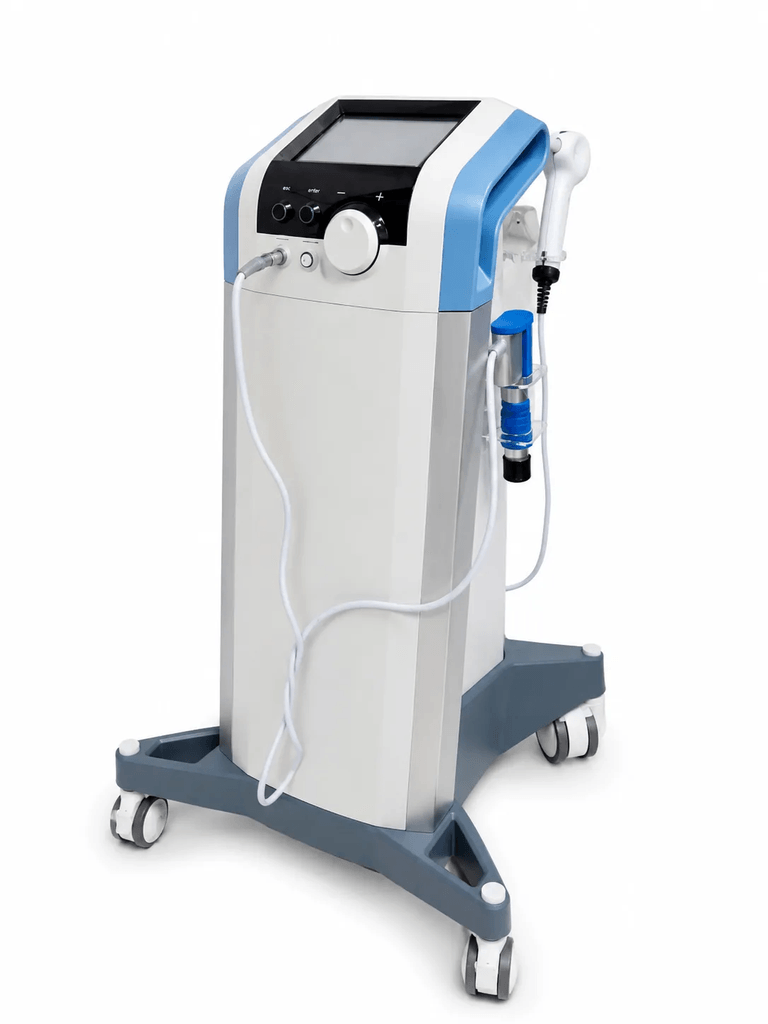
The Vertical Shockwave Therapy Machine is a professional physiotherapy and rehabilitation system designed to deliver controlled shockwave energy for selected musculoskeletal and soft-tissue treatment programs. Its vertical floor-standing design combines the shockwave generator, control system, applicator connections, and treatment accessories into a convenient clinical setup.

Shockwave therapy uses mechanically generated pressure waves delivered through an applicator to the treatment area. Depending on the machine configuration, pneumatic or ballistic technology can be used to generate the acoustic pulses. The therapist can select appropriate frequency, energy level, number of pulses, and applicator according to the treatment protocol and patient requirements.

A Vertical Shockwave Therapy Machine can be incorporated into physiotherapy clinics, sports rehabilitation centres, orthopedic rehabilitation facilities, pain-management practices, and other professional healthcare environments.
The Vertical Shockwave Therapy Machine is a professional physiotherapy and rehabilitation system designed to deliver controlled shockwave energy for selected musculoskeletal and soft-tissue treatment programs. Its vertical floor-standing design combines the shockwave generator, control system, applicator connections, and treatment accessories into a convenient clinical setup. Shockwave therapy uses mechanically generated pressure waves delivered through an applicator to the treatment area. Depending on the machine configuration, pneumatic or ballistic technology can be used to generate the acoustic pulses. The therapist can select appropriate frequency, energy level, number of pulses, and applicator according to the treatment protocol and patient requirements. A Vertical Shockwave Therapy Machine can be incorporated into physiotherapy clinics, sports rehabilitation centres, orthopedic rehabilitation facilities, pain-management practices, and other professional healthcare environments. What Is a Vertical Shockwave Therapy Machine? A Vertical Shockwave Therapy Machine is a floor-standing shockwave therapy system designed for professional clinical use. Unlike compact tabletop or portable units, the vertical configuration generally provides a larger integrated body with a dedicated control interface and storage or mounting arrangement for the applicator and treatment heads. Many vertical shockwave systems use radial or pneumatic shockwave technology. In pneumatic systems, compressed air accelerates a projectile or applicator mechanism, generating mechanical pressure pulses that are transferred through the treatment head and into the treatment area. The machine is designed to allow the therapist to control treatment parameters rather than delivering a fixed-output therapy. How Does Vertical Shockwave Therapy Work? Shockwave therapy delivers mechanical acoustic energy through a treatment applicator. During treatment, the applicator is positioned against the patient's skin over the selected area. A series of controlled pressure pulses is generated and transferred through the applicator. A typical treatment process involves: Patient assessment. Identification of the treatment area. Selection of the appropriate applicator. Application of coupling medium where required. Selection of frequency and energy parameters. Delivery of controlled shockwave pulses. Continuous monitoring of patient response. Completion and documentation of the treatment session. The exact treatment settings depend on the machine, treatment area, clinical protocol, and patient tolerance. Key Features of Vertical Shockwave Therapy Machine Floor-Standing Vertical Design The vertical structure provides a dedicated clinical workstation for shockwave treatment. The integrated design can make the equipment easier to position within a professional treatment room. Adjustable Shockwave Frequency Many vertical shockwave systems provide adjustable pulse frequency. Published models commonly offer ranges such as 1–16 Hz or 1–21 Hz, depending on the configuration. Adjustable Energy or Pressure Treatment intensity can be adjusted according to the machine's available settings. Some pneumatic models provide pressure-based adjustment, while other systems specify energy levels or multiple output steps. Multiple Treatment Heads Vertical shockwave systems can be supplied with multiple interchangeable treatment heads. One published vertical model, for example, specifies six working heads, while other systems offer different configurations. Different heads can provide different contact surfaces for treating various anatomical regions. Digital Control Interface A digital display or touchscreen interface allows the operator to select treatment parameters and monitor the therapy session. Depending on the model, the interface may provide preset programs, frequency adjustment, intensity control, pulse counting, and treatment information. High Shot Capacity Professional shockwave systems are designed for repeated clinical use. Some published vertical models specify approximately 2 million shockwave shots, although shot capacity varies by model and applicator. Professional Clinical Construction The floor-standing body provides a stable platform for professional treatment environments and can integrate the main control system with the shockwave generator and accessory storage. Applications of Vertical Shockwave Therapy The Vertical Shockwave Therapy Machine may be incorporated into rehabilitation programs involving selected musculoskeletal and soft-tissue conditions. Common applications can include: Plantar fascia-related rehabilitation Achilles tendon rehabilitation Tendon-related conditions Muscle pain management Myofascial trigger-point programs Sports injury rehabilitation Soft-tissue rehabilitation Joint-area rehabilitation Chronic musculoskeletal pain programs Rehabilitation following appropriate clinical assessment Shockwave therapy is not suitable for every condition or every patient. A qualified healthcare professional should determine whether the treatment is appropriate. Potential Benefits Controlled Mechanical Stimulation Shockwave therapy delivers mechanical pulses to a selected treatment area, allowing the therapist to apply a controlled stimulus according to the treatment protocol. Adjustable Treatment The ability to modify frequency, intensity or pressure, and pulse count provides flexibility for different treatment requirements. Multiple Applicator Options Interchangeable treatment heads can help the therapist select an appropriate contact surface for different anatomical areas. Support for Rehabilitation Programs Shockwave therapy can be combined with exercise therapy, manual techniques, mobility work, strengthening programs, and other physiotherapy approaches when clinically appropriate. Suitable for Professional Clinical Use The vertical design is particularly useful for clinics that perform repeated shockwave treatment sessions and require a dedicated floor-standing system. Non-Surgical Treatment Modality Shockwave therapy is a non-invasive modality that can be incorporated into selected rehabilitation programs without surgical intervention. Treatment Areas Depending on the treatment protocol and machine configuration, shockwave therapy may be used around areas such as: Heel and plantar fascia region Achilles tendon region Knee region Shoulder region Elbow region Hip region Thigh and calf muscles Other selected soft-tissue areas The exact treatment location and settings should be determined by a qualified professional after assessment. Radial Shockwave Technology Many vertical systems use radial shockwave technology, in which pressure pulses are generated by a pneumatic mechanism and transferred through an applicator. Radial systems are commonly used for musculoskeletal and soft-tissue applications. The energy characteristics, pressure range, frequency, penetration, and applicator design vary between machines. For example, one published vertical pneumatic system specifies 0.5–5 bar and 1–22 Hz, while another vertical model specifies 1–16 Hz and 12 output levels. These differences demonstrate why the exact machine datasheet should be used for final product specifications. How to Use Vertical Shockwave Therapy Machine Step 1: Patient Assessment Review the patient's history, symptoms, treatment goals, and relevant contraindications before beginning therapy. Step 2: Identify the Treatment Area Determine the appropriate treatment location according to the clinical assessment. Step 3: Select the Treatment Head Choose the applicator or treatment head appropriate for the anatomical area and treatment protocol. Step 4: Prepare the Skin Clean and prepare the treatment area. Apply an appropriate coupling medium when required by the machine's instructions. Step 5: Set the Parameters Select the appropriate frequency, energy or pressure level, and number of pulses according to the treatment protocol. Step 6: Position the Applicator Place the applicator against the treatment area with appropriate contact. Step 7: Start Treatment Begin shockwave delivery at a clinically appropriate setting. Step 8: Monitor the Patient Observe patient feedback and response during treatment. Parameters may be adjusted when clinically appropriate. Step 9: Complete the Session Stop the shockwave output before removing the applicator, clean the treatment area if necessary, and clean and store the equipment according to manufacturer instructions. A physiotherapy equipment SOP published by JIPMER similarly emphasizes patient assessment, coupling medium, parameter selection, applicator positioning, monitoring, and equipment cleaning after shockwave treatment. Safety Precautions The Vertical Shockwave Therapy Machine should be operated only by appropriately trained professionals. Important precautions include: Perform patient assessment before treatment. Follow the manufacturer's operating instructions. Select parameters according to the treatment protocol. Check the applicator and cables before use. Use the appropriate treatment head. Maintain proper applicator contact. Monitor patient response continuously. Avoid treatment over areas where shockwave therapy is contraindicated. Stop treatment if unexpected or significant discomfort occurs. Keep the machine and electrical connections dry. Perform regular maintenance and inspection. Follow the manufacturer's recommended service schedule. Potential contraindications and precautions should be reviewed before treatment. Professional physiotherapy guidance commonly identifies considerations such as blood-clotting disorders, malignancy, pregnancy, and infection at the treatment site. Technical Specifications Specification Vertical Shockwave Therapy Machine Product Type Floor-Standing Shockwave Therapy Machine Therapy Shockwave / Acoustic Wave Therapy Technology Radial / Pneumatic Shockwave* Frequency Approx. 1–16 Hz or model-dependent* Energy / Pressure Model-dependent* Treatment Heads Multiple interchangeable heads* Display Digital LCD / Touchscreen* Shot Capacity Up to approximately 2 million shots on selected models* Construction Vertical Floor-Standing Design Application Physiotherapy & Rehabilitation Operation Professional Use Power Supply Model-dependent *Specifications vary significantly between Vertical Shockwave models. Published examples include 1–16 Hz, 12 energy levels and 6 heads, while other vertical systems specify 0.5–10 bar and 1–21 Hz. Confirm the exact specifications, accessories, dimensions, power and output range against the supplied PHYSIOMODALITIES™ model before publishing. Who Should Operate the Machine? The Vertical Shockwave Therapy Machine should be operated by trained healthcare professionals who understand shockwave therapy principles, patient assessment, treatment parameters, applicator handling, and contraindications. Suitable professional users may include: Physiotherapists Sports rehabilitation professionals Orthopedic rehabilitation teams Qualified rehabilitation practitioners Healthcare professionals trained in shockwave therapy Professional supervision is important because treatment intensity and location need to be selected according to the individual patient. Why Clinics Use a Vertical Shockwave System A vertical shockwave system can be useful for clinics that regularly provide shockwave-based rehabilitation. Key operational advantages can include: Dedicated floor-standing design Integrated control system Multiple treatment heads Adjustable treatment parameters Digital treatment interface High shot capacity on selected models Easy access to applicator accessories Professional clinic-oriented construction The machine can complement other physiotherapy technologies and rehabilitation methods rather than replacing a complete clinical treatment program. Why Choose PHYSIOMODALITIES™? PHYSIOMODALITIES™ offers physiotherapy and rehabilitation equipment designed for professional clinical environments. A Vertical Shockwave Therapy Machine can be an appropriate addition for clinics looking to expand their rehabilitation equipment with shockwave technology. The floor-standing format provides a dedicated setup for repeated professional treatments. PHYSIOMODALITIES ENTERPRISES supplies physiotherapy and rehabilitation equipment for clinics, hospitals, physiotherapy centres, rehabilitation facilities, and professional healthcare environments. Conclusion The Vertical Shockwave Therapy Machine is a floor-standing professional system designed to deliver controlled mechanical shockwave energy for selected physiotherapy and rehabilitation applications. Its adjustable treatment parameters, interchangeable applicators, digital controls, and dedicated vertical construction can make it suitable for clinics that regularly use shockwave therapy. Depending on the model, systems may provide different frequency ranges, energy or pressure levels, treatment heads, shot capacities, and control interfaces. For final product publication, the exact technical specifications of the supplied PHYSIOMODALITIES™ model should be verified because Vertical Shockwave Therapy Machines are available in multiple configurations. Frequently Asked Questions 1. What is a Vertical Shockwave Therapy Machine? It is a floor-standing physiotherapy system designed to deliver controlled shockwave or acoustic pressure pulses for selected rehabilitation applications. 2. What conditions can shockwave therapy be used for? It may be incorporated into rehabilitation programs for selected tendon, plantar fascia, muscle, and other musculoskeletal conditions following professional assessment. 3. What frequency does a Vertical Shockwave Machine use? The frequency depends on the model. Published systems can range from approximately 1–16 Hz to 1–22 Hz or other configurations. 4. How many treatment heads are included? The number varies by model. Some published vertical systems include six working heads, while other configurations provide different numbers of applicators. 5. Who can operate a Vertical Shockwave Therapy Machine? It should be operated by an appropriately trained physiotherapist or other qualified healthcare professional familiar with shockwave therapy.

What Is a Vertical Shockwave Therapy Machine?

A Vertical Shockwave Therapy Machine is a floor-standing shockwave therapy system designed for professional clinical use.

Unlike compact tabletop or portable units, the vertical configuration generally provides a larger integrated body with a dedicated control interface and storage or mounting arrangement for the applicator and treatment heads.

Many vertical shockwave systems use radial or pneumatic shockwave technology. In pneumatic systems, compressed air accelerates a projectile or applicator mechanism, generating mechanical pressure pulses that are transferred through the treatment head and into the treatment area.

The machine is designed to allow the therapist to control treatment parameters rather than delivering a fixed-output therapy.

How Does Vertical Shockwave Therapy Work?

Shockwave therapy delivers mechanical acoustic energy through a treatment applicator.

During treatment, the applicator is positioned against the patient’s skin over the selected area. A series of controlled pressure pulses is generated and transferred through the applicator.
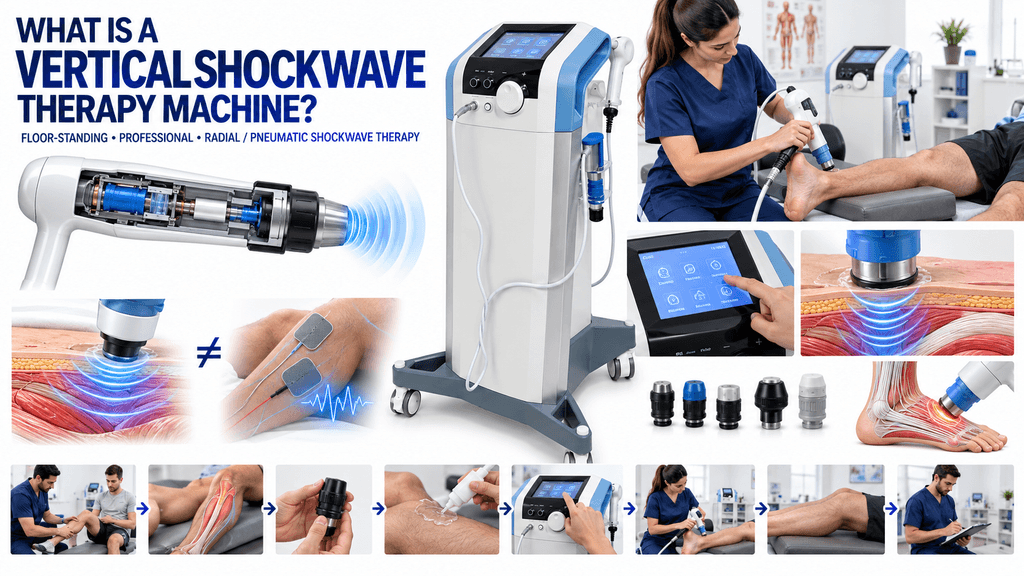
Vertical Shockwave Therapy Machine showing radial pneumatic shockwave treatment, touchscreen control, applicators and professional physiotherapy use

A typical treatment process involves:

  1. Patient assessment.
  2. Identification of the treatment area.
  3. Selection of the appropriate applicator.
  4. Application of coupling medium where required.
  5. Selection of frequency and energy parameters.
  6. Delivery of controlled shockwave pulses.
  7. Continuous monitoring of patient response.
  8. Completion and documentation of the treatment session.

The exact treatment settings depend on the machine, treatment area, clinical protocol, and patient tolerance.

Key Features of Vertical Shockwave Therapy Machine

Floor-Standing Vertical Design

The vertical structure provides a dedicated clinical workstation for shockwave treatment. The integrated design can make the equipment easier to position within a professional treatment room.

Adjustable Shockwave Frequency

Many vertical shockwave systems provide adjustable pulse frequency. Published models commonly offer ranges such as 1–16 Hz or 1–21 Hz, depending on the configuration.

Adjustable Energy or Pressure

Treatment intensity can be adjusted according to the machine’s available settings. Some pneumatic models provide pressure-based adjustment, while other systems specify energy levels or multiple output steps.

Multiple Treatment Heads

Vertical shockwave systems can be supplied with multiple interchangeable treatment heads. One published vertical model, for example, specifies six working heads, while other systems offer different configurations.

Different heads can provide different contact surfaces for treating various anatomical regions.

Digital Control Interface

A digital display or touchscreen interface allows the operator to select treatment parameters and monitor the therapy session. Depending on the model, the interface may provide preset programs, frequency adjustment, intensity control, pulse counting, and treatment information.

High Shot Capacity

Professional shockwave systems are designed for repeated clinical use. Some published vertical models specify approximately 2 million shockwave shots, although shot capacity varies by model and applicator.

Professional Clinical Construction

The floor-standing body provides a stable platform for professional treatment environments and can integrate the main control system with the shockwave generator and accessory storage.

Applications of Vertical Shockwave Therapy

The Vertical Shockwave Therapy Machine may be incorporated into rehabilitation programs involving selected musculoskeletal and soft-tissue conditions.

Common applications can include:

  • Plantar fascia-related rehabilitation
  • Achilles tendon rehabilitation
  • Tendon-related conditions
  • Muscle pain management
  • Myofascial trigger-point programs
  • Sports injury rehabilitation
  • Soft-tissue rehabilitation
  • Joint-area rehabilitation
  • Chronic musculoskeletal pain programs
  • Rehabilitation following appropriate clinical assessment

Shockwave therapy is not suitable for every condition or every patient. A qualified healthcare professional should determine whether the treatment is appropriate.

Potential Benefits
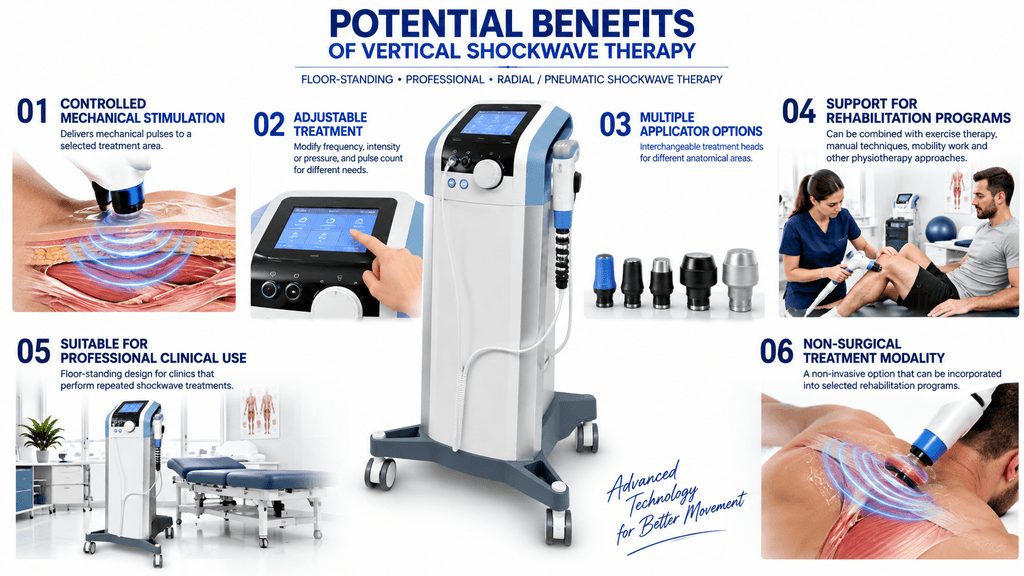
Vertical Shockwave Therapy Machine showing controlled mechanical stimulation, adjustable treatment settings, multiple applicators and rehabilitation applications

Controlled Mechanical Stimulation

Shockwave therapy delivers mechanical pulses to a selected treatment area, allowing the therapist to apply a controlled stimulus according to the treatment protocol.

Adjustable Treatment

The ability to modify frequency, intensity or pressure, and pulse count provides flexibility for different treatment requirements.

Multiple Applicator Options

Interchangeable treatment heads can help the therapist select an appropriate contact surface for different anatomical areas.

Support for Rehabilitation Programs

Shockwave therapy can be combined with exercise therapy, manual techniques, mobility work, strengthening programs, and other physiotherapy approaches when clinically appropriate.

Suitable for Professional Clinical Use

The vertical design is particularly useful for clinics that perform repeated shockwave treatment sessions and require a dedicated floor-standing system.

Non-Surgical Treatment Modality

Shockwave therapy is a non-invasive modality that can be incorporated into selected rehabilitation programs without surgical intervention.

Treatment Areas

Depending on the treatment protocol and machine configuration, shockwave therapy may be used around areas such as:

  • Heel and plantar fascia region
  • Achilles tendon region
  • Knee region
  • Shoulder region
  • Elbow region
  • Hip region
  • Thigh and calf muscles
  • Other selected soft-tissue areas

The exact treatment location and settings should be determined by a qualified professional after assessment.

Radial Shockwave Technology

Many vertical systems use radial shockwave technology, in which pressure pulses are generated by a pneumatic mechanism and transferred through an applicator.

Radial systems are commonly used for musculoskeletal and soft-tissue applications. The energy characteristics, pressure range, frequency, penetration, and applicator design vary between machines.

For example, one published vertical pneumatic system specifies 0.5–5 bar and 1–22 Hz, while another vertical model specifies 1–16 Hz and 12 output levels. These differences demonstrate why the exact machine datasheet should be used for final product specifications.

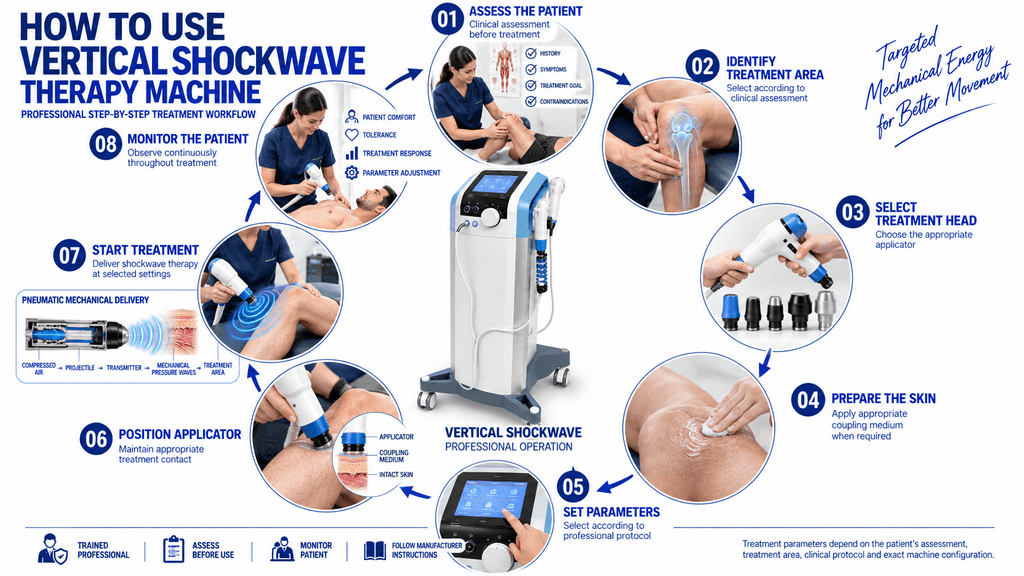
How to Use Vertical Shockwave Therapy Machine
Vertical Shockwave Therapy Machine

Step 1: Patient Assessment

Review the patient’s history, symptoms, treatment goals, and relevant contraindications before beginning therapy.

Step 2: Identify the Treatment Area

Determine the appropriate treatment location according to the clinical assessment.

Step 3: Select the Treatment Head

Choose the applicator or treatment head appropriate for the anatomical area and treatment protocol.

Step 4: Prepare the Skin

Clean and prepare the treatment area. Apply an appropriate coupling medium when required by the machine’s instructions.

Step 5: Set the Parameters

Select the appropriate frequency, energy or pressure level, and number of pulses according to the treatment protocol.

Step 6: Position the Applicator

Place the applicator against the treatment area with appropriate contact.

Step 7: Start Treatment

Begin shockwave delivery at a clinically appropriate setting.

Step 8: Monitor the Patient

Observe patient feedback and response during treatment. Parameters may be adjusted when clinically appropriate.

Step 9: Complete the Session

Stop the shockwave output before removing the applicator, clean the treatment area if necessary, and clean and store the equipment according to manufacturer instructions.

A physiotherapy equipment SOP published by JIPMER similarly emphasizes patient assessment, coupling medium, parameter selection, applicator positioning, monitoring, and equipment cleaning after shockwave treatment.

Safety Precautions

The Vertical Shockwave Therapy Machine should be operated only by appropriately trained professionals.

Important precautions include:

  • Perform patient assessment before treatment.
  • Follow the manufacturer’s operating instructions.
  • Select parameters according to the treatment protocol.
  • Check the applicator and cables before use.
  • Use the appropriate treatment head.
  • Maintain proper applicator contact.
  • Monitor patient response continuously.
  • Avoid treatment over areas where shockwave therapy is contraindicated.
  • Stop treatment if unexpected or significant discomfort occurs.
  • Keep the machine and electrical connections dry.
  • Perform regular maintenance and inspection.
  • Follow the manufacturer’s recommended service schedule.

Potential contraindications and precautions should be reviewed before treatment. Professional physiotherapy guidance commonly identifies considerations such as blood-clotting disorders, malignancy, pregnancy, and infection at the treatment site.

Technical Specifications

SpecificationVertical Shockwave Therapy Machine
Product TypeFloor-Standing Shockwave Therapy Machine
TherapyShockwave / Acoustic Wave Therapy
TechnologyRadial / Pneumatic Shockwave*
FrequencyApprox. 1–16 Hz or model-dependent*
Energy / PressureModel-dependent*
Treatment HeadsMultiple interchangeable heads*
DisplayDigital LCD / Touchscreen*
Shot CapacityUp to approximately 2 million shots on selected models*
ConstructionVertical Floor-Standing Design
ApplicationPhysiotherapy & Rehabilitation
OperationProfessional Use
Power SupplyModel-dependent

*Specifications vary significantly between Vertical Shockwave models. Published examples include 1–16 Hz, 12 energy levels and 6 heads, while other vertical systems specify 0.5–10 bar and 1–21 Hz. Confirm the exact specifications, accessories, dimensions, power and output range against the supplied PHYSIOMODALITIES™ model before publishing.

Who Should Operate the Machine?

The Vertical Shockwave Therapy Machine should be operated by trained healthcare professionals who understand shockwave therapy principles, patient assessment, treatment parameters, applicator handling, and contraindications.

Suitable professional users may include:

  • Physiotherapists
  • Sports rehabilitation professionals
  • Orthopedic rehabilitation teams
  • Qualified rehabilitation practitioners
  • Healthcare professionals trained in shockwave therapy

Professional supervision is important because treatment intensity and location need to be selected according to the individual patient.

Why Clinics Use a Vertical Shockwave System

A vertical shockwave system can be useful for clinics that regularly provide shockwave-based rehabilitation.

Key operational advantages can include:

  • Dedicated floor-standing design
  • Integrated control system
  • Multiple treatment heads
  • Adjustable treatment parameters
  • Digital treatment interface
  • High shot capacity on selected models
  • Easy access to applicator accessories
  • Professional clinic-oriented construction

The machine can complement other physiotherapy technologies and rehabilitation methods rather than replacing a complete clinical treatment program.

Why Choose PHYSIOMODALITIES™?

PHYSIOMODALITIES™ offers physiotherapy and rehabilitation equipment designed for professional clinical environments.

A Vertical Shockwave Therapy Machine can be an appropriate addition for clinics looking to expand their rehabilitation equipment with shockwave technology. The floor-standing format provides a dedicated setup for repeated professional treatments.

PHYSIOMODALITIES ENTERPRISES supplies physiotherapy and rehabilitation equipment for clinics, hospitals, physiotherapy centres, rehabilitation facilities, and professional healthcare environments.

Conclusion

The Vertical Shockwave Therapy Machine is a floor-standing professional system designed to deliver controlled mechanical shockwave energy for selected physiotherapy and rehabilitation applications.

Its adjustable treatment parameters, interchangeable applicators, digital controls, and dedicated vertical construction can make it suitable for clinics that regularly use shockwave therapy. Depending on the model, systems may provide different frequency ranges, energy or pressure levels, treatment heads, shot capacities, and control interfaces.

For final product publication, the exact technical specifications of the supplied PHYSIOMODALITIES™ model should be verified because Vertical Shockwave Therapy Machines are available in multiple configurations.

Frequently Asked Questions

1. What is a Vertical Shockwave Therapy Machine?

It is a floor-standing physiotherapy system designed to deliver controlled shockwave or acoustic pressure pulses for selected rehabilitation applications.

2. What conditions can shockwave therapy be used for?

It may be incorporated into rehabilitation programs for selected tendon, plantar fascia, muscle, and other musculoskeletal conditions following professional assessment.

3. What frequency does a Vertical Shockwave Machine use?

The frequency depends on the model. Published systems can range from approximately 1–16 Hz to 1–22 Hz or other configurations.

4. How many treatment heads are included?

The number varies by model. Some published vertical systems include six working heads, while other configurations provide different numbers of applicators.

5. Who can operate a Vertical Shockwave Therapy Machine?

It should be operated by an appropriately trained physiotherapist or other qualified healthcare professional familiar with shockwave therapy.

Leave a Comment

Your email address will not be published. Required fields are marked *

0
0
Your Cart
Your cart is empty
Scroll to Top