The Class IV Laser Physiotherapy Machine (Regular Model) is a professional high-power laser therapy device designed for physiotherapy, rehabilitation, sports medicine, and selected musculoskeletal treatment applications. It uses controlled laser energy to deliver non-invasive photobiomodulation-based treatment under the supervision of a trained healthcare professional.
Class IV laser therapy equipment is designed for professional clinical environments where therapists require adjustable treatment parameters and a dedicated laser applicator for localized treatment. Depending on the machine configuration, available controls may include power adjustment, treatment time, operating modes, pulse settings, and preset treatment programs.
The Class IV Laser Physiotherapy Machine can be incorporated into selected physiotherapy and rehabilitation protocols involving muscles, tendons, joints, and other soft-tissue structures. Treatment selection should always be based on patient assessment, the intended clinical objective, the device’s technical specifications, and the manufacturer’s instructions.
PHYSIOMODALITIES™ provides professional physiotherapy and rehabilitation equipment for clinics, hospitals, sports rehabilitation facilities, and healthcare professionals.
What Is a Class IV Laser Physiotherapy Machine?
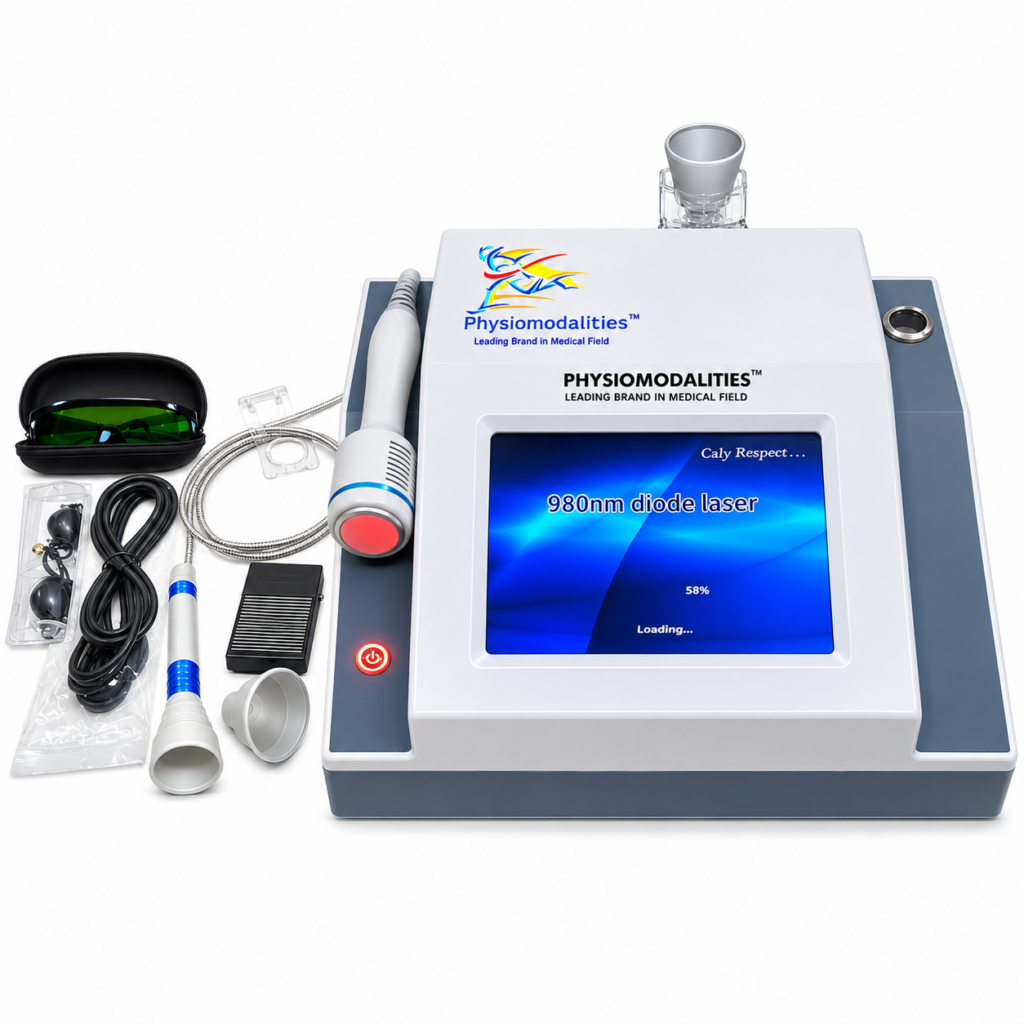
A Class IV Laser Physiotherapy Machine is a high-power therapeutic laser device designed to deliver controlled optical energy to selected treatment areas.
It is commonly used in professional laser therapy applications where a therapist selects suitable treatment parameters according to the patient’s condition and the device’s capabilities.
Laser therapy is different from conventional electrotherapy modalities such as TENS, IFT, and muscle stimulation. Instead of delivering electrical impulses through surface electrodes, a therapeutic laser uses light energy at specific wavelengths.
Class IV laser devices generally have higher accessible output power than lower laser classes. Because of their higher output, appropriate eye protection, controlled operation, and trained professional supervision are essential.
The exact wavelength, maximum output power, operating modes, treatment programs, and applicator specifications depend on the particular regular model being supplied.
How Does Class IV Laser Therapy Work?
Class IV laser therapy delivers controlled laser energy to a selected treatment area through a dedicated applicator.
The general treatment process involves:
- Assessing the patient and identifying the intended treatment area.
- Selecting the appropriate laser treatment protocol.
- Choosing the available wavelength and operating mode, where applicable.
- Setting the treatment parameters according to professional guidance.
- Positioning the applicator at the recommended distance or contact position.
- Delivering laser energy using the manufacturer’s recommended technique.
- Monitoring the patient and treatment area throughout the session.
- Completing the session and following the equipment’s shutdown and cleaning instructions.
Laser therapy is commonly discussed in relation to photobiomodulation, in which light energy interacts with biological tissues. The actual response depends on wavelength, power, energy density, treatment duration, tissue characteristics, and other clinical factors.
Understanding Class IV Laser Technology
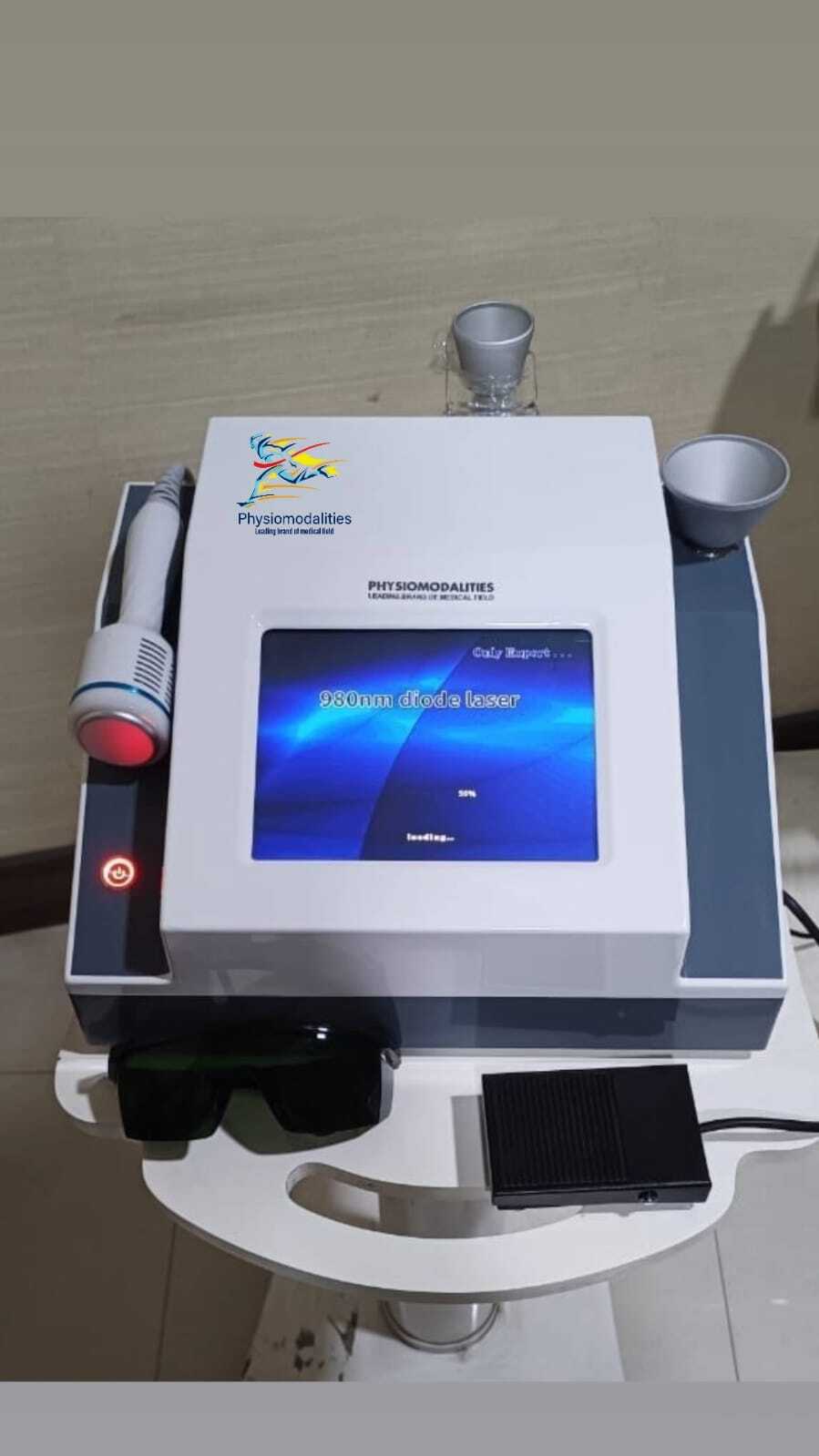
Class IV laser therapy machines are designed for professional use and can provide higher output power than lower-class therapeutic laser devices.
The laser’s treatment characteristics depend on its technical configuration.
Laser Output Power
Output power indicates the rate at which the machine delivers laser energy. The available power range differs between models and should be confirmed from the manufacturer’s datasheet.
Laser Wavelength
Wavelength is an important parameter because it influences how laser light interacts with and is absorbed by biological tissues.
Different Class IV laser models may use different wavelengths or combinations of wavelengths. The exact wavelength of the regular model should be verified before publication.
Continuous and Pulsed Modes
Depending on the model, the machine may provide continuous or pulsed laser operation. These modes allow the operator to select different delivery patterns according to the device’s capabilities and treatment protocol.
Treatment Time
A treatment timer can help the operator manage the duration of a session according to the selected protocol.
Adjustable Power
Adjustable power controls, where available, allow trained operators to configure the output within the machine’s specified operating range.
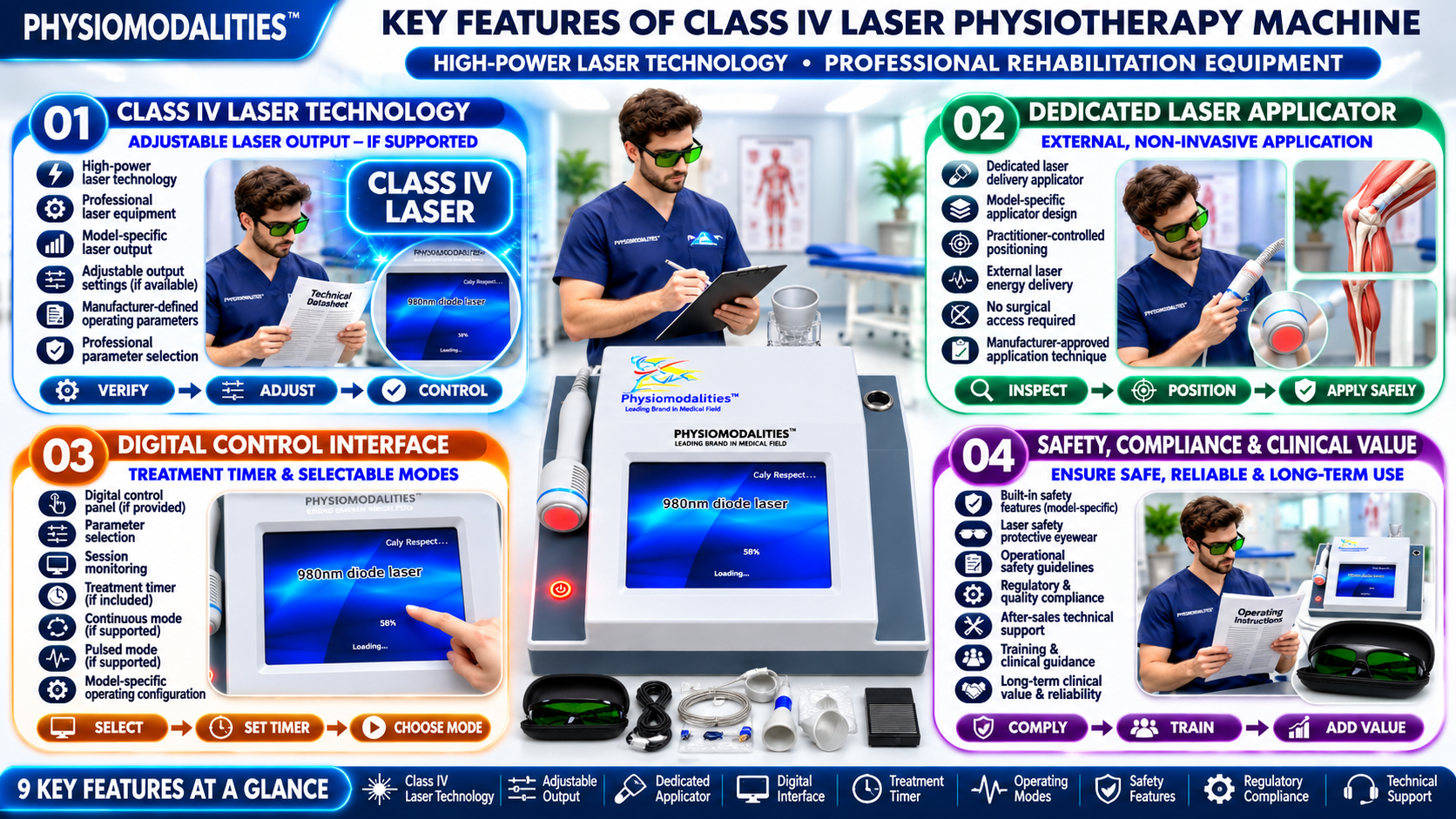
Key Features of Class IV Laser Physiotherapy Machine
Class IV Laser Technology
The machine uses high-power laser technology for professional physiotherapy and rehabilitation applications.
Adjustable Laser Output
Depending on the regular model’s configuration, the operator may be able to adjust laser output according to the selected treatment protocol.
Dedicated Laser Applicator
The applicator is designed to deliver laser energy to the selected treatment area. Its exact design and operating technique depend on the supplied configuration.
Digital Control Interface
A digital control panel or display can help the operator select treatment parameters and monitor the session.
Treatment Timer
A timer, where included, allows the operator to manage treatment duration.
Multiple Operating Modes
Some configurations provide different laser delivery modes, such as continuous and pulsed operation. Confirm the available modes for the exact model.
Professional Clinical Design
The machine is intended for use in physiotherapy clinics, rehabilitation centres, sports therapy facilities, and other professional healthcare environments.
Non-Invasive Application
Laser therapy is delivered externally through the applicator and does not require surgical access to the treatment area.
Compact Treatment Setup
The regular model can be incorporated into a professional treatment room, depending on its dimensions and supplied accessories.
Applications of Class IV Laser Physiotherapy Machine
The Class IV Laser Physiotherapy Machine may be incorporated into selected physiotherapy and rehabilitation programs following appropriate clinical assessment.
Musculoskeletal Rehabilitation
Therapeutic laser may be considered as one component of selected rehabilitation programs involving muscles, joints, and surrounding soft tissues.
Sports Physiotherapy
Sports rehabilitation professionals may incorporate laser therapy alongside exercise, mobility training, strengthening, and other appropriate treatment approaches.
Muscle-Related Treatment Applications
Laser therapy may be considered for selected muscle-related treatment protocols according to professional assessment and the device’s approved intended use.
Joint-Related Rehabilitation
The machine may be incorporated into selected rehabilitation programs involving joints and surrounding structures.
Tendon and Soft-Tissue Applications
Therapeutic laser may be used as an adjunct in selected tendon and soft-tissue rehabilitation protocols where clinically appropriate.
Orthopedic Rehabilitation
Orthopedic physiotherapy facilities may include laser therapy as one modality within a broader rehabilitation program.
Pain-Management Programs
Laser therapy may be considered as part of selected pain-management approaches. Treatment suitability and expected outcomes depend on the condition and clinical evidence.
Rehabilitation After Sports Injuries
The machine can be incorporated into selected sports injury rehabilitation programs alongside active rehabilitation and other professional interventions.
Potential Benefits of Class IV Laser Therapy
The response to laser therapy varies according to the patient’s condition, wavelength, output power, treatment parameters, treatment area, and individual clinical factors.
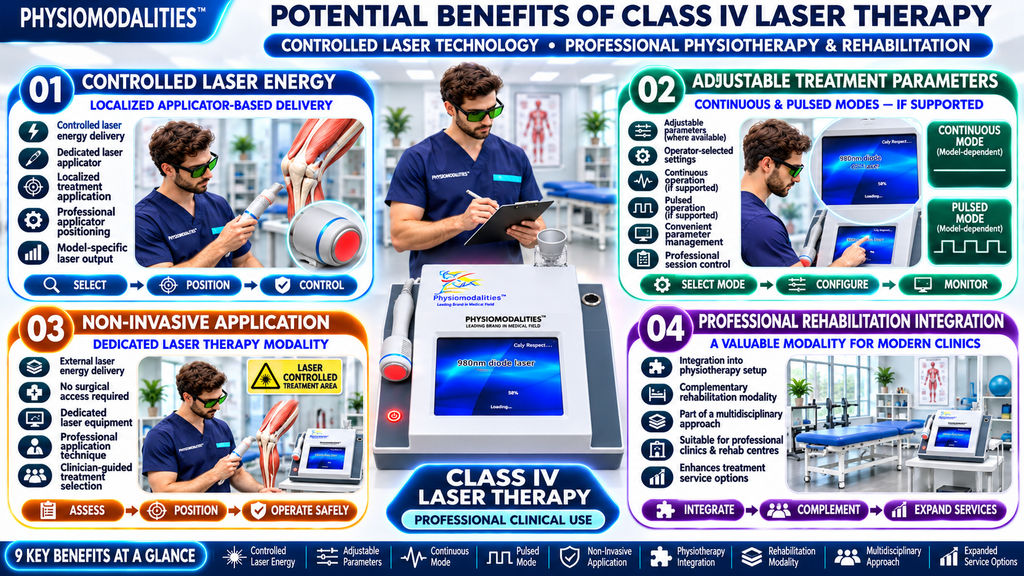
A professional Class IV Laser Physiotherapy Machine may provide:
- Controlled laser energy delivery
- Adjustable treatment parameters, where supported
- Localized treatment application
- Continuous or pulsed operation, where available
- Non-invasive treatment delivery
- Integration with physiotherapy and rehabilitation programs
- A dedicated laser treatment modality
- Convenient treatment parameter management
- An additional option for selected clinical protocols
Laser therapy should not be presented as a guaranteed cure or as a replacement for appropriate diagnosis, active rehabilitation, or other medically indicated treatment.
Class IV Laser Machine for Physiotherapy Clinics
A Class IV Laser Machine for Physiotherapy Clinics can add a dedicated therapeutic laser modality to a professional treatment setup.
Physiotherapy clinics often use multiple treatment approaches according to the patient’s requirements. Laser therapy may be incorporated alongside:
- Therapeutic exercise
- Strengthening exercises
- Mobility training
- Manual therapy
- Stretching
- Functional rehabilitation
- Sports rehabilitation
- Other appropriate physiotherapy modalities
The availability of laser therapy allows trained professionals to consider an additional treatment option when developing an individual rehabilitation plan.
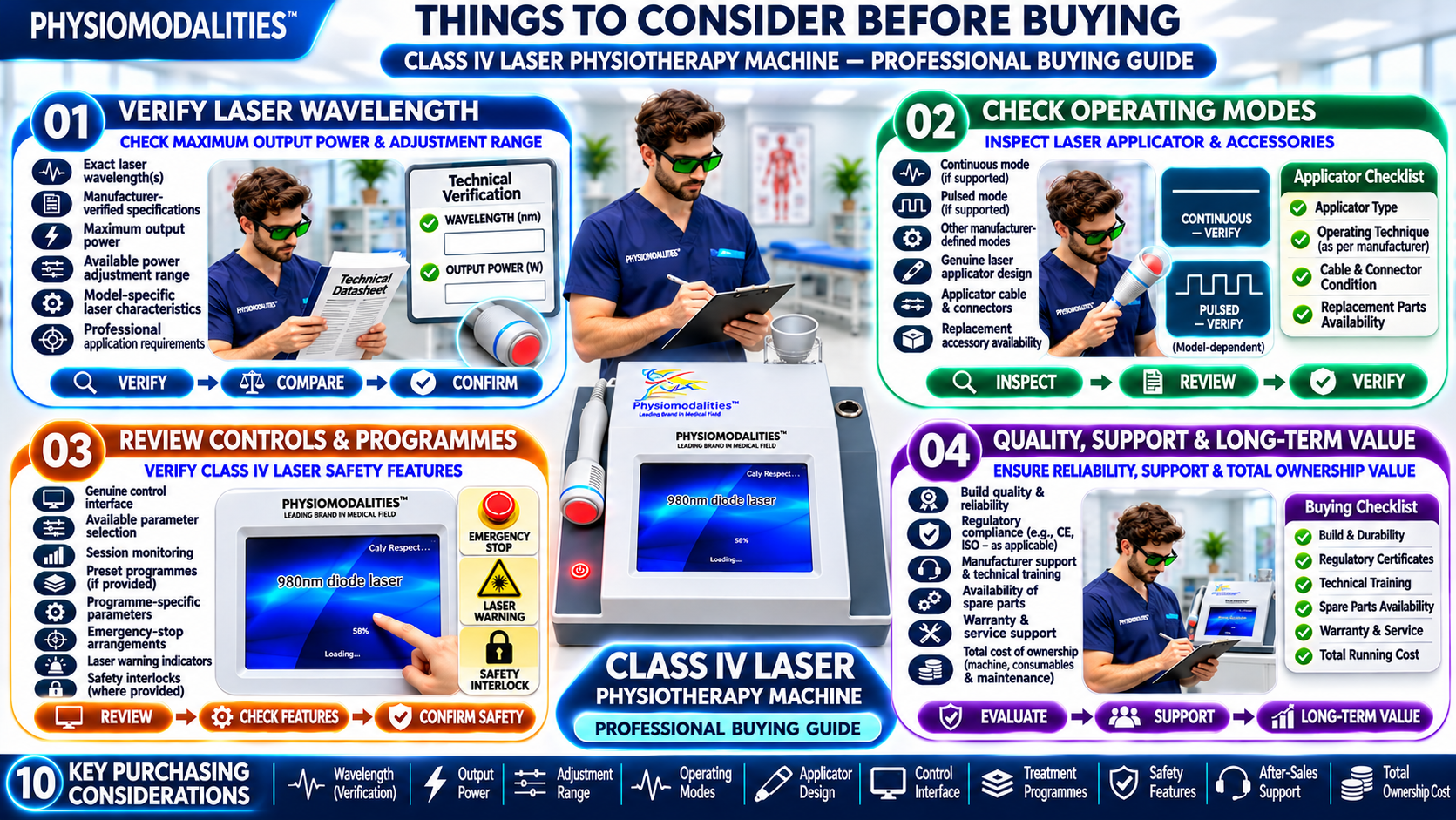
When selecting a Class IV Laser Physiotherapy Machine, clinics should evaluate the wavelength, output power, treatment modes, applicator design, controls, safety features, warranty, and technical support.
Class IV Laser vs Low-Level Laser Therapy
Class IV laser therapy and low-level laser therapy are both forms of therapeutic laser application, but they differ in laser classification and typical output power.
| Feature | Class IV Laser | Low-Level Laser Therapy |
|---|---|---|
| Laser Classification | Class IV | Commonly lower laser classes |
| Output Power | Higher accessible output power | Lower output power |
| Treatment Application | Professional high-power laser applications | Low-level laser applications |
| Operating Considerations | Strict laser safety controls | Safety requirements depend on device class |
| Eye Protection | Essential | Required according to device classification and instructions |
| Operator | Appropriately trained professional | Trained operator according to device requirements |
The exact performance and clinical application of a laser device should be evaluated using its technical specifications and intended-use documentation.
How to Use a Class IV Laser Physiotherapy Machine
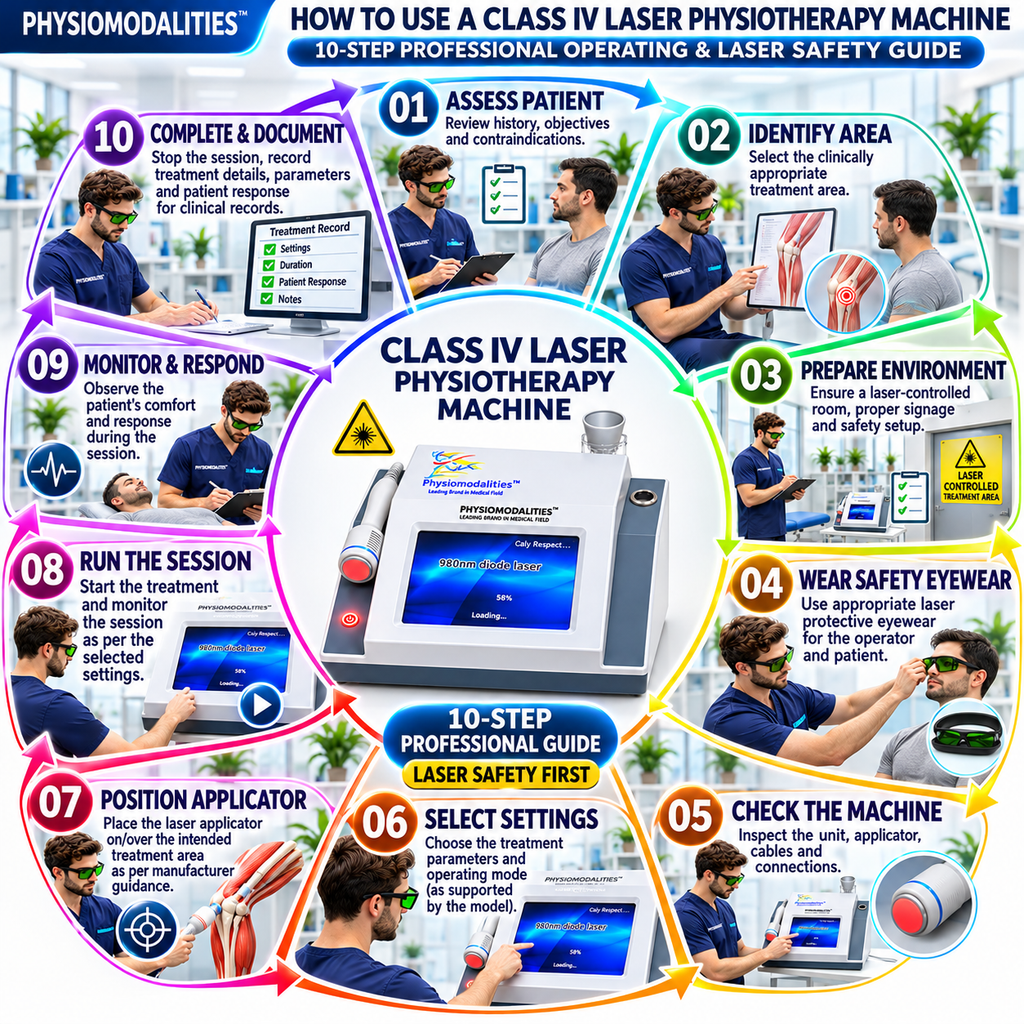
The Class IV Laser Physiotherapy Machine should only be operated by appropriately trained healthcare professionals who understand therapeutic laser safety and the specific device.
Step 1: Assess the Patient
Review the patient’s condition, treatment history, intended treatment objective, and relevant contraindications.
Step 2: Identify the Treatment Area
Select the treatment area according to the clinical assessment and the manufacturer’s recommended applications.
Step 3: Prepare the Treatment Environment
Ensure that the treatment area is suitable for Class IV laser operation. Follow the manufacturer’s requirements for controlled access, warning signs, and protective equipment.
Step 4: Use Appropriate Eye Protection
The operator, patient, and other individuals in the controlled treatment area must use protective eyewear suitable for the laser’s specified wavelength and classification.
Step 5: Select the Treatment Parameters
Configure the wavelength, output power, operating mode, treatment time, and other available settings according to the clinical protocol and device instructions.
Step 6: Position the Applicator
Position the laser applicator according to the manufacturer’s recommended treatment technique. Do not assume that contact and non-contact techniques are interchangeable.
Step 7: Begin Treatment
Start treatment using the selected parameters and maintain the recommended applicator technique.
Step 8: Monitor the Patient
Observe patient comfort and the treatment area throughout the session. Follow the manufacturer’s instructions for monitoring and stopping treatment.
Step 9: Complete the Session
Stop laser emission before removing or repositioning the applicator. Follow the device’s shutdown procedure.
Step 10: Clean and Store the Equipment
Clean the applicator and reusable accessories according to the manufacturer’s instructions. Store the equipment safely after use.
Safety Precautions
Class IV laser equipment requires strict safety procedures because of its high accessible output power.
- Operate the machine only by appropriately trained professionals.
- Follow the manufacturer’s operating instructions.
- Use wavelength-appropriate protective eyewear for everyone in the controlled treatment area.
- Never look directly into the laser aperture or beam.
- Do not direct the laser beam toward the eyes.
- Follow the manufacturer’s requirements for controlled access and laser warning signage.
- Avoid reflective surfaces in the treatment area where specified by the safety protocol.
- Assess the patient and review relevant contraindications before treatment.
- Use only compatible applicators and accessories.
- Do not operate damaged equipment.
- Do not modify the laser system or its safety controls.
- Monitor the patient and treatment area throughout the session.
- Stop treatment if an unexpected or concerning response occurs.
- Follow the manufacturer’s maintenance and servicing schedule.
The exact contraindications and safety requirements depend on the laser wavelength, output, device classification, intended use, and patient circumstances.
Technical Specifications
The following table describes the product category. Exact values for the regular model should be confirmed from its manufacturer datasheet before being published as fixed specifications.
| Specification | Details |
|---|---|
| Product Name | Class IV Laser Physiotherapy Machine |
| Model | Regular Model |
| Equipment Type | Therapeutic Laser System |
| Laser Classification | Class IV |
| Therapy Type | Laser Therapy / Photobiomodulation |
| Wavelength | Model-dependent |
| Maximum Output Power | Model-dependent |
| Operating Modes | Model-dependent |
| Pulse Settings | Model-dependent |
| Treatment Timer | Model-dependent |
| Control Interface | Model-dependent |
| Laser Applicator | According to package configuration |
| Safety Features | According to model and manufacturer |
| Power Supply | Model-dependent |
| Intended Application | Physiotherapy & Rehabilitation |
| Intended Operator | Appropriately Trained Healthcare Professional |
Important: Do not publish an assumed wavelength, output power, frequency, energy density, treatment area, or accessory list. Confirm these details from the exact regular-model datasheet.
Things to Consider Before Buying a Class IV Laser Machine
Laser Wavelength
Confirm the exact wavelength or wavelengths supported by the machine. Wavelength is an important part of evaluating a therapeutic laser device.
Maximum Output Power
Check the maximum output power and available adjustment range. Compare the specification with your clinic’s intended professional applications.
Operating Modes
Confirm whether the machine supports continuous, pulsed, or other operating modes.
Applicator Design
Review the applicator type, treatment technique, cable design, and availability of replacement accessories.
Control Interface
A clear interface can make it easier for trained operators to select and monitor treatment parameters.
Treatment Programs
If preset programs are available, ask for the program list and the parameters associated with each selection.
Laser Safety Features
Check the safety controls, emergency-stop arrangements, warning indicators, interlocks, and protective eyewear requirements.
Power Requirements
Confirm the input voltage, power consumption, and electrical requirements before installation.
Warranty and Technical Support
Review warranty coverage, servicing arrangements, repair availability, and replacement-part support.
Operator Training
Ensure that the clinic’s staff receive appropriate training in laser safety, device operation, treatment parameters, and manufacturer-specific protocols.
Who Should Operate a Class IV Laser Physiotherapy Machine?
A Class IV Laser Physiotherapy Machine should be operated by appropriately trained healthcare professionals who are familiar with therapeutic laser technology and the safety requirements of Class IV equipment.
The operator should understand:
- Therapeutic laser principles
- Laser classification
- Wavelength and output power
- Treatment parameter selection
- Patient assessment
- Contraindications
- Laser safety procedures
- Protective eyewear requirements
- Applicator positioning
- Patient monitoring
- Equipment maintenance
- Manufacturer-specific instructions
Professional training and appropriate safety procedures are essential for responsible clinical operation.
Why Choose PHYSIOMODALITIES™?
PHYSIOMODALITIES™ provides physiotherapy and rehabilitation equipment for professional clinical environments.
When selecting a Class IV Laser Physiotherapy Machine, clinics should consider the complete equipment configuration, technical specifications, safety provisions, and after-sales support.
Important purchasing considerations include:
- Class IV laser classification
- Wavelength
- Output power
- Operating modes
- Applicator design
- Treatment controls
- Safety features
- Protective eyewear
- Warranty
- Technical support
- Availability of accessories
PHYSIOMODALITIES ENTERPRISES supports clinics, hospitals, rehabilitation centres, and professional healthcare facilities with equipment across physiotherapy and rehabilitation categories, including electrotherapy, Ultrasonic Therapy, muscle stimulation, laser therapy, Tecar therapy, shockwave therapy, and exercise rehabilitation equipment.
Conclusion
The Class IV Laser Physiotherapy Machine (Regular Model) is a professional therapeutic laser system designed for selected physiotherapy, sports rehabilitation, and musculoskeletal treatment applications. Its high-power laser technology provides an additional treatment modality that trained healthcare professionals can consider as part of an appropriate rehabilitation plan.
The machine’s exact capabilities depend on its wavelength, output power, operating modes, applicator, treatment controls, and safety configuration. Clinics should verify these details before purchasing and ensure that the equipment is operated according to professional protocols and manufacturer instructions.
PHYSIOMODALITIES™ offers physiotherapy and rehabilitation equipment for professional treatment environments, helping clinics evaluate equipment according to their clinical and operational requirements.
Frequently Asked Questions
1. What is a Class IV Laser Physiotherapy Machine?
It is a high-power therapeutic laser device designed for professional physiotherapy and selected rehabilitation applications.
2. What is Class IV laser therapy used for?
It may be incorporated into selected musculoskeletal, sports rehabilitation, and soft-tissue treatment protocols following professional assessment.
3. Is Class IV laser therapy different from low-level laser therapy?
Yes. Class IV laser devices generally have higher accessible output power than lower-class therapeutic laser devices.
4. Who can operate a Class IV Laser Machine?
It should be operated by appropriately trained healthcare professionals who understand therapeutic laser operation and Class IV laser safety requirements.
5. What should I check before buying a Class IV Laser Physiotherapy Machine?
Check the wavelength, maximum output power, operating modes, applicator, treatment controls, safety features, protective eyewear, warranty, and technical support.