The Long Wave Therapy Machine is a physiotherapy device designed for professional treatment environments where long-wave therapeutic technology is part of the equipment’s intended application. It may be considered by physiotherapy clinics, rehabilitation centres, hospitals, and other professional healthcare facilities looking for specialized therapy equipment.
A Long Wave Therapy Machine is different from conventional shortwave diathermy equipment, and its exact operating principle depends on the technology used in the particular model. Therefore, the device’s frequency, output characteristics, treatment method, and intended applications should always be confirmed through the manufacturer’s technical documentation.
For professional buyers, understanding the machine’s configuration, operating controls, safety requirements, and approved indications is essential before purchasing. Selecting equipment based on verified specifications helps ensure that it meets the clinical and operational needs of the treatment facility.
What Is a Long Wave Therapy Machine?
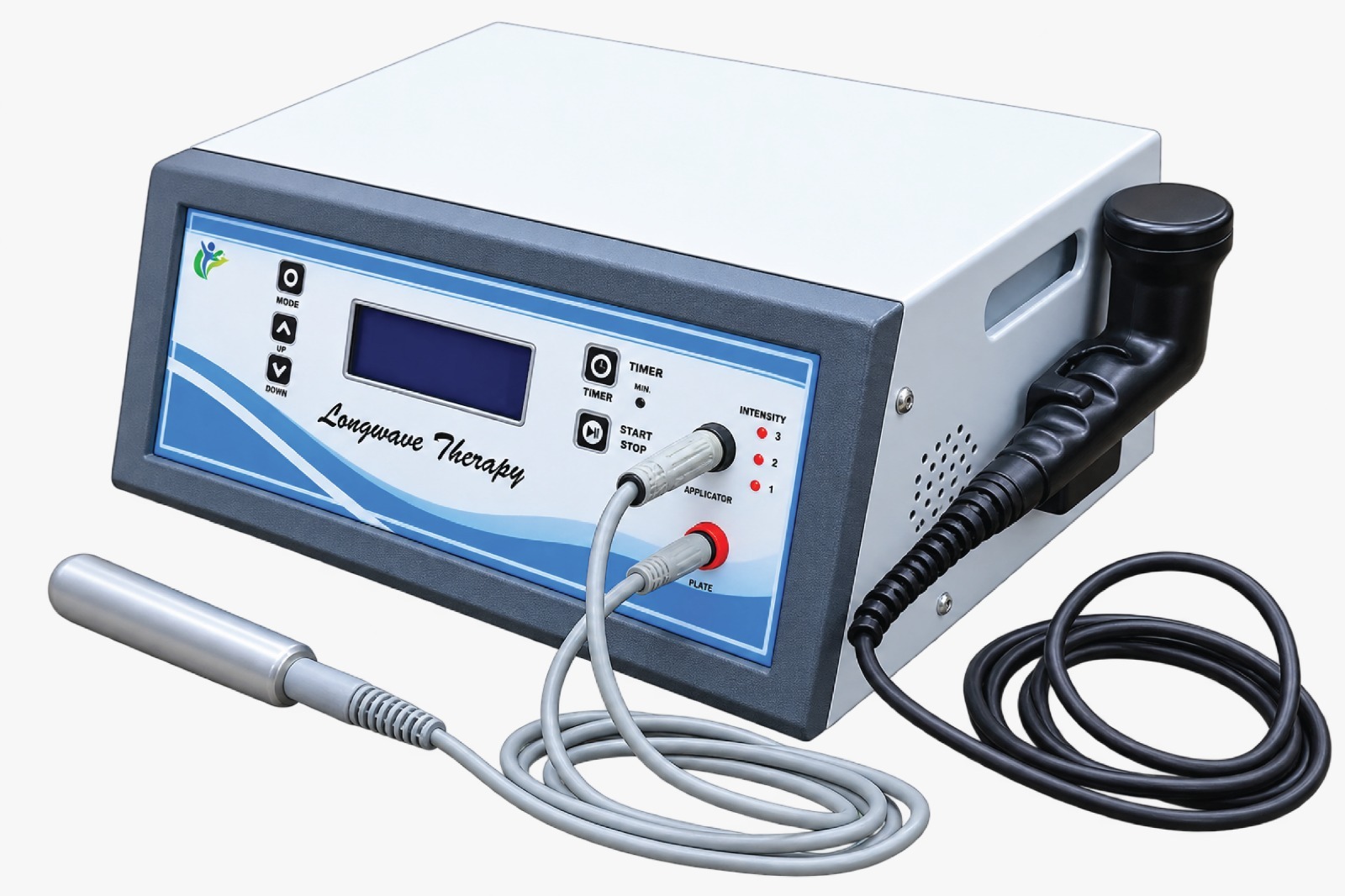
A Long Wave Therapy Machine is a specialized therapy device that uses long-wave technology according to its designed operating parameters. The term describes the technology category, but it does not establish the exact frequency, output power, electrode arrangement, or treatment method of a particular machine.
Depending on the manufacturer’s design, a long-wave device may have specific applicators, electrodes, control settings, or treatment accessories. These components determine how the equipment is configured and operated.
Before selecting a machine, physiotherapy professionals should review the product datasheet to identify its intended use, operating frequency, available settings, output specifications, and contraindications.
A suitable device should match the clinic’s requirements and be operated only by personnel trained in the equipment’s technology and safety procedures.
Key Features of the Long Wave Therapy Machine
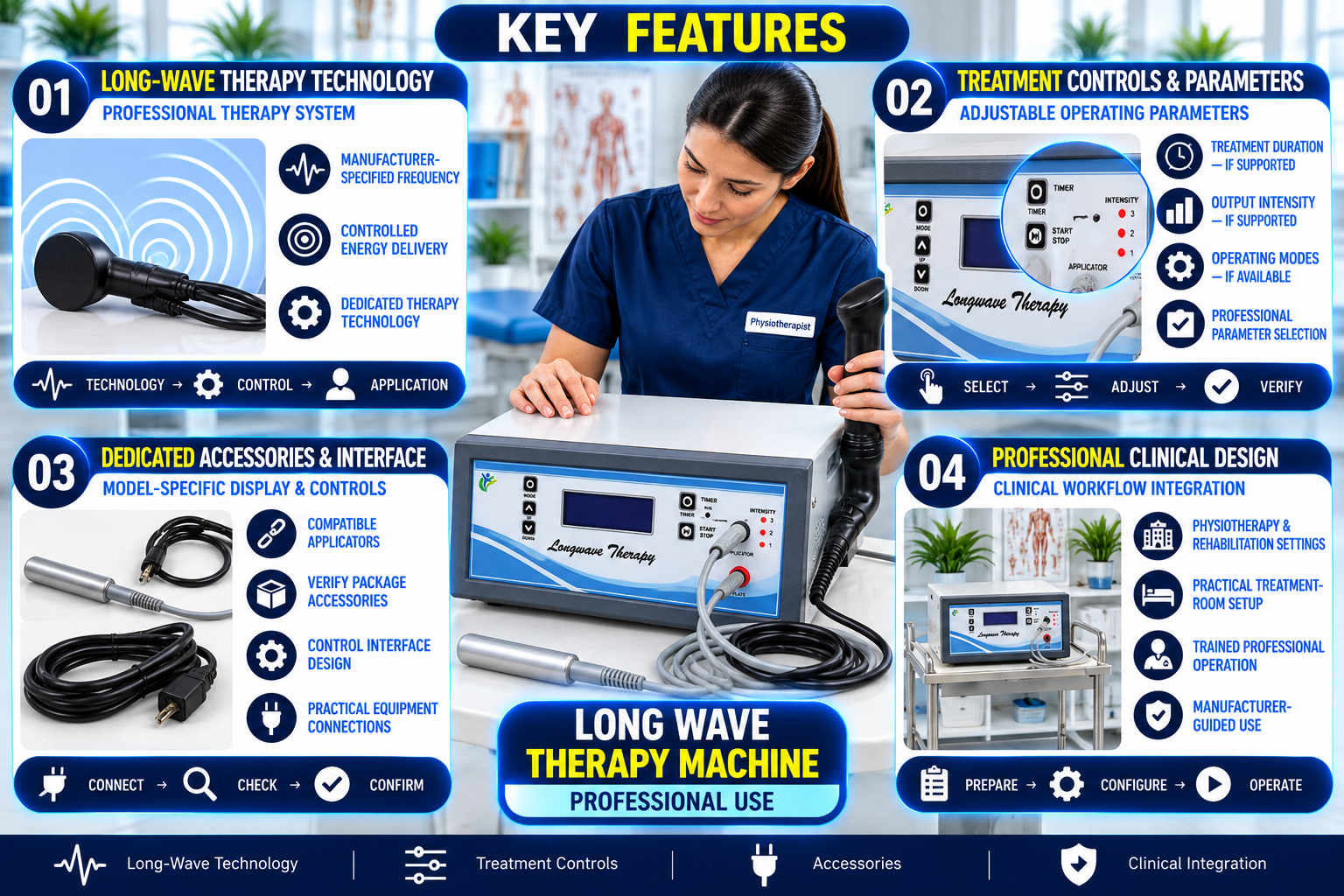
1. Long-Wave Technology
The machine is designed around long-wave technology as specified by the manufacturer. Its exact operating frequency and method of energy delivery should be confirmed from the model’s technical documentation.
2. Treatment Control System
Depending on the configuration, the unit may provide controls for treatment duration, output intensity, operating modes, or other parameters. The available controls vary by model.
3. Dedicated Treatment Accessories
Certain configurations may include applicators, electrodes, cables, or other accessories designed for use with the machine. Buyers should verify which accessories are included in the package.
4. Professional Equipment Design
The machine is intended for professional treatment environments where specialized therapy equipment is used according to clinical protocols and manufacturer instructions.
5. Adjustable Operating Parameters
If supported by the model, adjustable parameters allow trained operators to configure the machine within its specified operating range.
6. Clinical Workflow Integration
A Long Wave Therapy Machine may be incorporated into a clinic’s equipment setup when its technology and approved indications are appropriate for the services offered.
7. Model-Specific Display and Controls
The device may feature digital controls, a display, or another interface depending on the design. The type of display and its functions should be verified before purchase.
How Does a Long Wave Therapy Machine Work?
The operating principle of a Long Wave Therapy Machine depends on the technology and specifications of the particular device.
The term long wave refers to a category of electromagnetic waves, but it should not be used alone to infer the machine’s exact treatment mechanism. The operating frequency, method of energy delivery, applicator design, and output characteristics must be established from the manufacturer’s documentation.
During a professional treatment session, the operator first identifies the appropriate indication and checks whether the device is suitable for the intended application. The machine is then configured according to its instructions, and any required accessories are positioned as directed by the manufacturer.
The operator follows the specified treatment protocol, monitors the patient, and stops treatment if an unexpected reaction occurs.
Important: Long Wave Therapy should not automatically be described as Shortwave Diathermy, ultrasonic therapy, laser therapy, or another modality. The actual technology and therapeutic purpose must be confirmed for the specific product.
Applications of the Long Wave Therapy Machine
The applications of a Long Wave Therapy Machine depend on its approved intended use, technical design, and the manufacturer’s instructions.
Physiotherapy Clinics
Physiotherapy clinics may consider specialized long-wave equipment when the technology is appropriate for their treatment services and the device’s indications are clearly documented.
Rehabilitation Centres
Rehabilitation facilities may incorporate the machine into their equipment setup when it meets their clinical requirements and can be operated safely by trained personnel.
Hospital Physiotherapy Departments
Hospitals may evaluate long-wave equipment as part of their wider physiotherapy and rehabilitation equipment inventory.
Professional Treatment Facilities
Specialized treatment facilities may consider the device when its technical characteristics and approved uses match the services they provide.
Clinical Equipment Programs
The machine may be included in a professional equipment plan where the device’s intended use, operating requirements, maintenance needs, and safety measures have been reviewed.
These applications describe potential professional settings rather than guaranteed clinical outcomes. The device should be used only for indications supported by its documentation and appropriate clinical assessment.
Potential Benefits of a Long Wave Therapy Machine
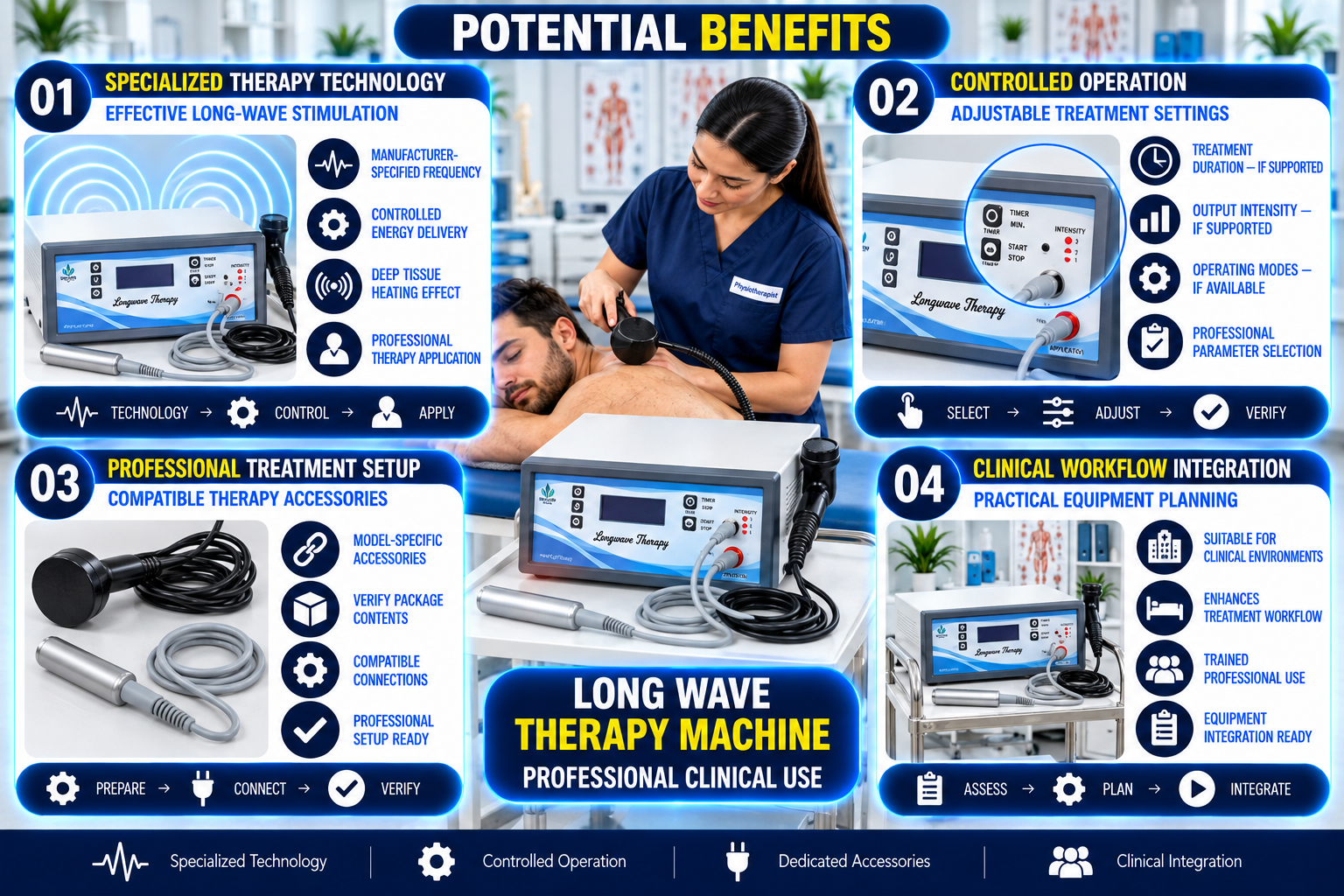
Specialized Therapy Technology
The machine provides access to a specific therapy technology, subject to its technical design and intended use.
Controlled Operation
Where supported, the controls may allow trained operators to configure treatment parameters within the manufacturer’s specified limits.
Professional Treatment Setup
The machine can form part of a specialized physiotherapy equipment setup when it meets the clinic’s needs.
Dedicated Accessories
Model-specific accessories can support the intended method of operation when used according to the manufacturer’s instructions.
Integration into Clinical Workflows
A specialized therapy device may complement other equipment in a clinic, provided the modalities are selected appropriately and are not assumed to be interchangeable.
Equipment Planning
Reviewing the device’s specifications, service requirements, and intended use helps clinics decide whether it is suitable for their treatment environment.
Long Wave Therapy Machine vs Shortwave Diathermy Machine
Long Wave Therapy and Shortwave Diathermy should not be treated as identical technologies. Their operating frequencies and equipment designs may differ, and the actual specifications must be confirmed for the product being considered.
| Comparison Point | Long Wave Therapy Machine | Shortwave Diathermy Machine |
|---|---|---|
| Technology | Long-wave technology as specified by the manufacturer | Shortwave electromagnetic therapy technology |
| Operating Frequency | Confirm from product datasheet | Confirm from product datasheet |
| Energy Delivery | Depends on the specific device | Depends on the specific device |
| Applicators | Model-specific | Model-specific |
| Treatment Controls | Model-dependent | Model-dependent |
| Intended Applications | According to approved device documentation | According to approved device documentation |
| Safety Requirements | Follow the manufacturer’s instructions | Follow the manufacturer’s instructions |
Choose equipment according to the exact clinical requirements and specifications rather than relying only on the product name.
Technical Specifications
The following table outlines the information buyers should confirm for the Long Wave Therapy Machine.
| Specification | Details |
|---|---|
| Product Name | Long Wave Therapy Machine |
| Product Category | Specialized Physiotherapy Therapy Equipment |
| Technology | Long-wave technology; exact type to be confirmed |
| Operating Frequency | Confirm with manufacturer |
| Output Power | Confirm with manufacturer |
| Output Modes | Model-dependent |
| Intensity Control | Confirm with manufacturer |
| Treatment Timer | Confirm with manufacturer |
| Display | Model-dependent |
| Applicator Type | Confirm with manufacturer |
| Electrode Configuration | Model-dependent |
| Power Supply | Confirm with manufacturer |
| Dimensions | Confirm with manufacturer |
| Weight | Confirm with manufacturer |
| Included Accessories | As specified in the package |
| Intended Use | As stated in manufacturer documentation |
| Safety Classification | Confirm from product documentation |
| Warranty | Confirm with supplier |
Technical note: Do not publish assumed frequency values, output power, dimensions, accessories, or treatment modes. All technical details should match the exact product model and its official datasheet.
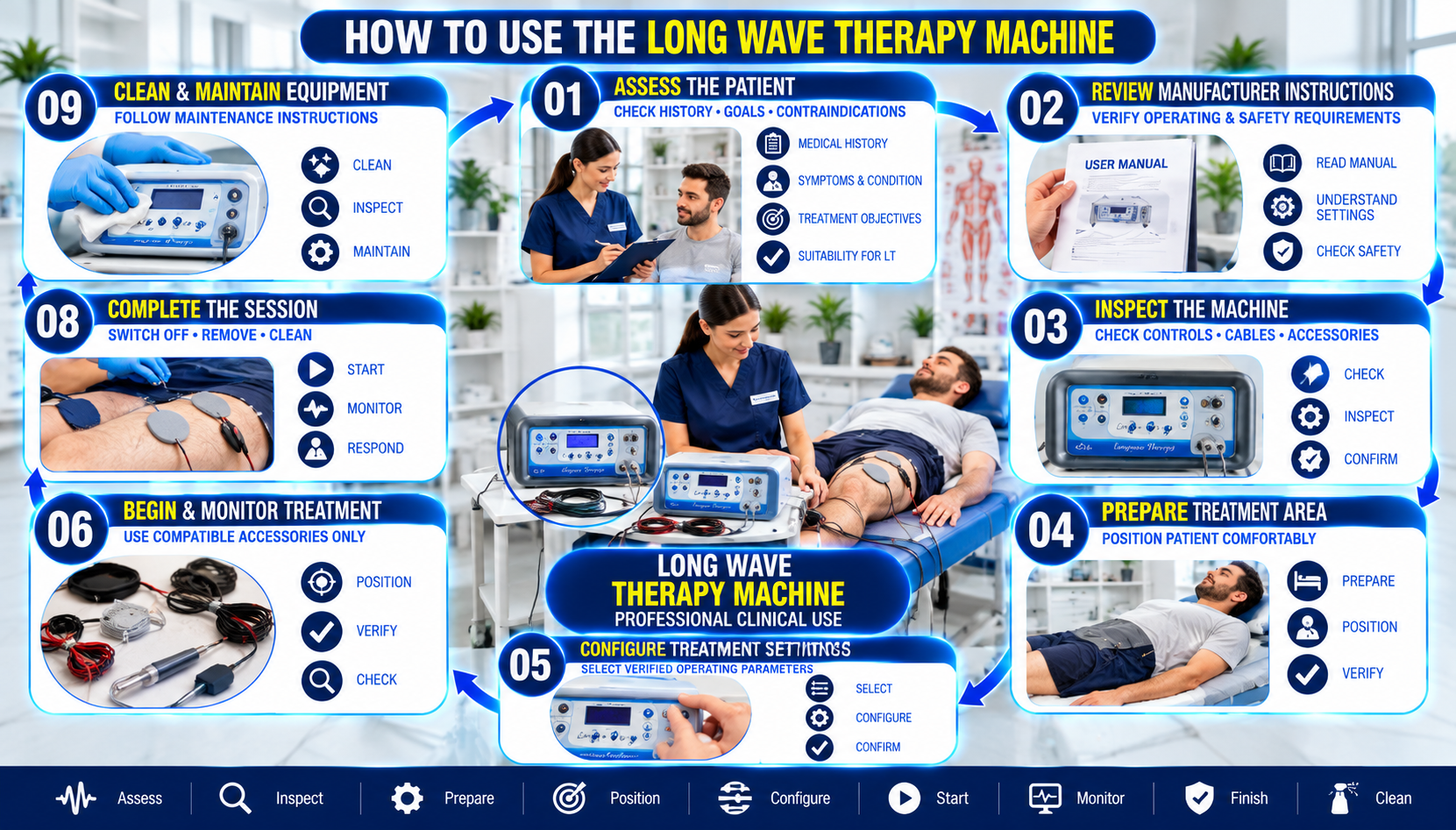
How to Use the Long Wave Therapy Machine
The device should be operated only by appropriately trained professionals who understand its technology and safety requirements.
Step 1: Assess the Patient
Review the patient’s condition, treatment objective, medical history where relevant, and contraindications associated with the specific device.
Step 2: Read the Manufacturer’s Instructions
Confirm the intended use, operating principle, treatment parameters, accessories, and safety requirements before operating the equipment.
Step 3: Inspect the Machine
Check the housing, controls, power cable, connectors, applicators, electrodes, and any supplied accessories. Do not operate damaged equipment.
Step 4: Prepare the Treatment Area
Prepare the patient and treatment environment according to the manufacturer’s instructions. Position the patient appropriately for the planned procedure.
Step 5: Configure the Machine
Select only the settings and operating modes supported by the specific model. Follow the approved treatment protocol and manufacturer guidance.
Step 6: Position the Accessories
Place or connect the applicators and other accessories exactly as specified in the user manual. Do not substitute incompatible accessories.
Step 7: Begin and Monitor Treatment
Start treatment according to the approved procedure. Monitor the patient and the machine throughout the session, and stop if an unexpected response occurs.
Step 8: Complete the Session
Turn off the output according to the operating instructions before removing or repositioning accessories. Assist the patient as needed.
Step 9: Clean and Maintain the Equipment
Clean the machine and reusable accessories according to the manufacturer’s recommendations. Record maintenance issues and arrange servicing when required.
Safety Precautions
Safe operation is essential when using specialized physiotherapy equipment.
- Operate the machine only according to the manufacturer’s instructions.
- Allow only appropriately trained personnel to use the device.
- Confirm the operating technology and intended use before treatment.
- Review contraindications and patient suitability before each session.
- Inspect the power cable, connectors, applicators, and accessories before use.
- Use only compatible accessories approved for the machine.
- Follow the specified treatment parameters and operating limits.
- Keep the equipment away from water and unsuitable environmental conditions.
- Do not operate the device if it is damaged or malfunctioning.
- Follow all precautions relating to implanted electronic devices, metal implants, pregnancy, impaired sensation, and other contraindications where applicable to the specific technology.
- Do not assume that safety precautions for Shortwave Diathermy automatically apply to every long-wave device.
- Stop treatment if the patient develops an unexpected or concerning response.
- Clean and maintain the machine according to the manufacturer’s instructions.
The exact contraindications depend on the technology and the manufacturer’s labeling. The product manual should be consulted before use.
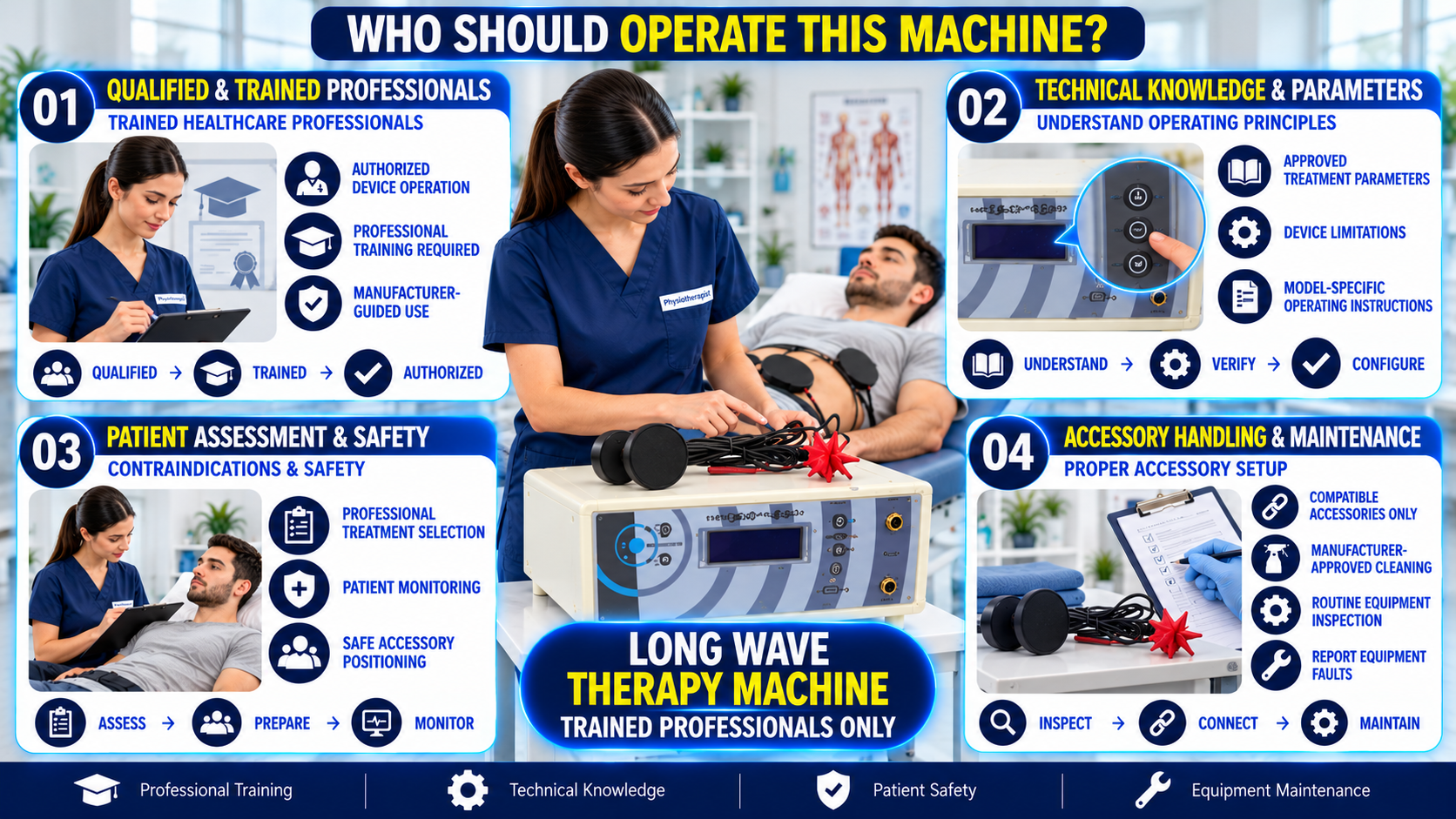
Who Should Operate a Long Wave Therapy Machine?
A Long Wave Therapy Machine should be operated by a qualified physiotherapist or another appropriately trained healthcare professional who is authorized to use the specific device.
The operator should understand:
- The machine’s operating principle
- Its technical specifications and limitations
- Patient assessment and treatment selection
- Approved treatment parameters
- Applicator and accessory setup
- Contraindications and safety precautions
- Patient monitoring
- Equipment cleaning and maintenance
The operator must not rely on the product name alone to determine how the device should be used. Training and model-specific instructions are essential.
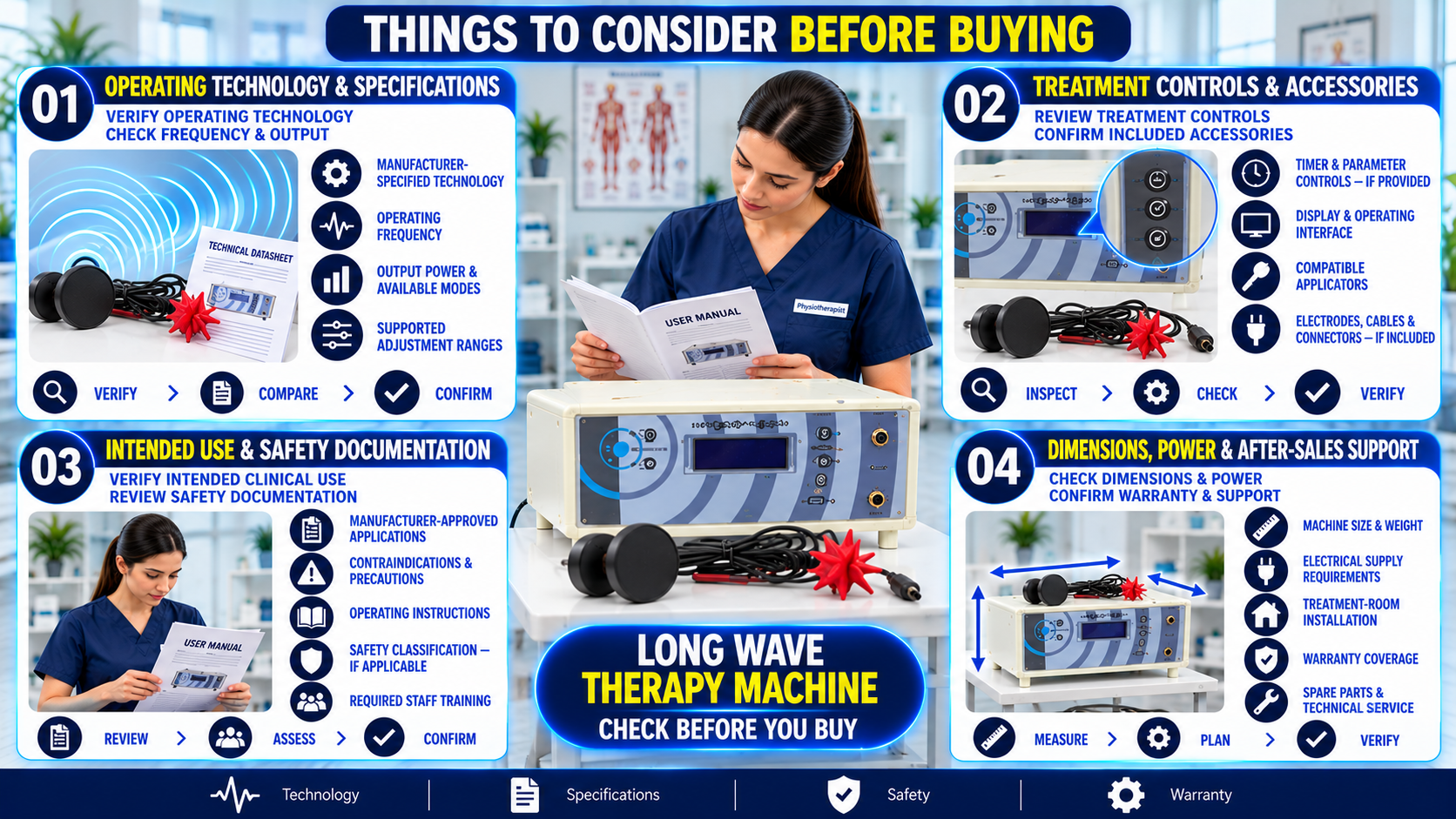
Things to Consider Before Buying
Verify the Operating Technology
Ask the supplier to confirm the exact technology used by the machine and how it differs from other therapy modalities.
Check Frequency and Output
Review the operating frequency, output power, available modes, and adjustment ranges in the official datasheet.
Review the Treatment Controls
Check the available controls, timer functions, display, and treatment parameter adjustments.
Confirm Accessories
Ask which applicators, electrodes, cables, and other accessories are included in the package. Confirm their compatibility with the unit.
Understand the Intended Use
Read the manufacturer’s intended-use statement and confirm whether it matches the clinic’s requirements.
Review Safety Documentation
Check the user manual, contraindications, safety classification, operating instructions, and required staff training.
Confirm Dimensions and Power Requirements
Verify the machine’s physical dimensions, weight, electrical supply, and installation requirements before arranging the treatment room.
Check Warranty and After-Sales Service
Review the warranty period, servicing arrangements, replacement parts, and availability of technical support.
Why Choose PHYSIOMODALITIES™?
PHYSIOMODALITIES™, from PHYSIOMODALITIES ENTERPRISES, focuses on physiotherapy and rehabilitation equipment for professional treatment environments.
When evaluating a Long Wave Therapy Machine, healthcare facilities should prioritize verified technical specifications, intended use, safety documentation, included accessories, warranty coverage, and after-sales support.
Request the exact model’s datasheet and operating manual before making a purchase decision. This helps ensure that the selected configuration is appropriate for the intended professional environment.
Conclusion
The Long Wave Therapy Machine is a specialized therapy device whose applications depend on its operating technology, technical specifications, and approved intended use. It may be considered by professional physiotherapy and rehabilitation facilities when the device meets their clinical and operational requirements.
Before purchasing, verify the operating frequency, output characteristics, treatment controls, accessories, safety requirements, power supply, warranty, and service support. The equipment should be operated by appropriately trained professionals according to the manufacturer’s instructions and the patient’s individual assessment.
Frequently Asked Questions
1. What is a Long Wave Therapy Machine?
It is a specialized therapy device that uses long-wave technology according to the specifications and intended use of the particular model.
2. Is Long Wave Therapy the same as Shortwave Diathermy?
No. They should not be assumed to be identical. Their technology and operating specifications must be confirmed from the manufacturer’s documentation.
3. What specifications should I check before buying?
Check the operating frequency, output power, treatment modes, controls, accessories, power requirements, safety documentation, and warranty.
4. Who should operate this machine?
A qualified or appropriately trained healthcare professional authorized to use the specific device should operate it.
5. Can the machine be used in a physiotherapy clinic?
It may be suitable if its intended use, specifications, and safety requirements match the clinic’s needs.