
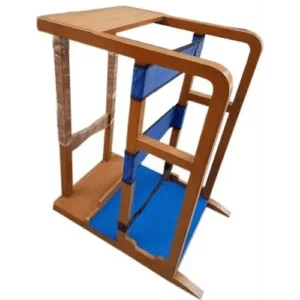
The Wooden Standing Frame is a professional rehabilitation and physiotherapy device designed to provide stable support for individuals who need assistance while practicing an upright standing position. It is particularly useful in rehabilitation programs where controlled standing, weight-bearing, posture training, balance development, and functional mobility are important parts of therapy.
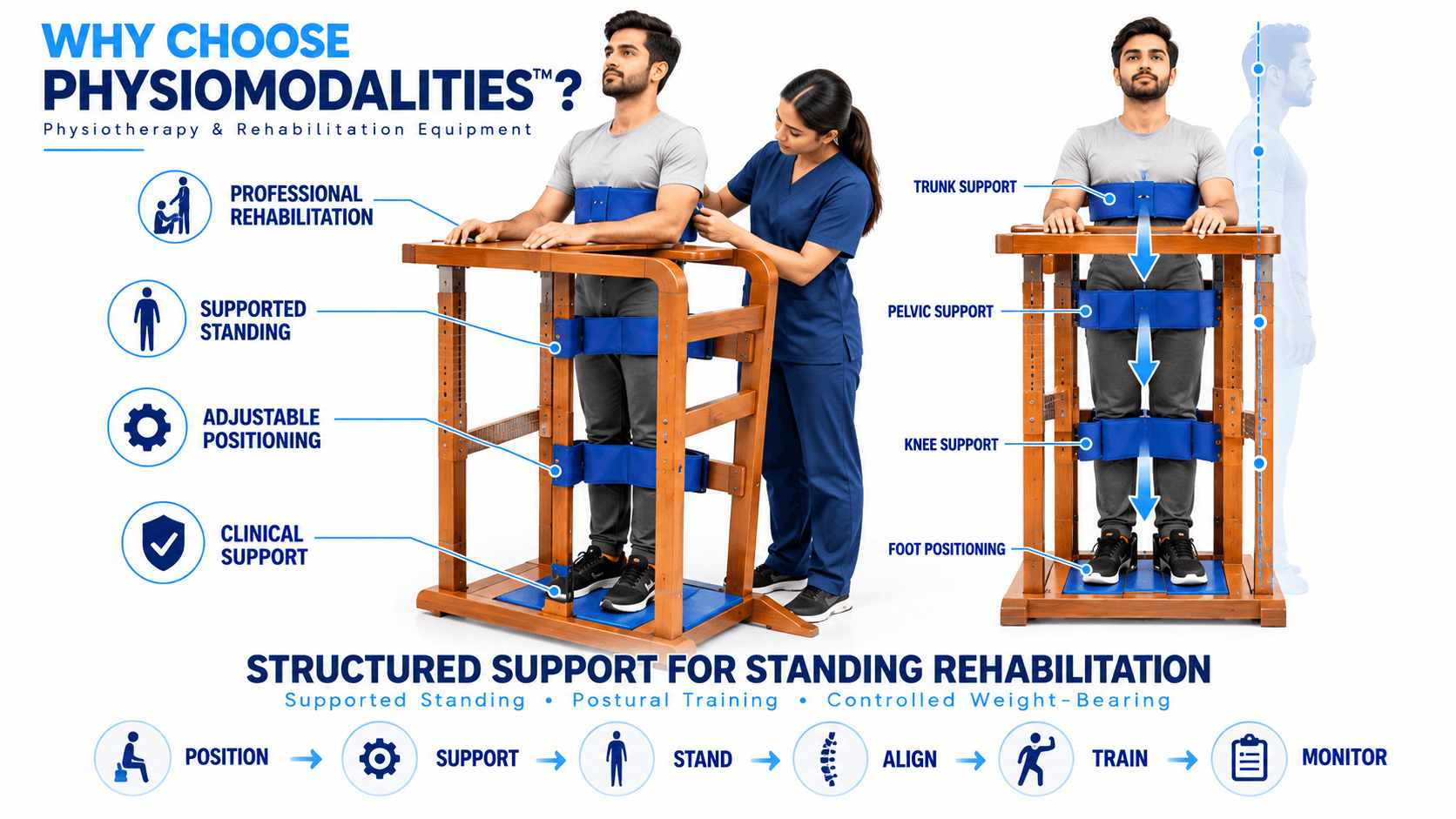
Constructed from durable wood, the frame provides a supportive structure around the user while allowing the therapist to work on standing and postural activities in a controlled environment. Depending on the configuration, the frame may include adjustable supports, straps, knee support, foot positioning, or other components designed to improve stability.
The Wooden Standing Frame can be used in physiotherapy clinics, rehabilitation centres, hospitals, occupational therapy departments, special-needs rehabilitation facilities, and suitable home-care environments.
Standing practice can be an important part of rehabilitation for individuals who have reduced lower-limb strength, impaired balance, limited mobility, or difficulty maintaining an upright position independently. The standing frame provides external support so that standing activities can be introduced according to the individual’s abilities and rehabilitation plan.
What Is a Wooden Standing Frame?
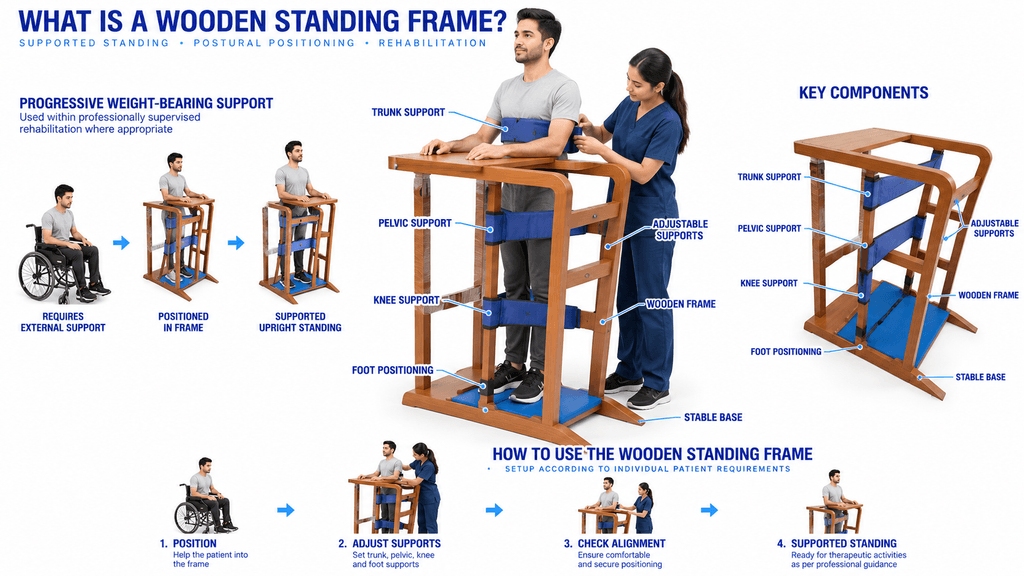
A Wooden Standing Frame is a rehabilitation support device designed to help a user maintain an upright standing position with external support.
Instead of requiring the individual to maintain complete balance independently, the frame provides a stable structure that can support different parts of the body. Depending on the model, support may be provided around the trunk, pelvis, knees, or feet.
The therapist can position the user inside the frame and make the required adjustments before beginning standing exercises.
A standing frame may be particularly useful when a patient is unable to safely stand independently but is being introduced to progressive weight-bearing activities.
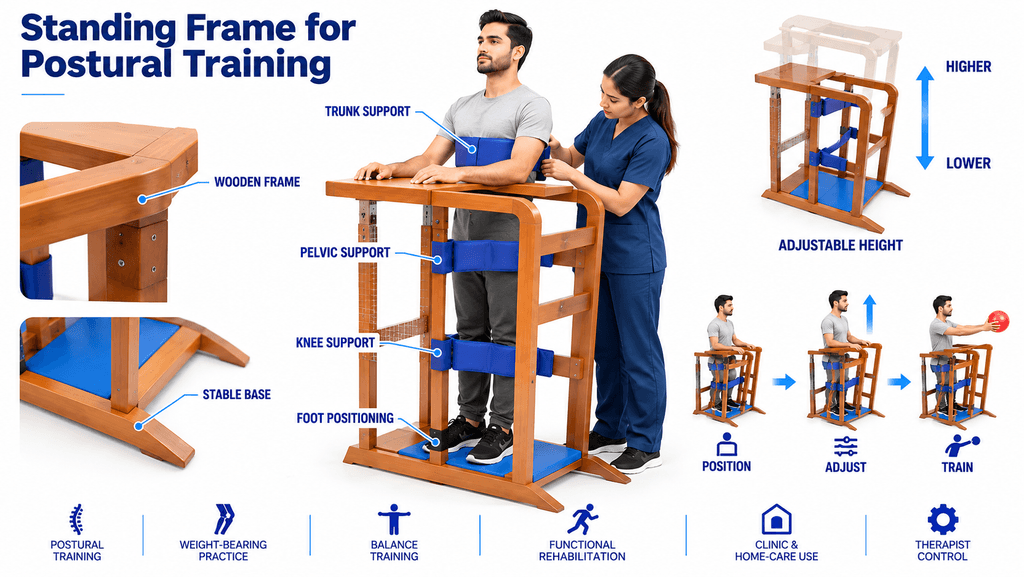
Common design elements may include:
- Strong wooden frame
- Wide and stable base
- Adjustable support system
- Knee support
- Pelvic support
- Chest or trunk support
- Foot positioning area
- Support straps
- Adjustable height
- Padded contact points
- Ergonomic construction
The exact configuration varies by model.
How Does a Wooden Standing Frame Work?
The Wooden Standing Frame provides external stability while the user is positioned in an upright posture.
The therapist first assesses the individual’s standing ability and determines the appropriate level of support. The patient is then positioned inside the frame, with the feet placed correctly and the available support components adjusted.
Once the user is safely positioned, standing activities can be introduced under professional supervision.
The frame does not independently perform the rehabilitation exercise. Instead, it provides the physical support needed to help the user practice standing while the therapist controls the rehabilitation activity.
Stable Standing Support
The frame provides a stable structure around the user, reducing the need to maintain balance without external assistance.
Progressive Weight Bearing
Standing practice can allow the therapist to gradually introduce or increase weight-bearing activities according to the patient’s capabilities.
Postural Support
Appropriate trunk, pelvic, knee, and foot positioning can help the therapist work on maintaining a more controlled upright posture.
Assisted Rehabilitation
The frame can be incorporated into rehabilitation programs for individuals who require additional support during standing exercises.
Key Features of Wooden Standing Frame
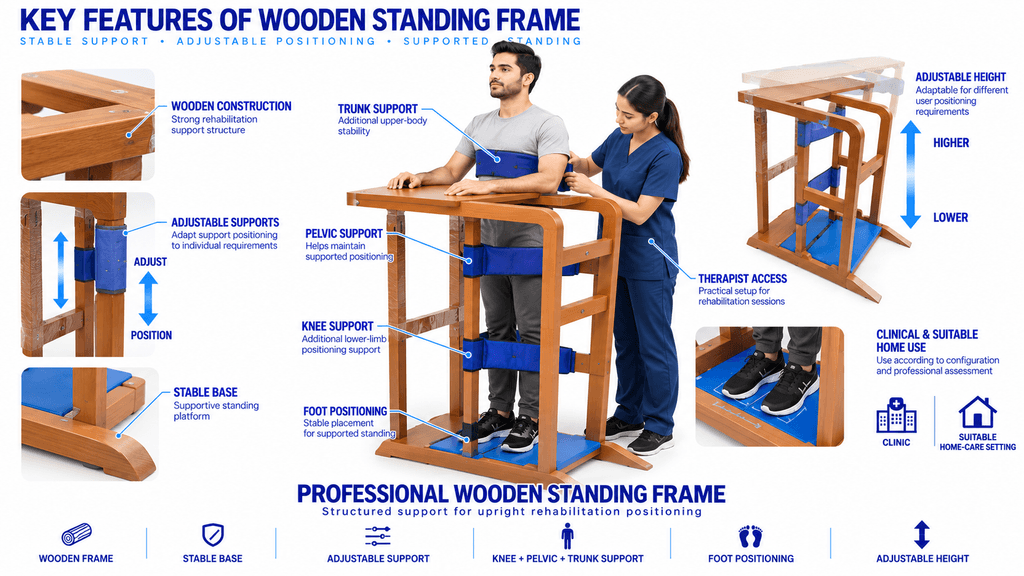
Durable Wooden Construction
The frame is constructed from wood to provide a sturdy rehabilitation structure. Published standing-frame models commonly use solid or durable wood for the main frame.
Stable Base
A stable base helps provide support while the user performs standing activities.
Adjustable Support
Depending on the model, support points can be adjusted to accommodate different users and positioning requirements.
Knee Support
Knee support can help provide additional stability for users who have difficulty maintaining lower-limb alignment during standing.
Pelvic Support
A pelvic support system may help maintain the user’s position within the frame.
Trunk Support
Some configurations provide upper-body or trunk support to improve stability during standing practice.
Foot Positioning
The user’s feet can be positioned appropriately within the base to establish a stable standing posture.
Adjustable Height
Some wooden standing frames include adjustable components to accommodate users of different heights. PME’s published product information specifically describes adjustable height as a feature.
Ergonomic Design
The structure is designed to provide practical support while allowing therapists to work with the user during rehabilitation sessions.
Clinical and Home Use
Depending on the configuration and professional assessment, standing frames can be used in clinical rehabilitation environments and suitable home-care settings.
Benefits of Wooden Standing Frame
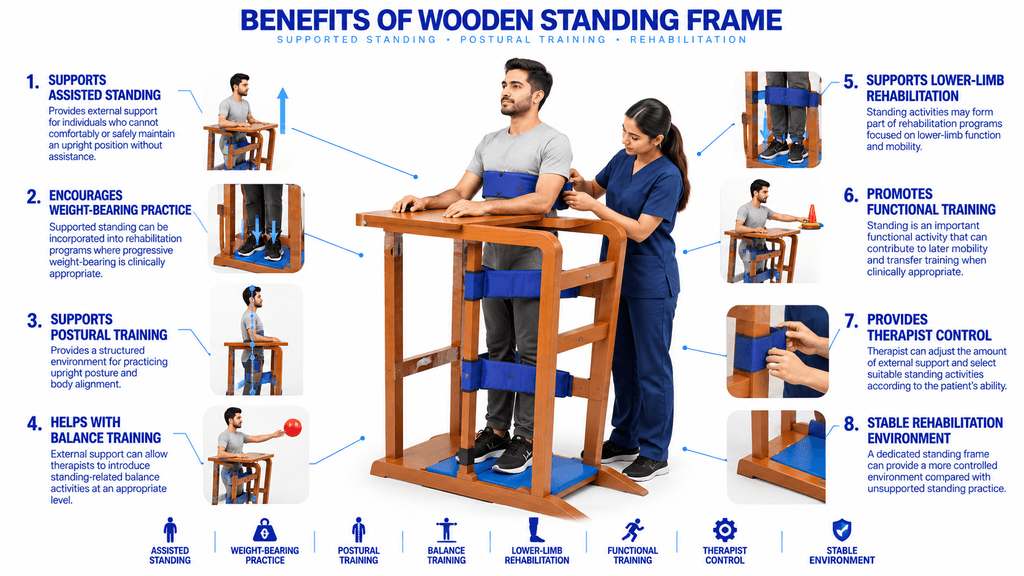
Supports Assisted Standing
The frame provides external support for individuals who cannot comfortably or safely maintain an upright position without assistance.
Encourages Weight-Bearing Practice
Supported standing can be incorporated into rehabilitation programs where progressive weight-bearing is clinically appropriate.
Supports Postural Training
The frame provides a structured environment for practicing upright posture and body alignment.
Helps With Balance Training
The external support can allow therapists to introduce standing-related balance activities at an appropriate level.
Supports Lower-Limb Rehabilitation
Standing activities may form part of rehabilitation programs focused on lower-limb function and mobility.
Promotes Functional Training
Standing is an important functional activity that can contribute to later mobility and transfer training when clinically appropriate.
Provides Therapist Control
The therapist can adjust the amount of external support and select suitable standing activities according to the patient’s ability.
Stable Rehabilitation Environment
A dedicated standing frame can provide a more controlled environment compared with unsupported standing practice.
Applications of Wooden Standing Frame
The Wooden Standing Frame can be used across different rehabilitation and therapy environments.
Physiotherapy
It can support standing, postural, balance, and weight-bearing exercises under physiotherapist supervision.
Neurological Rehabilitation
Standing frames may be incorporated into rehabilitation programs for selected neurological conditions where supported standing is appropriate.
Post-Stroke Rehabilitation
For suitable patients recovering from stroke, supported standing may form part of a broader rehabilitation program.
Spinal Cord Rehabilitation
Individuals undergoing rehabilitation following spinal cord-related mobility limitations may use standing equipment when clinically appropriate.
Cerebral Palsy Rehabilitation
Standing frames are commonly used in pediatric and neurological rehabilitation settings where supported standing is part of the therapy plan.
Orthopedic Rehabilitation
Selected patients recovering from lower-limb or orthopedic conditions may use supported standing during progressive rehabilitation.
Occupational Therapy
Standing equipment may be incorporated into functional and activity-based rehabilitation programs.
Pediatric Rehabilitation
Appropriately sized standing-frame configurations may be used for children who require additional support during standing activities.
Standing Frame for Postural Training
Postural control is an important part of functional rehabilitation.
A person with reduced muscle strength, impaired balance, neurological impairment, or limited mobility may find it difficult to maintain an upright position independently.
The Wooden Standing Frame provides a structured environment where the therapist can position the patient and work on upright posture.
The therapist may focus on:
- Head position
- Trunk alignment
- Pelvic positioning
- Knee alignment
- Foot placement
- Weight distribution
- Standing tolerance
- Controlled movement
The level of support should be adjusted according to the patient’s individual requirements.
Standing Frame for Weight-Bearing Exercises
Supported standing can be used when a therapist wants to introduce controlled weight-bearing as part of a rehabilitation program.
The amount and duration of standing should be determined according to the patient’s condition and tolerance.
Potential rehabilitation goals may include:
- Practicing upright posture
- Introducing supported weight bearing
- Improving standing tolerance
- Developing postural control
- Preparing for transfer activities
- Supporting functional mobility training
The standing frame should not be used as a substitute for a complete rehabilitation program.
Who Can Benefit From a Wooden Standing Frame?
A Wooden Standing Frame may be considered for individuals who require additional support during standing rehabilitation.
Potential users include people with:
- Reduced lower-limb strength
- Balance limitations
- Mobility impairments
- Neurological rehabilitation needs
- Post-stroke rehabilitation needs
- Cerebral palsy-related mobility limitations
- Selected spinal cord-related rehabilitation needs
- Orthopedic rehabilitation requirements
- Difficulty maintaining independent standing
The decision to use a standing frame should be made by a qualified rehabilitation professional after evaluating the individual’s condition and safety requirements.
How to Use the Wooden Standing Frame
Step 1: Assess the User
Before using the frame, assess the patient’s strength, balance, range of movement, weight-bearing ability, posture, and transfer capacity.
Step 2: Inspect the Frame
Check the wooden structure, support straps, knee support, foot area, adjustment mechanisms, and other components.
Step 3: Position the Frame
Place the frame on a stable, level surface.
Step 4: Position the Feet
Help the user place both feet correctly within the designated foot area.
Step 5: Adjust the Supports
Adjust the available knee, pelvic, trunk, or other supports so that the patient is securely positioned.
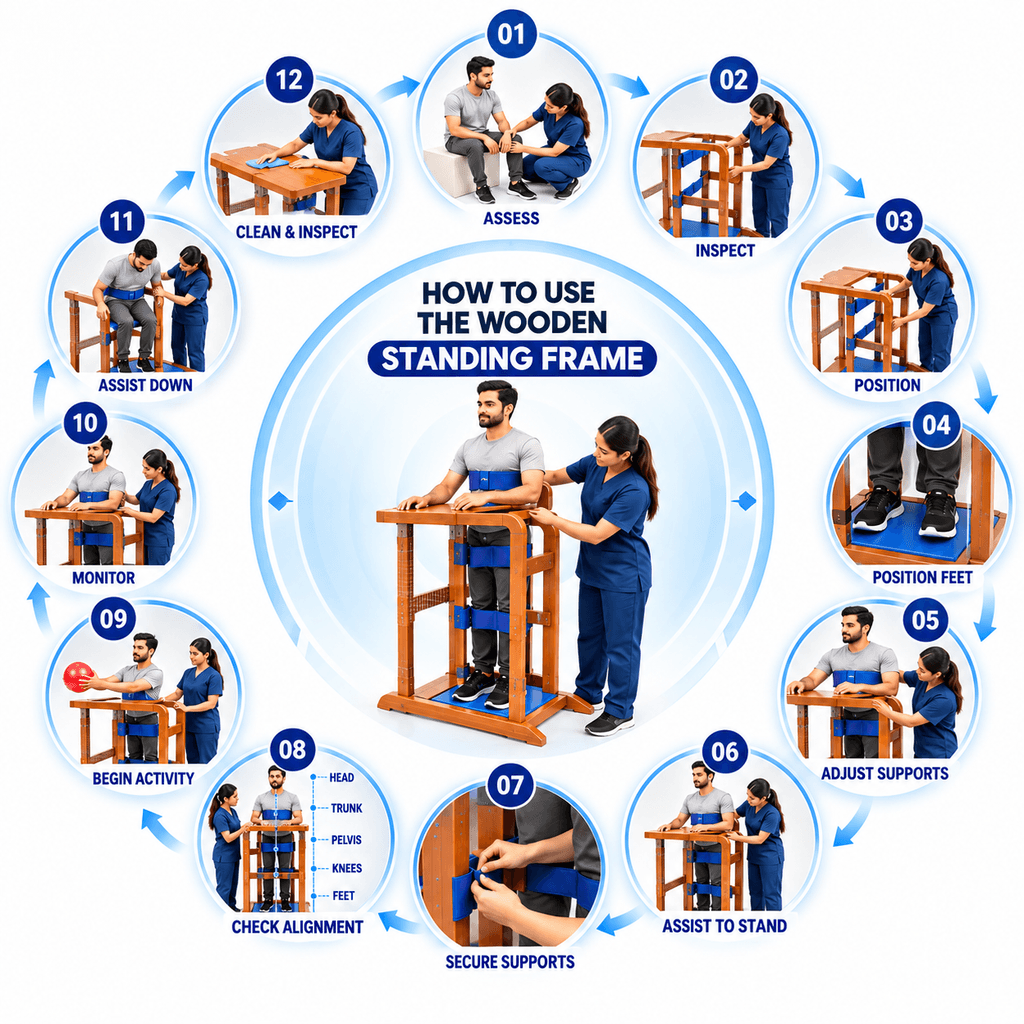
Step 6: Assist the Patient Into Standing
Help the patient move into the standing position using an appropriate transfer technique.
Step 7: Secure the Support System
Check all relevant straps and support components before beginning the exercise.
Step 8: Check Alignment
Confirm that the head, trunk, pelvis, knees, and feet are positioned appropriately.
Step 9: Begin Standing Activity
Start with a suitable duration and level of activity based on the patient’s rehabilitation plan.
Step 10: Monitor the Patient
Observe posture, fatigue, balance, discomfort, dizziness, and other responses throughout the session.
Step 11: End the Exercise Safely
Assist the patient out of the standing position using an appropriate transfer technique.
Step 12: Clean and Inspect
Clean appropriate contact areas and inspect the frame before the next session.
Safety Precautions
The Wooden Standing Frame should be used under appropriate professional supervision, especially for users who cannot stand independently.
Important precautions include:
- Perform an individual assessment before use.
- Check the frame before every session.
- Use the frame on a stable, level surface.
- Ensure all support straps are correctly secured.
- Check knee and pelvic positioning.
- Ensure proper foot placement.
- Do not exceed the manufacturer’s specified weight capacity.
- Never leave a high-risk patient unattended.
- Monitor for dizziness or fatigue.
- Stop the activity if the patient develops severe discomfort or unexpected symptoms.
- Use appropriate transfer techniques.
- Keep the surrounding area free from obstacles.
- Inspect wooden components for cracks or structural damage.
- Replace damaged straps or supports.
- Follow the manufacturer’s maintenance instructions.
Patients with conditions affecting bone strength, blood pressure regulation, joint stability, cardiovascular tolerance, or weight-bearing ability may require additional clinical assessment before standing-frame use.
Wooden Standing Frame for Physiotherapy Clinics
A rehabilitation clinic may require equipment that supports progressive functional training rather than only passive treatment.
The Wooden Standing Frame can become part of a rehabilitation area where therapists work on standing and postural activities.
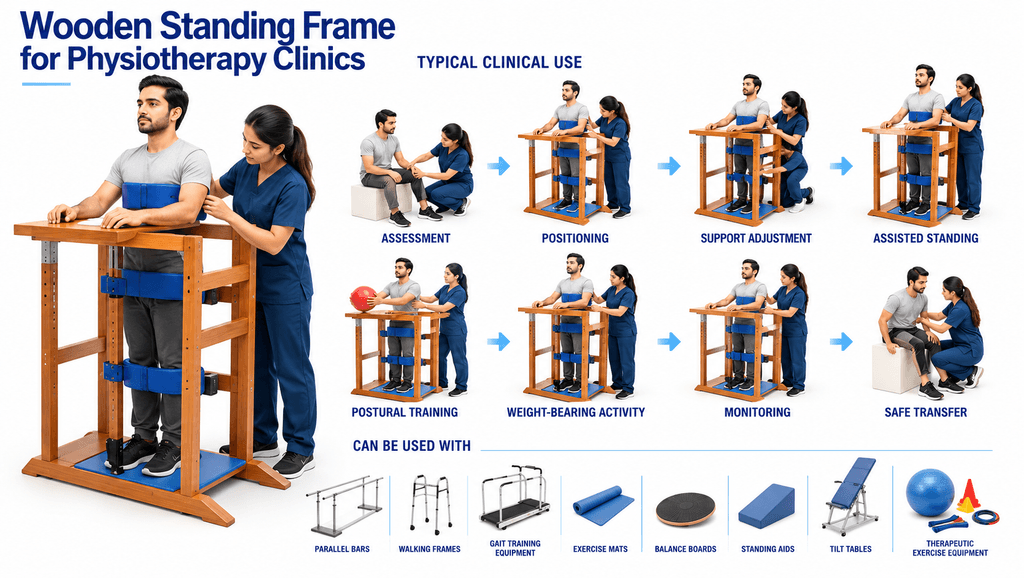
A typical session may follow:
Assessment → Positioning → Support Adjustment → Assisted Standing → Postural Training → Weight-Bearing Activity → Monitoring → Safe Transfer
This structured approach allows the therapist to gradually introduce standing activities while monitoring the patient’s response.
The frame can also be used alongside other rehabilitation equipment such as:
- Parallel bars
- Walking frames
- Gait training equipment
- Exercise mats
- Balance boards
- Standing aids
- Tilt tables
- Therapeutic exercise equipment
Wooden Standing Frame for Pediatric Rehabilitation
Appropriately sized standing frames can also be used in pediatric rehabilitation.
Children with neurological or developmental mobility limitations may require external support to practice upright positioning.
A pediatric standing frame should provide:
- Correct sizing
- Appropriate pelvic support
- Suitable trunk support
- Proper knee alignment
- Safe foot positioning
- Appropriate adjustment
- Adequate supervision
The frame should never be selected solely based on age. The child’s height, weight, physical abilities, posture, medical condition, and rehabilitation requirements should be considered.
Wooden Standing Frame for Adults
Adult standing frames are designed to provide stable support for users who require assistance during standing exercises.
They can be incorporated into rehabilitation programs involving neurological, orthopedic, mobility, or functional limitations.
Adult models may include larger support structures and higher load capacities than pediatric configurations. Exact capacity should always be confirmed from the specific product specification.
Wooden Standing Frame vs Unsupported Standing
| Feature | Wooden Standing Frame | Unsupported Standing |
|---|---|---|
| External Support | Available | Not available |
| Balance Assistance | High | Depends on user |
| Weight-Bearing Practice | Controlled | Less controlled |
| Postural Training | Structured | More challenging |
| Therapist Support | Easier to manage | More demanding |
| Suitable for Limited Mobility | Depending on assessment | Often unsuitable without assistance |
The purpose of a standing frame is not to replace independent standing permanently. It can provide a controlled step within a rehabilitation progression where independent standing is not yet safe or practical.
Choosing the Right Wooden Standing Frame
Before purchasing a Wooden Standing Frame, clinics and rehabilitation centres should consider several factors.
User Group
Determine whether the frame is intended for adults, children, or both.
Weight Capacity
Check the manufacturer’s maximum recommended user weight.
Height Adjustment
Adjustability is important when the equipment will be used by people of different heights.
Support Configuration
Check whether the frame includes knee, pelvic, trunk, and foot supports appropriate for the intended users.
Frame Stability
The base should provide adequate stability for the intended rehabilitation activity.
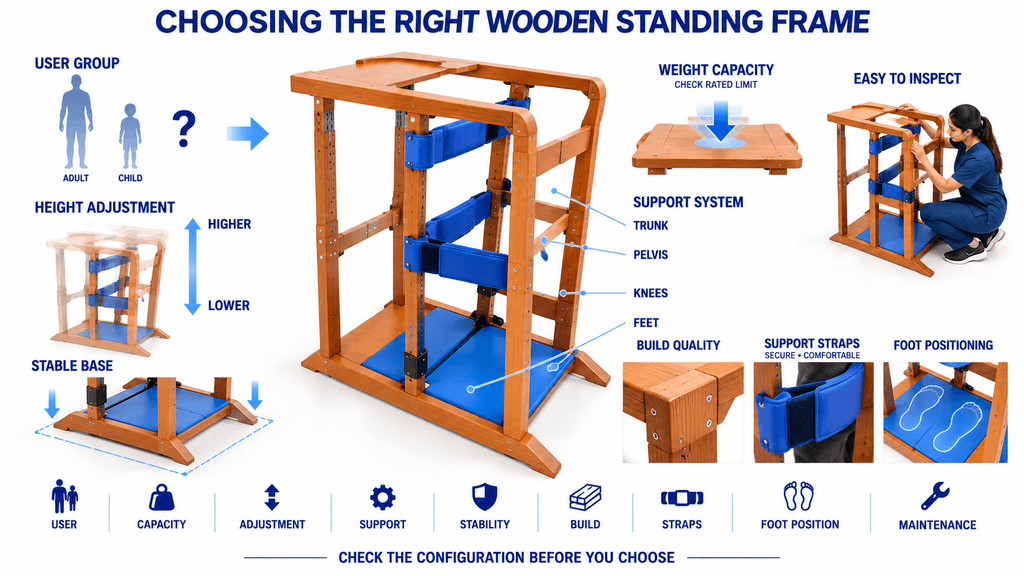
Material Quality
Inspect the wood quality, finishing, joints, and overall construction.
Strap Quality
Support straps should be durable and secure while remaining comfortable for the user.
Foot Positioning
A suitable foot platform helps establish a stable starting position.
Maintenance
Choose a design that can be inspected and maintained easily.
Technical Specifications
| Specification | Wooden Standing Frame |
|---|---|
| Product Name | Wooden Standing Frame |
| Product Type | Standing & Rehabilitation Aid |
| Primary Application | Assisted Standing & Rehabilitation |
| Construction | Durable Wooden Frame |
| Height Adjustment | Available on Supported Configuration |
| Patient Group | Adult / Pediatric Depending on Model |
| Support | Standing, Postural & Weight-Bearing Support |
| Knee Support | Model Dependent |
| Pelvic Support | Model Dependent |
| Trunk Support | Model Dependent |
| Foot Positioning | Included / Model Dependent |
| Straps | Support Straps Depending on Configuration |
| Usage | Physiotherapy, Rehabilitation & Occupational Therapy |
| Environment | Clinical / Home Rehabilitation |
| Operation | Manual |
| Brand | PHYSIOMODALITIES™ |
Exact dimensions, user capacity, adjustment range, number of straps, support configuration, and other specifications should be confirmed for the particular PHYSIOMODALITIES™ model before publication. Comparable Indian listings show substantial variation in dimensions and capacity; one published adult wooden frame lists a 300 kg capacity, while another model lists dimensions of approximately 69 × 88 × 96 cm.
Maintenance of Wooden Standing Frame
Proper maintenance helps preserve the safety and durability of the frame.
Clean the Contact Areas
Clean padded surfaces and support areas regularly using a method compatible with the material.
Inspect the Wooden Structure
Look for cracks, loose joints, splinters, or other structural damage.
Check Support Straps
Inspect straps regularly for fraying, damaged buckles, or weakened attachment points.
Inspect Adjustments
If the frame has adjustable components, make sure they remain secure after adjustment.
Check the Base
Ensure that the frame remains stable and does not rock or shift unexpectedly.
Store Properly
Keep the frame in a dry environment and protect the wooden structure from excessive moisture.
Who Should Operate a Wooden Standing Frame?
The Wooden Standing Frame should be introduced and supervised by appropriately trained professionals, especially when the user has significant mobility or balance limitations.
Suitable professionals may include:
- Physiotherapists
- Occupational therapists
- Rehabilitation professionals
- Pediatric therapists
- Neurological rehabilitation professionals
- Other appropriately trained healthcare practitioners
The professional should determine the appropriate positioning, support level, standing duration, and progression.
Why Choose PHYSIOMODALITIES™?
PHYSIOMODALITIES™ provides physiotherapy and rehabilitation equipment designed for professional healthcare environments.
The Wooden Standing Frame can be used as part of a functional rehabilitation setup where supported standing, postural training, and progressive weight-bearing activities are required.
PHYSIOMODALITIES ENTERPRISES offers a broad range of physiotherapy and rehabilitation equipment, including electrotherapy systems, traction equipment, treatment tables, exercise equipment, Ultrasonic therapy machines, laser systems, shockwave equipment, TECAR systems, and robotic rehabilitation products.
Conclusion
The Wooden Standing Frame is a practical rehabilitation device designed to provide external support during standing and weight-bearing activities.
Its durable wooden construction, stable structure, adjustable support options, and standing-focused design make it suitable for selected physiotherapy, occupational therapy, neurological rehabilitation, orthopedic rehabilitation, and functional mobility programs.
The frame can help therapists introduce supported standing, work on postural alignment, practice controlled weight bearing, and gradually develop standing tolerance according to the individual’s rehabilitation plan.
For safe use, the user’s physical abilities, weight-bearing capacity, balance, posture, and medical condition should be assessed before treatment. The correct frame size and support configuration should also be selected for the intended user.
Frequently Asked Questions
1. What is a Wooden Standing Frame?
A Wooden Standing Frame is a rehabilitation device that provides external support to help individuals maintain an upright standing position during supervised therapy.
2. Who can use a Wooden Standing Frame?
It may be used by adults or children who require supported standing during rehabilitation, depending on the frame configuration and professional assessment.
3. What are the main uses of a Wooden Standing Frame?
It can be used for supported standing, postural training, balance activities, progressive weight-bearing, and functional rehabilitation.
4. Is the Wooden Standing Frame height adjustable?
Some models provide adjustable height or adjustable support components. The exact adjustment range depends on the particular model.
5. Who should supervise standing-frame exercises?
A physiotherapist, occupational therapist, rehabilitation professional, or another appropriately trained healthcare professional should determine and supervise the standing program when clinical support is required.