
The 4D Spine Pro Decompression Therapy Machine is an advanced robotic spinal rehabilitation system designed for professional physiotherapy, chiropractic, rehabilitation, orthopedic, and specialized spine-care environments. It combines controlled spinal decompression with multidirectional robotic movement to support structured cervical and lumbar rehabilitation programs.
The system is designed to provide controlled positioning and movement rather than relying only on conventional linear traction. Depending on the configuration, robotic spine therapy can incorporate flexion, extension, axial rotation, thoracic and lumbar side bending, decompression, and electric height adjustment.
For clinics looking to expand their advanced spinal rehabilitation services, the 4D Spine Pro Decompression Therapy Machine provides a technology-focused platform for professionally supervised treatment.
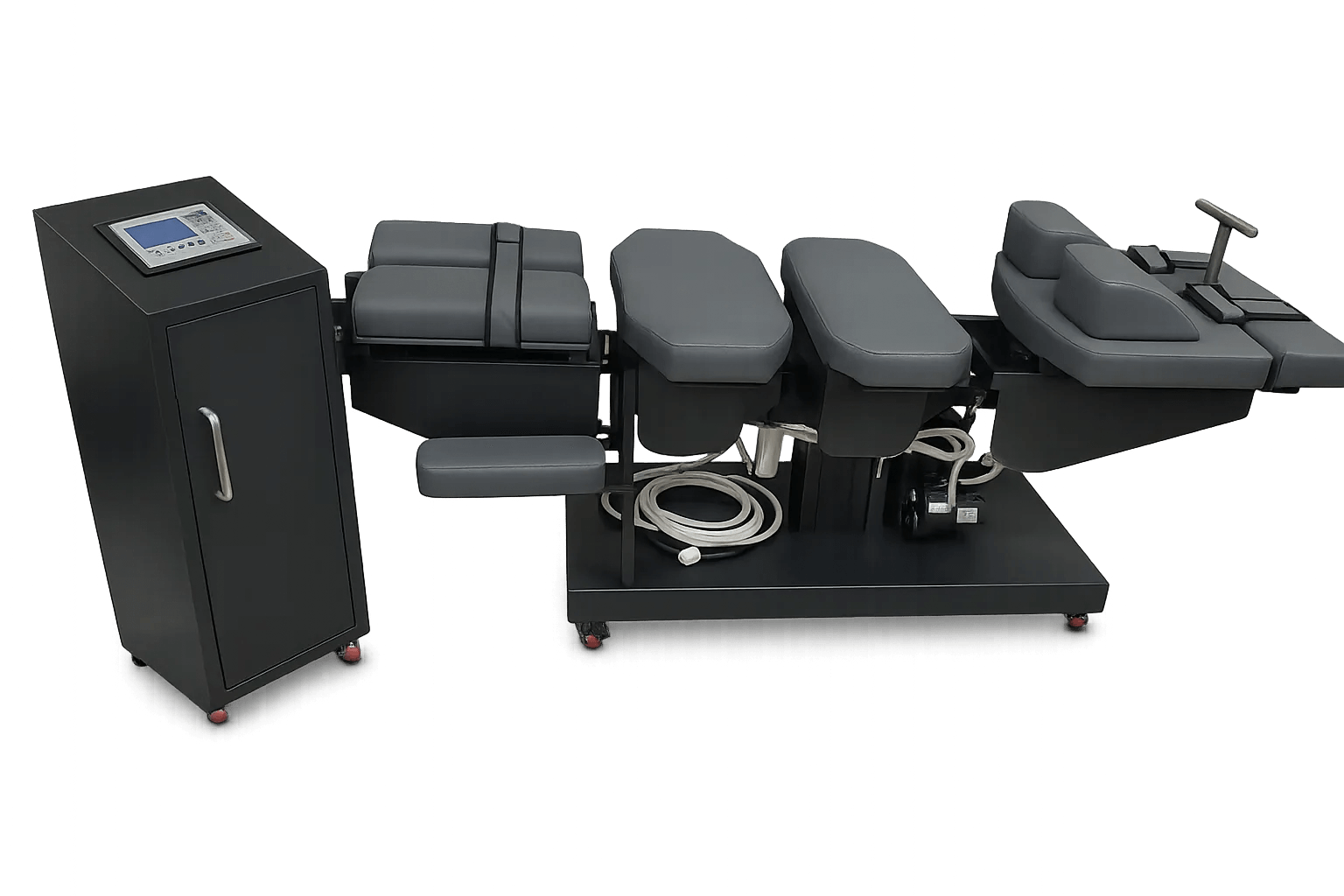
What Is the 4D Spine Pro Decompression Therapy Machine?
The 4D Spine Pro is a robotic spinal decompression and rehabilitation system designed to provide controlled movement of the treatment table and patient positioning.
Traditional spinal traction generally focuses on applying a longitudinal pulling force. A robotic decompression system can combine this approach with controlled multidirectional movement, allowing the therapist to work with different spinal movement patterns according to the patient’s assessment and treatment plan.
The “4D” concept represents a broader range of controlled spinal movement and positioning. Available movements depend on the exact machine configuration and programmed treatment protocols.
The machine is intended for professional use, with treatment parameters selected and monitored by a trained practitioner.
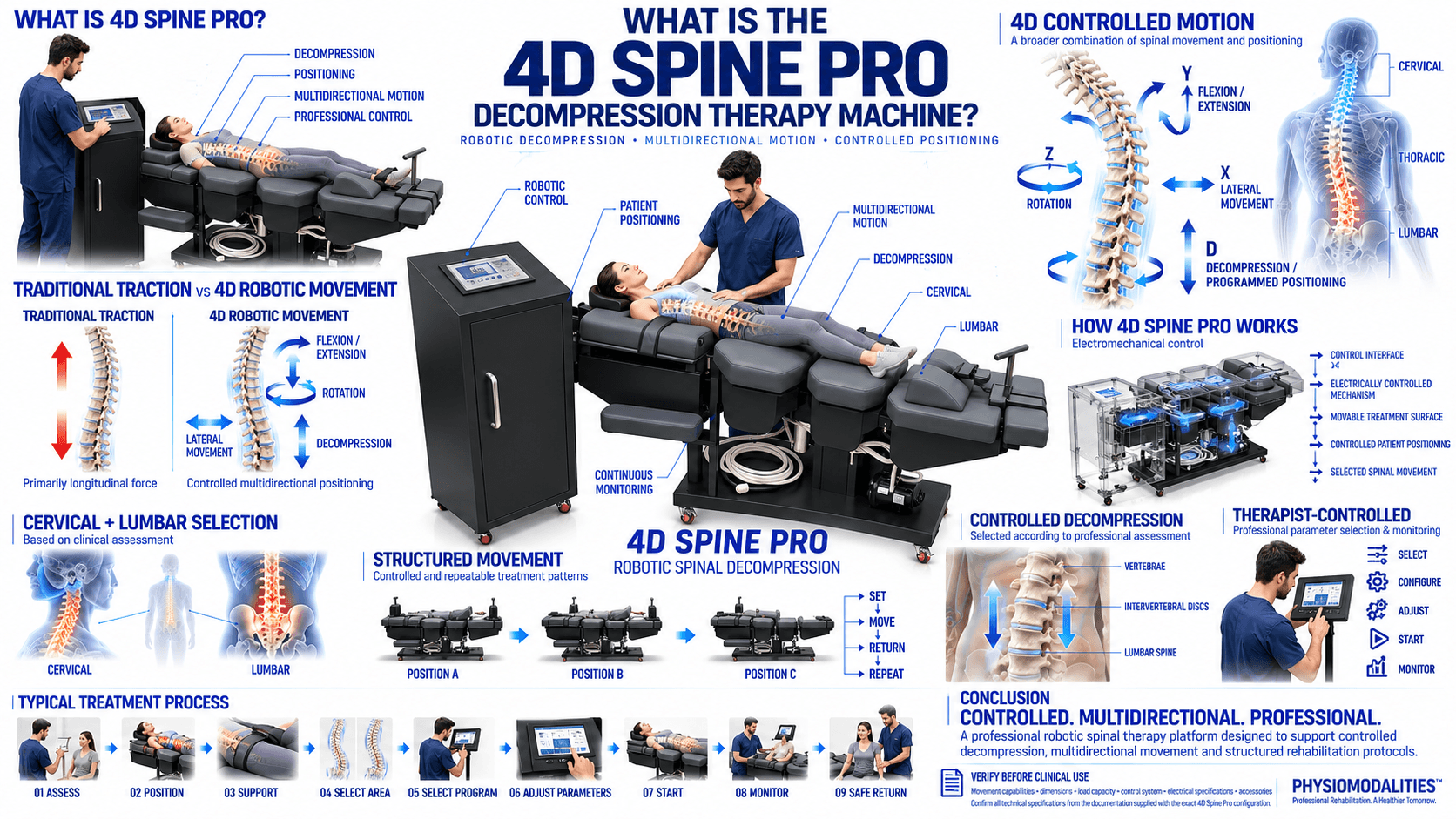
How Does 4D Spine Pro Work?
The 4D Spine Pro Decompression Therapy Machine uses electrically controlled mechanical components to position and move the treatment surface according to selected parameters.
A typical treatment process includes:
- Patient assessment and treatment selection.
- Positioning the patient on the treatment table.
- Securing the required patient supports.
- Selecting cervical or lumbar treatment.
- Choosing an appropriate treatment program.
- Adjusting available movement and decompression parameters.
- Starting the robotic treatment.
- Monitoring the patient’s response.
- Returning the table to its safe position after treatment.
The controlled movement allows treatment sessions to be performed in a structured and repeatable manner.
Key Features of 4D Spine Pro
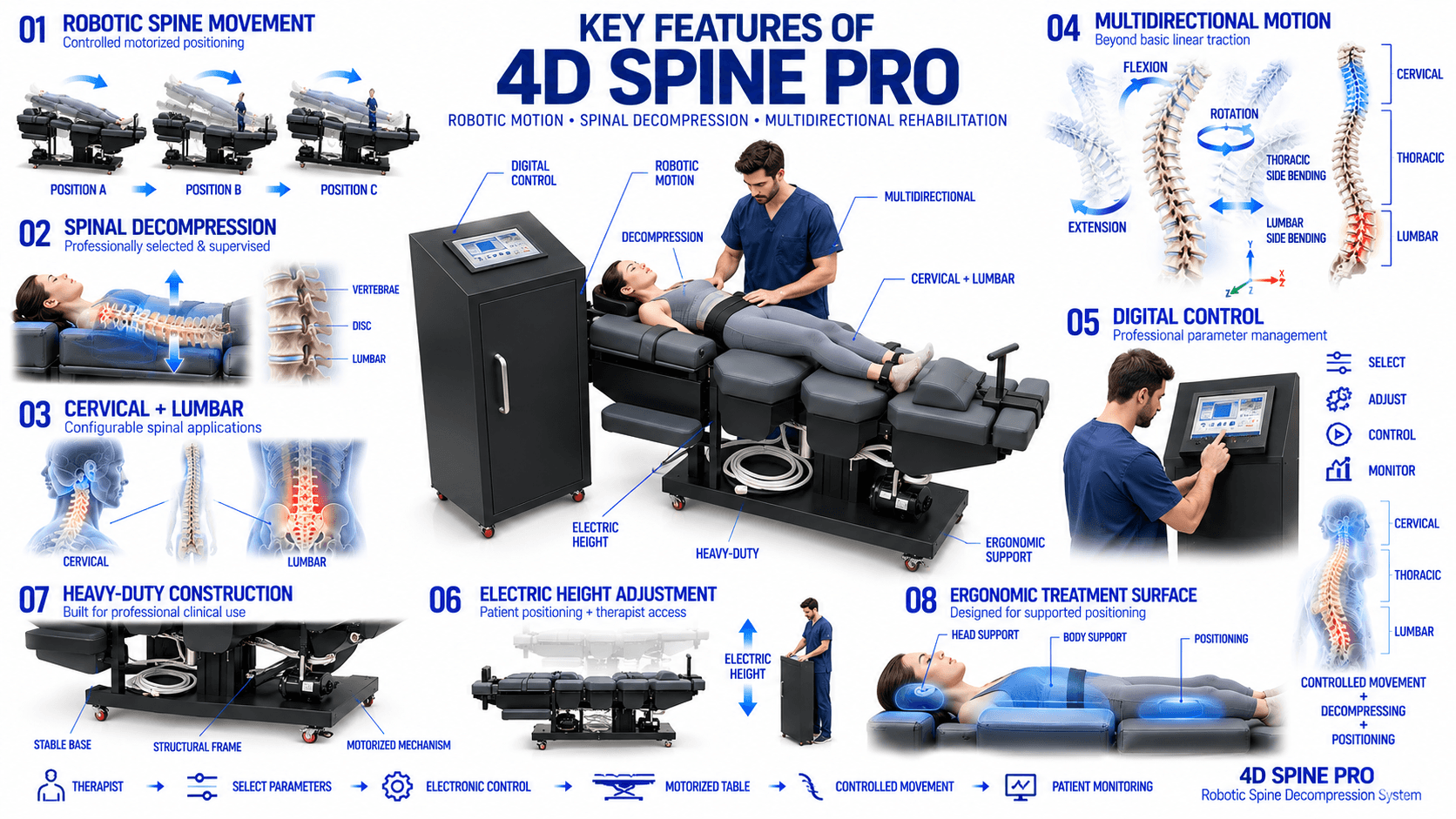
Robotic Spine Movement
The 4D Spine Pro Decompression Therapy Machine provides motorized spinal movement to support controlled rehabilitation protocols.
Spinal Decompression Therapy
The system is designed for professionally supervised spinal decompression programs. Decompression should be selected only after appropriate patient assessment.
Cervical and Lumbar Therapy
The system can support treatment approaches involving the cervical and lumbar regions, depending on the machine configuration.
Multidirectional Movement
Depending on the available configuration, movements can include:
- Flexion
- Extension
- Axial rotation
- Thoracic side bending
- Lumbar side bending
- Controlled positioning
These movement options provide greater flexibility than a basic linear traction system.
Digital Control Interface
An electronic control interface allows the operator to configure and monitor treatment parameters. The related PHYSIOMODALITIES robotic spine system incorporates touchscreen-based control.
Electric Height Adjustment
Motorized height adjustment assists with patient positioning and can make therapist access more convenient.
Heavy-Duty Construction
A robotic spinal therapy table requires a stable structure capable of supporting controlled movement. The related PHYSIOMODALITIES system uses heavy-duty construction.
Ergonomic Treatment Surface
The padded treatment surface is designed to provide appropriate patient support during spinal rehabilitation sessions.
Applications of 4D Spine Pro
The 4D Spine Pro Decompression Therapy Machine may be incorporated into selected professional rehabilitation programs involving spinal and musculoskeletal conditions.
Potential applications include:
- Lumbar spine rehabilitation
- Cervical spine rehabilitation
- Spinal decompression programs
- Lower-back rehabilitation
- Neck rehabilitation
- Lumbar mobility training
- Selected disc-related rehabilitation
- Sciatica rehabilitation
- Postural rehabilitation
- Musculoskeletal back pain management
- Reduced spinal mobility
- Professional chiropractic rehabilitation
The suitability of treatment depends on the patient’s clinical condition, assessment, contraindications, and treatment objectives.
Potential Benefits
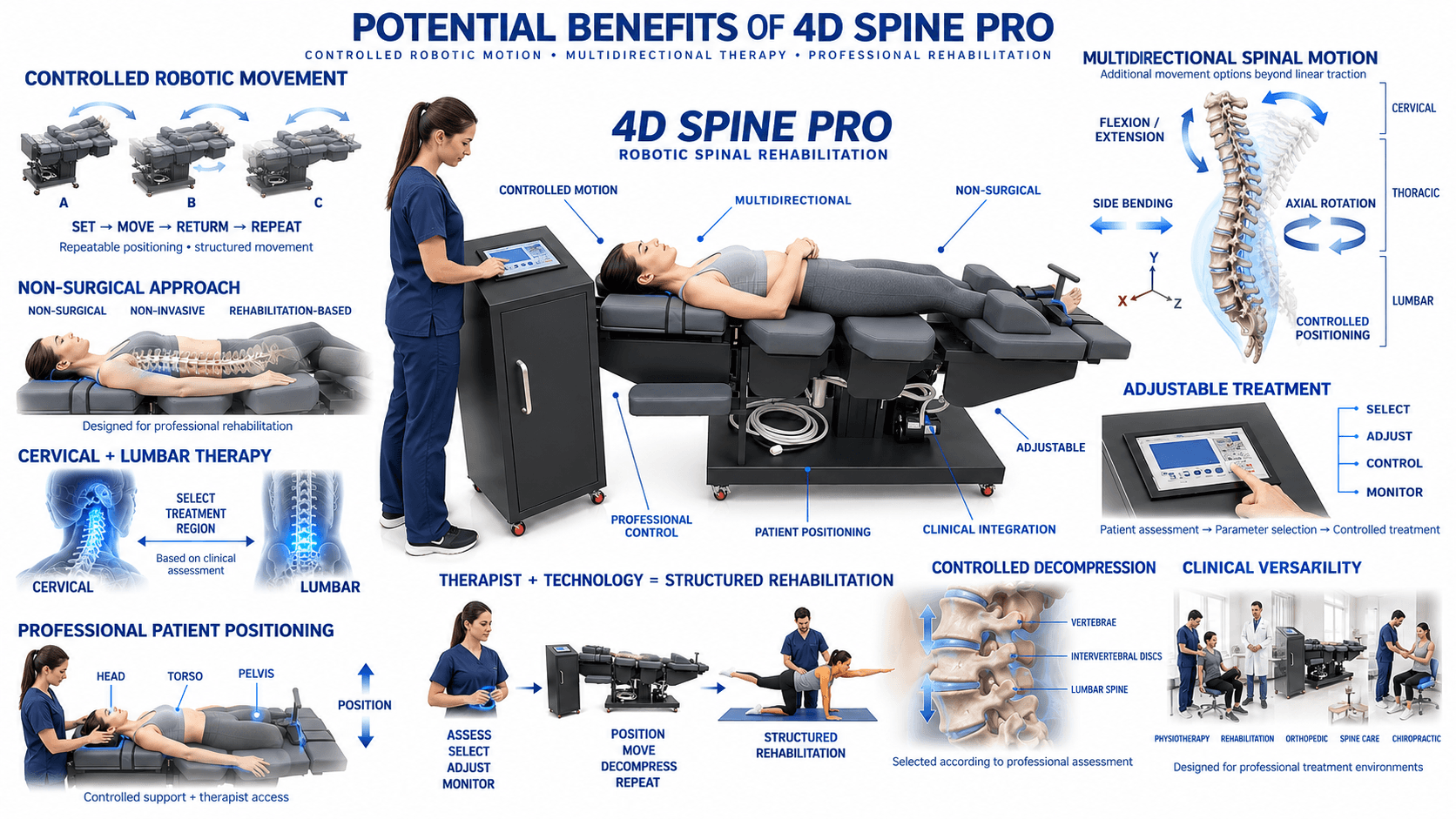
Controlled Robotic Movement
Motorized movement can provide repeatable positioning and consistent treatment patterns.
Multidirectional Spinal Therapy
Where supported by the configuration, flexion, rotation, and side-bending movements provide additional options beyond conventional linear traction.
Adjustable Treatment
The operator can select available treatment parameters according to the patient’s requirements and professional protocol.
Non-Surgical Treatment Approach
The system is intended for non-surgical rehabilitation. It should not be considered a replacement for surgery or medical intervention when such treatment is clinically indicated.
Professional Patient Positioning
Motorized table adjustment can help achieve suitable patient positioning during treatment.
Clinical Versatility
The system can be incorporated into physiotherapy, chiropractic, rehabilitation, orthopedic, and spine-care environments.
Conditions Considered for Spinal Rehabilitation
Following professional assessment, robotic decompression therapy may be considered as part of rehabilitation programs for selected conditions such as:
- Lumbar disc-related conditions
- Cervical disc-related conditions
- Sciatica
- Lumbar spondylosis
- Cervical spondylosis
- Mechanical back pain
- Neck pain
- Reduced spinal mobility
- Postural dysfunction
- Selected facet-related conditions
A patient’s diagnosis alone does not establish suitability for decompression therapy. Proper clinical assessment should be performed before treatment.
How to Use the 4D Spine Pro
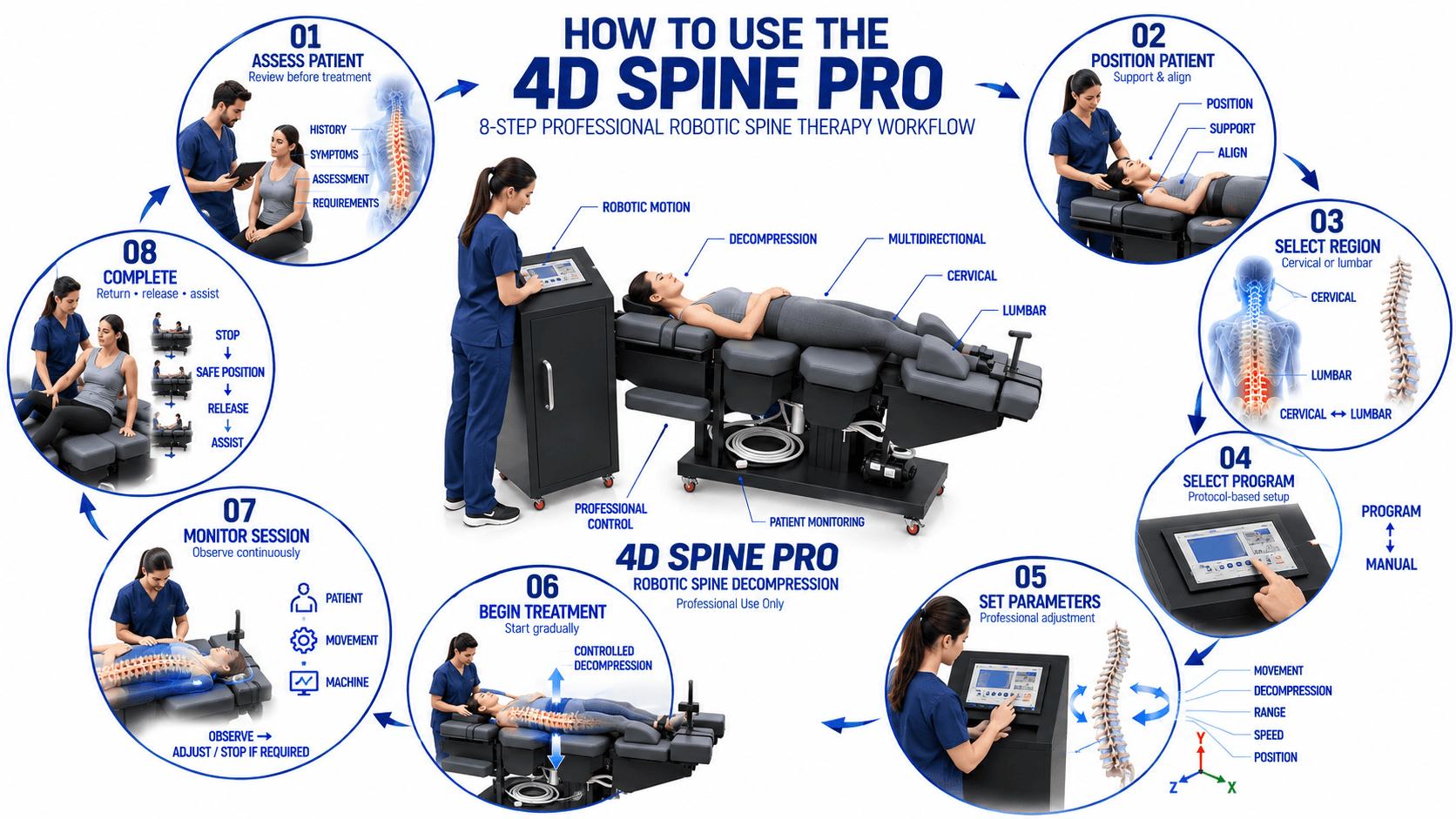
Step 1: Assess the Patient
Review the patient’s condition, medical history, symptoms, and treatment requirements.
Step 2: Position the Patient
Place the patient correctly on the treatment surface and ensure the required supports are secured.
Step 3: Select the Treatment Region
Choose the appropriate cervical or lumbar treatment configuration.
Step 4: Select the Treatment Program
Choose an available automated program or configure the machine manually according to the treatment protocol.
Step 5: Set Treatment Parameters
Adjust available movement, decompression, range, speed, or positioning parameters according to professional assessment.
Step 6: Begin Treatment
Start the robotic movement gradually and observe the patient’s response.
Step 7: Monitor the Session
The therapist should remain attentive throughout treatment and modify or stop the session if unexpected discomfort occurs.
Step 8: Complete Treatment
Return the table to its safe position, release the patient supports, and assist the patient off the machine.
Safety Precautions
The 4D Spine Pro Decompression Therapy Machine should be operated only by appropriately trained professionals.
Important precautions include:
- Conduct patient assessment before treatment.
- Follow manufacturer instructions.
- Verify correct patient positioning.
- Use clinically appropriate parameters.
- Monitor the patient throughout treatment.
- Do not exceed recommended movement limits.
- Stop treatment if severe or unexpected symptoms occur.
- Inspect mechanical components before operation.
- Keep loose clothing and objects away from moving parts.
- Ensure the table is stable before positioning the patient.
- Understand the emergency-stop procedure.
- Follow recommended maintenance schedules.
Patients with suspected serious spinal pathology or contraindications should receive appropriate medical evaluation before treatment.
Technical Specifications
| Specification | 4D Spine Pro |
|---|---|
| Product Type | Decompression Therapy Machine |
| Therapy | Robotic Spine Decompression & Rehabilitation |
| Treatment Areas | Cervical & Lumbar* |
| Movement | Motorized / Robotic* |
| Movement Options | Flexion, Extension, Rotation & Side-Bending* |
| Control | Digital / Touchscreen Interface* |
| Height Adjustment | Electric* |
| Construction | Heavy-Duty Clinical Structure* |
| Patient Support | Ergonomic Padded Treatment Surface* |
| Application | Physiotherapy & Rehabilitation |
| Operation | Professional Use |
*Exact specifications should be confirmed from the final 4D Spine Pro datasheet, as movement options, dimensions, load capacity, electrical specifications, and accessories can vary by configuration.
Why Clinics Use Robotic Spine Decompression Systems
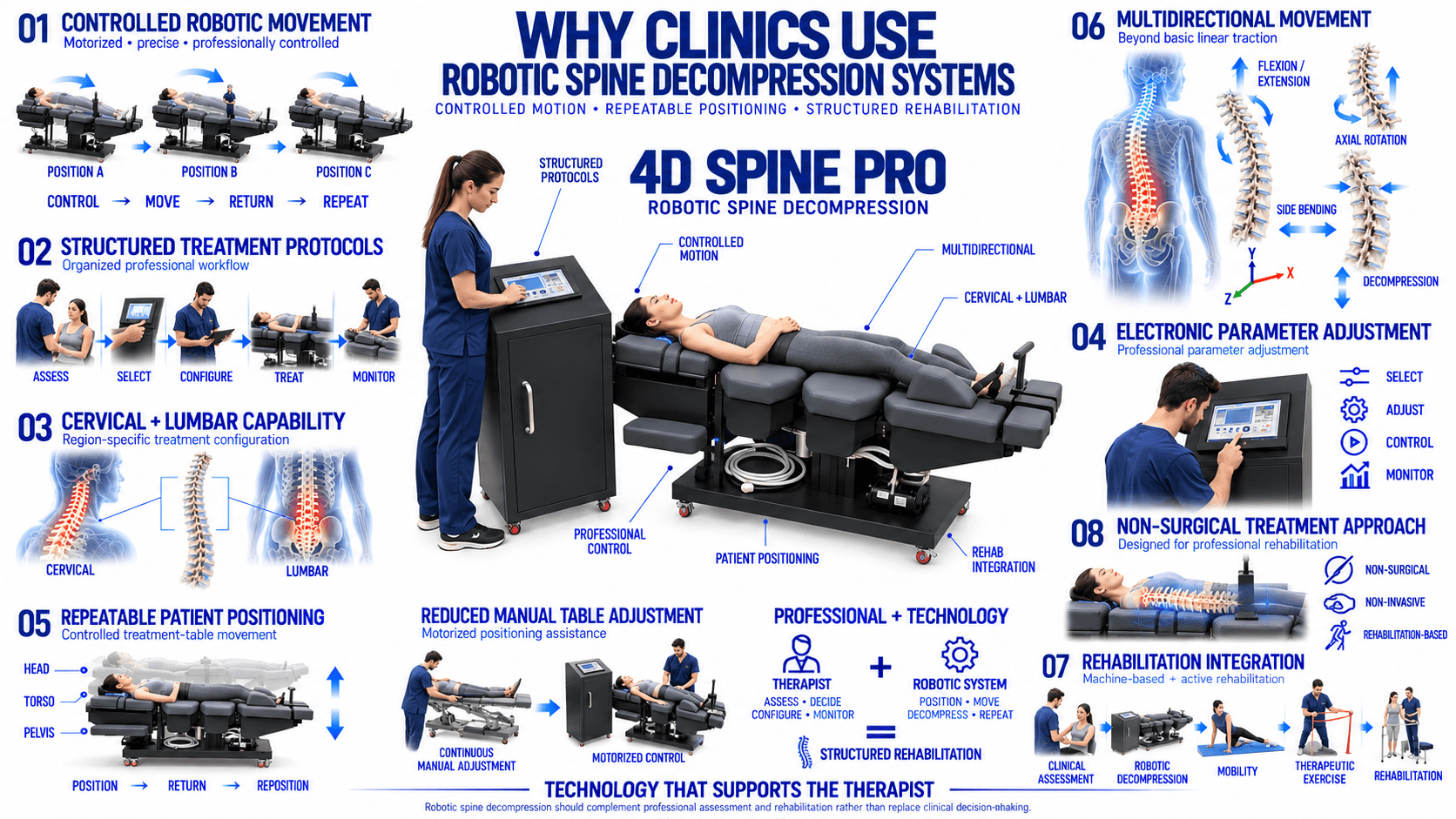
Spinal rehabilitation often requires controlled positioning and carefully selected movement patterns. A robotic decompression platform can help therapists deliver repeatable treatment protocols while reducing the need for continuous manual table adjustment.
For professional clinics, this type of system can provide:
- Controlled robotic movement
- Structured treatment protocols
- Cervical and lumbar treatment capability
- Electronic parameter adjustment
- Repeatable patient positioning
- Multidirectional movement options
- Integration with broader rehabilitation programs
The machine should complement professional assessment and rehabilitation rather than replace clinical decision-making.
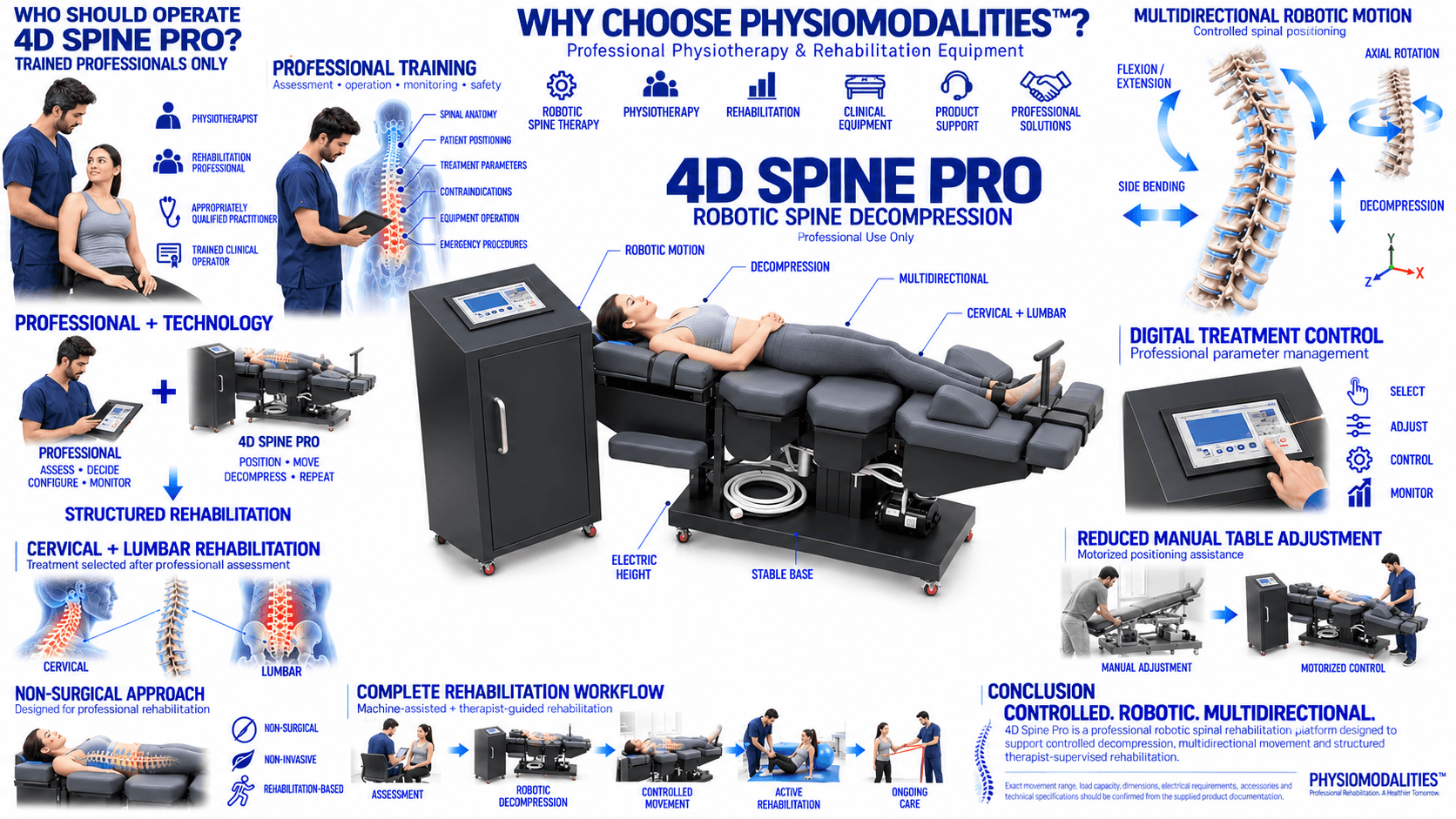
Who Should Operate 4D Spine Pro?
The machine should be operated by appropriately trained physiotherapists, chiropractors, rehabilitation professionals, or other qualified healthcare practitioners.
The operator should understand spinal anatomy, patient positioning, treatment parameters, contraindications, equipment operation, and emergency procedures.
Why Choose PHYSIOMODALITIES™?
PHYSIOMODALITIES™ provides professional physiotherapy and rehabilitation equipment for modern clinical environments.
The 4D Spine Pro Decompression Therapy Machine can be an advanced addition to clinics developing dedicated spine rehabilitation services. Its robotic movement, decompression functionality, digital control, and patient-positioning capabilities are designed for structured professional treatment.
PHYSIOMODALITIES ENTERPRISES focuses on physiotherapy, rehabilitation, and clinical equipment solutions for professional healthcare environments.
Conclusion
The 4D Spine Pro Decompression Therapy Machine is an advanced robotic system designed for controlled spinal decompression and multidirectional rehabilitation. By combining motorized movement with decompression-based therapy, it can support structured cervical and lumbar rehabilitation programs under professional supervision.
Depending on the configuration, the system may provide flexion, extension, axial rotation, side bending, electric height adjustment, and digital treatment control. These capabilities make it suitable for physiotherapy clinics, rehabilitation centres, chiropractic practices, orthopedic facilities, and specialized spine-care environments.
The exact technical specifications, movement range, load capacity, dimensions, electrical requirements, and accessories should be confirmed from the final product datasheet before publication.
Frequently Asked Questions
1. What is the 4D Spine Pro Decompression Therapy Machine?
It is a robotic spinal rehabilitation system designed to provide controlled spinal decompression and multidirectional movement for professional therapy applications.
2. Can 4D Spine Pro be used for cervical and lumbar therapy?
Yes, the system is designed for cervical and lumbar spinal rehabilitation, subject to the specific configuration and treatment protocol.
3. Is 4D Spine Pro a non-surgical treatment system?
Yes. It is designed for non-surgical spinal rehabilitation and decompression therapy. It does not replace medical or surgical treatment when clinically required.
4. Who can operate the 4D Spine Pro?
It should be operated by trained physiotherapists, chiropractors, rehabilitation professionals, or other appropriately qualified healthcare practitioners.
5. Does 4D Spine Pro provide robotic movement?
Yes. The system is designed around controlled motorized spinal movement, with the exact available movement patterns depending on the model configuration.