
How to Use the MINI ULTRASONIC 1 MHz Physiotherapy Device
In this comprehensive, step-by-step guide, you will learn how to configure your Mini Ultrasonic 1 MHz unit, select operational delivery modes, determine proper clinical dosages, follow mandatory safety standards, and execute hassle-free warranty claims.
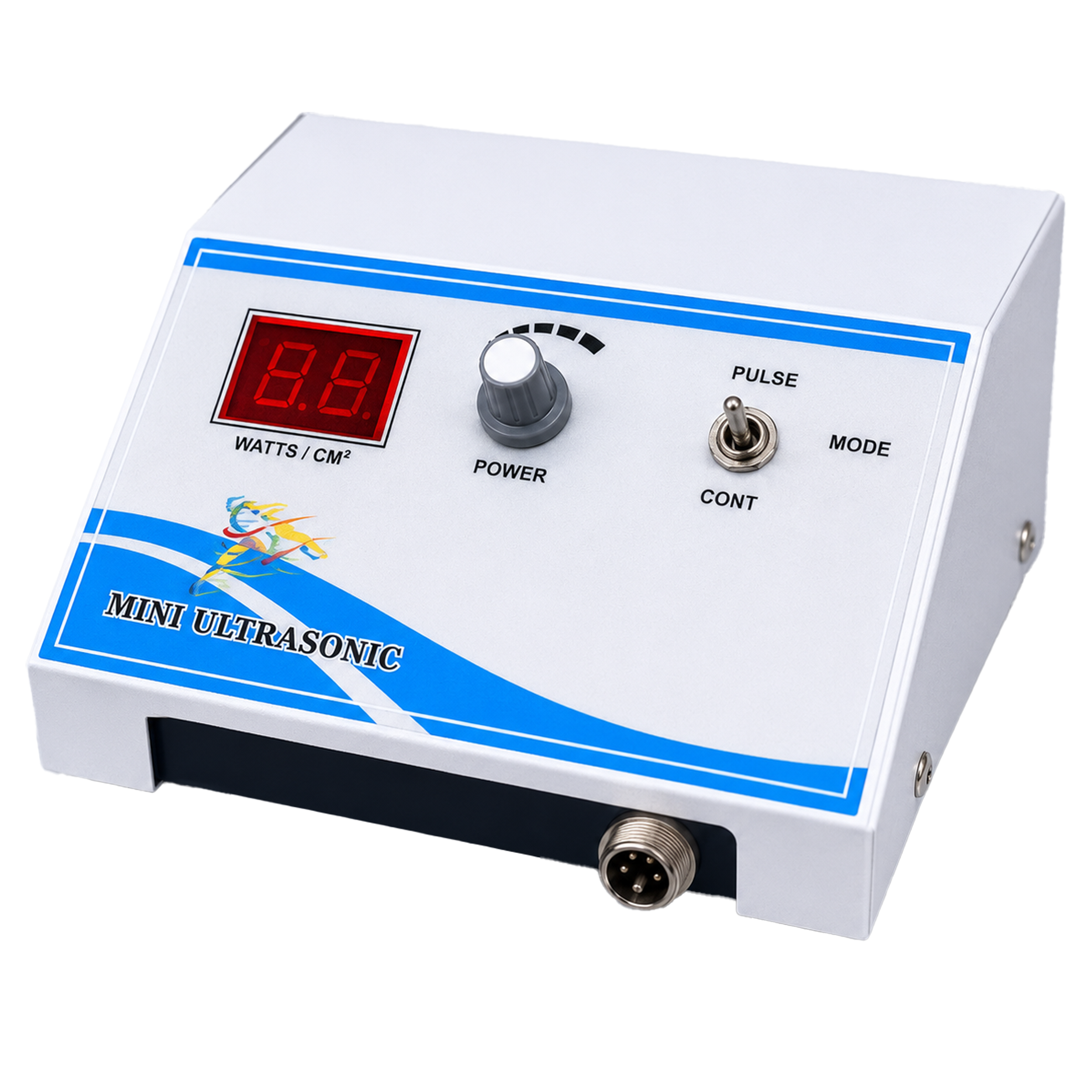
1. Welcome & Intended Use
The Physiomodalities Mini Ultrasonic 1 MHz is a modern, microcomputer-controlled medical device designed specifically for deep muscle and skeletal soft tissue treatment.
With high-frequency acoustic wave oscillations, the device creates micro-vibrations inside targeted cells, producing deep tissue warming, elevating local metabolic speed, and accelerating biological recovery.
Key Benefits of 1 MHz Treatment:
Deep Tissue Healing
Acoustic signals penetrate 3-5 cm deep into thick skeletal muscle groups.
Pain & Swelling Relief
Inhibits local nerve signaling pathways to suppress sharp pain and minimize swelling.
Improved Blood Flow
Induces localized vascular dilatation, feeding oxygen and nutrients to damaged cells.
Restored Range of Motion
Relieves severe joint stiffness and soft tissue adhesions to ease motion.
2. Safety Information & Warnings
To prevent accidental injury or device damage, review and adhere to the following safety precautions carefully:
Strict Contraindications (Do NOT Apply Near)
Never use this therapeutic equipment over the region of Cardiac Pacemakers, Eyes, Pregnant Abdomen, Malignant Tumors (Cancerous areas), or Open/Bleeding Wounds.
Ensure the skin is free of oil, heavy chemical ointments, or dust before beginning treatment.
Always use plenty of water-soluble acoustic coupling gel to prevent the transducer probe from overheating.
3. Hardware Controls & Diagram
Reference this architectural blueprint to identify key operational switches and output nodes:
4. Technical Specifications
| Device Parameter | Calibrated Engineering Values |
|---|---|
| Product Classification | Therapeutic Ultrasound Physiotherapy Unit |
| Primary Acoustic Frequency | 1.0 MHz ± 10% (Targeted deep tissue wave) |
| Output Transmission Modes | Continuous Wave & Pulsed Wave (Duty Cycles 1:1, 1:4, 1:8) |
| Effective Radiating Area (ERA) | 4.0 cm² ± 20% (Surgical Stainless Steel Contact Plate) |
| Power Source Requirements | 220V - 240V AC, 50Hz Standard Domestic Supply |
5. Machine Setup (Step-by-Step)
Connect the Treatment Probe
Insert the heavy-duty ultrasound applicator connector firmly into the front-panel circular connection port.
Attach the Power Source
Plug the primary power adapter safely into a 220V AC wall plug, then toggle the rear power switch to the ON position.
Select Output Waveform
Based on patient specifications, set the output mode toggle switch to either 'Pulse' or 'Continuous'.
Fine-Tune Treatment Intensity
Rotate the analogue potentiometer dial gradually to match comforting treatment output levels.
6. Continuous vs. Pulsed Mode Usage
Continuous Wave (Thermal Relief)
Sends uninterrupted acoustic energy down into soft tissues, introducing friction-based deep-muscle warmth. Ideal for soothing chronic back tensions, rigid muscle contractions, and arthritic stiffness.
Pulsed Wave (Mechanical Relief)
Triggers intermittent bursts of sound waves to minimize cumulative heat buildup. Perfect for fresh sports sprains, cellular swelling reduction, and acute ligament injuries.
Live Treatment Dosage Calculator
Select your patient's symptoms or conditions below. Our medical calibration engine will immediately calculate and display the optimal output waveforms, intensities, timers, and application tips.
Recommended Setting Configurations:
Wand the probe away from bony landmarks, moving in deep slow circular loops over muscular zones.
7. Clinical Applications Guide
Frozen Shoulder Recovery
Utilize continuous waveform output targeting 1.2 W/cm² to warm deep articular capsules and restore muscle flexibility.
Musculoskeletal Strain Treatment
If managing acute tissue trauma, enforce pulsed wave (1:4) cycles to maintain tissue safety, keeping output below 0.8 W/cm².
8. Maintenance & Cleaning Instructions
Follow these critical care tips to maximize the lifespan of your physical therapy device:
- Immediately wipe off residual acoustic gel from the transducer probe head after every clinical session using a dry microfiber towel.
- Never spray chemical solvents directly over the transducer. Use mild, non-alcoholic antiseptic wipes instead.
- Avoid tight coiling or kinking the probe cables, as this can break the internal shielded copper lines.
9. Official 1-Year Warranty Terms
PME Medical Devices provides a reliable 1-Year Standard Manufacturing Warranty starting from your original invoice date.
Defects Fully Covered:
Covers original material defects, internal PCB functional failures, piezo-electric crystal breakdown, and standard component malfunctions under normal operational currents.
Exclusions (Void Parameters):
Does not cover physical damage, outer shell fractures, water submersion, dry-fired transducer crystal burns, or any unauthorized servicing attempts.
10. Dynamic Warranty Claim System
Experience our streamlined, customer-first service program. You do not need to ship the machine immediately! Follow our interactive digital checklist to resolve issues remotely.
Click & Chat
Tap our interactive WhatsApp button. This instantly registers your request with our technical claim department.
Video Assessment
Our on-duty service engineer will schedule a brief diagnostic video call to troubleshoot the issue remotely.
Rapid Repair
If a hardware repair is needed, we will coordinate the repair or replacement and ship the unit back to you.
Start Your Claim Instantly via WhatsApp
Click the button to open a pre-formatted message to register your device details directly with our support team.
11. Help & Support Centre
Company Registered Office:
PME Medical Devices Private Limited, Delhi, India. All systems are manufactured under strict ISO 13485 Medical Device Standard protocols.